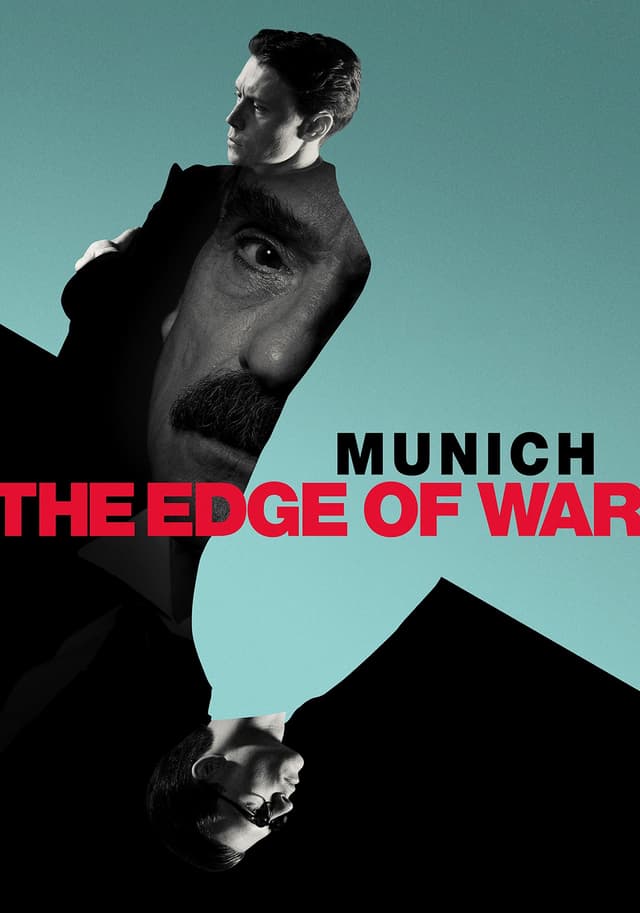
Munich – The Edge of War Budget
 DramaHistory2h 10m
Updated
Synopsis
In September 1938, with Europe on the brink of war, a young British civil servant and an old German friend reconnect at the Munich Conference, where Neville Chamberlain meets Adolf Hitler in a last-ditch effort to prevent armed conflict. Each man carries a secret that could alter the negotiations and the course of history.
What Is the Budget of Munich: The Edge of War (2021)?
Munich: The Edge of War (2021), directed by Christian Schwochow and adapted from Robert Harris's 2017 novel Munich, was produced by Turbine Studios and FilmNation Entertainment for Netflix on a budget that industry sources placed in the £15,000,000 to £20,000,000 range (approximately $20,000,000 to $26,000,000 USD at 2020 exchange rates). The film was financed through a co-production between Netflix and the UK and German producing partners, with Netflix taking worldwide distribution rights.
The budget reflected the practical needs of a period political-thriller co-production: prestige cast, location work in both London and Munich, an Anglo-German technical crew, and the production-design overhead that accompanies a 1938 setting. As a Netflix original with no theatrical recoupment window, the film operated under a streaming-economics framework where the production cost is measured against subscriber engagement rather than against a theatrical opening.
Key Budget Allocation Categories
The reported budget was distributed across several core production areas:
- Above-the-Line Talent: Jeremy Irons received top-of-call billing as Neville Chamberlain, the largest single above-the-line line item in a cast that included George MacKay (1917) as Hugh Legat, Jannis Niewöhner as Paul von Hartmann, Sandra Hüller, Liv Lisa Fries, Jessica Brown Findlay, and August Diehl. Director Christian Schwochow, novelist Robert Harris, and screenwriter Ben Power received standard rate-card fees.
- UK and Germany Location Shoot: Principal photography split between London and Munich, with location work at the Houses of Parliament-adjacent areas in London and at the actual Munich Führerbau (now the Hochschule für Musik und Theater), where the 1938 conference took place. International dual-location shooting added travel, lodging, customs, and second-unit crew costs above a single-country production.
- Production Design and Costume: Tim Pannen's production design and Sebastian Krawinkel's set decoration rebuilt 1938 London and Munich interiors with period-accurate detail, including the Munich conference room itself. Frauke Firl's costume design dressed several hundred principal and background performers in 1930s-period clothing, with the diplomatic-uniform and historical-personage work commanding the highest costs.
- Cinematography: Frank Lamm shot the film with a restrained, period-appropriate visual language that supported the negotiated tension rather than action set pieces. Camera and lighting packages were standard for a prestige period drama.
- Score and Sound: Composer Isobel Waller-Bridge provided the score, with sound design supporting the film's emphasis on overhead anxiety and conversational tension rather than action-driven beats.
- Visual Effects: Light VFX work supported period-extension shots, the Hitler scenes (achieved through prosthetic and digital combination work for August Diehl's performance), and crowd-replication for the German political-rally sequences.
How Does Munich: The Edge of War's Budget Compare to Similar Films?
At an estimated £15,000,000 to £20,000,000, the film sits in the upper-middle of contemporary Netflix prestige drama originals. Its peers in subject matter and production scale spent in a comparable bracket:
- Darkest Hour (2017): Budget $30,000,000 | Worldwide $150,802,729. Joe Wright's Winston Churchill drama is the closest theatrical comparison, costing 1.5 times what Munich reportedly cost and earning Gary Oldman the Best Actor Academy Award.
- The Imitation Game (2014): Budget $14,000,000 | Worldwide $233,555,708. Morten Tyldum's wartime drama was made for less than Munich, earned dramatically more theatrically, and is the benchmark for the prestige period drama profitability model that Netflix was attempting to replicate at streaming scale.
- Operation Mincemeat (2021): Budget approximately $24,000,000 | Worldwide $11,000,000 theatrical + Netflix license. The Colin Firth wartime drama is the closest peer in scale, subject, and Netflix-adjacent distribution.
- The Two Popes (2019): Budget approximately $25,000,000 | Worldwide n/a streaming (Netflix). Fernando Meirelles' political drama is the closest Netflix-original comparison, with a similar prestige-cast structure and a comparable production scale.
- Their Finest (2016): Budget approximately $7,000,000 | Worldwide $5,400,000. Lone Scherfig's wartime production drama is a useful lower-end UK period drama reference, made on roughly a third of the Munich budget.
Munich: The Edge of War Box Office Performance
Munich: The Edge of War received a limited theatrical release in the UK on January 7, 2022 to qualify for awards consideration before premiering exclusively on Netflix worldwide on January 21, 2022. UK theatrical box office was modest (under £100,000) by design, with the streaming launch driving the bulk of audience reach.
Against an estimated £15,000,000 to £20,000,000 production budget, the streaming-economics model means traditional theatrical ROI metrics do not apply. The closest financial framing:
Box Office Breakdown
Munich – The Edge of War

Netflix's public Top 10 dashboard recorded the film in the global English-language film top ten for two weeks following its January 21, 2022 launch, with cumulative hours viewed in the tens of millions. The film attracted strong engagement particularly in the UK, Germany, and continental European markets where the historical subject matter carried direct relevance.
Without disclosed viewership data the recoupment math cannot be calculated, but the launch-window engagement and the awards-positioning value of the UK qualifying run together represented a reasonable return on the Netflix investment by the platform's internal benchmarks. The film has continued to receive recommendations across Netflix's drama, historical, and prestige-content category pages in the years since launch.
Munich: The Edge of War Production History
Robert Harris's novel Munich was published in 2017 and optioned shortly thereafter. Christian Schwochow, the German director whose previous credits include the Stasi drama West (2013) and episodes of The Crown, was attached as director, with Ben Power adapting the screenplay. The script went through development with FilmNation Entertainment and Turbine Studios before being set up at Netflix in 2019.
Principal photography ran from September to November 2020 amid pandemic protocols, with the production observing strict COVID safety procedures including testing, bubble-shooting, and limited crew sizes. The London portion of the shoot took advantage of the UK production tax credit, with location work in central London and at studio facilities. The Munich portion of the shoot was based at the actual Führerbau building where the 1938 conference took place, with German production support and use of the EFP-Förderung German film fund incentives.
George MacKay, fresh off the success of 1917 (2019), and Jannis Niewöhner anchored the two younger leads, with Jeremy Irons cast as Neville Chamberlain in February 2020. The Adolf Hitler scenes, played by August Diehl (Inglourious Basterds, A Hidden Life), were shot with a combination of prosthetic makeup and digital character work to avoid the period-cliché Hitler-impersonation visual trap. Filming concluded in Germany and the United Kingdom in November 2020, with extensive post-production extending through summer 2021.
The film premiered out-of-competition at the BFI London Film Festival on October 16, 2021 ahead of its UK qualifying release in January 2022 and Netflix streaming launch worldwide. Robert Harris's involvement as the source novelist provided ongoing consultation through development and production.
Awards and Recognition
Munich: The Edge of War received select awards recognition. The film was nominated for the British Academy of Film and Television Arts (BAFTA) award for Outstanding British Film at the 2022 BAFTA ceremony. Jeremy Irons received recognition in the supporting actor conversation for his performance as Neville Chamberlain, including a Screen Actors Guild Award nomination for Outstanding Performance by a Male Actor in a Television Movie or Limited Series.
The film was named one of the year's best historical dramas by several UK critics' organizations, though it did not penetrate the Academy Award best-picture or best-supporting-actor categories, where Netflix's 2022 awards push centered on The Power of the Dog. The film's legacy is as a respected entry in the prestige Netflix drama category rather than as a major awards-circuit winner.
Critical Reception
Munich: The Edge of War received broadly positive reviews from critics. The film holds an 80% approval rating on Rotten Tomatoes based on 89 reviews, with a critical consensus praising the performances and the historical re-examination of Neville Chamberlain. On Metacritic, the film scored 62 out of 100, indicating generally favorable reviews.
Critics singled out Jeremy Irons's nuanced Chamberlain performance as a highlight, with several reviewers noting that the film offers a more sympathetic reading of appeasement than has been standard in postwar British historiography. The Guardian's Peter Bradshaw called it "thoughtful, well-mounted, and quietly persuasive," while The Hollywood Reporter's Stephen Dalton described Irons's performance as "a serious historical reappraisal in miniature."
Variety's Owen Gleiberman wrote that the film "trades thriller mechanics for diplomatic close observation, with mixed results," noting that the screenplay's sympathetic Chamberlain reading risked overcorrecting the historical record. IndieWire's David Ehrlich was more critical, suggesting the film "wants to rehabilitate appeasement without quite committing to the argument." Audience response on Netflix's in-platform metrics was strong, particularly in the UK, German, and continental European markets where the subject matter carried direct relevance.
Frequently Asked Questions
How much did it cost to make Munich: The Edge of War (2021)?
Netflix did not publicly disclose the budget, but industry sources placed the cost in the £15,000,000 to £20,000,000 range (approximately $20,000,000 to $26,000,000 USD at 2020 exchange rates). The film was financed through a co-production between Netflix, Turbine Studios, and FilmNation Entertainment.
How much did Munich: The Edge of War earn at the box office?
The film received a limited UK theatrical release on January 7, 2022 for awards qualification, grossing under £100,000. It premiered exclusively on Netflix worldwide on January 21, 2022, with no further theatrical release. Netflix has not publicly disclosed viewership or recoupment figures.
Who directed Munich: The Edge of War?
Christian Schwochow directed the film. Schwochow is a German director whose previous credits include the Stasi drama West (2013), the limited series Bad Banks, and episodes of The Crown for Netflix.
Is Munich: The Edge of War based on a book?
Yes. The screenplay by Ben Power adapted Robert Harris's 2017 historical thriller novel Munich. Harris also serves as the basis for several other prominent recent screen adaptations including Fatherland, Enigma, The Ghost Writer, and the Apple TV+ series Conclave (later a 2024 film).
Where was Munich: The Edge of War filmed?
Principal photography ran from September to November 2020 in London and Munich. The London portion used the UK production tax credit, while the Munich portion was based at the actual Führerbau building where the 1938 conference took place, with German production support and EFP-Förderung incentives.
Who plays Neville Chamberlain in Munich: The Edge of War?
Jeremy Irons plays Neville Chamberlain. The performance offers a more sympathetic reading of the British Prime Minister than has been standard in postwar British historiography and earned a Screen Actors Guild Award nomination for Outstanding Performance by a Male Actor in a Television Movie or Limited Series.
Who plays Adolf Hitler in Munich: The Edge of War?
August Diehl, the German actor known for Inglourious Basterds (2009) and A Hidden Life (2019), plays Adolf Hitler. The character was rendered with a combination of prosthetic makeup and digital character work to avoid the period-cliché Hitler-impersonation visual trap.
What did critics think of Munich: The Edge of War?
The film received broadly positive reviews with an 80% approval rating on Rotten Tomatoes based on 89 reviews and a 62 out of 100 score on Metacritic. Critics singled out Jeremy Irons's nuanced Chamberlain performance as a highlight, though several reviewers questioned the screenplay's sympathetic reading of appeasement.
Did Munich: The Edge of War win any awards?
The film was nominated for the British Academy of Film and Television Arts (BAFTA) award for Outstanding British Film at the 2022 BAFTA ceremony. Jeremy Irons received a Screen Actors Guild Award nomination for his performance. The film did not win any major awards.
Is Munich: The Edge of War historically accurate?
The 1938 Munich Conference itself is depicted with substantial historical fidelity, but the central young-protagonist plot involving Hugh Legat and Paul von Hartmann is fictional, invented by Robert Harris for the novel. The film blends documented diplomatic history with this fictional thriller framework, presenting a revisionist sympathetic reading of Chamberlain's appeasement strategy.
Filmmakers
Munich – The Edge of War

Official Trailer
Build budgets like this one in Saturation
Start from an industry-standard feature film template, import the schedule and rates you already have, and let the cost report keep itself current as you spend. Real-time collaboration, no spreadsheets.