Mr. Bean’s Holiday Budget
 FamilyComedy1h 30m
Updated
Synopsis
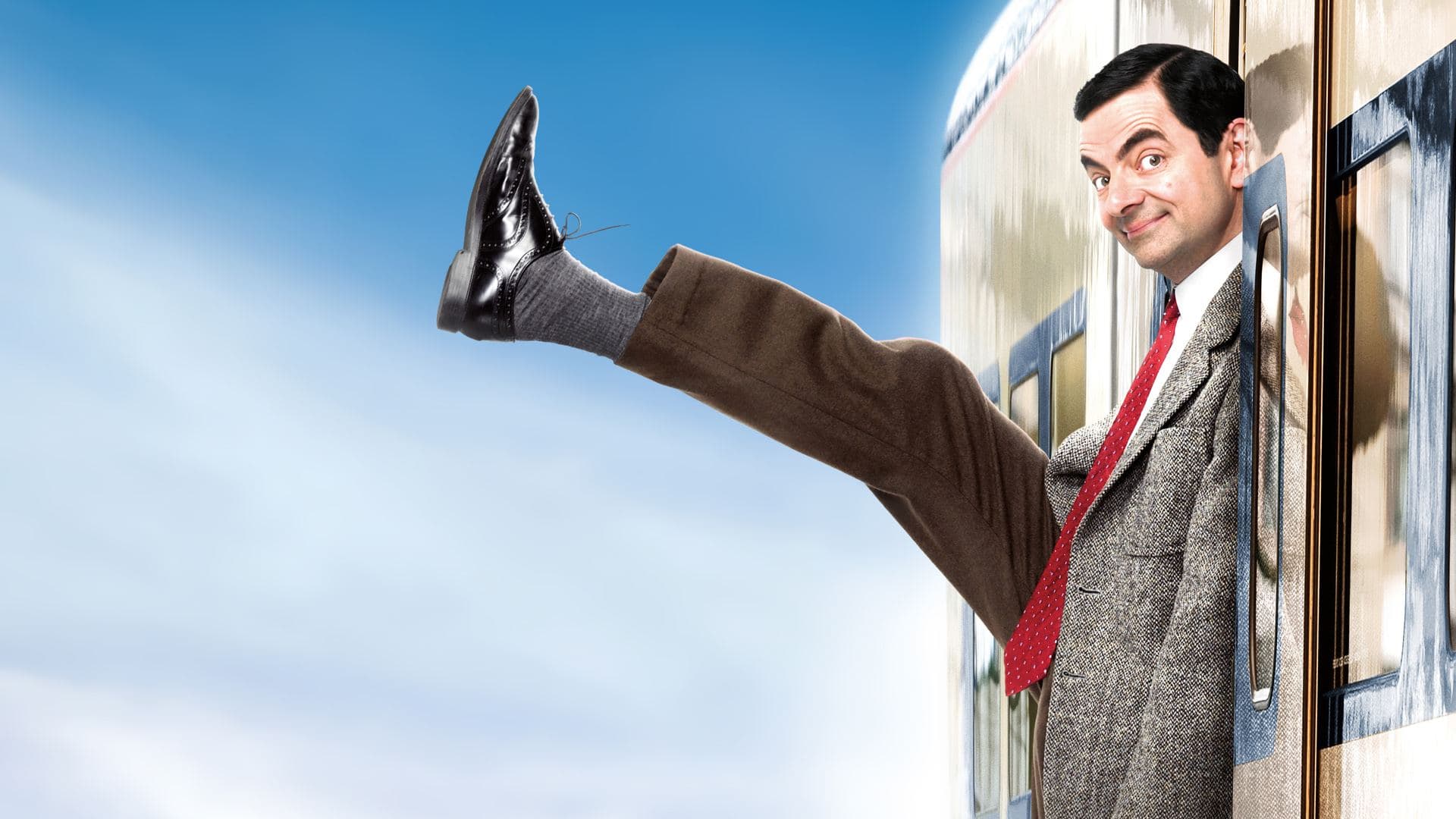
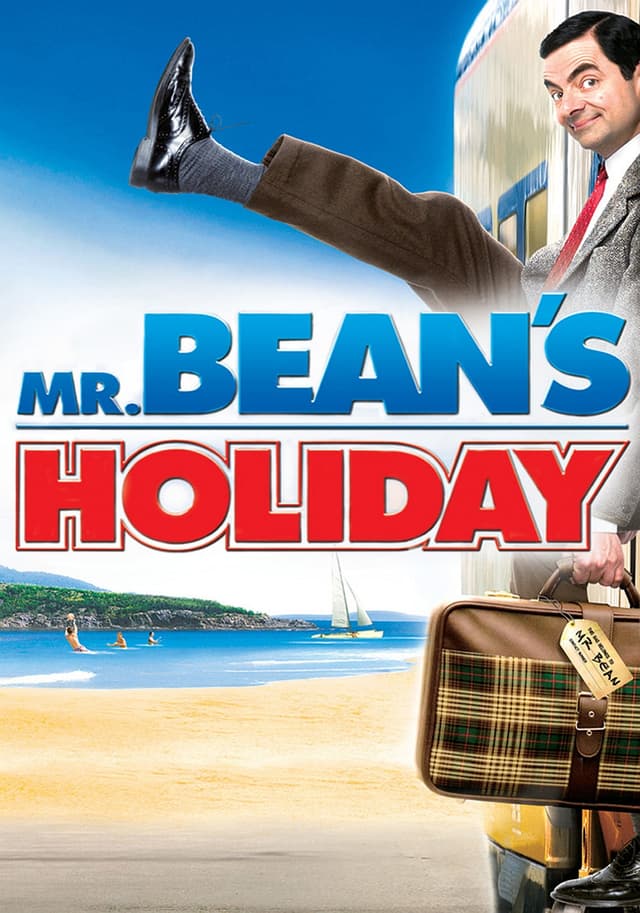
Mr. Bean wins a trip to Cannes where he unwittingly separates a young boy from his father and must help the two come back together. On the way he discovers France, bicycling, and true love, among other things.
What Is the Budget of Mr. Bean's Holiday?
Mr. Bean's Holiday was produced on a budget of approximately 25 million pounds sterling, equivalent to roughly $47 million USD at the 2007 exchange rate. The film was financed by Working Title Films and Tiger Aspect Pictures, two of the UK's most established production companies, with Universal Pictures handling worldwide distribution.
The budget reflected the scale of a genuinely international production. Unlike many British comedies that stay close to home, Mr. Bean's Holiday was shot across multiple countries, requiring location work in London, Paris, the French countryside, and Cannes. The decision to film partly during the actual 2006 Cannes Film Festival added logistical complexity but gave the production access to the real event atmosphere that a studio recreation could not replicate.
Working Title's backing was significant. The company had already produced the two Mr. Bean television specials (Bean: The Ultimate Disaster Movie and Mr. Bean's Holiday), and their experience managing internationally marketed British comedies made them a natural fit. Their distribution relationship with Universal ensured the film received wide theatrical release across all major markets.
Key Budget Allocation Categories
- Above-the-Line Talent: Rowan Atkinson, as the creator and sole star of the Bean franchise, commanded the largest single line item. Atkinson co-developed the story with writer Hamish McColl and was involved throughout production. Supporting cast including Willem Dafoe, Emma de Caunes, and Max Baldry added further cost, with Dafoe in particular bringing his international profile to a comedic role that required him to parody his own screen persona.
- International Location Filming: Shooting across London, Paris, Cannes, and the French countryside significantly elevated the production budget compared to a UK-only shoot. The Paris sequences included the Gare du Nord station and streets around Montmartre, requiring city permits, crowd control, and location fees. Filming at the Cannes Film Festival in 2006 during the live event required coordination with festival organisers and added logistical overhead estimated in the range of several million pounds.
- Cinematography and Production Design: Cinematographer Brice Cauvin gave the film a warm, sun-drenched look that contrasted deliberately with the grey palette typical of London-set British comedies. The production design team recreated elements of French village life and period Cannes glamour on location rather than on sets, keeping the visual style grounded but requiring extensive practical dressing.
- Original Score: Composer Howard Goodall, who had scored the original Mr. Bean television series, returned to provide the film's music. Goodall's score blended French-inflected orchestral themes with the comic timing cues that had defined Bean's television appearances, requiring a full orchestral recording session.
- Post-Production and Visual Effects: The film's comedy is almost entirely physical and practical, which kept VFX costs relatively modest compared to a typical studio comedy of similar scale. Post-production effort was concentrated on the sound design, where Atkinson's wordless performance required precise audio work to land each gag without dialogue to fill the gaps.
How Does Mr. Bean's Holiday's Budget Compare to Similar Films?
At $47 million, Mr. Bean's Holiday sat at the upper end of live-action British comedy budgets of its era. Its return of $229.4 million worldwide on that investment placed it among the most profitable British comedies ever made. The following comparisons illustrate how it performed relative to similar productions:
- Bean: The Ultimate Disaster Movie (1997): Budget approximately $22 million | Worldwide $251 million. The original Bean film remains the higher-grossing entry, benefiting from pent-up demand and a broader release window. The 2007 film's slightly smaller return was partly a function of market changes and the intervening decade, but both films demonstrated the character's extraordinary international commercial pull.
- Johnny English (2003): Budget approximately $40 million | Worldwide $160 million. Rowan Atkinson's other major film franchise of the era performed solidly but noticeably below Mr. Bean's Holiday on a comparable budget. The Bean character's near-universal visual comedy proved more exportable than the verbal spy-spoof format.
- The Pink Panther (2006): Budget approximately $80 million | Worldwide $158 million. The Steve Martin-led reboot of the Clouseau franchise cost nearly twice as much as Mr. Bean's Holiday and earned significantly less worldwide, illustrating how efficiently the Bean production converted its budget into global box office.
- Paddington (2014): Budget approximately $55 million | Worldwide $282 million. The closest modern British family-comedy comparison in terms of international reach and tone. Paddington edged out Mr. Bean's Holiday on absolute gross with a higher budget, but both films share a similar profile: beloved British character, European setting, genuinely cross-cultural appeal.
Mr. Bean's Holiday Box Office Performance
Mr. Bean's Holiday opened in the United Kingdom on March 30, 2007, before expanding across Europe and eventually reaching North America in August 2007. Universal Pictures handled distribution worldwide. The film earned $33.4 million in the United States and Canada, a relatively modest domestic result that belied its exceptional international performance.
The worldwide total of $229.4 million was driven almost entirely by international markets. Europe was the film's strongest territory, with France in particular delivering outstanding numbers given the film's Parisian and Cannes settings. Australia, Japan, and Latin America also contributed strong returns. The imbalance between US and international gross illustrated a consistent pattern with Bean content: the character's wordless physical comedy translates across language barriers in ways that dialogue-driven comedy cannot.
Universal invested an estimated $25 million in global prints and advertising. With a total investment of approximately $72 million against $229.4 million in worldwide gross, the studio's estimated 50% share of theatrical receipts came to roughly $114.7 million, comfortably clearing break-even and generating a return of approximately 388% on the production budget alone.
Box Office Breakdown
Mr. Bean’s Holiday

The film earned roughly $4.88 for every $1 invested in production, making it one of the most efficient returns in British comedy history. The gap between US and international performance has been a subject of industry analysis: Bean is effectively the highest-grossing non-animated British character franchise internationally, yet the US has consistently been the weakest market. The physical, visual nature of the comedy that makes Bean universally accessible in non-English-speaking markets is less differentiated in the US, where competing English-language comedies are plentiful.
Mr. Bean's Holiday Production History
The origins of Mr. Bean's Holiday trace back to Rowan Atkinson and his longtime collaborators at Tiger Aspect Pictures. The Bean character had last appeared in the 1997 theatrical film Bean: The Ultimate Disaster Movie, which had been a substantial international hit. A decade later, Tiger Aspect and Working Title began developing a follow-up that would take Bean out of his familiar London context entirely, sending him to France for a story structured around the Cannes Film Festival.
Hamish McColl wrote the screenplay with Robin Driscoll, both working from original character concepts by Atkinson and Richard Curtis, who had co-created Bean for the original ITV series in 1990. The central conceit was deliberately simple: Bean wins a trip to Cannes, becomes separated from a young boy named Stepan, and must navigate France without speaking French. The decision to strip dialogue almost entirely from the film was a deliberate creative choice that echoed the silent-comedy traditions of Chaplin and Keaton that had always underpinned Atkinson's approach to the character.
Steve Bendelack, a television director who had worked extensively in British comedy, was hired to direct. Principal photography began in 2006, with the French location work shot across Paris, including interiors and exteriors at the Gare du Nord, streets around Montmartre, and a fictional village in the French countryside. The Cannes sequences were filmed during the actual 2006 Cannes Film Festival, a logistically complex undertaking that required Working Title to negotiate access with festival organisers. Filming at a live international event gave the production authentic red carpet footage and real festival atmosphere that would have been extremely costly to recreate on a closed set.
Post-production concluded in late 2006, and the film was released in the UK in March 2007. The US release followed in August 2007, positioned as a summer family release. Willem Dafoe's casting as Carson Clay, a pompous American film director who appears repeatedly in documentary footage Bean has accidentally corrupted, was a notable coup: Dafoe's willingness to play a broadly satirised self-parody brought an additional layer of comedy that worked particularly well for international audiences familiar with his serious dramatic persona.
Awards and Recognition
Mr. Bean's Holiday received a BAFTA nomination for Outstanding British Film at the 2008 BAFTA Awards, a notable recognition for a broad comedy in a category typically dominated by dramas and prestige productions. The nomination acknowledged the craft behind Atkinson's performance and the film's successful international ambitions.
Rowan Atkinson received recognition from critics and industry observers for the sustained physical performance required to carry a film with almost no dialogue. The role demanded a different kind of performance discipline than his work in Blackadder or Johnny English: every scene had to land through expression, body language, and timing alone, with no verbal punchlines available as a safety net.
Beyond formal awards, the film's commercial performance was itself a form of recognition. A return of $229.4 million worldwide on a $47 million budget demonstrated that the Bean character retained genuine global appeal two decades after the television series launched. The film has continued to perform strongly in television syndication and streaming, particularly in European markets where it remains one of the most-viewed British comedies of its decade.
Critical Reception
Mr. Bean's Holiday earned a 71% approval rating on Rotten Tomatoes. The critical consensus was broadly positive for a broad comedy sequel: reviewers praised Atkinson's committed physical performance and the film's willingness to stay true to the wordless, Chaplin-inflected style of the character rather than updating him for a more dialogue-driven modern audience.
Positive reviews highlighted the sequence in which Bean inadvertently films a documentary that exposes Carson Clay's pretensions, a structural joke that built across the film's second half and gave Willem Dafoe full license to parody American arthouse cinema. Critics also praised Emma de Caunes as the aspiring actress Sabine, whose chemistry with Atkinson gave the film an emotional warmth that lifted it above pure slapstick.
Some reviewers found the film slight by the standards of theatrical comedy and noted that the premise stretched somewhat thin over its 90-minute running time. A handful of set pieces, including an extended sequence at a train station restaurant, were cited as running longer than necessary. However, even critics who found the film modest in ambition acknowledged that Atkinson's performance was technically impeccable and that the film delivered reliably on its core promise.
Frequently Asked Questions
How much did Mr. Bean's Holiday cost to make?
The production budget was $25,000,000, a modest increase from the $18,000,000 budget of Bean (1997). Universal Pictures and Working Title Films co-financed the family-targeted sequel.
How much did Mr. Bean's Holiday earn at the box office?
The film grossed $33,310,545 domestically and $198,800,000 internationally, for a worldwide total of approximately $232,000,000. The international result reflected the character's strong global recognition, with particularly strong receipts in France, Germany, the UK, and Australia.
Who stars in Mr. Bean's Holiday?
Rowan Atkinson reprises his Mr. Bean role from the television series and Bean (1997). Willem Dafoe plays the self-important American filmmaker Carson Clay, with Emma de Caunes as Sabine and Max Baldry as the Russian boy Stepan.
Who directed Mr. Bean's Holiday?
Steve Bendelack directed the film. Bendelack came from a British television comedy background, including The League of Gentlemen and the original Mr. Bean series, replacing Mel Smith from Bean (1997).
Where was Mr. Bean's Holiday filmed?
Principal photography took place across France, including Paris, the south of France, and Cannes, where the film's climactic sequence at the Cannes Film Festival was shot during a real festival cycle. Additional studio work took place at Pinewood Studios in the UK.
What did critics think of Mr. Bean's Holiday?
Reviews were mixed, with a 51% approval rating on Rotten Tomatoes and a 51 out of 100 score on Metacritic. Critics praised Rowan Atkinson's physical comedy and the loving homage to Jacques Tati, while objecting to a thin narrative.
Is Mr. Bean's Holiday connected to the TV series?
Yes. Mr. Bean's Holiday is the second theatrical feature based on the Mr. Bean television series, which originally aired on ITV from 1990 to 1995. The film maintains the character's near-silent characterization with minimal dialogue, in contrast to the more dialogue-heavy Bean (1997).
Was Mr. Bean's Holiday a final farewell to the character?
Rowan Atkinson signaled at the time of release that Mr. Bean's Holiday would likely be the last live-action outing for the character. Atkinson has continued voicing the character for an animated television series and commercials, but no further theatrical feature has been produced.
Was Mr. Bean's Holiday profitable?
Yes. Against the $25,000,000 production budget and an estimated $30,000,000 to $40,000,000 in global marketing spend, the worldwide gross of $232,000,000 produced a substantial theatrical profit. Strong home video and television syndication revenue extended the financial return significantly.
How does Mr. Bean's Holiday compare to Bean (1997)?
Bean (1997) grossed $251,200,000 worldwide on an $18,000,000 budget, making it the slightly stronger performer at the box office. Mr. Bean's Holiday closed the gap with stronger European receipts and weaker U.S. results, reflecting the character's greater international standing.
Build budgets like this one in Saturation
Start from an industry-standard feature film template, import the schedule and rates you already have, and let the cost report keep itself current as you spend. Real-time collaboration, no spreadsheets.