
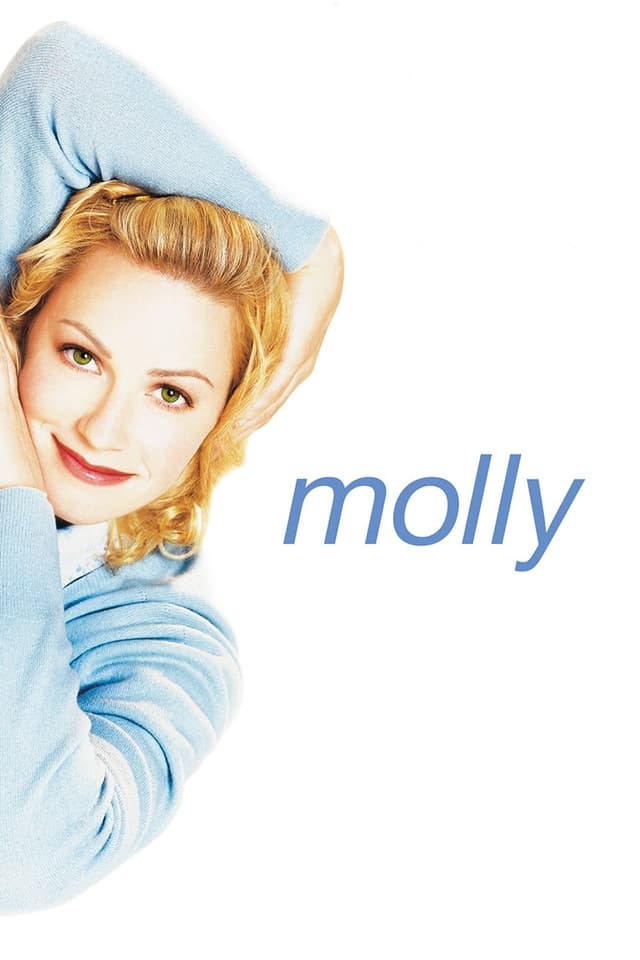
Molly Budget
 Drama1h 42m
Updated
Synopsis
Molly McKay (Elisabeth Shue), a 28-year-old woman on the autism spectrum, is released from an institutional care facility into the reluctant guardianship of her estranged advertising-executive brother Buck (Aaron Eckhart). When Buck consents to an experimental brain-cell transplant, Molly briefly transforms into a verbally fluent and emotionally aware adult, only for her body to begin rejecting the implanted cells. The film tracks the siblings' journey through reunion, transformation, and eventual return as Buck learns to accept his sister on her own terms.
What Is the Budget of Molly (1999)?
Molly, John Duigan's 1999 American drama starring Elisabeth Shue and Aaron Eckhart, was produced on a reported production budget of $21,000,000 for Metro-Goldwyn-Mayer Pictures in partnership with William J. Macdonald's Cockamamie Productions and Absolute Entertainment. The figure has been reported consistently in the trade press, in TV Tropes, on Wikipedia, and in retrospective coverage of the film's commercial collapse, and represents the kind of mid-tier studio outlay that MGM was committing to drama-driven star vehicles in the late 1990s.
At $21 million the production sat squarely in the lower-mid studio tier for a contemporary-set drama with two leads who had recently broken out: Shue had received an Academy Award nomination for Leaving Las Vegas (1995) and Eckhart was coming off Neil LaBute's In the Company of Men (1997) and Your Friends and Neighbors (1998). The budget covered above-the-line star salaries for Shue, Eckhart, Jill Hennessy, and Thomas Jane, a New York metropolitan area shoot, visual-effects work for the brain-cell transplant sequence, and a full Trevor Jones orchestral score. What the budget did not ultimately cover was a meaningful theatrical marketing campaign, because MGM elected to cut prints and advertising spending almost entirely once test screenings indicated the film would not work commercially.
Key Budget Allocation Categories
A reconstructed allocation for Molly, based on the production profile and standard 1999 studio drama budgeting practice, points to the following dominant cost lines:
- Above-the-Line Cast Salaries: Elisabeth Shue, fresh off her Oscar nomination for Leaving Las Vegas, anchored the picture in a physically and emotionally demanding lead role that required her to play an institutionalized autistic adult, the post-transplant transformation, and the regression in the third act. Aaron Eckhart, Jill Hennessy (Law & Order), and Thomas Jane filled out the principal cast, with Lucy Liu and Elizabeth Mitchell in supporting roles, pushing the cast line into the largest single share of the budget.
- Director and Writer Fees: Australian director John Duigan, coming off Sirens (1994) and Lawn Dogs (1997), and screenwriter Dick Christie carried director and writer fees commensurate with a studio-financed drama at this scale. Producer William J. Macdonald and the Cockamamie/Absolute Entertainment producing structure layered additional producer fees into the above-the-line stack.
- New York Tri-State Location Shoot: Principal photography took place across New York City and northern New Jersey, with interiors and exteriors covering the institution where Molly lives at the film's opening, Buck's suburban home, Manhattan office and street locations, and the medical-research facility where the experimental procedure is performed. The tri-state production base carried union crew rates, location permit fees, and the higher per-day costs associated with a 1999 New York studio shoot.
- Production Design and Set Decoration: The medical-research lab, the group-home interior, and the suburban Eckhart-family home each required a distinct production-design pass to anchor the story's tonal shifts from clinical to domestic to lyrical. Costume changes tracked Molly's arc through institutional clothing, post-transplant fashion experiments, and a return to softer wardrobe in the third act.
- Visual Effects for the Transplant Sequence: The brain-cell transplant operation, including the surgical visualization and the subsequent montage of Molly's synaptic awakening, required visual-effects work that, while modest by 1999 blockbuster standards, added a non-trivial line to a project that was otherwise primarily a chamber drama.
- Cinematography and Camera Package: Gabriel Beristain, the Mexican cinematographer of Caravaggio and Dolores Claiborne, shot the film on 35mm color stock with a camera and lighting package consistent with a 1999 studio drama. The lighting design tracked Molly's emotional state across her pre-treatment, post-treatment, and regression phases, requiring more setups than a comparable single-tone drama.
- Music and Score: Trevor Jones (The Last of the Mohicans, Cliffhanger) composed an orchestral score recorded and mixed in London. The composer fee, orchestra session costs, and music licensing for source cues placed the music budget at the higher end of the mid-tier studio drama range.
- Post-Production and Negative Costs: Editor Humphrey Dixon assembled the picture across a standard 1999 studio post schedule. Sound design, ADR, color timing, and negative cutting completed the workflow before MGM's effective abandonment of the theatrical campaign, with the bulk of post spending committed before that decision was reached.
How Does Molly's Budget Compare to Similar Films?
Molly's $21 million production budget places it in a clearly defined cluster of late-1990s and early-2000s American films built around adult characters with autism or developmental disabilities, most of which were marketed as awards contenders and most of which significantly outperformed Molly commercially:
- Rain Man (1988): Budget $25,000,000 | Worldwide $412,800,000. Barry Levinson's Best Picture Oscar winner is the foundational reference point for the entire subgenre and the most direct cinematic precursor to Molly. Both films pair a high-functioning neurodivergent lead with a sibling who must become caregiver, and the box-office spread between the two (Rain Man's $412.8M vs Molly's $17,650) is one of the starkest in studio drama history.
- Forrest Gump (1994): Budget $55,000,000 | Worldwide $678,200,000. Robert Zemeckis's Best Picture winner sits in the same broad neurodivergent-protagonist conversation as Molly and demonstrates the upside ceiling MGM was almost certainly chasing in greenlighting a Shue-led drama in this space.
- Mercury Rising (1998): Budget $60,000,000 | Worldwide $93,100,000. The Bruce Willis thriller, released a year before Molly, paired a high-functioning autistic child character with an action plotline and grossed $32.9 million domestic. It established that studios were actively investing in autism-centered dramas in the late 1990s and that the commercial outcomes varied widely.
- I Am Sam (2001): Budget $22,000,000 | Worldwide $97,800,000. Jessie Nelson's Sean Penn vehicle, made on essentially the same budget as Molly two years later, demonstrated the commercial path a sensitively handled, awards-positioned disability drama could take. I Am Sam earned a Best Actor Oscar nomination for Penn and grossed nearly 100 times what Molly did.
- Leaving Las Vegas (1995): Budget $4,000,000 | Worldwide $49,800,000. Mike Figgis's low-budget drama, the film for which Elisabeth Shue received her Best Actress Oscar nomination, is the immediate Shue benchmark and the obvious reason MGM was willing to write a $21 million check four years later. The Las Vegas comparison highlights how much smaller and more commercially efficient her breakout role was relative to Molly.
- Cube (1997): Budget $365,000 | Worldwide $9,000,000. The Canadian science-fiction thriller sits at the opposite financial extreme from Molly but is an instructive contrast: a $365,000 production grossed roughly 510 times what Molly grossed theatrically, illustrating the inversion of expectations that the Molly release schedule produced.
Molly Box Office Performance
Molly opened on October 22, 1999 in a token release across only 12 theaters in the United States, a release strategy effectively designed by MGM to fulfill contractual obligations rather than to reach an audience. The studio, having determined from test screenings that the film would not work commercially, made the unusual decision to all but eliminate the marketing budget and to debut the picture on in-flight airline programming before its theatrical bow. The theatrical run totaled $17,650 in domestic gross, one of the smallest reported totals for a major studio release of the decade. International theatrical figures were not reported.
Box Office Breakdown
Molly

Molly returned approximately $0.001 for every $1 invested in production and marketing, one of the most lopsided ratios ever recorded for a major studio drama. The film recouped a measurable portion of its negative cost through downstream windows (airline programming during the run-up to the theatrical date, pay-television licensing, VHS and DVD home video, and ongoing library value to MGM/Sony as the studio's catalog has changed hands), but it has never been treated as anything other than a write-down at the corporate level.
In terms of strategic context, the Molly release sits inside a broader 1999 MGM pattern of bypassing wide theatrical for films the studio had lost confidence in, a pattern that contributed to the corporate restructuring later in the decade. The $17,650 domestic total is regularly cited alongside Town and Country (2001, Warner Bros.) and Cutthroat Island (1995, Carolco/MGM) as one of the canonical case studies in late-1990s studio commercial failure.
Molly Production History
Molly originated from a Dick Christie screenplay developed at MGM under producer William J. Macdonald's Cockamamie Productions banner in partnership with Absolute Entertainment. Christie, best known to that point as the creator and showrunner of the 1985 to 1989 family sitcom Small Wonder, wrote the script as a contemporary drama about a 28-year-old institutionalized autistic woman, Molly McKay, and her advertising-executive brother, Buck, who reluctantly becomes her guardian when their longtime care facility loses its funding.
Australian director John Duigan, coming off the period drama Sirens (1994) with Hugh Grant and the Sundance prizewinner Lawn Dogs (1997) with Sam Rockwell and Mischa Barton, was attached to direct. Duigan's previous work had focused on coming-of-age themes and unconventional female protagonists, a track record that made him a logical creative choice for a film built around the interior life of a neurodivergent woman. Producer William J. Macdonald, an MGM-aligned producer best known later for HBO's Rome, shepherded the project through development.
Elisabeth Shue accepted the title role on the strength of her recent Oscar-nominated performance in Leaving Las Vegas (1995) and her work in Cousin Bette (1998) and The Saint (1997). For Shue the role represented a deliberate effort to follow Mike Figgis's drama with another physically and emotionally demanding character study, and she prepared by consulting with autism researchers, families, and adults on the spectrum. Aaron Eckhart took the brother role on the back of his Neil LaBute partnership in In the Company of Men (1997) and Your Friends and Neighbors (1998), expanding into a more sympathetic register. Jill Hennessy, then on hiatus from her Law & Order run, joined as Buck's romantic interest, and Thomas Jane played a fellow patient on the autism spectrum. Lucy Liu and Elizabeth Mitchell took supporting parts in early-career roles.
Principal photography began in 1998 in the New York metropolitan area, with additional photography in northern New Jersey. The tri-state shoot covered Manhattan office and street exteriors, the institutional group home where Molly lives at the film's opening, Buck's suburban home, and the medical-research facility where the experimental brain-cell transplant procedure is performed. Cinematographer Gabriel Beristain (Caravaggio, Dolores Claiborne) shot the film on 35mm with a lighting palette that tracked Molly's shifts from institutional flatness through post-transplant warmth to the regressive third act. Trevor Jones (The Last of the Mohicans) composed an orchestral score recorded in London.
Post-production through 1998 and into early 1999 was completed at standard 1999 studio rhythm, with editor Humphrey Dixon assembling the picture. The trouble began with the test-screening process. Audience response to the film's tonal mix (a romantic-comedy first act, a clinical experimental-treatment middle, and a deeply melancholic regression in the third act) was poor, and MGM concluded that the picture would not work in a wide commercial release. Rather than reposition the film for awards-season or art-house exhibition, the studio chose to release Molly first to in-flight airline programming and then to a contractual minimum twelve-theater theatrical release on October 22, 1999 with effectively zero theatrical marketing.
The release strategy became its own news story. Trade press at the time reported the $17,650 domestic gross as one of the most dramatic studio dumpings in recent memory, and the film entered the catalog of late-1990s commercial cautionary tales. For Duigan it marked a slowdown in his American studio work, and for MGM it factored into the broader narrative of the studio's late-1990s commercial drift that preceded the 2005 Sony-led acquisition.
Awards and Recognition
Molly did not win any awards and was not in the awards conversation in the 1999 to 2000 season. The film was released too quietly to qualify in critical year-end voting and was not submitted to any major festival circuit, having been positioned by MGM as a write-down rather than a contender. It was not nominated for any Academy Awards, Golden Globes, BAFTAs, Screen Actors Guild Awards, or major critics' association awards.
At the 20th Golden Raspberry Awards covering 1999 releases, the Worst Actress prize went to Heather Donahue for The Blair Witch Project, with nominees including Melanie Griffith (Crazy in Alabama), Milla Jovovich (The Messenger: The Story of Joan of Arc), Sharon Stone (Gloria), and Catherine Zeta-Jones (Entrapment). Elisabeth Shue was not among the official nominees for Molly, although the film has been informally listed in retrospective worst-of-1999 coverage and is a frequent inclusion on critics' lists of well-intentioned films undone by tonal mismanagement. The lack of formal Razzie recognition reflects the limited theatrical visibility the picture had during the eligibility window rather than any verdict on the performance itself.
The film's most durable post-release recognition has been as a case study. It appears on contemporary lists ranking the largest dollar-for-dollar studio commercial failures of the 1990s, and it is regularly cited in retrospective coverage of MGM's late-1990s release strategy alongside Cutthroat Island and Hollywood Pictures' similar dumpings of the period. Adults-on-the-spectrum advocacy organizations have also revisited Shue's performance over the subsequent twenty-five years, with mixed reception: some critics now treat it as an unfairly maligned, well-intentioned attempt, while others, including disability scholars, raise the same concerns about caricature that contemporary reviewers voiced in 1999.
Critical Reception
Molly holds a 13 percent positive rating on Rotten Tomatoes based on 23 critic reviews, with a critics' consensus that reads "Molly never really elevates above uninspired, cliche-ridden moments." On Metacritic the film scored 21 out of 100, putting it firmly in the "generally unfavorable reviews" band. CinemaScore did not issue an audience grade given the film's minimal theatrical exposure, and the IMDb user score sits at 5.7 based on roughly nine thousand ratings. Rotten Tomatoes audience score on the Popcornmeter currently stands at 52 percent based on more than one thousand ratings, indicating a viewer split between those who reject the film outright and those who treat it as a sincere if flawed sibling drama.
The critical pile-on at the time of release focused on the screenplay's tonal whiplash and on the central performance. Lou Lumenick in the New York Post wrote that "Shue comes perilously close to offensive caricature," and Louis B. Parks in the Houston Chronicle called the film "a near-disaster." Kevin Thomas in the Los Angeles Times was a comparative outlier in the positive direction, writing that the film "is moving and has been well-crafted with much care." The Variety review of the original release characterized the picture as a misjudged attempt at the Rain Man template, and the New York Times notice in late 1999 treated it as a textbook example of a studio handling a sensitive subject without the discipline to follow through.
Retrospective writing on Molly has been more divided than the original reception suggests. Letterboxd reviews and disability-studies essays have reassessed Shue's commitment to the role, with some writers arguing the film's reputation collapsed not because the performance was deficient but because the script and the MGM marketing decisions left it without context to land. Others maintain the original assessment that the film flattens autism into a series of crowd-pleasing tropes and that the experimental-procedure plot mechanically inverts the more serious neurological reality. The picture remains in regular streaming circulation on Amazon Prime Video and through MGM/Amazon library licensing.
Frequently Asked Questions
How much did it cost to make Molly (1999)?
Molly was produced on a reported $21,000,000 budget for Metro-Goldwyn-Mayer Pictures in partnership with William J. Macdonald's Cockamamie Productions and Absolute Entertainment. The figure has been consistently reported across trade coverage of the film's commercial collapse and reflects the kind of mid-tier studio outlay common for late-1990s star-driven dramas. The bulk of the budget went to above-the-line salaries for Elisabeth Shue and Aaron Eckhart and to a New York metropolitan area shoot.
How much did Molly (1999) earn at the box office?
Molly grossed approximately $17,650 in its United States theatrical run after MGM released it on a token twelve-theater release on October 22, 1999. The studio had effectively eliminated the film's marketing budget after test screenings, debuted the picture on in-flight airline programming before its theatrical bow, and treated the release as a contractual obligation. International theatrical figures were not reported.
Was Molly (1999) profitable?
No. Against a $21,000,000 production budget Molly returned roughly $17,650 in domestic theatrical gross, an ROI of approximately negative 99.9 percent. The film recouped a portion of its negative cost through downstream airline programming, pay-television licensing, VHS and DVD home video, and ongoing library value, but it has been treated at the studio level as a complete write-down. It is regularly cited as one of the largest dollar-for-dollar studio commercial failures of the 1990s.
Why did Molly (1999) flop so badly at the box office?
MGM's release strategy effectively guaranteed the result. After test screenings indicated the film would not work commercially, the studio chose to eliminate the theatrical marketing budget, debut the picture on in-flight airline programming, and release it to a contractual minimum of twelve theaters on October 22, 1999. With no print campaign, no trailer rotation, and no critical or word-of-mouth push, the film grossed $17,650 over its run.
Who directed Molly (1999)?
Molly was directed by Australian filmmaker John Duigan, coming off the period drama Sirens (1994) with Hugh Grant and the Sundance prizewinner Lawn Dogs (1997) with Sam Rockwell. Duigan's previous work focused on coming-of-age themes and unconventional female protagonists, which made him a logical creative choice for a film built around the interior life of a neurodivergent adult woman.
Where was Molly (1999) filmed?
Principal photography took place across the New York City metropolitan area in 1998, with additional photography in northern New Jersey. The tri-state shoot covered Manhattan office and street exteriors, the institutional group home where Molly lives at the film's opening, Buck's suburban home, and the medical-research facility where the experimental brain-cell transplant procedure is performed.
Did Elisabeth Shue win a Razzie for Molly (1999)?
No. The 20th Golden Raspberry Awards Worst Actress prize for 1999 releases went to Heather Donahue for The Blair Witch Project, with nominees including Melanie Griffith, Milla Jovovich, Sharon Stone, and Catherine Zeta-Jones. Elisabeth Shue was not among the official Razzie nominees for Molly, although the film is informally listed in retrospective worst-of-1999 coverage and is a frequent inclusion in critics' lists of well-intentioned films undone by tonal mismanagement.
How does Molly (1999) compare to Rain Man (1988)?
Both films pair a high-functioning neurodivergent lead with a sibling who must become caregiver, and Rain Man is the foundational reference point for the entire subgenre. The box-office spread between the two is one of the starkest in studio drama history: Rain Man grossed $412.8 million worldwide on a $25 million budget and won Best Picture, while Molly grossed $17,650 on a $21 million budget and was released to a contractual twelve-theater minimum.
What was Molly (1999) rated on Rotten Tomatoes and Metacritic?
Molly holds a 13 percent positive rating on Rotten Tomatoes based on 23 critic reviews, with a consensus that reads "Molly never really elevates above uninspired, cliche-ridden moments." On Metacritic the film scored 21 out of 100, in the "generally unfavorable reviews" band. The IMDb user rating sits at 5.7, and the Rotten Tomatoes Popcornmeter audience score is 52 percent, indicating a viewer split between rejection and qualified sympathy.
Where can you watch Molly (1999) today?
Molly remains in circulation through MGM/Amazon library licensing and is available on Amazon Prime Video for streaming and digital rental. The film has been issued on VHS and DVD over the years, and it surfaces periodically on cable and streaming services that carry the Amazon-owned MGM catalog. Physical-media availability is limited to secondary-market DVDs.
Filmmakers
Molly

Official Trailer
Build budgets like this one in Saturation
Start from an industry-standard feature film template, import the schedule and rates you already have, and let the cost report keep itself current as you spend. Real-time collaboration, no spreadsheets.