Miami Vice Budget
 CrimeDrama2h 13m
Updated
Synopsis
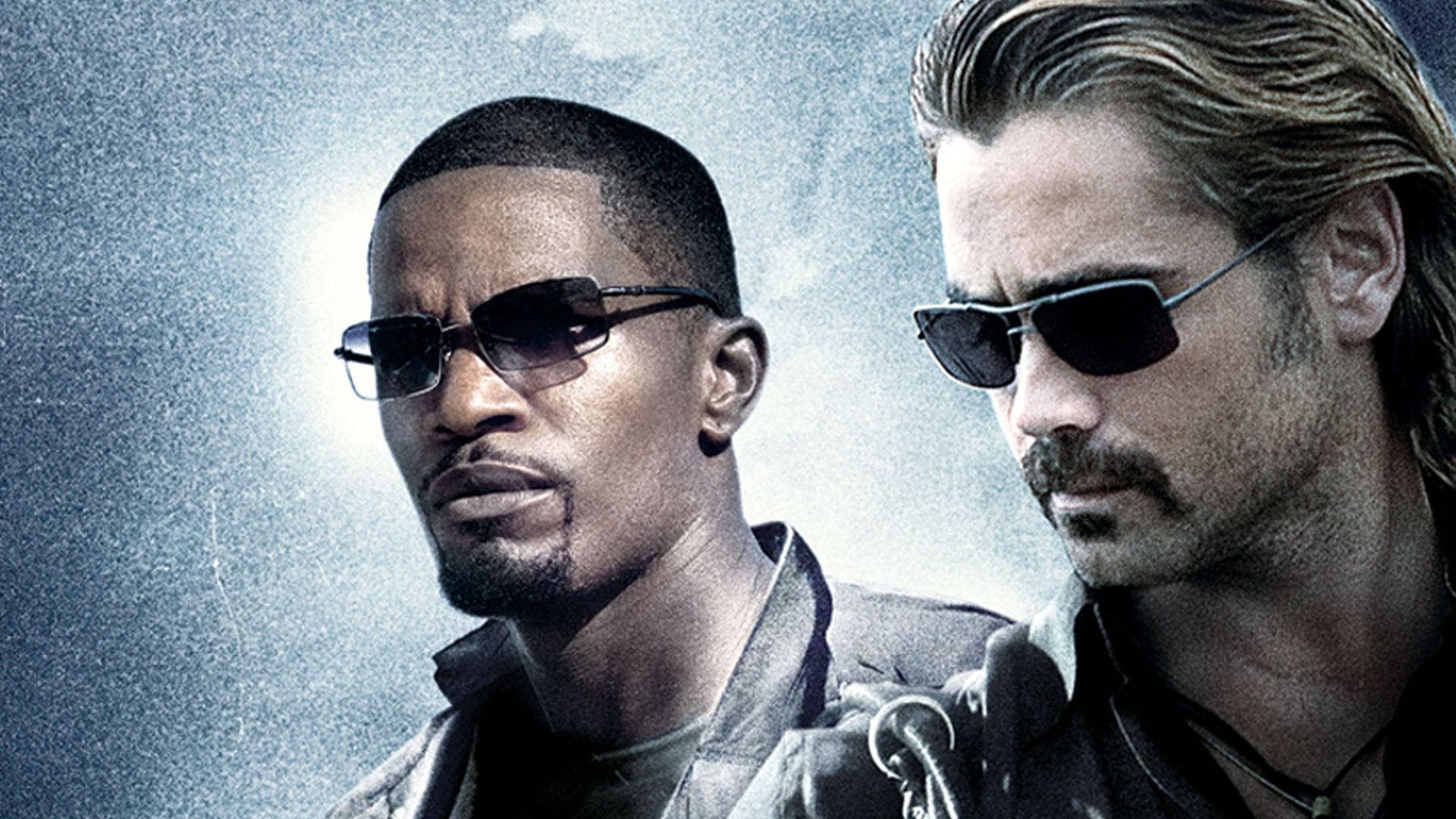
Cops Sonny Crockett and Ricardo Tubbs see the lines between their real and undercover lives become blurred as they try to find the people involved for three murders.
What Is the Budget of Miami Vice (2006)?
Miami Vice (2006), directed by Michael Mann and released by Universal Pictures, was produced on a budget of approximately $135,000,000. This made it one of the most expensive films of 2006 and a significant financial gamble for Universal, which bet on Mann's ability to reimagine his own 1984 television series as a gritty, digital-cinema crime epic. The production was financed by Forward Pass Productions in partnership with Universal.
The budget ballooned well beyond initial projections due to a series of production disruptions that would have sunk most films. Hurricane season in 2005 forced the loss of seven shooting days across South Florida and the Dominican Republic. A shooting incident on location in the Dominican Republic in October 2005 led to Jamie Foxx's departure from the foreign shoot entirely, forcing Mann to rewrite the climactic third act and relocate it from Paraguay to Miami. These compounding problems pushed the film into a cost range that made profitability at the box office extremely difficult.
Key Budget Allocation Categories
The $135,000,000 budget for Miami Vice reflects the high cost of shooting a globe-spanning crime thriller on practical locations with A-list talent. Key cost drivers include:
- Above-the-Line Talent: Colin Farrell and Jamie Foxx commanded top-tier salaries as the leads, with Foxx's deal reportedly including salary increases and a private jet after the Dominican Republic incident raised safety concerns. Gong Li, Naomie Harris, and Ciaran Hinds rounded out a strong international cast. Michael Mann served as director, writer, and producer, giving him substantial creative control and a corresponding compensation package.
- Location Production Across Multiple Countries: Principal photography spanned Miami, the Dominican Republic, Paraguay, Uruguay, and other locations. Shooting on practical locations rather than soundstages is a hallmark of Mann's approach, but it carries steep logistics costs: local crews, permits, security, housing, and transportation for a large international production. The Dominican Republic shoot alone required significant security infrastructure after the October 2005 incident.
- Hurricane and Weather Disruptions: Hurricanes Katrina, Rita, and Wilma struck during the 2005 production window, costing the production seven full shooting days in South Florida. Weather delays on a film of this scale carry costs in the range of $200,000 to $500,000 per lost day when accounting for crew standby, equipment rental, and schedule compression for subsequent scenes.
- Digital Cinematography and Post-Production: Cinematographer Dion Beebe shot the film on the Thomson Viper FilmStream camera, an early high-definition digital system that gave the film its distinctive gritty, desaturated look. Digital cinematography was still relatively new for major studio features in 2005, and the post-production pipeline required specialized color grading and visual effects work to achieve Mann's signature nocturnal aesthetic.
- Script Revisions and Reshoots: After Jamie Foxx refused to return to the Dominican Republic following the shooting incident, Mann was forced to rewrite the film's climactic sequence. The original ending was set in Paraguay; the revised version relocated the finale to Miami. This kind of late-stage script overhaul cascades through every department, requiring new location scouting, set construction, stunt coordination, and scheduling around talent availability.
- Music and Score: Composer John Murphy created the film's score, blending electronic textures with orchestral elements to match the film's moody, nighttime atmosphere. The soundtrack also featured licensed tracks including Mogwai, Audioslave, and Nonpoint, with licensing fees for a major studio release adding significant cost.
How Does Miami Vice's Budget Compare to Similar Films?
At $135,000,000, Miami Vice sits in the upper tier of R-rated crime thrillers. Its budget reflects both the scale of Mann's ambition and the production problems that inflated costs:
- Heat (1995): Budget $60,000,000 | Worldwide $187,400,000. Mann's defining crime epic cost less than half of Miami Vice and earned substantially more. Heat succeeded because its two leads (Pacino, De Niro) were enough to anchor the entire marketing campaign, and the film had no production disruptions comparable to what Miami Vice endured.
- Collateral (2004): Budget $65,000,000 | Worldwide $217,800,000. Mann's previous film, also shot on early digital cameras, demonstrated that his style could deliver strong commercial returns at a more controlled budget. Miami Vice's budget was more than double Collateral's, yet it earned $53,000,000 less worldwide.
- The Departed (2006): Budget $90,000,000 | Worldwide $291,500,000. Martin Scorsese's crime film from the same year cost $45,000,000 less than Miami Vice and earned nearly double. The Departed also won Best Picture at the Academy Awards, demonstrating the commercial advantage of critical acclaim in the crime genre.
- Casino Royale (2006): Budget $150,000,000 | Worldwide $616,500,000. The James Bond reboot, released the same year with a comparable budget, earned nearly four times Miami Vice's worldwide gross. Both films share a globe-trotting production approach and emphasis on practical action, but Bond's franchise recognition gave it a floor that an original property could not match.
- Public Enemies (2009): Budget $100,000,000 | Worldwide $214,100,000. Mann's next film after Miami Vice performed modestly better on a lower budget, suggesting the studio had recalibrated expectations for Mann's brand of digital crime cinema.
Miami Vice Box Office Performance
Miami Vice opened on July 28, 2006, earning $25,700,000 from 3,021 theaters in its opening weekend, landing at number one. While a solid opening, it fell short of the $35,000,000 to $40,000,000 range that Universal needed to project a path to profitability on a $135,000,000 production budget. The film dropped 56% in its second weekend, a steep decline that signaled weak word-of-mouth.
With a production budget of $135,000,000 and estimated prints and advertising costs of $50,000,000 to $60,000,000, Miami Vice needed roughly $370,000,000 to $390,000,000 in worldwide gross to break even theatrically, accounting for exhibitor revenue splits. The film fell well short of that threshold.
Box Office Breakdown
Miami Vice

The $164,920,000 worldwide gross made Miami Vice a box office disappointment, recovering only a fraction of its combined production and marketing costs in theaters. However, the film performed strongly in home video, selling over one million DVD copies in its first week of release. The home video revenue, combined with international television licensing, helped Universal recoup a significant portion of its investment over time.
Miami Vice Production History
Michael Mann created the original Miami Vice television series in 1984, and the show ran for five seasons on NBC before ending in 1990. The series redefined television aesthetics with its pastel colors, pop music soundtrack, and cinematic production values. When Mann returned to the property two decades later, he took the opposite visual approach: instead of the show's sun-drenched glamour, the film was shot on early digital cameras in a deliberately ugly, gritty style that emphasized realism over style.
Colin Farrell was cast as Sonny Crockett and Jamie Foxx as Ricardo Tubbs, replacing Don Johnson and Philip Michael Thomas from the original series. Gong Li, one of China's most prominent actresses, was cast as Isabella, a cartel financier who becomes Crockett's love interest. The casting of Gong Li reflected Mann's desire to make the film's criminal underworld feel genuinely international rather than Hollywood's typical version of global crime.
Production began in 2005 and immediately ran into trouble. Hurricanes Katrina, Rita, and Wilma struck during the South Florida shooting schedule, costing seven full production days. The storms damaged locations and forced extensive schedule reworking. Mann, known for his exacting production standards, refused to compromise on the location-specific look he wanted, which meant waiting out the weather rather than moving to cover sets.
The most serious disruption came in October 2005 during filming in the Dominican Republic. Gunshots were fired near the set, and while no crew members were injured, the incident shook the production. Jamie Foxx, who had won the Academy Award for Best Actor the previous year for Ray, demanded enhanced security provisions and ultimately refused to return to the Dominican Republic or travel to any other international location for the remainder of the shoot. This forced Mann to completely rewrite the film's third act. The original screenplay's climax was set in Paraguay; Mann relocated it to Miami, rewriting key scenes and restructuring the narrative to accommodate the geographic limitation.
The production tensions extended beyond logistics. Reports from the set described friction between Foxx and Mann over creative direction, with Foxx reportedly seeking script changes and salary increases. Farrell, by contrast, was described as fully committed to Mann's process, spending extensive time with DEA agents to prepare for the role. Despite the on-set difficulties, Mann delivered a finished film that divided audiences but would later be recognized as one of the most distinctive studio films of the 2000s.
Awards and Recognition
Miami Vice received no major awards nominations upon its release. The film was largely overlooked during the 2006 awards season, in part because its July release date placed it outside the traditional fall window for prestige consideration, and in part because its divisive critical reception made it a difficult campaign candidate.
The film's most significant recognition has come retrospectively. In the years since its release, Miami Vice has been re-evaluated by critics and filmmakers as a landmark in digital cinema. Dion Beebe's cinematography, which was criticized at the time for looking "ugly" or "video-like," is now recognized as pioneering work that anticipated the digital aesthetic adopted by major filmmakers including David Fincher, Steven Soderbergh, and Mann himself in subsequent projects. The film regularly appears on critical reassessment lists and "best of the 2000s" rankings that it was absent from at the time of release.
Michael Mann released a director's cut in 2009 that runs 140 minutes compared to the theatrical cut's 133. The director's cut restructures the opening, removing the theatrical version's cold open at a nightclub and replacing it with a boat racing sequence. Many critics and fans consider the director's cut the superior version, and its availability on home video has contributed to the film's growing cult reputation.
Critical Reception
Miami Vice holds a 47% approval rating on Rotten Tomatoes from 226 reviews and a 66 out of 100 on Metacritic. The film received a CinemaScore of B- from opening weekend audiences. These numbers reflect the sharp division between viewers who embraced Mann's unconventional approach and those who expected a more conventional action film or a faithful adaptation of the television series.
Critics who praised the film focused on Mann's commitment to an immersive, almost documentary style of crime filmmaking. The digital photography, improvised dialogue, and emphasis on procedural detail created a viewing experience closer to a European art film than a summer blockbuster. Supporters argued that Mann had made one of the most authentic depictions of undercover law enforcement ever filmed, prioritizing mood and texture over plot mechanics.
Detractors found the film cold, plotless, and visually unappealing. The digital photography divided audiences accustomed to the polished look of 35mm film, and the sparse dialogue left many viewers struggling to follow the narrative. The romance between Farrell and Gong Li, which occupies a significant portion of the running time, was singled out by negative reviews as emotionally inert. The CinemaScore of B- confirmed that general audiences left theaters underwhelmed, even if they did not actively dislike the film.
The critical reassessment that began around 2010 has shifted Miami Vice's reputation considerably. Publications including Cahiers du Cinema, Sight & Sound, and The Ringer have published essays positioning the film as one of Mann's finest works and a key text in the transition from celluloid to digital cinema. This post-release reappraisal, rare for a major studio release, has given Miami Vice a second life as a cult film that is more respected now than at any point during its theatrical run.
Frequently Asked Questions
How much did it cost to make Miami Vice (2006)?
Miami Vice (2006) had a production budget of approximately $135,000,000, making it one of the most expensive R-rated films of 2006. The budget escalated due to hurricane disruptions that cost seven shooting days, a shooting incident in the Dominican Republic, and subsequent script rewrites that relocated the climax from Paraguay to Miami.
How much did Miami Vice (2006) make at the box office?
Miami Vice earned $63,478,838 domestically and $164,920,076 worldwide. It opened at number one with $25,700,000 from 3,021 theaters but dropped steeply in subsequent weekends. The worldwide gross fell well short of the estimated $370,000,000 to $390,000,000 needed to break even theatrically.
Was Miami Vice (2006) a box office flop?
Miami Vice underperformed at the box office relative to its $135,000,000 production budget. The $164,920,076 worldwide gross did not cover combined production and marketing costs in theaters. However, strong DVD sales (over one million copies in the first week) and television licensing helped Universal recoup losses over time.
Who directed Miami Vice (2006)?
Michael Mann directed and wrote Miami Vice (2006). Mann also created the original Miami Vice television series that aired on NBC from 1984 to 1990. He served as producer alongside Pieter Jan Brugge through Forward Pass Productions.
Why did Jamie Foxx leave the Miami Vice production?
During filming in the Dominican Republic in October 2005, gunshots were fired near the set. Although no crew members were injured, Jamie Foxx demanded enhanced security and ultimately refused to return to the Dominican Republic or any other international location. This forced Michael Mann to rewrite the climax, relocating it from Paraguay to Miami.
What problems occurred during the filming of Miami Vice?
Miami Vice suffered multiple production disruptions: Hurricanes Katrina, Rita, and Wilma cost seven shooting days in South Florida during 2005. A shooting incident in the Dominican Republic in October 2005 led to Jamie Foxx departing the foreign shoot. Mann was forced to rewrite the third act, relocating the climax from Paraguay to Miami.
What is the Rotten Tomatoes score for Miami Vice (2006)?
Miami Vice holds a 47% approval rating on Rotten Tomatoes from 226 reviews and a 66 out of 100 on Metacritic. The film received a CinemaScore of B- from opening weekend audiences. Despite the mixed initial reception, the film has undergone significant critical reassessment and developed a strong cult following.
Is there a director's cut of Miami Vice (2006)?
Yes. Michael Mann released a director's cut in 2009 that runs 140 minutes compared to the theatrical cut's 133 minutes. The director's cut restructures the opening, removing the nightclub cold open and replacing it with a boat racing sequence. Many critics and fans consider it the superior version of the film.
Who stars in Miami Vice (2006)?
Miami Vice stars Colin Farrell as Sonny Crockett and Jamie Foxx as Ricardo Tubbs, with Gong Li as Isabella, Naomie Harris as Trudy Joplin, and Ciarán Hinds as FBI Agent Fujima. The film was shot by cinematographer Dion Beebe with a score by John Murphy.
Why has Miami Vice (2006) become a cult film?
Miami Vice has been critically reassessed since its release, with publications including Cahiers du Cinema and Sight & Sound recognizing it as pioneering digital cinema. Dion Beebe's cinematography, initially criticized as "ugly," is now seen as influential work that anticipated the digital aesthetic adopted by David Fincher and Steven Soderbergh. The 2009 director's cut further bolstered the film's reputation.
Filmmakers
Miami Vice

Official Trailer
Build budgets like this one in Saturation
Start from an industry-standard feature film template, import the schedule and rates you already have, and let the cost report keep itself current as you spend. Real-time collaboration, no spreadsheets.