Mangrove Budget
Updated
Synopsis
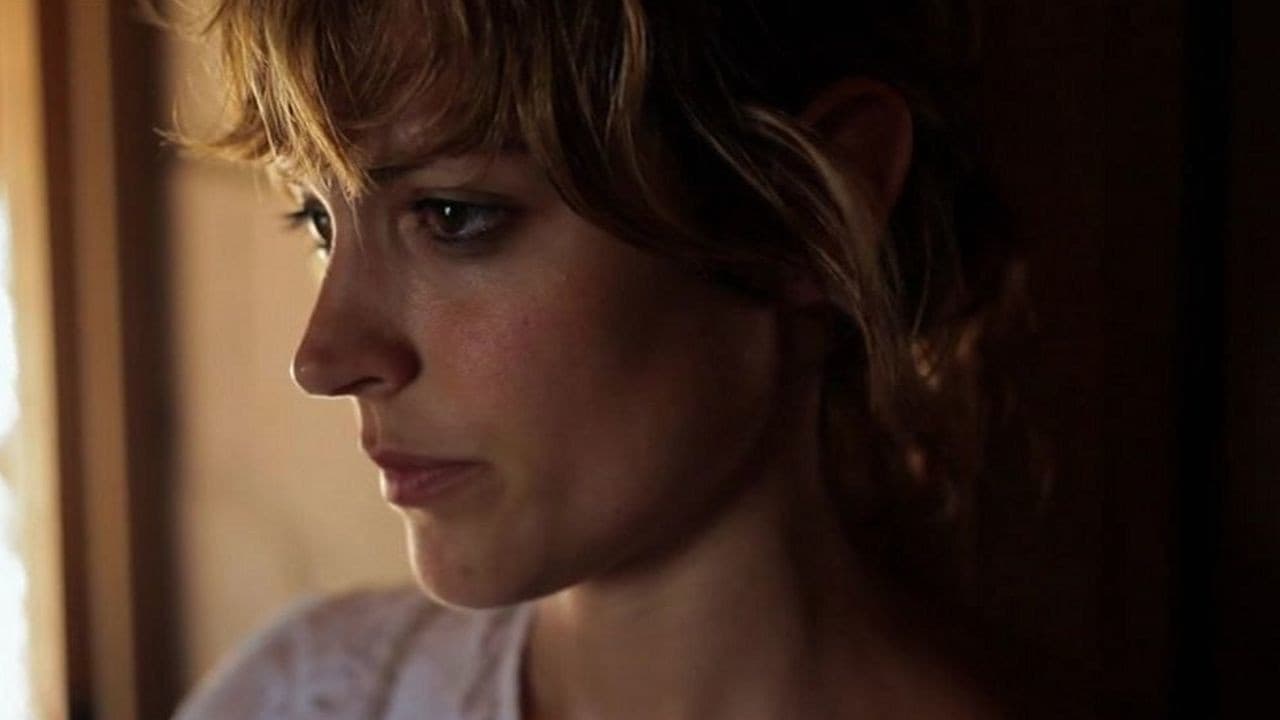
A young woman returns with her son to an isolated beach on the Pacific coast of southern Mexico, drawn back to a place she once knew in an attempt to find peace with the ghosts of her past. Across a handful of encounters with a Franco-Mexican man, her father's old friend, and a mysterious woman, the rhythms of the mangrove ecosystem and the tide itself shape her quiet reckoning with memory, grief, and the possibility of beginning again.
What Is the Budget of Mangrove?
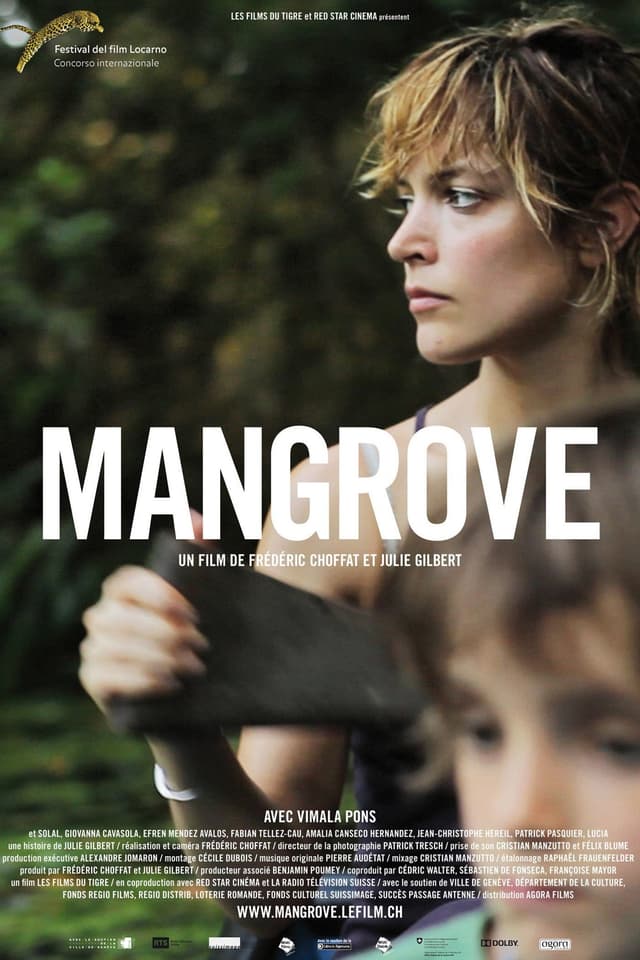
Mangrove (2011), co-directed by Julie Gilbert and Frédéric Choffat, is a 70-minute French-Swiss co-production with no publicly disclosed production budget. The film was produced by Red Star Cinéma in France with Swiss partners Les Films Oeil-Sud and Les Films du Tigre, a co-production structure typical of European arthouse cinema that draws on regional film fund support, broadcaster pre-sales, and post-production tax credits rather than commercial financing.
Based on the production profile, a remote single-location shoot on the Pacific coast of southern Mexico, a compact four-actor cast, a short 70-minute runtime, and the French/Swiss independent financing model, the working budget likely falls in the range of $300,000 to $800,000 typical of European feature-length arthouse debuts and shorts-to-feature hybrid productions of this scale. Funding for projects of this kind is most commonly assembled from the Centre National du Cinéma (CNC) selective aid, Cinéforom (the Romandy regional film fund), Office Fédéral de la Culture (OFC) support in Switzerland, and SRG SSR broadcaster pre-sales, layered with co-producer cash and in-kind contributions.
Key Budget Allocation Categories
While Mangrove's exact financial breakdown has not been released, the production's scale and approach point to a handful of dominant cost lines:
- Above-the-Line Talent: Two co-directors (Julie Gilbert and Frédéric Choffat) and a four-person cast (Lucia in the lead, Patrick Pasquier, Vimala Pons, Fabian Tellez-Cau) kept above-the-line costs minimal. Arthouse productions of this profile typically pay scale rates set by national collective agreements rather than market premiums, with directors often deferring fees in exchange for points or producer credits.
- International Location Shoot in Mexico: Principal photography on the Pacific coast of southern Mexico required moving a small Franco-Swiss crew across the Atlantic, securing local fixers and permits, and absorbing travel, lodging, and per diem for the duration of the shoot. Working in a remote coastal village kept location fees low but added meaningful logistics overhead for any European production, including freight for cameras and sound gear.
- Lean Production Crew: Arthouse productions in this budget band typically run with a crew of 10 to 15 people across camera, sound, art, and production departments, with multiple roles often combined. Below-the-line costs were almost certainly the largest single line item, even as the headcount remained small relative to a conventional feature.
- Camera, Sound, and Equipment: A film of this vintage and scale would have shot on a digital cinema camera with prime lenses rented for the duration of the production. Location sound on a beach environment is notoriously difficult, requiring careful boom work, wind protection, and substantial ADR coverage in post.
- Post-Production and Festival Delivery: Editing, sound design, music, color grading, and the creation of DCP and broadcast masters represented a significant share of the budget. For a French/Swiss co-production, post is often partly funded by regional tax credits and completed in Switzerland to satisfy co-production point-allocation rules.
- Co-Production Administration: Splitting a film across two countries multiplies legal, accounting, and reporting overhead. Producers must satisfy CNC and OFC eligibility, manage cross-border VAT and social charges, and deliver separate financial audits for each territory.
How Does Mangrove's Budget Compare to Similar Films?
Without a confirmed figure, comparisons are anchored to the likely $300,000 to $800,000 working range. Mangrove sits in the same financial tier as other small European arthouse co-productions and intimate first features:
- Tangerine (2015): Budget $100,000 | Worldwide $720,000. Sean Baker's iPhone-shot Los Angeles drama proved how far a few hundred thousand dollars can stretch with a small cast and a single-environment story. Mangrove operates in a comparable budget tier with a similarly intimate scale, though shot conventionally on digital cinema rather than mobile.
- Beasts of the Southern Wild (2012): Budget $1,800,000 | Worldwide $21,400,000. Benh Zeitlin's Louisiana-shot debut shows the upper end of what an immersive, location-driven indie debut can cost, with comparable production demands of a remote natural environment and a small ensemble built around a non-professional lead.
- Wendy and Lucy (2008): Budget $300,000 | Worldwide $1,200,000. Kelly Reichardt's minimalist Oregon-set drama is a direct stylistic and financial peer: small cast, natural light, observational pacing, and a budget assembled from independent grants and private equity rather than studio financing.
- Stranger by the Lake (2013): Budget $1,000,000 | Worldwide $1,600,000. Alain Guiraudie's French lakeside drama is a useful French-language reference for what a single-location arthouse film with a tight cast and natural-setting cinematography costs at a slightly higher tier than Mangrove.
- Lake Tahoe (2008): Budget $500,000 | Worldwide $200,000. Fernando Eimbcke's Mexican co-production with a small cast and a contemplative coastal-town setting offers a regional comparison from the same Latin American production landscape Mangrove engaged with for its location shoot.
Mangrove Box Office Performance
Mangrove premiered at the Locarno Film Festival in Switzerland on August 10, 2011, in the Cineasti del presente competition for emerging directors. The film never received a commercial theatrical release outside the festival circuit, which is typical for French-Swiss arthouse features of this scale and runtime. No box office figures have been publicly reported by Box Office Mojo, The Numbers, or Comscore, and the production's public distribution footprint was limited to festival screenings, broadcaster windows in Switzerland and France, and select cultural-institution exhibitions.
For films of this profile, financial recoupment is engineered through the financing waterfall rather than the box office. Public film funds, broadcaster pre-sales, and minimum guarantees from regional distributors are layered on the front end so that the production is fully covered before a single ticket is sold. The expectation at greenlight is that any box office revenue is incremental rather than essential to the film's economics.
Box Office Breakdown
Mangrove

Without disclosed budget and gross figures, the standard "$X for every $1 invested" calculation cannot be performed. The film's commercial profile is closer to a public-broadcaster commission than a theatrical release, and its return on investment is best understood as a function of festival programming success, broadcaster acquisitions, and the long-tail cultural value of having a debut feature on the directors' filmographies.
Comparable French/Swiss arthouse first features of this vintage typically draw between 1,000 and 8,000 admissions across their entire theatrical and festival lifecycle, with the bulk of audience coming from television broadcasts on Arte, RTS, and SRG SSR rather than cinema attendance. Mangrove's low TMDB vote count (4 ratings) and absence from major box office tracking databases is consistent with this distribution pattern.
Mangrove Production History
Mangrove was conceived as the first joint feature by Julie Gilbert and Frédéric Choffat, two filmmakers active in the Swiss independent scene. Choffat had previously co-directed La Vraie vie est ailleurs (2006), an omnibus feature, and was building a body of work centered on travel, displacement, and the relationship between landscape and interior states. Gilbert, with a background in writing and theater, brought a literary sensibility to the screenplay, which the two developed together as both writers and directors.
The project was developed through the Swiss film fund ecosystem, with backing from Office Fédéral de la Culture (OFC), Cinéforom, and broadcaster RTS, alongside French co-production support routed through Red Star Cinéma. The Swiss-French co-production treaty allowed the production to claim eligibility under both national systems, multiplying the available financing while imposing the usual point-allocation rules on cast, crew, and post-production spend across the two territories.
Principal photography took place on the Pacific coast of southern Mexico in 2010. The directors selected a remote coastal location to give the story's themes of return, memory, and grief a concrete physical setting, with the mangrove ecosystem itself functioning as a recurring visual motif. Shooting on a Mexican beach with a Franco-Swiss crew required substantial pre-production fixing, including local production support, customs clearance for camera and sound packages, and navigating local labor and permit requirements for an extended location shoot.
The film's lead, credited as Lucia, was cast for the central role of a young woman returning with her son to a place from her past. Vimala Pons, who would later become a more prominent name in French independent cinema, plays La Femme. The compact four-actor ensemble allowed the directors to focus on long observational takes and naturalistic performances built around the rhythms of the coastal location rather than conventional dramatic pacing.
Post-production was completed in Switzerland and France in early 2011, with the finished 70-minute cut delivered in time for the August 2011 Locarno Film Festival premiere in the Cineasti del presente competition. The runtime sits at the boundary between feature and long-short, a length that some festivals classify as a feature and others as a mid-length work, which shaped the film's subsequent festival circulation.
Awards and Recognition
Mangrove's most significant industry recognition was its selection for the Cineasti del presente competition at the 2011 Locarno Film Festival, one of Europe's premier showcases for emerging directors. Locarno's emerging-filmmakers competition has launched the careers of directors including Ramon Zürcher, Eduardo Williams, and Wang Bing, and inclusion in the program is a meaningful signal of curatorial confidence in a debut.
The film did not win the Locarno Pardo d'oro for the Cineasti del presente section that year, and it did not subsequently win major awards on the broader European festival circuit. Its recognition is best characterized as program selection rather than competitive prize-winning, which is the typical outcome for the majority of films that enter the Locarno emerging-directors competition. Programmer interest in the film helped Frédéric Choffat continue his directing career in subsequent Swiss productions, and the Locarno credit functioned as a meaningful career-stage marker for both co-directors.
No Academy Award, BAFTA, César, or Swiss Film Award nominations have been recorded for the production. The film does not appear in major awards databases such as IMDb's awards index beyond its Locarno festival participation.
Critical Reception
Mangrove has not been reviewed by Rotten Tomatoes or Metacritic, both of which focus on commercially released English-language titles and do not aggregate coverage for festival-only French-Swiss arthouse features of this scale. CinemaScore likewise does not survey audiences for films that lack a domestic theatrical run, so no audience grade has been recorded. The film carries a 6.2 out of 10 average on TMDB based on 4 user ratings, a sample size too small to draw conclusions from.
Coverage of the film at the time of its Locarno premiere was largely confined to Swiss and French film press, including festival dailies and regional cultural publications. Reviewers responding to the Locarno screening noted the film's deliberate, contemplative pacing and its strong sense of place, treating it as a promising if slight first feature in the contemporary tradition of slow cinema. The 70-minute runtime, single coastal location, and observational style placed it in conversation with the work of Lisandro Alonso, Carlos Reygadas, and the broader contemporary Latin American slow-cinema movement that informed its visual approach.
The absence of broader critical aggregation reflects the film's distribution profile rather than a judgment on its quality. Many festival-only arthouse features of this vintage are seen by under five thousand viewers across their entire lifecycle and never accumulate the dozen-plus reviews required for a Rotten Tomatoes percentage. For audiences seeking the film today, availability is limited to film-festival rewind programs, cinematheque retrospectives, and a small number of European cultural-institution streaming windows.
Frequently Asked Questions
How much did it cost to make Mangrove (2011)?
The production budget for Mangrove has not been publicly disclosed. Based on the film's profile as a French-Swiss arthouse co-production with a four-actor cast, a single coastal location in southern Mexico, and a 70-minute runtime, the budget likely falls in the $300,000 to $800,000 range typical of European arthouse debuts financed through the CNC, Cinéforom, Office Fédéral de la Culture, and broadcaster pre-sales.
How much did Mangrove (2011) earn at the box office?
Mangrove never received a commercial theatrical release outside the festival circuit and has no publicly reported box office figures. The film's distribution was limited to its 2011 Locarno Film Festival premiere, subsequent festival screenings, and broadcaster windows in Switzerland and France. Box Office Mojo, The Numbers, and Comscore do not list a worldwide gross for the title.
Was Mangrove (2011) profitable?
Profitability for arthouse co-productions of this scale is engineered upstream rather than at the box office. Mangrove was financed through public film funds, broadcaster pre-sales, and regional incentives that typically cover the production cost before release, so the title was likely recouped on signature rather than on ticket sales. No public ROI figure exists.
Who directed Mangrove (2011)?
Mangrove was co-directed by Julie Gilbert and Frédéric Choffat. The two filmmakers also co-wrote the screenplay. Choffat had previously co-directed La Vraie vie est ailleurs (2006), and Gilbert came to the project with a background in writing and theater. Mangrove was developed as their first joint feature.
Where was Mangrove (2011) filmed?
Principal photography took place on the Pacific coast of southern Mexico in 2010. The directors selected a remote coastal location for the central themes of return, memory, and grief, with the mangrove ecosystem itself functioning as a recurring visual motif. Pre-production and post were handled across France and Switzerland.
How long is Mangrove (2011)?
Mangrove runs 70 minutes, placing it at the boundary between feature and long-short film. The runtime is consistent with European arthouse first features programmed at festivals such as Locarno, Rotterdam, and Visions du Réel, where mid-length works are commonly slotted alongside conventional features.
Where did Mangrove (2011) premiere?
Mangrove premiered at the Locarno Film Festival in Switzerland on August 10, 2011, in the Cineasti del presente competition for emerging directors. Locarno's emerging-filmmakers section is one of Europe's most respected platforms for first and second features.
Who produced Mangrove (2011)?
Mangrove was produced by Red Star Cinéma in France, with Swiss co-producers Les Films Oeil-Sud and Les Films du Tigre. The film was assembled as a France-Switzerland co-production under the bilateral co-production treaty, drawing financing from both national funding systems.
Who stars in Mangrove (2011)?
The film stars Lucia as the young woman returning to the beach, with Patrick Pasquier as her father's old friend, Vimala Pons as La Femme, and Fabian Tellez-Cau as the Franco-Mexican man. The compact four-actor ensemble is built around naturalistic performances and observational pacing.
Where can you watch Mangrove (2011) today?
Mangrove is not currently available on major streaming services such as Netflix, Amazon Prime Video, or the Criterion Channel. Availability is limited to occasional festival retrospectives, cinematheque programs, and select European cultural-institution streaming windows. Rights inquiries are typically routed through the producing companies Red Star Cinéma, Les Films Oeil-Sud, and Les Films du Tigre.
Filmmakers
Mangrove

Official Trailer
Build budgets like this one in Saturation
Start from an industry-standard feature film template, import the schedule and rates you already have, and let the cost report keep itself current as you spend. Real-time collaboration, no spreadsheets.