Mad Money Budget
 ComedyActionCrime1h 44m
Updated
Synopsis
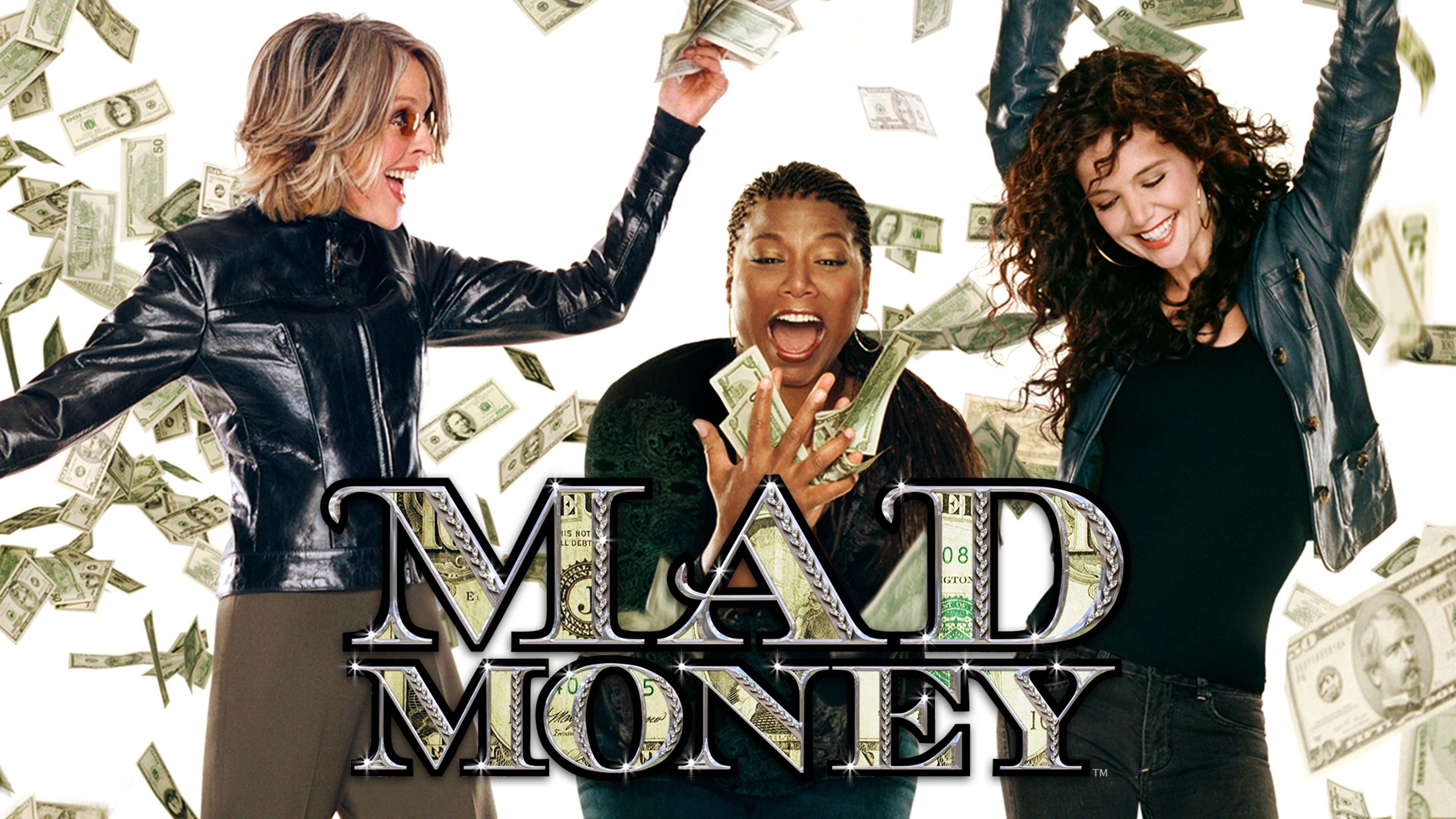
Bridget, an upper-middle-class housewife whose husband has just been laid off, takes a cleaning job at the Kansas City Federal Reserve. There she discovers a fellow single-mother cleaner and a younger security-staff worker, and the three women begin to extract bundles of cash slated for destruction. A heist comedy built around Diane Keaton, Queen Latifah, and Katie Holmes, adapted from the 2001 British television film Hot Money.
What Is the Budget of Mad Money (2008)?
Mad Money (2008), directed by Callie Khouri and distributed by Overture Films, was produced on a reported budget of $22,000,000. The film was financed and produced by Millennium Films (a Nu Image and Avi Lerner outfit) under the title Mad Money in partnership with Liddell Entertainment, with Overture Films handling domestic theatrical distribution as one of the new specialty distributor's 2008 release slate entries. The film was Callie Khouri's second feature as director after Divine Secrets of the Ya-Ya Sisterhood (2002), reuniting her with material in the women-led ensemble comedy register.
The investment reflected the post-Anchor Bay specialty-distributor tier of late-2000s mid-budget studio comedy. Overture Films had launched in 2007 as a Liberty Media-backed specialty distributor; Mad Money was the company's widest 2008 release and a test of the new distributor's wide-release capability. The budget supported a three-actress above-the-line package of Diane Keaton, Queen Latifah, and Katie Holmes, an extensive Federal Reserve-set production design, and a national marketing campaign for the January 18, 2008 wide release.
Key Budget Allocation Categories
Mad Money's reported $22,000,000 budget was distributed across several core production areas:
- Above-the-Line Talent: Diane Keaton, then 62 and an Oscar winner for Annie Hall, commanded the senior compensation tier appropriate to her Academy Award status and her recent late-career comedy work in Something's Gotta Give and The Family Stone. Queen Latifah, a Best Supporting Actress Oscar nominee for Chicago and the established Bringing Down the House lead, was paid at her established post-Chicago A-list tier. Katie Holmes, then 29 and post-Batman Begins but pre-Jack and Jill, took a lower mid-tier rate. Director Callie Khouri received feature-director scale appropriate to her second feature.
- Federal Reserve-Set Production Design: The film's central setting is the Kansas City branch of the Federal Reserve, where the three principals work as cleaning staff and security at the cash-destruction facility. Production designer Lester Cohen and his team built a fictional Federal Reserve facility on stages with detailed dressing for the cash-handling and shredding bays that drive the heist mechanics. Set construction and detailed cash-vault dressing consumed a meaningful slice of the budget.
- Heist Mechanics and Stunts: The film's central heist requires the protagonists to extract bundled Federal Reserve cash slated for destruction. Stunt coordination, props management for cash bundles (with detailed pages explaining the cash-handling and destruction mechanics for audience comprehension), and security-evasion choreography drove a portion of the production budget.
- Louisiana Production Block: Although the film is set in Kansas City, principal photography took place largely in Shreveport, Louisiana, taking advantage of the state's production tax credit. Locations included the Shreveport Convention Center standing in for the Federal Reserve and the broader Caddo Parish area for the residential and commercial exteriors. The Louisiana incentive program's 25% transferable tax credit provided meaningful production savings.
- Cinematography: John Bailey, the veteran cinematographer with credits including Ordinary People, The Big Chill, and Mishima, shot the film on 35mm with a glossy ensemble-comedy aesthetic. Multiple-camera coverage on the three-lead ensemble sequences added consumable and crew costs.
- Score and Music Licensing: Composer James Newton Howard delivered an orchestral score, with the music budget also covering needle drops from late-2000s pop, jazz standards, and the film's signature score-driven heist sequences.
How Does Mad Money's Budget Compare to Similar Films?
At a reported $22,000,000, Mad Money sits in the mid-tier of late-2000s studio comedy production. The comparison set illustrates the budget context:
- The Bank Job (2008): Budget $20,000,000 | Worldwide $64,800,000. Lionsgate's contemporaneous British bank-heist film operates at a similar budget tier and offers the closest direct heist-genre comparison.
- Bringing Down the House (2003): Budget $33,000,000 | Worldwide $164,500,000. Queen Latifah's previous comedy lead operates at the upper end of the comparison set and demonstrates the wide-release theatrical upside that Mad Money failed to replicate.
- Something's Gotta Give (2003): Budget $80,000,000 | Worldwide $266,700,000. Diane Keaton's recent late-career comedy lead operates at roughly four times Mad Money's budget and demonstrates the wide-release Diane Keaton ceiling that Mad Money's smaller release model could not approach.
- First Wives Club (1996): Budget $26,000,000 | Worldwide $181,500,000. The defining women-led ensemble comedy of the late 1990s operates at a comparable budget tier and offers the clearest cinematic forebear for Mad Money's premise.
- Ocean's 11 (2001): Budget $85,000,000 | Worldwide $451,000,000. Steven Soderbergh's wide-release ensemble heist film operates at roughly four times Mad Money's budget and demonstrates the upper end of the heist-comedy theatrical tier.
Mad Money Box Office Performance
Mad Money opened on January 18, 2008 in 2,470 North American theaters, finishing fifth at the domestic box office with $7,716,407 over its opening weekend, behind Cloverfield (debut weekend), 27 Dresses (debut weekend), The Bucket List, and Juno. The opening was significantly below the $15,000,000 to $20,000,000 opening Overture and Millennium had positioned the film toward, with widespread critic notices and weak word of mouth limiting the platform expansion through January and February.
Against a reported production budget of $22,000,000, the film failed to clear profitability theatrically. Here is the financial breakdown:
Box Office Breakdown
Mad Money

Mad Money returned approximately $0.56 to $0.63 in worldwide gross for every $1 invested when measured against total estimated production and marketing spend, placing it among Overture Films' meaningful losses of 2008. The domestic share of the gross was $20,600,000 against an international share of $5,800,000, a 78/22 split that reflected the heavily American-cultural Federal Reserve premise's limited cross-cultural travel.
The disappointing performance was an early signal of the specialty-distributor turbulence that would shape the next several years of the industry. Overture Films, which had been formed in 2007 to compete with the new wave of specialty distributors, would shut down in 2010 after a series of similar wide-release disappointments, with Mad Money among the first of those failures. Diane Keaton continued working in studio comedies but at smaller scale, with Queen Latifah pivoting more decisively to television production in subsequent years.
Mad Money Production History
Mad Money is a Hollywood adaptation of the 2001 British television film Hot Money, which had starred Caroline Quentin, Lorraine Stanley, and Lou Gish as three British Bank of England cleaning staff who steal currency slated for destruction. Glenn Gers wrote the American adaptation, which transposed the premise from the Bank of England to the Federal Reserve and built the ensemble around three American principals across class and generational lines.
Callie Khouri, the Oscar-winning Thelma & Louise screenwriter who had made her directing debut with the 2002 Sandra Bullock and Ashley Judd vehicle Divine Secrets of the Ya-Ya Sisterhood, was attached to direct in 2006. Millennium Films and Liddell Entertainment co-financed the production, with Diane Keaton, Queen Latifah, and Katie Holmes signing on across late 2006 and early 2007 to anchor the three-lead ensemble. Supporting cast included Adam Rothenberg, Stephen Root, and Roger R. Cross.
Principal photography ran from spring through summer 2007 in Louisiana, utilizing the state's 25% transferable production tax credit. Locations included the Shreveport Convention Center standing in for the Federal Reserve facility and the broader Caddo Parish area for residential and commercial exteriors. Production designer Lester Cohen built the detailed cash-handling and shredding bay sets that drive the heist mechanics.
Post-production proceeded through fall 2007 with editor Andrew Marcus, with score by James Newton Howard added in late 2007. Overture Films acquired the film for North American distribution and set a January 18, 2008 wide release date, positioning the film against the contemporaneous January 2008 wide-release competition that included Cloverfield, 27 Dresses, and the holdover plays of The Bucket List and Juno.
Awards and Recognition
Mad Money received no significant awards recognition. The film was not nominated at the Academy Awards, the Golden Globes, the Screen Actors Guild Awards, the BAFTAs, or any other major industry ceremony. It also avoided Razzie nominations despite its commercial failure, likely because the same January 2008 release window produced more publicly maligned titles.
Within the trade-press year-end conversation, Mad Money was occasionally cited as part of a broader 2008 discussion of women-led wide-release commercial underperformance that also included the contemporaneous Sex and the City (which would prove the counter-example by opening to $57,000,000) and the broader question of whether women-led ensembles could anchor wide-release studio comedy. The film's legacy in this conversation has been minor compared with the much-discussed Sex and the City performance.
Critical Reception
Mad Money received mixed-to-negative reviews. The film holds a 22% approval rating on Rotten Tomatoes based on 121 critic reviews with an average score of 4.5 out of 10, with the critical consensus calling it "a flimsy heist comedy that wastes its A-list cast." On Metacritic, the film scored 42 out of 100, indicating mixed or average reviews. Audiences surveyed by CinemaScore gave the film a B, indicating less negative audience response than the critic aggregate.
Critics broadly praised the chemistry between Diane Keaton, Queen Latifah, and Katie Holmes while raising consistent objections about the screenplay's structural problems and the perceived condescension of the working-class characterizations. The New York Times's Stephen Holden wrote that "the leads work hard to make the heist material crackle, but the script keeps undermining them with cheap gags." Roger Ebert gave the film 2 out of 4 stars and noted that "Khouri's ensemble instincts are good, but the screenplay doesn't earn the comedy of escalation that the heist genre requires." Variety's Joe Leydon called the film "watchable but underwhelming."
A minority of critics offered more positive notices, with Entertainment Weekly's Owen Gleiberman calling the three-lead chemistry "the saving grace of an otherwise mechanical heist comedy" and The Hollywood Reporter writing that Diane Keaton "brings genuine charm to a role beneath her station." These positive notices did not significantly affect the broader critical reception, which positioned Mad Money as a forgotten footnote in late-2000s women-led ensemble cinema.
Frequently Asked Questions
How much did it cost to make Mad Money (2008)?
The reported production budget was $22,000,000. Millennium Films and Liddell Entertainment co-financed the production, with Overture Films acquiring domestic theatrical distribution as part of the new specialty distributor's 2008 release slate.
How much did Mad Money earn at the box office?
The film grossed $20,617,734 domestically and $5,768,000 internationally, for a worldwide total of $26,385,734. It opened to $7,716,407 in the United States, finishing fifth on its January 18, 2008 opening weekend behind Cloverfield, 27 Dresses, The Bucket List, and Juno.
Was Mad Money a box office bomb?
Yes. Against a $22,000,000 production budget and roughly $20,000,000 to $25,000,000 in marketing, the film returned approximately $0.56 to $0.63 in worldwide gross for every $1 invested. It was among Overture Films' meaningful losses of 2008 and contributed to the specialty distributor's broader struggles that led to its 2010 shutdown.
Who directed Mad Money?
Callie Khouri directed the film, her second feature after Divine Secrets of the Ya-Ya Sisterhood (2002). Khouri is the Oscar-winning Thelma & Louise (1991) screenwriter who transitioned from screenwriter to director in the early 2000s. She subsequently moved primarily to television, creating ABC's Nashville (2012-2018).
Where was Mad Money filmed?
Although the film is set in Kansas City, principal photography ran from spring through summer 2007 largely in Shreveport, Louisiana, utilizing the state's 25% transferable production tax credit. Locations included the Shreveport Convention Center standing in for the Federal Reserve facility and the broader Caddo Parish area for residential and commercial exteriors.
Who stars in Mad Money?
Diane Keaton stars as Bridget Cardigan, with Queen Latifah as Nina Brewster and Katie Holmes as Jackie Truman. Ted Danson plays Bridget's husband Don, with supporting performances from Adam Rothenberg, Stephen Root, Christopher McDonald, and Roger R. Cross. The three-lead ensemble was built around the principals' established Hollywood comedy and drama profiles of the mid-2000s.
Is Mad Money based on a true story?
No, but it is an American adaptation of the 2001 British television film Hot Money, which had starred Caroline Quentin, Lorraine Stanley, and Lou Gish as three British Bank of England cleaning staff who steal currency slated for destruction. The American adaptation transposed the premise from the Bank of England to the Federal Reserve in Kansas City.
What did critics think of Mad Money?
The film received mixed-to-negative reviews, with a 22% Rotten Tomatoes approval based on 121 reviews (4.5 average) and a 42 out of 100 score on Metacritic. Audiences gave it a B CinemaScore. Critics praised the chemistry between Diane Keaton, Queen Latifah, and Katie Holmes while raising consistent objections about screenplay problems and the perceived condescension of working-class characterizations.
What happened to Overture Films after Mad Money?
Overture Films had been formed in 2007 by Liberty Media as a specialty distributor competing with the new wave of late-2000s indie acquisition labels. Mad Money was the company's widest 2008 release and a test of its wide-release capability. After a series of similar disappointments including Mad Money, Overture Films shut down in 2010.
Did Mad Money win any awards?
No. Mad Money received no significant awards recognition. The film was not nominated at the Academy Awards, the Golden Globes, the Screen Actors Guild Awards, the BAFTAs, or any other major industry ceremony. It also avoided Razzie nominations despite its commercial failure.
Filmmakers
Mad Money

Official Trailer
Build budgets like this one in Saturation
Start from an industry-standard feature film template, import the schedule and rates you already have, and let the cost report keep itself current as you spend. Real-time collaboration, no spreadsheets.