Life, and Nothing More… Budget
Updated
Synopsis
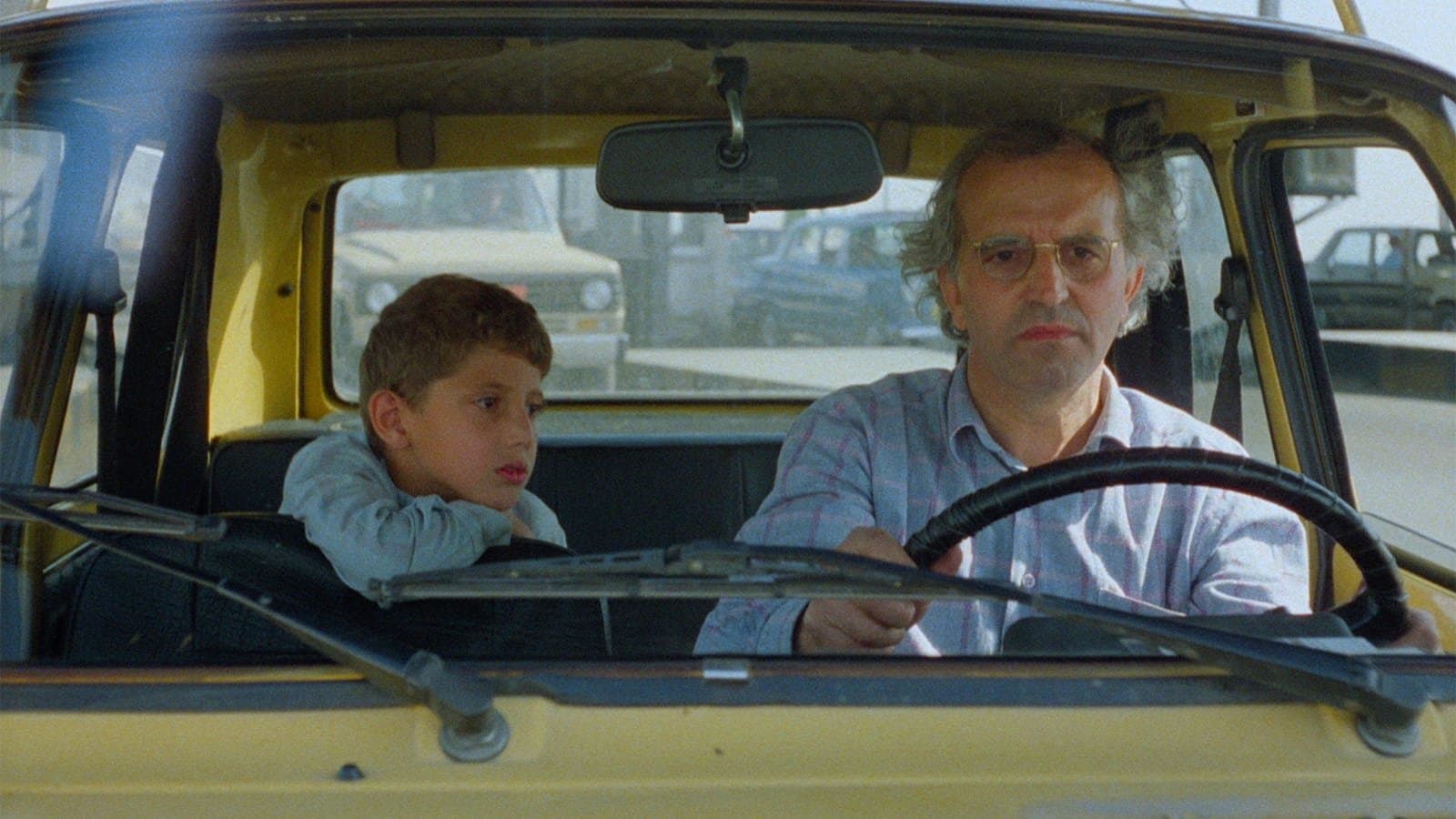
A film director and his young son drive into the earthquake-devastated Koker region of northern Iran, searching for the child actors from the director's previous film and discovering the resilience of survivors among the ruins. Abbas Kiarostami's metafictional second entry in the Koker trilogy blurs documentary and narrative.
What Is the Budget of Life, and Nothing More... (1992)?
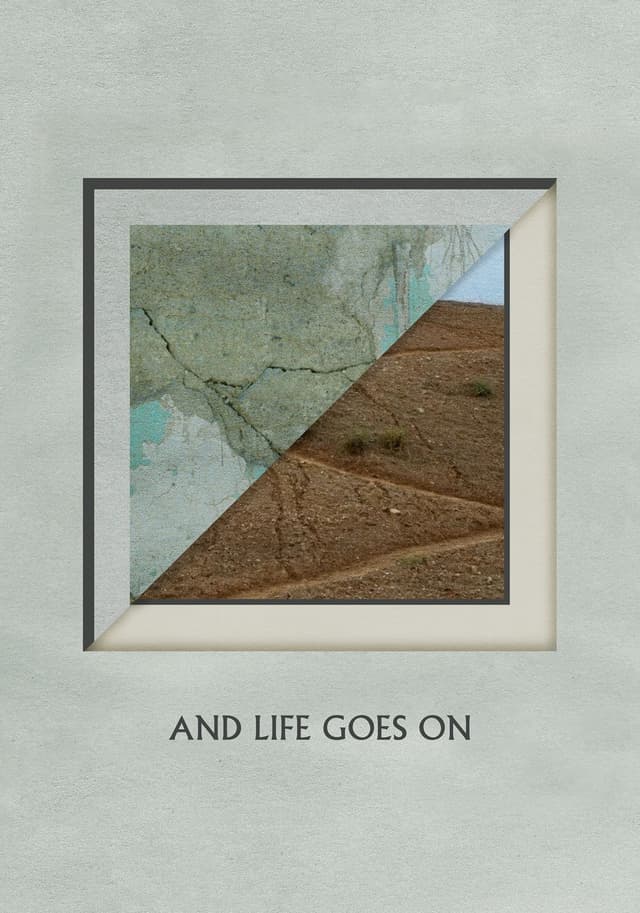
Life, and Nothing More... (also released as And Life Goes On, 1992), written and directed by Abbas Kiarostami, was produced on an undisclosed but exceptionally modest budget that scholarly sources have placed in the range of approximately $300,000 to $500,000 U.S. dollars, in 1992 figures, reflective of the Iranian art-cinema production economy and the deliberately stripped-down documentary-narrative hybrid approach the film employs. The production was financed by the Institute for the Intellectual Development of Children and Young Adults (Kanoon), the Iranian government-affiliated arts institution that had also financed Kiarostami's 1987 Where Is the Friend's House? and his subsequent Iranian works.
The film was shot in the immediate aftermath of the June 21, 1990 Manjil-Rudbar earthquake, which killed approximately 40,000 to 50,000 people in northern Iran, including extensive damage to the Koker village and surrounding region that had been the setting for Kiarostami's 1987 Where Is the Friend's House?. Kiarostami traveled to Koker shortly after the disaster to locate the two boys (Babek Ahmed Poor and Ahmed Ahmed Poor) who had starred in his earlier film and to document the survivor experience, ultimately producing a metafictional narrative feature about a fictional director's same search.
Key Budget Allocation Categories
The micro-budget production was distributed across these focused areas:
- Location Production in Earthquake Zone: Principal photography ran in the Manjil-Rudbar-Koker region in 1991 and 1992, with the production navigating ongoing post-earthquake humanitarian logistics, damaged road infrastructure, and tent-city refugee settlements. The local nonprofessional cast was drawn entirely from earthquake survivors in the region, with Farhad Kheradmand playing the fictional director protagonist alongside Buba Bayour as the boy son.
- Nonprofessional Cast: Kiarostami's established practice of casting nonprofessionals from the actual community kept casting costs minimal while preserving documentary authenticity. The cast members played versions of themselves or community archetypes, with the production paying community-appropriate per-diem compensation rather than professional acting rates.
- Minimal Crew: Cinematographer Homayoun Payvar operated a small crew with portable equipment suited to the rural and post-disaster terrain. The film's naturalistic style, including long takes from inside the protagonist's moving car and observational documentation of survivor encounters, required relatively limited technical infrastructure.
- Sound Design: The film was shot largely with location sound, with post-production dialogue replacement and sound design handled by Iranian post houses. The sparse music cues drew on existing recorded material rather than commissioned scoring.
- Kanoon Institutional Support: The Institute for the Intellectual Development of Children and Young Adults provided not just direct financing but also institutional infrastructure including equipment, post-production facilities, and the protected status that allowed Kiarostami to film freely in the earthquake region under Iranian government oversight.
- Festival Strategy: Cannes Film Festival selection (Un Certain Regard) provided the primary international launching platform, with international art-house distribution rights subsequently sold across European and North American markets at a scale that recouped production costs many times over.
How Does Life, and Nothing More...'s Budget Compare to Similar Films?
The film operates at the lowest end of the international art-house budget spectrum, comparable to other Iranian and international micro-budget works:
- Where Is the Friend's House? (1987): Budget approximately $200,000 (estimated, 1987 dollars) | Limited theatrical / international art-house. Kiarostami's 1987 Koker trilogy opener offers the closest direct comparison.
- Through the Olive Trees (1994): Budget approximately $400,000 (estimated, 1994 dollars) | Limited theatrical / international art-house. The third Koker trilogy entry illustrates the consistent Kanoon-financed budget tier across Kiarostami's 1980s-1990s work.
- Close-Up (1990): Budget approximately $250,000 (estimated, 1990 dollars) | Limited theatrical / international art-house. Kiarostami's metafictional masterpiece operates at the same Iranian art-cinema production scale.
- Bicycle Thieves (1948): Budget approximately $130,000 (1948 dollars, roughly $1,700,000 in 1992 inflation-adjusted) | Worldwide approximately $7,000,000 (1948-1949). Vittorio De Sica's Italian neorealist masterpiece offers the post-war neorealism comparison Kiarostami himself cited as inspiration.
- Reservoir Dogs (1992): Budget approximately $1,200,000 | Worldwide $2,832,029. Quentin Tarantino's contemporaneous American indie illustrates the same-year Western indie-cinema scale comparison, at roughly 3 to 4 times Kiarostami's budget.
Life, and Nothing More... Box Office Performance
Life, and Nothing More... premiered in the Un Certain Regard sidebar at the 1992 Cannes Film Festival, where it won the Roberto Rossellini Prize. The film received limited art-house theatrical distribution across Europe and North America in 1992-1993, with screenings at major festivals including Toronto International Film Festival and New York Film Festival driving subsequent theatrical bookings.
Box office records for early-1990s Iranian art-house releases are incomplete, but the film's U.S. theatrical gross has been documented at approximately $39,000 from a deliberately limited art-house run, with international totals (primarily France, Italy, and West Germany) estimated at approximately $200,000 to $400,000. The financial breakdown:
Box Office Breakdown
Life, and Nothing More…

The film's commercial significance lies less in initial theatrical revenue than in its sustained cultural prestige and its critical canonization as a major work of world cinema. The Koker trilogy as a whole has remained continuously available on home video and streaming through Criterion, MK2, and the Iranian Kanoon institution, with the films routinely programmed in international cinema retrospectives.
Life, and Nothing More... Production History
The film was conceived in the immediate aftermath of the June 21, 1990 Manjil-Rudbar earthquake (also known as the Gilan earthquake), which struck northern Iran with a moment magnitude of 7.4 and killed approximately 40,000 to 50,000 people. The earthquake devastated the Koker village and surrounding rural area, the location of Kiarostami's 1987 Where Is the Friend's House?
Kiarostami traveled to Koker shortly after the disaster, primarily to locate the two child actors who had starred in his earlier film (Babek and Ahmed Ahmed Poor) and to determine whether they had survived. Once on site, he conceived the project as a metafictional narrative about a film director and his son driving into the earthquake zone in search of the same children, blurring the line between Kiarostami's own search and the protagonist's fictional one. The director protagonist is played by Farhad Kheradmand, not Kiarostami himself.
Principal photography ran in 1991 and 1992 across the Manjil-Rudbar region and the Koker village, using local nonprofessional cast members who were either earthquake survivors playing versions of themselves or community archetypes representing the post-disaster experience. The production navigated ongoing humanitarian logistics, damaged road infrastructure, and tent-city refugee settlements. Some interactions in the film are with real survivors documenting their own post-earthquake circumstances; other sequences are scripted but use the actual physical locations and community members.
The film was completed in time for the 1992 Cannes Film Festival, where it premiered in Un Certain Regard and won the Roberto Rossellini Prize. Kiarostami subsequently completed the Koker trilogy with Through the Olive Trees (1994), which retroactively reframes both prior films through a third metafictional layer about the making of Life, and Nothing More.
Awards and Recognition
Life, and Nothing More... won the Roberto Rossellini Prize at the 1992 Cannes Film Festival, where it premiered in the Un Certain Regard sidebar. The film also won the Bronze Leopard at the 1992 Locarno International Film Festival, the FIPRESCI Prize from the international critics' federation, and recognition at the Fajr International Film Festival in Iran.
The film and the broader Koker trilogy have been continuously canonized in international cinema circles. The Sight & Sound polls have repeatedly recognized Kiarostami as one of the most significant filmmakers in world cinema, with the 2022 Sight & Sound Greatest Films of All Time poll naming Close-Up (1990) among the top 50 films ever made. The Koker trilogy is recognized by the BFI, Cahiers du Cinéma, and the New York Film Festival among others as one of the defining bodies of work in 1980s-1990s world cinema.
Critical Reception
Life, and Nothing More... received exceptional critical acclaim upon its 1992 release and has retained its critical stature in the decades since. The film holds a 91% approval rating on Rotten Tomatoes and is included in Sight & Sound's 2012 Greatest Films of All Time poll. Critics have consistently identified the film as one of the defining works of the Iranian New Wave and a foundational text in the international understanding of metafictional documentary-narrative hybrid filmmaking.
At the time of release, Variety praised the film as "a masterpiece of humanist cinema that finds quiet grace in the rubble of disaster," and Cahiers du Cinéma in France ranked it among the year's major releases. The New York Times's Janet Maslin wrote that Kiarostami "transforms the documentation of human resilience into a transcendent narrative experience," while Sight & Sound critic Geoff Andrew called the film "an essential work of post-war world cinema."
The film's critical reputation has only grown over time. Roger Ebert wrote in his 2000 reassessment that the film "demonstrates with absolute clarity that the cinema of small gestures can produce the largest emotional rewards," and Jonathan Rosenbaum named the Koker trilogy among the top film works of the 1990s. The film's influence on subsequent filmmakers, including Jafar Panahi, Hirokazu Kore-eda, and Charles Burnett, has been documented in scholarly literature, with Kiarostami's formal innovations (the recurring car-as-cinematic-frame, the use of nonprofessional community actors, the metafictional reframing) shaping subsequent decades of world cinema.
Frequently Asked Questions
How much did Life, and Nothing More... (1992) cost to make?
The exact budget was never publicly disclosed by Iranian state-affiliated producers Kanoon, but scholarly sources place the figure in the range of approximately $300,000 to $500,000 in 1992 dollars, in line with Kiarostami's other Iranian productions of the period. The film was financed by the Institute for the Intellectual Development of Children and Young Adults (Kanoon).
Is Life, and Nothing More... part of the Koker trilogy?
Yes. The film is the second entry in Abbas Kiarostami's Koker trilogy, following Where Is the Friend's House? (1987) and preceding Through the Olive Trees (1994). All three films are set in or refer to the rural Koker village in northern Iran. The trilogy structure was identified retrospectively by critics rather than planned as a sequence from the outset.
Is Life, and Nothing More... based on the real Iran earthquake?
Yes. The film is set in the immediate aftermath of the June 21, 1990 Manjil-Rudbar earthquake (also known as the Gilan earthquake), which struck northern Iran with a moment magnitude of 7.4 and killed approximately 40,000 to 50,000 people. Kiarostami traveled to Koker shortly after the disaster to film among the survivors.
Who directed Life, and Nothing More...?
Abbas Kiarostami (1940-2016) wrote, directed, and co-edited the film. Kiarostami is widely considered one of the most significant filmmakers of the late 20th and early 21st centuries, with Sight & Sound consistently ranking his Close-Up (1990) among the greatest films ever made.
Did Life, and Nothing More... use real earthquake survivors?
Yes. The film's local nonprofessional cast was drawn entirely from earthquake survivors in the Manjil-Rudbar-Koker region. Some interactions in the film are with real survivors documenting their own post-earthquake circumstances; other sequences are scripted but use the actual physical locations and community members.
What awards did Life, and Nothing More... win?
The film won the Roberto Rossellini Prize at the 1992 Cannes Film Festival, the Bronze Leopard at the 1992 Locarno International Film Festival, the FIPRESCI Prize from the international critics' federation, and recognition at the Fajr International Film Festival in Iran.
Where can I watch Life, and Nothing More...?
The film has been released on home video through Criterion Collection (as part of the Koker trilogy box set), MK2 Editions in France, and other international art-house distributors. It is also continuously available through repertory cinema programming and academic streaming platforms.
How does Life, and Nothing More... compare to Where Is the Friend's House?
The 1987 first Koker film is a children's film about an 8-year-old's search for his classmate's house, while the 1992 second film is a metafictional documentary-narrative hybrid about a film director searching for the same boys after the earthquake. Both operate at the same micro-budget Kanoon scale, but the 1992 film is technically and narratively more ambitious, blending fiction and documentation in ways that anticipate Kiarostami's mature 1990s and 2000s work.
What did critics think of Life, and Nothing More...?
The film received exceptional critical acclaim upon its 1992 release and has retained its critical stature in the decades since. Variety praised it as "a masterpiece of humanist cinema," The New York Times's Janet Maslin wrote that Kiarostami "transforms the documentation of human resilience into a transcendent narrative experience," and Roger Ebert called it a defining example of "the cinema of small gestures."
Is Life, and Nothing More... also called And Life Goes On?
Yes. The film is known by both English-language titles: Life, and Nothing More... (the more common Western release title) and And Life Goes On (the more direct translation of the original Persian title Zendegi va digar hich). The original Persian title means "Life and nothing else," a reference to the film's thematic affirmation of survival.
Filmmakers
Life, and Nothing More…

Official Trailer
Build budgets like this one in Saturation
Start from an industry-standard feature film template, import the schedule and rates you already have, and let the cost report keep itself current as you spend. Real-time collaboration, no spreadsheets.