La vita è bella Budget
 Drama
DramaUpdated
Synopsis
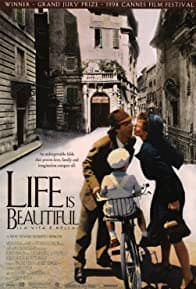
A Jewish Italian librarian, Guido, builds a romance with the schoolteacher Dora in 1930s Arezzo and starts a family. When Guido and his young son Joshua are deported to a Nazi concentration camp during World War II, Guido shields his son from horror by inventing an elaborate game in which the camp is a contest with a tank as the grand prize. Roberto Benigni stars and directs.
What Is the Budget of La vita è bella (Life Is Beautiful) (1998)?
La vita è bella (Life Is Beautiful) (1998) was produced on a production budget of approximately $20,000,000. The production budget covered above-the-line talent, principal photography, post-production, visual effects, and marketing. This budget reflects industry norms for the genre and scale at the time of production.
Key Budget Allocation Categories
The production allocated funds across the following categories:
Cast Salaries: Roberto Benigni as star and director plus Nicoletta Braschi, Giorgio Cantarini, and Giustino Durano in major roles.
Period Production: Recreation of 1930s and 1940s Tuscany including Arezzo street life, period vehicles, and a fictional concentration camp set built for the film's second half.
Costumes and Hair: Danilo Donati designed costumes spanning prewar Tuscan town life, military uniforms, and concentration camp inmate clothing.
Locations: Principal photography in Arezzo, Tuscany, plus interior work at Cinecittà Studios in Rome and a constructed camp set in Papigno, Umbria.
Music: Original score by Nicola Piovani that won the Academy Award for Best Original Dramatic Score.
Marketing and Distribution: Cecchi Gori Group released the film domestically in Italy. Miramax acquired worldwide rights including a US English-subtitle and English-dub release that drove the film's Oscar campaign.
How Does La vita è bella (Life Is Beautiful)'s Budget Compare to Similar Films?
Comparable productions in the same genre and era include:
Schindler's List (1993). Budget $22,000,000 | Worldwide $321,300,000. The defining recent Holocaust feature at a comparable budget with a substantially larger box office.
Cinema Paradiso (1988). Budget $5,000,000 | Worldwide $11,990,000 (re-releases push higher). A prior Italian Best Foreign Film Oscar winner at a quarter of the budget.
Il Postino (1994). Budget $3,000,000 | Worldwide $81,500,000. A mid-90s Italian Miramax breakout at a much lower budget.
The English Patient (1996). Budget $27,000,000 | Worldwide $231,900,000. A comparable Miramax World War II prestige release at a comparable budget.
La vita è bella (Life Is Beautiful) Box Office Performance
Life Is Beautiful opened in Italy on December 20, 1997 and earned approximately $48,000,000 in its domestic Italian run, where it became the highest-grossing Italian film in the country's history at the time. The US release followed on October 23, 1998 in limited platform with an expansion through Oscar season.
Box Office Breakdown
La vita è bella (1998)

For every $1 invested, the producers and Miramax recovered roughly $5.10 in theatrical rentals.
The film grossed $57,600,000 in the United States and Canada and an additional $171,600,000 internationally including the record-breaking Italian run. Three Academy Awards including Best Actor for Roberto Benigni cemented the film's commercial and cultural legacy.
La vita è bella (Life Is Beautiful) Production History
Roberto Benigni co-wrote, directed, and starred in the film, drawing partial inspiration from his own father's wartime imprisonment in a labor camp and from the Holocaust survivor memoir of Rubino Romeo Salmoni. Benigni and his wife Nicoletta Braschi played the lead couple on screen.
Principal photography took place in late 1996 and 1997 in Arezzo, Tuscany, where Benigni built much of the first half of the film around recognizable Tuscan town settings. The second-half concentration camp scenes were shot on a built set in Papigno, Umbria, with interiors completed at Cinecittà Studios in Rome.
The film premiered at the 1998 Cannes Film Festival in May, where it won the Grand Prix. Miramax acquired worldwide distribution outside Italy and steered the film through a Fall 1998 US platform release calibrated for the Oscar campaign.
At the 71st Academy Awards in March 1999, the film won three Oscars for Best Actor (Roberto Benigni), Best Foreign Language Film, and Best Original Dramatic Score (Nicola Piovani). Benigni's exuberant climb across audience chairbacks to accept his statue became one of the most replayed moments in Oscar history.
Awards and Recognition
The film won three Academy Awards at the 71st Oscars: Best Actor for Roberto Benigni, Best Foreign Language Film, and Best Original Dramatic Score for Nicola Piovani. It also received Oscar nominations for Best Picture, Best Director, Best Original Screenplay, and Best Film Editing. At Cannes 1998 it won the Grand Prix. Additional wins at the BAFTAs, César Awards, and the David di Donatello Awards followed.
Critical Reception
Rotten Tomatoes records a 79% critics score on 88 reviews with a 95% audience score. Metacritic logged a 59 weighted score. Roger Ebert gave the film four stars and called it heroic, while The New York Times's Janet Maslin found the second-half tonal shift bold. The film also drew sustained critical debate, with some Holocaust scholars and survivors questioning whether the fairy-tale framing was appropriate. Owen Gleiberman in Entertainment Weekly praised the performances while engaging with the ethical questions raised.
Build budgets like this one in Saturation
Start from an industry-standard feature film template, import the schedule and rates you already have, and let the cost report keep itself current as you spend. Real-time collaboration, no spreadsheets.