Klaus Budget
 AnimationFamilyComedy1h 37m
Updated
Synopsis
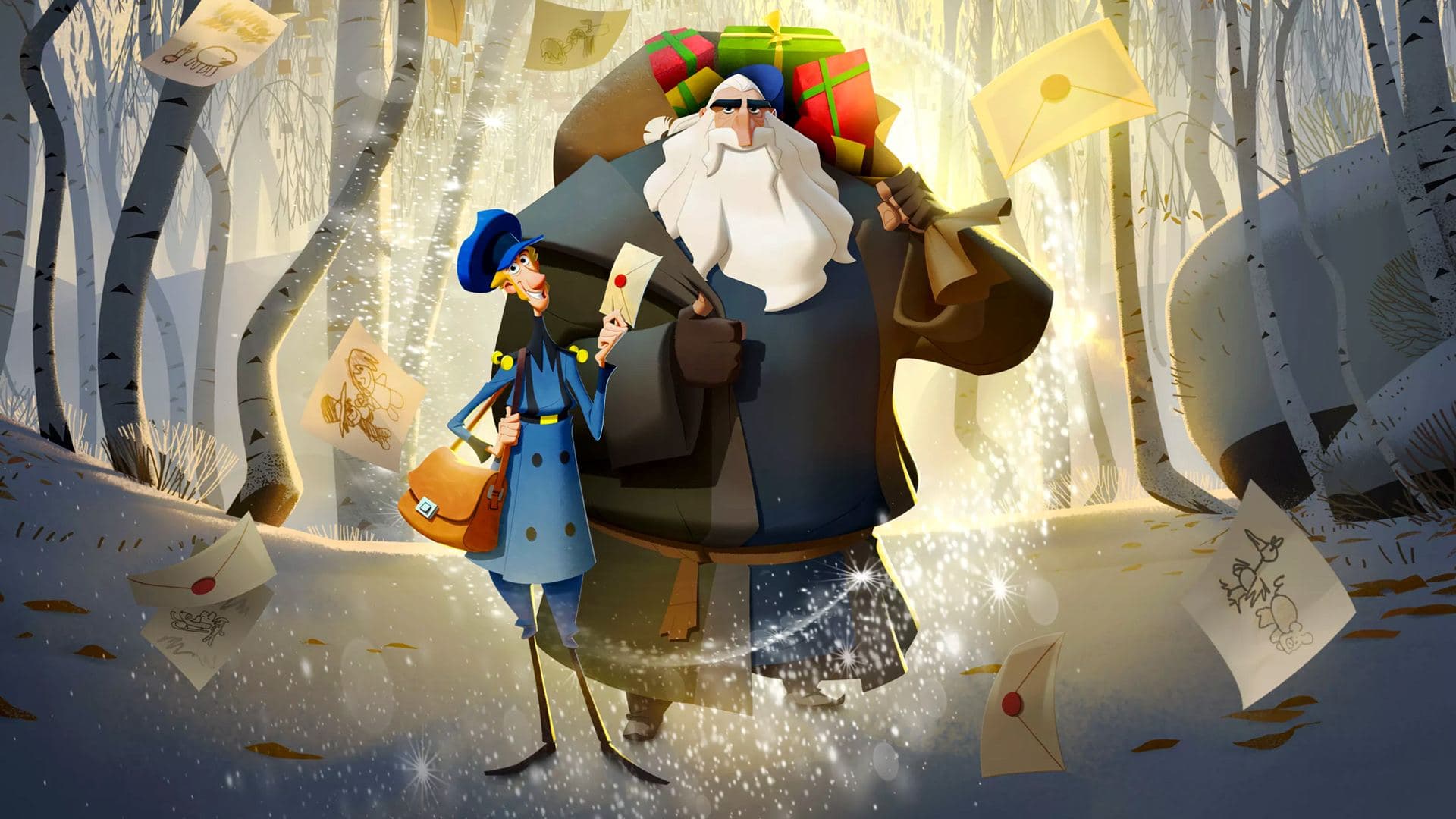
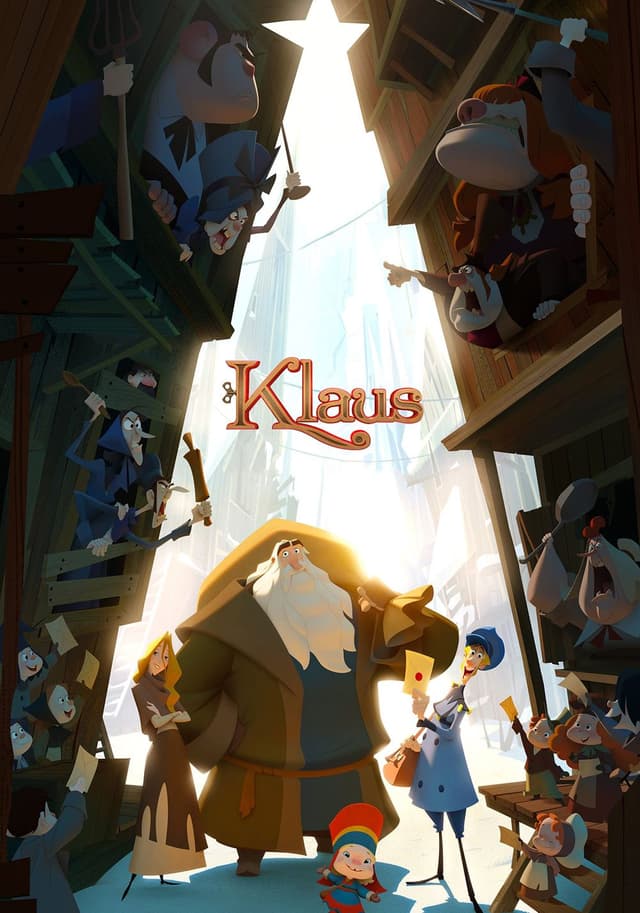
Jesper Johansson, the spoiled son of the Royal Postmaster General, is exiled to the bleak Arctic town of Smeerensburg with a quota of 6,000 letters to deliver in one year or be cut off from his family fortune. When he stumbles upon a reclusive woodworker named Klaus living deep in the forest, an unlikely friendship sparks a series of acts of kindness, hand-delivered toys, and warm letters that begin to thaw the town's centuries-old blood feud. Sergio Pablos's hand-drawn animated feature debuted on Netflix in November 2019.
What Is the Budget of Klaus (2019)?
Klaus (2019), directed by Sergio Pablos and released by Netflix, was produced on a reported budget of approximately $40,000,000 by Madrid-based SPA Studios in association with Atresmedia Cine. The picture was developed and produced over approximately six years at SPA Studios, with Netflix coming on as worldwide distributor after the production was substantially advanced. The picture was Sergio Pablos's directorial debut after a career as an animator and character designer on Disney features (The Hunchback of Notre Dame, Hercules, Treasure Planet, Treasure Planet) and as the creator of the Despicable Me franchise concept.
The investment reflected the substantial production cost of hand-drawn 2D feature animation in the late 2010s, a category that had been largely abandoned by major American animation studios in favor of CG animation. SPA Studios developed proprietary in-house animation tools, including a custom lighting pipeline that allowed 2D-drawn characters to receive computer-generated lighting effects (the picture's signature visual element), with the technical innovation supporting the picture's distinctive painterly aesthetic at a contained production cost relative to comparable CG features.
Key Budget Allocation Categories
Klaus's $40,000,000 budget was distributed across several major production areas:
- Above-the-Line Talent Voice cast led by Jason Schwartzman as Jesper, J.K. Simmons as Klaus, Rashida Jones as Alva, Norm Macdonald as Mogens, Joan Cusack as Mrs. Krum, and Will Sasso as Mr. Ellingboe. Sergio Pablos directed at a substantial first-time-director rate following his long animation career and his Despicable Me franchise-creator role. The picture's animation talent was its principal above-the-line investment category.
- Madrid Animation Studio Production Principal animation production took place at SPA Studios in Madrid over approximately five years, with the studio's full staff dedicated to the picture. The Spanish production base provided substantial advantages including the Spanish state animation tax credit (25% rebate on qualifying spend), and access to a deep Spanish 2D animation talent pool that materially contained production cost relative to comparable American studio production.
- Hand-Drawn 2D Animation The picture's hand-drawn 2D character animation, supervised by Spanish and international animation talent, was the production's principal cost driver. Lead animators included veterans from European 2D animation studios including Cartoon Saloon, Studio Ghibli alumni, and former Disney 2D animators. The hand-drawn approach was the picture's central artistic statement, deliberately rejecting the CG-animation default of contemporary Hollywood.
- Proprietary Lighting Pipeline (Klaus Effect) SPA Studios developed a proprietary lighting pipeline, internally referred to as the Klaus Effect, that allowed hand-drawn 2D characters to receive computer-generated lighting and volumetric atmospheric effects across each frame. The proprietary tool development was a substantial early-production cost investment that paid off across the picture's full visual identity.
- Production Design and Background Art Production designer Szymon Biernacki and background art department rendered the bleak Arctic town of Smeerensburg with detailed painterly specificity. The picture's wintry color palette, deliberate frame composition, and integrated character-and-background lighting were the principal visual-design investments.
- Score and Music Composer Alfonso G. Aguilar delivered an orchestral score with prominent Norse-folk-music elements that supported the picture's Arctic setting. Additional songs by Zara Larsson (the closing-credits track Invisible) and Sia (Christmas-themed music for the closing celebration) anchored the picture's mainstream-pop crossover music elements.
- Post-Production and Sound Mix Sound design supervisor and Dolby Atmos mixing prepared the picture for its Netflix streaming release and limited theatrical premiere. The picture's elaborate sound design supported the deliberately quiet moments of character connection that anchored the dramatic structure.
How Does Klaus's Budget Compare to Similar Films?
At $40,000,000, Klaus sits in the lower-tier range for major-studio animated features and substantially below the typical Pixar or DreamWorks Animation budget. The comparison set illustrates how its scale tracked against peer productions:
- The Breadwinner (2017): Budget approximately $11,000,000 | limited theatrical and streaming. Cartoon Saloon's Academy Award-nominated 2D Irish-Canadian animated picture cost roughly a quarter of Klaus and demonstrated the contained-budget European 2D animation template Klaus operated within at larger scale.
- Wolfwalkers (2020): Budget approximately $10,000,000 | Apple TV+ streaming exclusive. Cartoon Saloon's Academy Award-nominated 2D Irish animated feature cost a quarter of Klaus and earned strong critical reception, providing the contemporaneous prestige-European-2D-animation template.
- The Secret Life of Pets (2016): Budget $75,000,000 | Worldwide $894,901,775. Illumination Entertainment's CG animated picture (from Sergio Pablos's longtime collaborator Chris Meledandri) cost nearly twice Klaus and earned over twenty times the worldwide commercial scale, illustrating the dramatic budget and commercial gap between the contained-2D European model and the major-CG American model.
- Spider-Man: Into the Spider-Verse (2018): Budget $90,000,000 | Worldwide $384,283,777. Sony Pictures Animation's CG-and-traditional-hybrid picture cost more than twice Klaus and earned a substantial worldwide theatrical gross, providing the high-end contemporary animation-production template.
- The Little Prince (2015): Budget approximately $80,000,000 | limited theatrical and Netflix streaming. Mark Osborne's French-American animated picture cost twice Klaus and was eventually distributed by Netflix after Paramount dropped its U.S. theatrical release, providing the direct precedent for Netflix's prestige-animation streaming-exclusive distribution model.
Klaus Box Office Performance
Klaus received a deliberately limited theatrical release in select international markets ahead of its global Netflix streaming launch on November 15, 2019. The limited theatrical run reported approximately $4,800,000 in international theatrical gross, primarily from European markets where the picture received expanded theatrical distribution. The picture's commercial proposition resided entirely in Netflix streaming engagement, with the platform's global launch establishing the picture as one of Netflix's most-watched holiday-season releases of the 2019 corridor.
Against a $40,000,000 production budget, the financial breakdown reflects the Netflix streaming-exclusive commercial model:
Box Office Breakdown
Klaus

Klaus's commercial performance is opaque by design as a Netflix streaming exclusive. Industry reporting subsequent to the November 15, 2019 streaming launch indicated that the picture was one of Netflix's most-watched releases of the late-2019 holiday corridor, with the family-audience engagement substantially supporting the platform's broader holiday-season content strategy.
The picture's Academy Award nomination for Best Animated Feature and its BAFTA win for Best Animated Film at the 73rd British Academy Film Awards substantially extended the picture's commercial life through continued streaming engagement across the 2020 and subsequent holiday corridors. Netflix has continued to feature Klaus as a holiday-season catalog asset across each subsequent November and December, with sustained family-audience engagement supporting the picture's long-term streaming value.
Klaus Production History
Sergio Pablos founded SPA Studios in Madrid in 2008 with the explicit ambition of producing a hand-drawn 2D animated feature that could compete commercially with American CG animation. Pablos developed Klaus across approximately a decade as the studio's flagship production, with the project shopped to multiple American distributors before Netflix attached as worldwide distributor in 2017. The Netflix involvement provided the financing structure that allowed SPA Studios to complete the picture's elaborate animation production.
Pre-production and animation development began at SPA Studios in 2014, with the studio developing its proprietary Klaus Effect lighting pipeline that allowed hand-drawn 2D characters to receive computer-generated lighting and volumetric atmospheric effects across each frame. The proprietary tool development was a substantial early-production cost investment that paid off across the picture's full visual identity. Voice casting brought Jason Schwartzman, J.K. Simmons, Rashida Jones, Norm Macdonald, Joan Cusack, and Will Sasso to the picture across 2018.
Principal animation production took place at SPA Studios in Madrid over approximately five years, with the studio's full staff dedicated to the picture. The Spanish production base provided substantial advantages including the Spanish state animation tax credit (25% rebate on qualifying spend), and access to a deep Spanish 2D animation talent pool that materially contained production cost relative to comparable American studio production. Lead animators included veterans from European 2D animation studios including Cartoon Saloon, Studio Ghibli alumni, and former Disney 2D animators.
Composer Alfonso G. Aguilar delivered the orchestral score with prominent Norse-folk-music elements that supported the picture's Arctic setting in 2018 and 2019, with additional songs by Zara Larsson (Invisible) and Sia (Christmas-themed music) anchoring the picture's mainstream-pop crossover music elements. The picture's premiere at the Animation Is Film festival in Los Angeles in October 2019 preceded the November 15, 2019 Netflix streaming launch.
Awards and Recognition
Klaus received substantial industry awards recognition. At the 92nd Academy Awards (2020), the picture received a nomination for Best Animated Feature, with Toy Story 4 ultimately winning the category. At the 73rd British Academy Film Awards (2020), the picture won Best Animated Film, defeating Toy Story 4, Frozen II, A Shaun the Sheep Movie: Farmageddon, and Missing Link. The BAFTA win was the picture's most prominent awards achievement and substantially elevated its industry profile.
At the 47th Annie Awards (2020), Klaus won seven awards including Best Animated Feature Independent, Best Direction in a Feature Production (Sergio Pablos), Best Character Animation, Best Character Design, Best Production Design, Best Storyboarding, and Best Editorial. The Annie Awards sweep was the most substantial industry recognition for the picture across its full production-design and animation-craftsmanship achievement.
Additional recognition included nominations and wins at the European Film Awards, the Goya Awards (Spanish national film awards, where the picture won multiple categories), the Critics' Choice Awards, and the Producers Guild of America Awards. The picture is widely cited in retrospective coverage of 2010s animation as a defining example of hand-drawn 2D animation's continued artistic and commercial viability in an era dominated by CG production.
Critical Reception
Klaus received strong critical reviews. The film holds a 95% approval rating on Rotten Tomatoes based on 95 critic reviews, with a critical consensus calling it 'a richly drawn celebration of selfless giving whose hand-crafted artistry rewards repeat viewing for animation enthusiasts of all ages.' On Metacritic, the film scored 65 out of 100, indicating generally favorable reviews. As a streaming exclusive, the picture did not receive CinemaScore polling.
Variety's Peter Debruge called the picture 'a knockout achievement in hand-drawn 2D animation,' singling out the proprietary Klaus Effect lighting pipeline as 'a genuine technical innovation that gives the picture its distinctive painterly identity.' The Hollywood Reporter's John DeFore wrote that the picture was 'a richly satisfying origin story for the Santa Claus mythology, told with extraordinary visual craftsmanship.' Mark Kermode of The Guardian gave the picture five out of five stars, calling it 'a triumph of hand-drawn animation and a beautifully constructed Christmas fable.'
Comparative critical analyses across late-2010s animation consistently position Klaus as one of the most visually accomplished animated features of the decade, with the picture's hand-drawn 2D approach and proprietary Klaus Effect lighting pipeline cited as the most discussed technical innovations. The picture's critical reputation has continued to grow across the years since release, with retrospective coverage frequently citing Klaus alongside Cartoon Saloon's Wolfwalkers (2020) and Spider-Man: Into the Spider-Verse (2018) as defining late-2010s animation achievements.
Frequently Asked Questions
How much did Klaus (2019) cost to make?
The reported production budget was approximately $40,000,000. Madrid-based SPA Studios produced the picture in association with Atresmedia Cine over approximately six years, with Netflix coming on as worldwide distributor after the production was substantially advanced.
How much did Klaus earn at the box office?
Klaus received a deliberately limited theatrical release in select international markets ahead of its global Netflix streaming launch on November 15, 2019. The limited theatrical run reported approximately $4,800,000 in international theatrical gross. The picture's commercial proposition resided entirely in Netflix streaming engagement, which Netflix does not publicly report.
Is Klaus on Netflix?
Yes. Netflix launched Klaus on its global streaming platform on November 15, 2019, as the picture's exclusive worldwide distribution. Netflix has continued to feature Klaus as a holiday-season catalog asset across each subsequent November and December, with sustained family-audience engagement supporting the picture's long-term streaming value.
Who directed Klaus?
Sergio Pablos directed the picture in his directorial debut. Pablos founded Madrid-based SPA Studios in 2008 after a career as an animator and character designer on Disney features (The Hunchback of Notre Dame, Hercules, Treasure Planet) and as the creator of the Despicable Me franchise concept.
What is the Klaus Effect?
The Klaus Effect is SPA Studios's proprietary lighting pipeline that allows hand-drawn 2D characters to receive computer-generated lighting and volumetric atmospheric effects across each frame. The proprietary tool development was a substantial early-production cost investment that paid off across the picture's full visual identity, giving the picture its distinctive painterly look that combines hand-drawn character animation with CG-rendered lighting.
Where was Klaus made?
Principal animation production took place at SPA Studios in Madrid, Spain, over approximately five years. The Spanish production base provided substantial advantages including the Spanish state animation tax credit (25% rebate on qualifying spend), and access to a deep Spanish 2D animation talent pool that materially contained production cost relative to comparable American studio production.
Who provides the voices in Klaus?
Voice cast led by Jason Schwartzman as Jesper, J.K. Simmons as Klaus, Rashida Jones as Alva, Norm Macdonald as Mogens, Joan Cusack as Mrs. Krum, and Will Sasso as Mr. Ellingboe. Norm Macdonald's role was one of his final voice acting credits before his September 2021 death.
What awards did Klaus win?
At the 92nd Academy Awards (2020), Klaus received a nomination for Best Animated Feature. At the 73rd British Academy Film Awards (2020), the picture won Best Animated Film, defeating Toy Story 4, Frozen II, and Missing Link. At the 47th Annie Awards (2020), Klaus won seven awards including Best Animated Feature Independent and Best Direction in a Feature Production.
Is Klaus hand-drawn or CG animated?
Klaus uses hand-drawn 2D character animation combined with computer-generated lighting effects (the Klaus Effect) and CG-rendered environmental atmospherics. The picture is deliberately positioned as a hand-drawn 2D animated feature, rejecting the CG-animation default of contemporary Hollywood while integrating computer-generated lighting and volumetric effects for the picture's distinctive painterly visual identity.
What did critics think of Klaus?
Klaus received strong critical reviews. It holds a 95% approval rating on Rotten Tomatoes from 95 critics and a 65 out of 100 score on Metacritic. Variety's Peter Debruge called it 'a knockout achievement in hand-drawn 2D animation,' and Mark Kermode of The Guardian gave it five out of five stars, calling it 'a triumph of hand-drawn animation.'
Filmmakers
Klaus

Official Trailer
Build budgets like this one in Saturation
Start from an industry-standard feature film template, import the schedule and rates you already have, and let the cost report keep itself current as you spend. Real-time collaboration, no spreadsheets.