John Carter Budget
 ActionAdventureScience Fiction2h 12m
Updated
Synopsis
Civil War veteran John Carter is mysteriously transported to Mars, where the planet's lower gravity gives him extraordinary strength and leaping ability. Captured by the Tharks, a race of towering four-armed green warriors, Carter earns their respect through combat and befriends their leader, Tars Tarkas. When he encounters Dejah Thoris, a princess of the human-like city of Helium fleeing an arranged marriage to a warlord, Carter is drawn into a conflict that could determine the fate of Barsoom, forced to choose between finding a way home and fighting for a world that has given him a second chance at purpose.
What Is the Budget of John Carter?
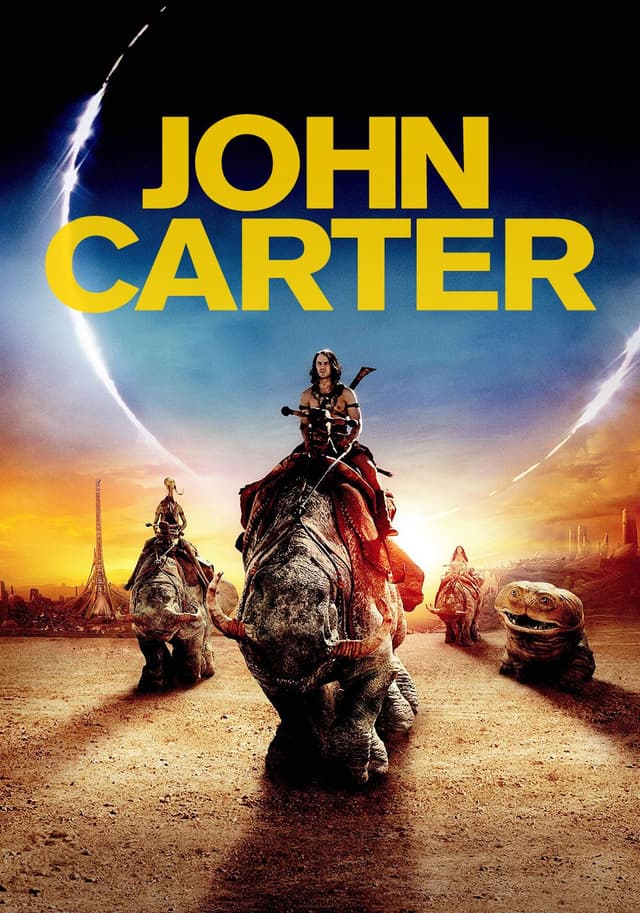
John Carter (2012), directed by Andrew Stanton and distributed by Walt Disney Studios Motion Pictures, was produced on a budget of $263,700,000. Based on Edgar Rice Burroughs' 1912 novel "A Princess of Mars," the film starred Taylor Kitsch as a Civil War veteran transported to Mars (called Barsoom by its inhabitants), where he becomes embroiled in a conflict between warring Martian civilizations. The project represented Pixar veteran Andrew Stanton's live-action directorial debut, bringing his animation sensibilities to a large-scale visual effects production.
The $263.7 million budget made John Carter one of the most expensive films produced at the time, a cost driven by the complex VFX required to create Barsoom's alien landscapes and inhabitants, multiple rounds of reshoots, and the challenge of adapting century-old source material into a modern blockbuster. Disney ultimately wrote off approximately $200 million on the film, making it one of the largest financial losses in cinema history and a cautionary tale about the risks of entrusting a first-time live-action director with a franchise-launching tentpole.
Key Budget Allocation Categories
John Carter's $263.7 million budget was distributed across the following production areas:
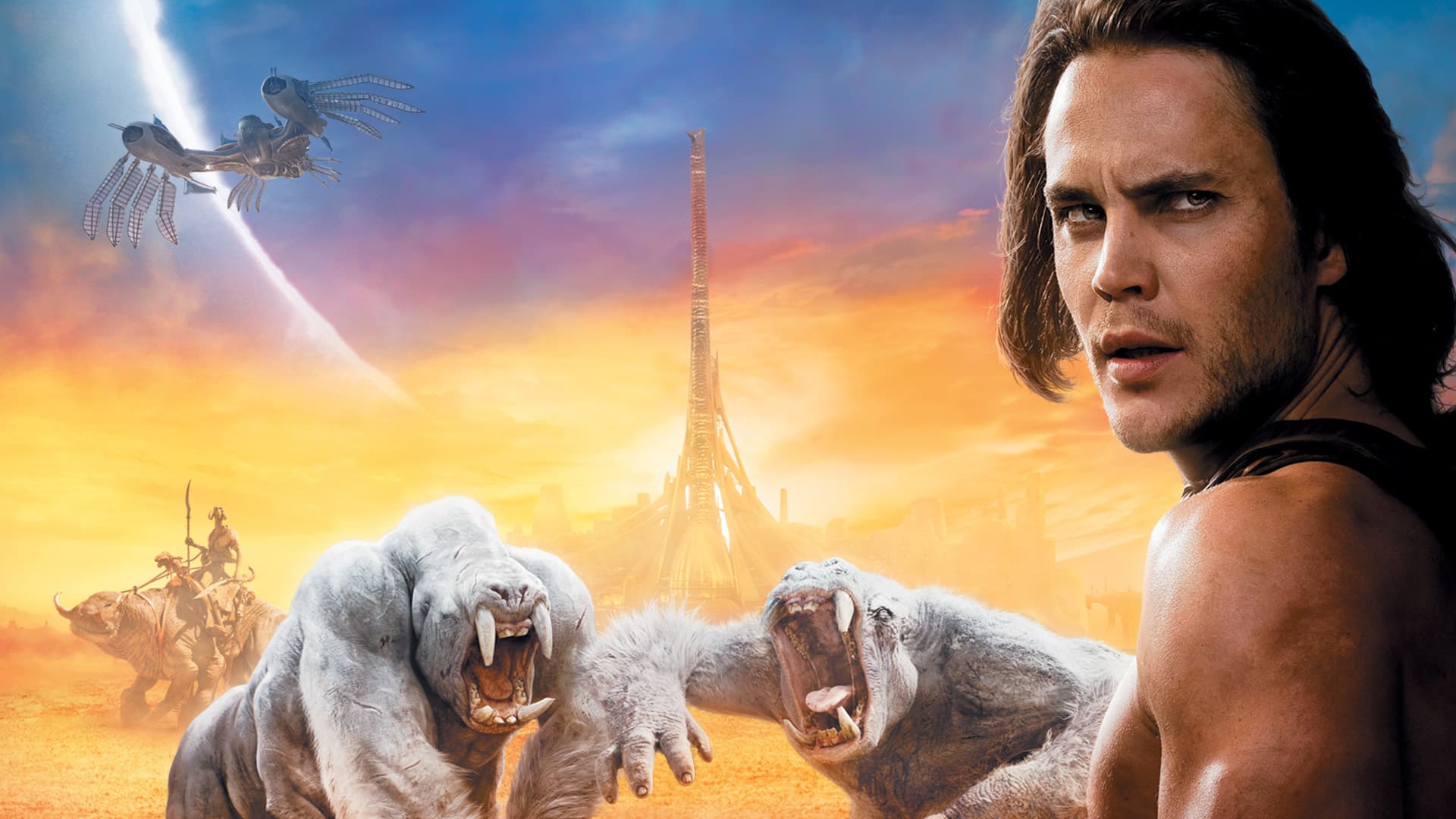
- Visual Effects and Alien World-Building: The film required extensive VFX work to realize Barsoom, including the four-armed Tharks (created entirely through motion capture and CGI, with Willem Dafoe, Samantha Morton, and Thomas Haden Church providing performances), the Martian landscapes, aerial combat sequences involving flying ships, and the various alien creatures. The VFX work was led by Double Negative and supported by several additional vendors, totaling over 2,000 effects shots.
- Location Photography and Desert Environments: Principal photography took place in Utah (specifically Moab and Lake Powell areas) and in England at Shepperton Studios. The Utah desert locations were chosen to approximate Barsoom's arid landscape, though extensive digital modification was required to transform Earth deserts into alien terrain. The remote locations added logistical complexity and transportation costs.
- Motion Capture for Thark Characters: The Tharks, 9-foot-tall, four-armed green Martian warriors, were created through a performance capture pipeline similar to what James Cameron developed for Avatar (2009). Willem Dafoe performed on stilts and wore a motion capture suit to portray Tars Tarkas, with the process requiring specialized rigging, set modifications, and extensive post-production work to integrate the digital Tharks into live-action environments.
- Cast and Above-the-Line Talent: Taylor Kitsch, coming off the TV series Friday Night Lights, led the cast in a role originally developed for other actors. Lynn Collins played Dejah Thoris, with Willem Dafoe, Samantha Morton, Mark Strong, Ciaran Hinds, and Dominic West in supporting roles. Andrew Stanton's directing deal, along with producers Jim Morris and Lindsey Collins, and screenplay credits shared with Mark Andrews and Michael Chabon, contributed to above-the-line costs.
- Reshoots and Production Overruns: The production underwent multiple rounds of reshoots as Stanton, accustomed to Pixar's iterative process of reworking films extensively in post-production, applied the same approach to a live-action blockbuster. This iterative method, while standard in animation, proved far more expensive when applied to a production requiring physical sets, cast availability, and VFX integration for every revised sequence.
How Does John Carter's Budget Compare to Similar Films?
At $263,700,000, John Carter's budget was enormous for 2012. Comparing it with other big-budget sci-fi adventures of the era:
- Avatar (2009): Budget $237,000,000 | Worldwide $2,923,700,000. James Cameron's sci-fi epic cost 10% less and earned over ten times as much, establishing the commercial ceiling for original sci-fi world-building that John Carter aspired to but failed to reach.
- The Avengers (2012): Budget $220,000,000 | Worldwide $1,518,800,000. Released just two months after John Carter, this MCU milestone cost 17% less and earned over five times as much, underscoring Disney's miscalculation in prioritizing John Carter as a franchise launcher.
- Battleship (2012): Budget $209,000,000 | Worldwide $303,000,000. Universal's similarly ill-fated sci-fi action film, also starring Taylor Kitsch, underperformed in the same year, compounding the perception that Kitsch could not carry a tentpole franchise.
- Prince of Persia: The Sands of Time (2010): Budget $200,000,000 | Worldwide $336,400,000. Disney's previous attempt to launch a live-action adventure franchise delivered similarly underwhelming returns, a warning sign that the studio arguably should have heeded before greenlit John Carter at an even higher budget.
- Prometheus (2012): Budget $130,000,000 | Worldwide $403,400,000. Ridley Scott's sci-fi film cost less than half of John Carter and earned 42% more worldwide, demonstrating that well-executed sci-fi could succeed at a more disciplined budget level.
John Carter Box Office Performance
John Carter opened in the United States on March 9, 2012, debuting to $30.2 million domestically. The opening was catastrophic for a film of its budget, failing to match even the modest expectations set by pre-release tracking. The film never recovered, legging out to just $73.1 million domestically, a total that made clear the domestic audience had little interest in the property.
Box Office Breakdown
John Carter

At approximately +8%, John Carter returned roughly $1.08 for every $1 of production budget invested during its theatrical run.
Disney announced a $200 million write-down on John Carter in its fiscal second-quarter earnings report, one of the largest losses ever taken on a single film. The write-down contributed to the departure of Disney Studios chairman Rich Ross and reshaped the studio's approach to tentpole filmmaking. The loss was particularly painful because John Carter had been positioned as the launchpad for a franchise based on Burroughs' 11-novel Barsoom series. The film's failure effectively killed any sequel plans and became shorthand in Hollywood for the risks of spending massive budgets on unfamiliar intellectual property without a built-in audience.
John Carter Production History
Edgar Rice Burroughs' "A Princess of Mars" had been in Hollywood development since the early 1930s, making it one of the longest-gestating properties in film history. Paramount Pictures, Disney, and numerous directors (including Robert Rodriguez, Kerry Conran, and Jon Favreau) had attempted to bring the story to screen over decades. The project finally moved forward at Disney when Andrew Stanton, riding the success of WALL-E and Finding Nemo at Pixar, expressed a lifelong passion for Burroughs' Mars novels.
Disney greenlit the film based largely on Stanton's Pixar pedigree, granting him significant creative autonomy. Stanton co-wrote the screenplay with Mark Andrews (who would go on to direct Brave) and Pulitzer Prize-winning novelist Michael Chabon, who contributed to later drafts. Taylor Kitsch was cast as John Carter after the role was previously attached to other actors, and the casting was viewed as risky given Kitsch's limited big-screen profile.
Principal photography took place from January to July 2010, filming primarily in the Utah desert (near Moab and at Lake Powell) to capture Barsoom's arid landscape, and at Shepperton Studios in England for interior and controlled environment work. The shoot was reportedly challenging, with Stanton adjusting to the pace and constraints of live-action filmmaking after his career in animation.
Post-production extended well beyond initial projections as Stanton applied Pixar's iterative approach, reworking sequences extensively, ordering reshoots, and refining the VFX-heavy action sequences. Multiple rounds of reshoots between 2010 and 2011 added tens of millions to the budget. Disney's marketing campaign was widely criticized for failing to communicate what the film was about, with the generic title "John Carter" (stripped of "of Mars" during production) confusing potential audiences unfamiliar with the source material.
Awards and Recognition
John Carter received a nomination for Best Visual Effects at the 85th Academy Awards, losing to Life of Pi. The nomination recognized the technical achievement of creating the Thark characters through motion capture and the digital realization of Barsoom, work that was genuinely accomplished despite the film's commercial failure.
Despite its box office performance, John Carter developed a devoted cult following in the years after its release, with fans praising the film's world-building, Andrew Stanton's vision, and the faithfulness of the Barsoom depiction to Burroughs' source material. A "Take Me Back to Barsoom" campaign advocated for a sequel that never materialized. The film's critical reappraisal has been modest but persistent, with many revisiting critics arguing that John Carter deserved a better fate than its troubled marketing campaign afforded it.
Critical Reception
John Carter earned a 52% approval rating on Rotten Tomatoes based on 240 reviews, with a consensus describing it as a "lavish but uneven adaptation that is faithful to its source material but may feel unfamiliar to modern audiences." On Metacritic, the film scored 51 out of 100, indicating "mixed or average reviews."
Positive reviews praised the film's visual ambition, the motion capture performances (particularly Willem Dafoe's Tars Tarkas), and Stanton's evident love for the Burroughs material. The action sequences, especially the Thark arena battle and the airship combat, were recognized for their scale and inventiveness.
Negative reviews centered on Taylor Kitsch's performance, which many critics found lacking the charisma needed to anchor a franchise; the convoluted plot involving multiple Martian factions and shape-shifting Thern antagonists; and a general sense that the film's source material, despite predating and inspiring many subsequent sci-fi works, felt derivative to modern audiences familiar with Star Wars, Avatar, and similar properties that had drawn from the same well. The irony of Burroughs' original work feeling like a copy of its own imitators was widely noted.
Frequently Asked Questions
How much did it cost to make John Carter?
The production budget was $263,700,000, making it one of the most expensive films produced at that time. Costs were driven by extensive visual effects for the alien world of Barsoom, motion capture for the four-armed Thark characters, location filming in Utah, and multiple rounds of reshoots as director Andrew Stanton applied an iterative approach from his Pixar background.
How much did John Carter earn at the box office?
The film grossed $73,100,000 domestically and $211,000,000 internationally, totaling $284,100,000 worldwide. It opened with just $30.2 million domestically, a catastrophic debut for a film of its budget.
How much money did Disney lose on John Carter?
Disney announced a $200 million write-down on John Carter, one of the largest financial losses on a single film in cinema history. The loss contributed to the departure of Disney Studios chairman Rich Ross and reshaped the studio's approach to tentpole filmmaking.
Who directed John Carter?
Andrew Stanton directed the film, marking his live-action debut after directing Pixar's Finding Nemo (2003) and WALL-E (2008). Stanton co-wrote the screenplay with Mark Andrews and Pulitzer Prize-winning novelist Michael Chabon.
Why did John Carter fail at the box office?
Multiple factors contributed: the generic title "John Carter" (stripped of "of Mars") confused potential audiences unfamiliar with the source material; Disney's marketing campaign failed to communicate the film's appeal; Taylor Kitsch lacked the star power to draw audiences; and the story, though it predated and inspired many sci-fi properties, felt derivative to modern viewers familiar with Star Wars and Avatar.
What is John Carter based on?
The film is based on "A Princess of Mars" (1912) by Edgar Rice Burroughs, the first novel in the 11-book Barsoom series. The property had been in Hollywood development since the 1930s, making it one of the longest-gestating projects in film history before finally reaching the screen.
Where was John Carter filmed?
Principal photography took place from January to July 2010 in the Utah desert (near Moab and at Lake Powell) to approximate Barsoom's arid landscape, and at Shepperton Studios in England for interior and controlled environment sequences.
Who stars in John Carter?
Taylor Kitsch stars as John Carter, with Lynn Collins as Dejah Thoris. Willem Dafoe provides the motion capture performance for Tars Tarkas, the Thark leader. The supporting cast includes Samantha Morton, Mark Strong, Ciaran Hinds, Dominic West, and Thomas Haden Church.
Did John Carter receive any awards?
The film received an Academy Award nomination for Best Visual Effects at the 85th Oscars, losing to Life of Pi. The nomination recognized the technical achievement of creating the Thark characters and digital Barsoom environments, work that was praised even by critics who were mixed on the film overall.
Does John Carter have a cult following?
Yes. Despite its commercial failure, John Carter developed a devoted cult following, with fans praising its world-building, faithfulness to Burroughs' novels, and Andrew Stanton's vision for Barsoom. A "Take Me Back to Barsoom" campaign advocated for a sequel, though Disney never greenlit one after the $200 million write-down.
Filmmakers
John Carter

Official Trailer
Build budgets like this one in Saturation
Start from an industry-standard feature film template, import the schedule and rates you already have, and let the cost report keep itself current as you spend. Real-time collaboration, no spreadsheets.