Jay and Silent Bob Strike Back Budget
 ComedyAdventureAction1h 44m
Updated
Synopsis
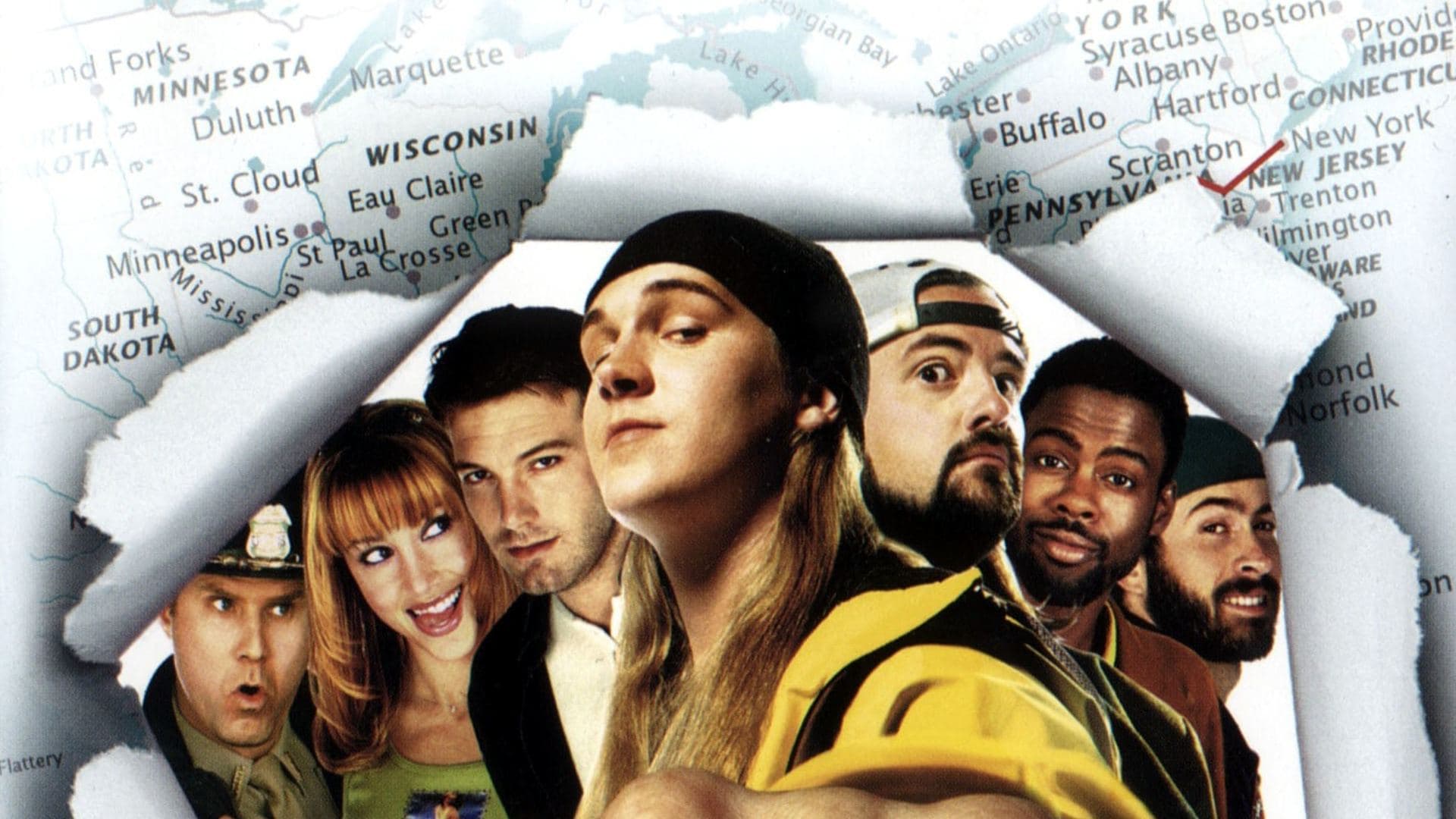
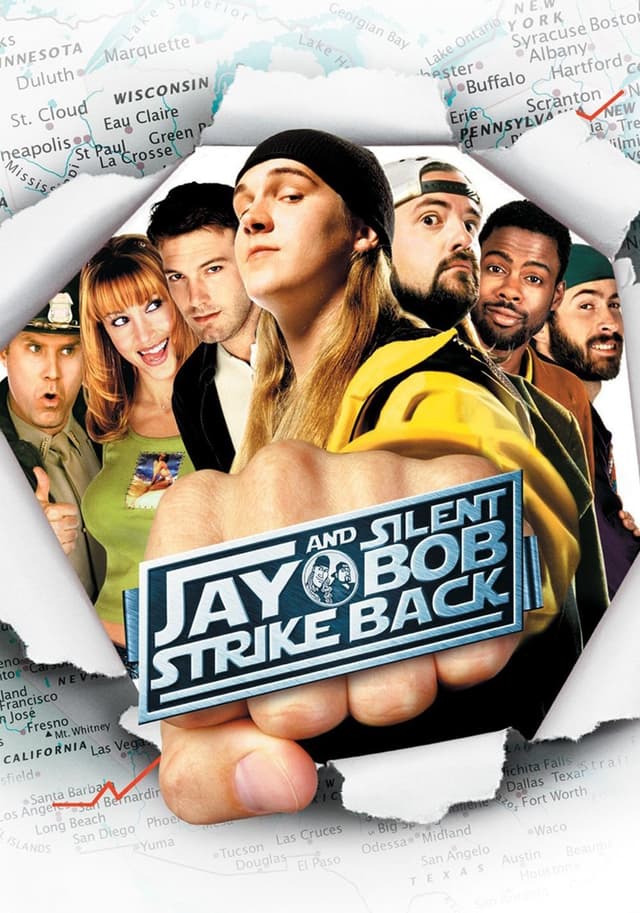
"Jay and Silent Bob Strike Back" is a comedic adventure that follows the iconic duo, Jay (Jason Mewes) and Silent Bob (Kevin Smith), as they embark on a cross-country journey to stop a movie based on their comic book alter egos, Bluntman and Chronic. After discovering that a film is being made without their consent, the pair sets out to Hollywood to reclaim their rights and make their voices heard. Along the way, they encounter a colorful cast of characters, including a group of female criminals, a clueless film crew, and various cameos from beloved figures in the View Askewniverse. Filled with irreverent humor, pop culture references, and a heartfelt message about friendship, the film showcases Jay and Silent Bob's misadventures as they navigate the chaotic world of the film industry.
What Is the Budget of Jay and Silent Bob Strike Back?
Jay and Silent Bob Strike Back was produced on a budget of $22 million, making it by far the most expensive film Kevin Smith had directed at that point in his career. For context, Smith had made Clerks (1994) for a mere $27,575, Mallrats (1995) for $6.1 million, Chasing Amy (1997) for $250,000, and Dogma (1999) for $10 million. The leap to $22 million reflected Miramax's confidence in the View Askewniverse franchise following Dogma's strong performance and the enduring cult popularity of Jay and Silent Bob as characters.
The film was distributed by Miramax Films through their Dimension label and released on August 24, 2001. It earned $30.1 million domestically and $3.7 million internationally for a worldwide total of approximately $33.8 million. Against its $22 million production budget, the theatrical run produced modest returns, with the film opening third at the domestic box office behind American Pie 2 and Rush Hour 2 in its debut weekend.
Principal photography ran from January 14 through April 19, 2001, shooting across New Jersey and California. Kevin Smith wrote, directed, and co-edited the film, reuniting the full ensemble of recurring View Askewniverse players for what Smith intended as a send-up of Hollywood sequel culture and internet fandom.
Key Budget Allocation Categories
- Above-the-Line Talent and Ensemble Cast: Jason Mewes and Kevin Smith headlined as Jay and Silent Bob, but the film's appeal rested heavily on an extraordinary parade of cameos from across Hollywood. Ben Affleck, Matt Damon, Jason Lee, Shannon Elizabeth, Eliza Dushku, Ali Larter, Chris Rock, Will Ferrell, Carrie Fisher, Mark Hamill, Wes Craven, and George Carlin all appeared. Coordinating schedules and fees for this many recognizable faces on a $22 million budget required careful above-the-line negotiation, with many performers appearing as personal favors to Smith or in exchange for brief day-rate shoots.
- Location and Studio Shooting in California and New Jersey: The film shot at locations across Los Angeles and the New Jersey suburban settings that anchor the View Askewniverse. Production used Hollywood soundstages for interior sequences and the Quick Stop convenience store in Leonardo, New Jersey, for scenes rooted in the franchise's home turf. A scripted Scooby-Doo dream sequence, planned to parody animated film adaptations, was cut after legal counsel flagged intellectual property concerns, saving potential licensing costs but also losing a planned production design set piece.
- Production Design and Visual Comedy: Unlike Smith's earlier low-budget talkathon films, Jay and Silent Bob Strike Back demanded more elaborate production design. The cross-country road trip structure required multiple location setups, a fictionalized "Miramax Films" studio backlot sequence, and a sustained Hollywood-parody aesthetic. The film's meta-commentary on the filmmaking industry required sets that read immediately as genre parody, from the movie-within-a-movie sequences to the Justice League-style "Bluntman and Chronic" superhero shoot.
- Music and Score: Composer James L. Venable scored the film, continuing his collaboration with Smith following their work together on Dogma and Chasing Amy. The film also incorporated licensed pop and rock tracks suited to the road-movie premise and the early-2000s comedic tone. Music licensing represented a meaningful portion of the post-production budget given the number of needle-drop cues across the 104-minute runtime.
- Post-Production and Marketing: Miramax handled distribution and marketing, investing in a theatrical release strategy timed to late August 2001 to catch the summer box office tail end. The film's marketing leaned into the meta-humor angle, with promotional materials embracing the film's self-aware relationship with its own franchise status. Post-production editing, handled in part by Kevin Smith himself, stayed true to the fast-cut comedic rhythm established across the View Askewniverse.
How Does Jay and Silent Bob Strike Back's Budget Compare to Similar Films?
At $22 million, Jay and Silent Bob Strike Back was positioned above most indie comedies of its era but well below mainstream studio comedies. The film competed in the late-summer comedy window where raunchy R-rated comedies commanded solid audiences. Comparing it to Kevin Smith's own filmography and to similar ensemble road comedies of the period provides useful context.
- Dogma (1999): Budget $10M | Worldwide $45M. Smith's previous View Askewniverse outing doubled its money worldwide. Jay and Silent Bob's larger budget and similar domestic appeal made its thinner international numbers a relative disappointment.
- Clerks II (2006): Budget $5M | Worldwide $27.3M. Smith's return to leaner budgets after Jay and Silent Bob proved financially smarter, delivering a 5.5x worldwide multiple on a fraction of the cost.
- American Pie 2 (2001): Budget $30M | Worldwide $142.4M. Released the same week, this R-rated sequel showed the ceiling for ensemble-cast comedies that had broader mainstream crossover appeal beyond a dedicated fan base.
- Dude, Where's My Car? (2000): Budget $13M | Worldwide $46.8M. Another stoner-comedy buddy film from the same era, produced at a lower cost with similar domestic demographics and considerably stronger international traction.
Jay and Silent Bob Strike Back Box Office Performance
Jay and Silent Bob Strike Back opened August 24, 2001, distributed by Miramax Films. Its opening weekend earned $11.0 million across 2,995 theaters, placing third domestically behind American Pie 2 ($19.1 million that weekend) and Rush Hour 2 ($14.5 million). The film held reasonably well with its core fan base through September, ultimately collecting $30.1 million domestically and $3.7 million internationally for a worldwide total of $33.8 million.
The film's economics were tight. With a $22 million production budget and an estimated $15 to $20 million in prints and advertising spend, total investment likely reached $37 to $42 million. Theaters retain roughly 50% of gross ticket sales, so Miramax's share of the worldwide $33.8 million gross was approximately $16.9 million. The film did not recoup its combined production and marketing costs theatrically, relying on home video, cable licensing, and DVD sales to reach overall profitability.
Box Office Breakdown
Jay and Silent Bob Strike Back

On production budget alone, the film earned roughly $1.54 for every $1 invested in production, a figure that looks adequate in isolation but becomes a loss once marketing spend is factored in. The film's durability on home video and cable throughout the 2000s, combined with the enduring cult status of Jason Mewes and Kevin Smith as Jay and Silent Bob, made the project profitable over its full life cycle. The View Askewniverse DVD box set and recurring midnight screenings kept the film in circulation well beyond its theatrical run.
Jay and Silent Bob Strike Back Production History
Kevin Smith conceived Jay and Silent Bob Strike Back as both a love letter to and a roast of the View Askewniverse he had built since Clerks in 1994. By the late 1990s, the characters of Jay and Silent Bob had appeared across five films, and internet fan communities were deeply invested in the mythology. Smith wrote the script as a meta-commentary on internet fandom, fan entitlement, and Hollywood's appetite for franchise sequels, an unusually self-aware creative position for a filmmaker to take toward his own work.
The film was announced after Dogma's commercial and critical success in 1999 gave Miramax confidence in the franchise's box office ceiling. Smith and producer Scott Mosier assembled the production quickly, with principal photography beginning January 14, 2001, and wrapping April 19, 2001, a 14-week schedule that required choreographing dozens of celebrity cameo appearances. Jason Mewes, who had battled substance abuse issues during the production period, required additional scheduling coordination. Smith later addressed this period candidly in his podcasts and the documentary Clerks III's marketing campaign.
Filming spanned New Jersey (including the Quick Stop convenience store in Leonardo, the franchise's spiritual home) and California soundstages in Los Angeles. The cross-country road trip structure gave the production geographic variety while keeping costs manageable through a mix of practical locations and studio work. The scripted Scooby-Doo animated sequence was dropped during production after legal clearance concerns, replaced with alternative material. The film wrapped post-production and received its R rating from the MPAA before opening in the final week of August 2001.
Awards and Recognition
Jay and Silent Bob Strike Back received one win and three nominations during its awards season run. The film's primary recognition came from genre and fan-voted ceremonies rather than mainstream awards bodies, consistent with its cult-comedy status. The MTV Movie Awards, which often honored fan-favorite performances and comedic moments, included the film in their consideration cycle for the 2002 ceremony.
Kevin Smith's script won recognition for its self-referential humor and meta-Hollywood satire from fan and independent film communities. The film's clever integration of View Askewniverse continuity, including callbacks to Clerks, Mallrats, Chasing Amy, and Dogma, earned appreciation from critics who covered Smith's filmography as a unified creative universe. The performances of Jason Mewes and Kevin Smith as Jay and Silent Bob were frequently cited as standout comedic work even by reviewers who found the film uneven overall.
Critical Reception
Jay and Silent Bob Strike Back holds a 52% approval rating on Rotten Tomatoes based on 150 reviews, with a 75% audience score reflecting the significant gap between critical opinion and fan enthusiasm. Metacritic scores the film at 51 out of 100, placing it in "mixed or average" territory. The film earned a B+ CinemaScore from opening weekend audiences, indicating strong satisfaction among the fans who turned out specifically to see it.
Roger Ebert awarded the film three out of four stars, writing approvingly of its anarchic humor and Smith's willingness to mock his own creative universe. Critics who were already fans of the View Askewniverse tended to rate it more generously, appreciating the density of in-jokes and callbacks. Those without prior investment in Smith's films found the humor reliant on familiarity with the franchise and the meta-Hollywood comedy underdeveloped for newcomers. The consensus: a rewarding watch for the converted, a confusing one for everyone else.
In the years since its release, Jay and Silent Bob Strike Back has risen in cultural estimation as a document of early-2000s internet fandom culture and as a prototype for the kind of meta-franchise comedy that became common in the 2010s and 2020s. Its lampooning of online fan communities, sequel culture, and Hollywood IP machinery looks prescient in retrospect. Kevin Smith revisited the characters in Jay and Silent Bob Reboot (2019), confirming the duo's durability as pop culture figures nearly two decades after Strike Back.
Frequently Asked Questions
How much did it cost to make Jay and Silent Bob Strike Back (2001)?
The production budget was $22,000,000, covering principal photography, cast and crew salaries, locations, sets, post-production, and music. Marketing and distribution (P&A) costs are estimated at an additional $11,000,000 - $17,600,000, bringing the total studio investment to approximately $33,000,000 - $39,600,000.
How much did Jay and Silent Bob Strike Back (2001) earn at the box office?
Jay and Silent Bob Strike Back grossed $30,085,147 domestic, $3,703,014 international, totaling $33,788,161 worldwide.
Was Jay and Silent Bob Strike Back (2001) profitable?
The film did not break even theatrically, earning $33,788,161 against an estimated $55,000,000 needed. Ancillary revenue may have improved the picture.
What were the biggest costs in producing Jay and Silent Bob Strike Back?
The primary cost drivers were above-the-line talent (Jason Mewes, Kevin Smith, Ben Affleck); star comedian salaries, location filming, and aggressive marketing campaigns.
How does Jay and Silent Bob Strike Back's budget compare to similar comedy films?
At $22,000,000, Jay and Silent Bob Strike Back is classified as a low-budget production. The median budget for wide-release comedy films in the 2000s ranges from $30 - 80M for mid-budget to $150M+ for tentpoles. Comparable budgets: 12 Rounds (2009, $22,000,000); Before I Go to Sleep (2014, $22,000,000); Dances with Wolves (1990, $22,000,000).
Did Jay and Silent Bob Strike Back (2001) go over budget?
There are no widely reported accounts of significant budget overruns for this production. However, studios rarely disclose precise budget overrun figures publicly. The reported production budget reflects the final estimated cost.
What was the return on investment (ROI) for Jay and Silent Bob Strike Back?
The theatrical ROI was 53.6%, calculated as ($33,788,161 − $22,000,000) ÷ $22,000,000 × 100. This measures gross revenue against production budget only - it does not account for P&A or exhibitor shares.
What awards did Jay and Silent Bob Strike Back (2001) win?
1 win & 3 nominations total.
Who directed Jay and Silent Bob Strike Back and who were the key crew members?
Directed by Kevin Smith, written by Kevin Smith, shot by Jamie Anderson, with music by James L. Venable, edited by Scott Mosier, Kevin Smith.
Where was Jay and Silent Bob Strike Back filmed?
Jay and Silent Bob Strike Back was filmed in United States of America.
Filmmakers
Jay and Silent Bob Strike Back

Official Trailer
Build budgets like this one in Saturation
Start from an industry-standard feature film template, import the schedule and rates you already have, and let the cost report keep itself current as you spend. Real-time collaboration, no spreadsheets.