In a Lonely Place Budget
Updated
Synopsis
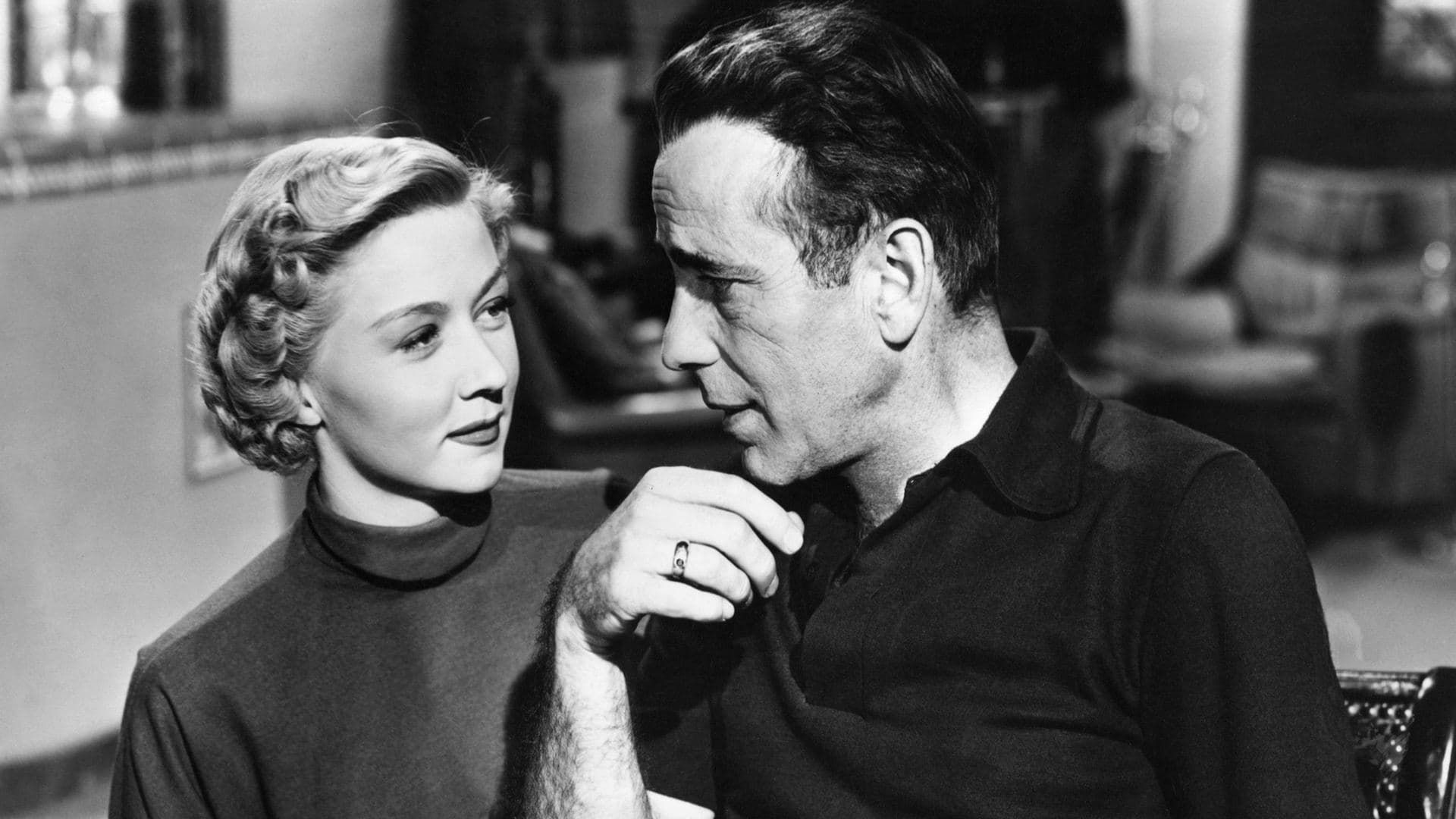
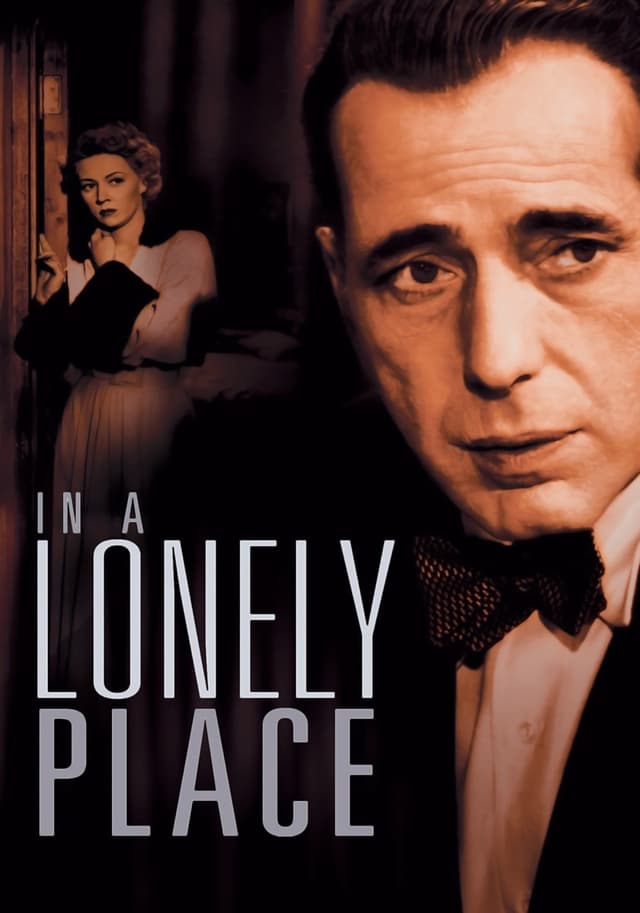
Dix Steele, a Hollywood screenwriter with a violent temper, becomes the prime suspect in a young woman's murder. As his neighbor and budding lover Laurel Gray begins providing his alibi to the investigating police, she gradually comes to doubt whether the man she's fallen for is the man he appears to be. Nicholas Ray's late-period noir adapted from Dorothy B. Hughes's 1947 novel.
What Is the Budget of In a Lonely Place (1950)?
In a Lonely Place (1950), directed by Nicholas Ray and distributed by Columbia Pictures, was produced on an estimated budget of approximately $1,000,000 to $1,500,000 (roughly $13,000,000 to $19,000,000 in 2025 dollars). The film was produced by Santana Pictures Corporation, the independent production company Humphrey Bogart founded in 1948 with Robert Lord and Mark Hellinger to produce Bogart vehicles outside the conventional Warner Bros. contract, with Columbia Pictures providing financing and distribution. In a Lonely Place was Santana's fourth release after Knock on Any Door (1949), Tokyo Joe (1949), and Sirocco (1951).
The investment reflected the conventional mid-tier Hollywood studio production scale of the late-1940s and early-1950s noir cycle. Santana operated as a quasi-independent production company under a multi-picture distribution arrangement with Columbia, with Bogart starring in each Santana release and Columbia providing financing, soundstage facilities, and distribution capability. The budget allocation supported Bogart's star salary, the casting of Gloria Grahame (then under contract to RKO and lent to Columbia for the picture), Nicholas Ray's direction, an extensive Los Angeles location shoot at the recognizable Beverly Hills Villa Primavera apartment complex, and the picture's contained noir production design.
Key Budget Allocation Categories
In a Lonely Place's estimated $1,000,000 to $1,500,000 budget was distributed across several core production areas:
- Above-the-Line Talent: Humphrey Bogart, then 50 and at the peak of his post-Casablanca and post-Maltese Falcon star tier, received both an upfront salary as the lead actor and a profit participation as a Santana Pictures principal. Gloria Grahame, then 26 and four years into her Hollywood career, was paid at a mid-tier rate under her RKO contract loanout. Director Nicholas Ray, then 38 and known for They Live by Night (1948) and Knock on Any Door, received feature-director scale. Screenwriter Andrew Solt adapted the Dorothy B. Hughes 1947 novel for feature scale.
- Los Angeles Production: Principal photography ran at Columbia Pictures' Sunset Boulevard soundstage facilities, with key exterior work at the Villa Primavera apartment complex on Harper Avenue in West Hollywood, the location that anchors the central romance between Dix Steele and Laurel Gray. The Villa Primavera, designed by architects Arthur and Nina Zwebell in 1923, has subsequently become one of the most recognized noir architectural locations in Los Angeles cinema.
- Cinematography and Production Design: Burnett Guffey, the Columbia Pictures veteran cinematographer who would subsequently win Best Cinematography Oscars for From Here to Eternity (1953) and Bonnie and Clyde (1967), shot the film in 1.37:1 Academy ratio black-and-white with the contained interior coverage and naturalistic exterior framing that defines the late-1940s and early-1950s noir cycle. Production designer Robert Peterson and set decorator William Kiernan dressed the contained apartment, restaurant, and police-precinct sets that anchor the film's geography.
- Score and Music: Composer George Antheil, the modernist composer and "Bad Boy of Music" autobiographer who had scored multiple Hollywood pictures through the 1940s, delivered an orchestral score that uses harmonic dissonance to support the film's mounting psychological tension. Recording took place at Columbia's Sunset Boulevard scoring stage.
- Costume: Costume designer Jean Louis dressed the cast in late-1940s Hollywood-noir contemporary fashion, with Gloria Grahame's wardrobe consisting of multiple distinctive evening and casual ensembles that defined the female-noir-protagonist look of the period.
- Editorial and Post: Editor Viola Lawrence cut the film at Columbia's Sunset Boulevard post facilities. The film's spare 94-minute running time and contained scene-construction reflected the efficiency of the late-1940s Hollywood studio editorial system.
How Does In a Lonely Place's Budget Compare to Similar Films?
At an estimated $1,000,000 to $1,500,000 (approximately $13,000,000 to $19,000,000 in 2025 dollars), In a Lonely Place sits within the mid-tier of the late-1940s and early-1950s Hollywood studio production envelope. The comparison set illustrates the budget context:
- The Maltese Falcon (1941): Budget approximately $375,000 (approximately $8,000,000 in 2025 dollars) | Domestic approximately $1,500,000. Humphrey Bogart's previous defining noir lead operates at one-third the inflation-adjusted budget of In a Lonely Place, reflecting the lower production scale of Bogart's pre-Casablanca pre-Santana career.
- Casablanca (1942): Budget approximately $950,000 (approximately $18,000,000 in 2025 dollars) | Domestic approximately $3,700,000. Humphrey Bogart's defining Warner Bros. lead operates at a comparable inflation-adjusted budget tier.
- Sunset Boulevard (1950): Budget approximately $1,750,000 | Domestic approximately $4,000,000. Billy Wilder's contemporaneous Paramount noir operates at a comparable budget tier and offers the closest direct year-comparable production-scale reference.
- The Third Man (1949): Budget approximately £200,000 (approximately $560,000 USD; roughly $7,500,000 in 2025 dollars) | Domestic Approximately $1,400,000. Carol Reed's contemporaneous British noir operates at a lower budget tier reflecting the British post-war production economy.
- The Big Sleep (1946): Budget approximately $1,500,000 (approximately $24,000,000 in 2025 dollars) | Domestic approximately $4,500,000. Howard Hawks's prior Bogart-Bacall Warner Bros. noir operates at a slightly higher budget tier reflecting the wider star-vehicle production envelope.
In a Lonely Place Box Office Performance
In a Lonely Place opened in New York on May 17, 1950, with wide North American release following through May and June 1950. The film grossed approximately $1,750,000 in domestic theatrical rentals (Columbia's share of the box office gross, the standard accounting unit for 1950 Hollywood), which would translate to approximately $3,500,000 to $4,000,000 in theatrical box-office gross. International theatrical added approximately $500,000 to $1,000,000 across the back half of 1950 and into 1951.
Against an estimated production budget of $1,000,000 to $1,500,000, the film cleared modest profitability. Here is the financial breakdown:
Box Office Breakdown
In a Lonely Place

The film returned modest profitability for Santana Pictures and Columbia in its initial 1950 release. The picture was the third Santana-Columbia release and the second-strongest performer in the Santana slate after Knock on Any Door (1949) before the company's 1953 dissolution.
In a Lonely Place's long-term legacy has substantially exceeded its initial 1950 commercial profile. The film has become a defining reference point in late-period noir cinema scholarship, with the Bogart-Grahame relationship and Nicholas Ray's mature directorial style established as touchstones for subsequent film noir criticism and adapted for various retrospective releases by Columbia and the Criterion Collection. The film was selected for preservation by the United States National Film Registry by the Library of Congress in 2007.
In a Lonely Place Production History
Andrew Solt adapted Dorothy B. Hughes's 1947 novel In a Lonely Place into a screenplay that significantly altered the source material's central premise. The novel had centered on Dix Steele as a serial killer narrated from his own first-person psychotic perspective; the Solt screenplay reframed the character as a Hollywood screenwriter with a violent temper who becomes a murder suspect, removing the novel's clarifying serial-killer perspective and replacing it with an extended romance-and-mystery between Bogart and Gloria Grahame as Laurel Gray.
Santana Pictures, the independent production company Humphrey Bogart had founded in 1948 with Robert Lord and Mark Hellinger to produce Bogart vehicles outside the conventional Warner Bros. contract, acquired the property in early 1950. Nicholas Ray, who had directed They Live by Night (1948) and the previous Santana-Columbia release Knock on Any Door (1949) starring John Derek, was attached to direct. Bogart, then 50 and freshly out of his Warner Bros. contract, headlined as Dix Steele.
Casting Gloria Grahame as Laurel Gray was significantly complicated by the personal relationship between Grahame and director Nicholas Ray. The two had been married in 1948 but were separated during the 1950 production, with the marriage formally ending in 1952. Grahame, then under contract to RKO, was lent to Columbia for the picture under specific working conditions that reportedly limited contact between Ray and Grahame outside takes. The fraught off-screen dynamic between director and lead actress shaped the picture's mounting psychological tension.
Principal photography ran in spring 1950 at Columbia Pictures' Sunset Boulevard soundstage facilities in California, with key exterior work at the Villa Primavera apartment complex on Harper Avenue in West Hollywood. Burnett Guffey's contained-coverage cinematography and Robert Peterson's production design supported Nicholas Ray's directorial approach. Post-production at Columbia facilities through the spring of 1950 included George Antheil's orchestral score recording, with the film released to New York theatrical on May 17, 1950 followed by wide North American release.
Awards and Recognition
In a Lonely Place received no major industry awards recognition during its 1950 release. The film was not nominated at the 23rd Academy Awards ceremony in 1951, the 1950 Golden Globes, or the major industry guild ceremonies. Gloria Grahame would subsequently win the Best Supporting Actress Academy Award for The Bad and the Beautiful in 1953, with In a Lonely Place retroactively cited as the previous-year benchmark performance that established her dramatic range.
The film's legacy recognition has substantially exceeded its initial 1950 awards profile. In a Lonely Place was selected for preservation by the United States National Film Registry by the Library of Congress in 2007, recognizing its cultural, historical, and aesthetic significance. The American Film Institute's 2008 list of the top 10 mystery films ranked it among the genre's defining works. Sight & Sound's critics' poll has consistently ranked the film among the strongest film noir entries of the late-1940s and early-1950s cycle.
Critical Reception
In a Lonely Place received broadly positive reviews during its initial 1950 release, with subsequent legacy reception positioning the film as one of the defining late-period film noirs. The film currently holds a 99% approval rating on Rotten Tomatoes based on 70 critic reviews with an average score of 9.0 out of 10, with the critical consensus calling it "Nicholas Ray's most mature directorial work, anchored by a complex Humphrey Bogart lead and a remarkable Gloria Grahame performance." A Metacritic score for the original 1950 release is not available, but contemporary reissue reviews score the film in the upper 80s to low 90s.
Original 1950 reviews praised the Bogart-Grahame chemistry and the screenplay's deviation from the conventional studio-noir formula. The New York Times's Bosley Crowther wrote that "Bogart gives one of his most complex performances, and Gloria Grahame matches him with an extraordinarily nuanced portrayal of doubt and growing fear." Variety's reviewer noted that "Nicholas Ray has crafted a noir mystery that ends up something more substantial than its genre framework promises."
Subsequent legacy criticism, beginning with the rediscovery of the picture across the late 1960s and 1970s film noir critical movement, positioned the picture as a defining work in the late-period film noir canon. Roger Ebert wrote in his Great Movies series that "In a Lonely Place is the most heartbreaking of all film noirs, because it dares to suggest that romance can heal a broken man and then refuses the easy resolution." The British Film Institute's Sight & Sound critics' poll has consistently ranked the film among the strongest film noir entries.
Frequently Asked Questions
How much did it cost to make In a Lonely Place (1950)?
The production budget was not precisely documented in surviving studio records, but historical Hollywood production scale and the Santana Pictures and Columbia Pictures co-financing model of the era place the figure in the range of $1,000,000 to $1,500,000 (approximately $13,000,000 to $19,000,000 in 2025 dollars). Santana Pictures, Humphrey Bogart's independent production company, financed the production with Columbia handling distribution.
Who directed In a Lonely Place?
Nicholas Ray directed the film, his fifth feature after They Live by Night (1948), Knock on Any Door (1949), and other early-career noir and drama work. He worked from a screenplay by Andrew Solt adapting Dorothy B. Hughes's 1947 novel. Ray would subsequently direct Rebel Without a Cause (1955), among many other films.
Is In a Lonely Place based on a book?
Yes. The film adapts Dorothy B. Hughes's 1947 novel In a Lonely Place. The screenplay by Andrew Solt significantly altered the source material's central premise, removing the novel's clarifying serial-killer perspective and replacing it with an extended romance-and-mystery between the screenwriter protagonist Dix Steele and his neighbor Laurel Gray.
Where was In a Lonely Place filmed?
Principal photography ran in spring 1950 at Columbia Pictures' Sunset Boulevard soundstage facilities in Los Angeles, with key exterior work at the Villa Primavera apartment complex on Harper Avenue in West Hollywood. The Villa Primavera, designed by architects Arthur and Nina Zwebell in 1923, has subsequently become one of the most recognized noir architectural locations in Los Angeles cinema.
Who stars in In a Lonely Place?
Humphrey Bogart stars as Dix Steele, a Hollywood screenwriter with a violent temper, with Gloria Grahame as Laurel Gray, his neighbor and budding lover. Supporting performances include Frank Lovejoy as the investigating Detective Sergeant Brub Nicolai, Carl Benton Reid as Captain Lochner, Art Smith as Bogart's agent Mel Lippman, and Jeff Donnell as Sylvia Nicolai.
Were Nicholas Ray and Gloria Grahame married during filming?
They were married but separated during filming. Nicholas Ray and Gloria Grahame had married in 1948 but were separated during the 1950 production of In a Lonely Place, with the marriage formally ending in 1952. Grahame, then under contract to RKO, was lent to Columbia for the picture under specific working conditions that reportedly limited contact between Ray and Grahame outside takes. The fraught off-screen dynamic shaped the picture's mounting psychological tension.
How did In a Lonely Place perform at the box office?
The film opened in New York on May 17, 1950 with wide North American release following through May and June 1950. It grossed approximately $1,750,000 in domestic theatrical rentals (Columbia's share), which would translate to approximately $3,500,000 to $4,000,000 in theatrical box-office gross. International theatrical added approximately $500,000 to $1,000,000.
Is In a Lonely Place in the National Film Registry?
Yes. In a Lonely Place was selected for preservation by the United States National Film Registry by the Library of Congress in 2007, recognizing its cultural, historical, and aesthetic significance. The American Film Institute's 2008 list of the top 10 mystery films also ranked it among the genre's defining works.
What did critics think of In a Lonely Place?
The film received broadly positive reviews during its initial 1950 release, with subsequent legacy reception positioning the film as one of the defining late-period film noirs. It currently holds a 99% approval rating on Rotten Tomatoes based on 70 reviews (9.0 average), with the critical consensus calling it "Nicholas Ray's most mature directorial work." Roger Ebert included it in his Great Movies series.
What is Santana Pictures Corporation?
Santana Pictures Corporation was the independent production company Humphrey Bogart founded in 1948 with Robert Lord and Mark Hellinger to produce Bogart vehicles outside the conventional Warner Bros. contract. The company released four films under a multi-picture distribution arrangement with Columbia Pictures: Knock on Any Door (1949), Tokyo Joe (1949), In a Lonely Place (1950), and Sirocco (1951), before dissolving in 1953.
Filmmakers
In a Lonely Place

Official Trailer
Build budgets like this one in Saturation
Start from an industry-standard feature film template, import the schedule and rates you already have, and let the cost report keep itself current as you spend. Real-time collaboration, no spreadsheets.