Hustle Budget
Updated
Synopsis
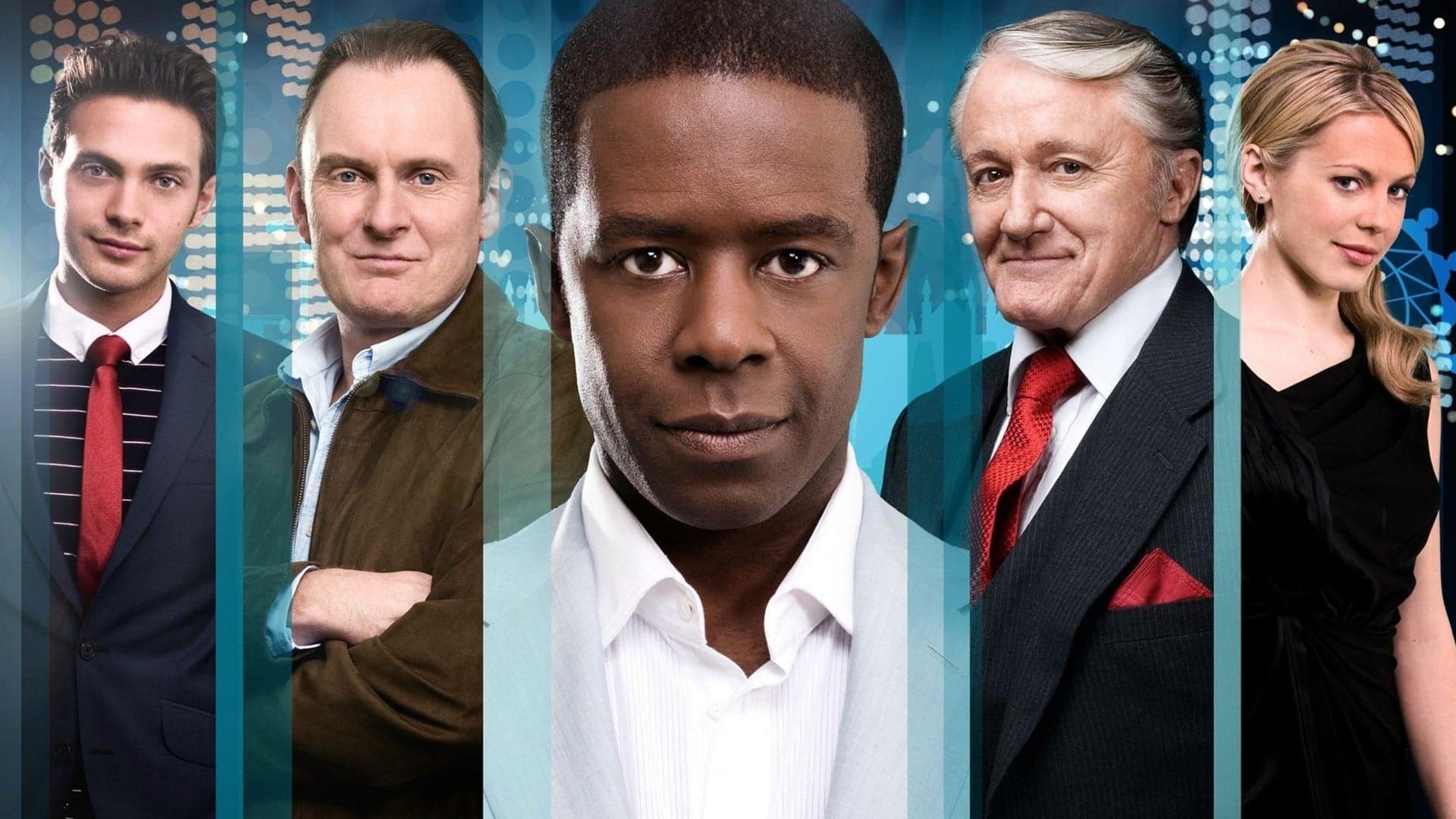
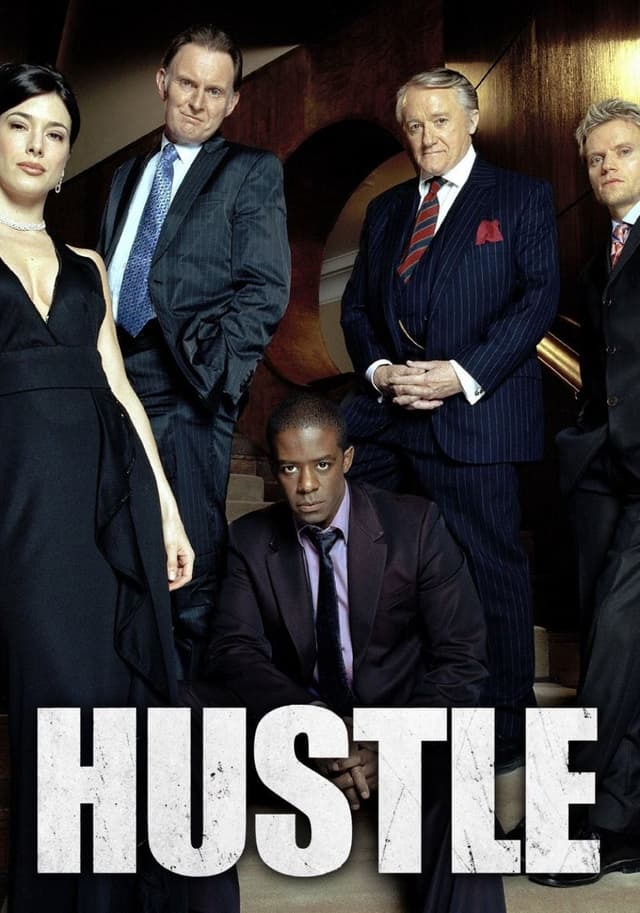
Hustle (2004) follows a tight ensemble of London-based con artists, led by Mickey Bricks (Adrian Lester) and elder grifter Albert Stroller (Robert Vaughn), who target wealthy and morally compromised marks with elaborate "long con" set pieces. The BBC One drama created by Tony Jordan ran for eight seasons and 48 episodes between February 2004 and February 2012, with its Soderbergh-inspired freeze-frames and fourth-wall breaks defining its visual signature.
What Is the Budget of Hustle (2004)?
Hustle (2004), the BBC One long-con caper drama created by Tony Jordan and produced by Kudos Film and Television, was made on an estimated per-episode budget of approximately £700,000 to £900,000, or roughly $1,100,000 to $1,400,000 in 2004 to 2012 US dollar terms, across its eight-season run. Specific BBC budgets are rarely disclosed, but Kudos described Hustle as a "premium" BBC One drama positioned alongside Spooks and Life on Mars in its commissioning tier, which placed it comfortably above the corporation's standard hour-long drama tariff. Over 48 broadcast episodes between February 2004 and February 2012, the cumulative production spend is estimated at approximately $55,000,000 to $70,000,000 in period dollars.
Kudos produced the show in-house for BBC One with a workflow built around six-episode seasons, ensemble casting, and recurring London location shoots that were progressively augmented with stylised graphics, fourth-wall breaks, and a Las Vegas season (season seven, 2011) that pushed the show's top-line cost meaningfully above its first-season baseline. The vast majority of episodes filmed in central London, with later seasons relocating principal photography to Birmingham to take advantage of regional crew rates and Screen West Midlands location support.
Key Budget Allocation Categories
Hustle's episodic budget broke down across the cost centres typical of a BBC One ensemble drama, with several show-specific line items reflecting its stylised production design and recurring location demands:
- Above-the-Line Cast: Adrian Lester, Robert Vaughn, Robert Glenister, Marc Warren, Jaime Murray, Ashley Walters, Matt Di Angelo, and Kelly Adams across the rotating ensemble represented the largest single line item. Robert Vaughn, an established American star, commanded a premium against UK rates, and his contracted appearances across seasons one through seven anchored the cast budget.
- Mark-of-the-Week Guest Casting: Each episode revolved around a fresh "mark", typically a wealthy, corrupt, or unscrupulous target the team conned over a single hour. The guest-cast budget supported a rotating roster of British character actors, with notable appearances including Saffron Burrows, Eddie Izzard, Bill Bailey, Richard Chamberlain, and Robert Wagner across the run.
- London and Birmingham Location Production: Seasons one through four filmed primarily in central London, with regular use of high-end Mayfair restaurants, City of London office buildings, and West End hotels. From season five, principal photography relocated to Birmingham, with the show using the city as both a production base and a stand-in for various London exteriors, reducing weekly location and crew cost.
- Stylised Visual Effects and Graphics: The show's signature freeze-frames, on-screen graphic overlays, point-of-view fourth-wall breaks, and time-jump transitions required a dedicated post-production graphics team. The visual style, modelled on Steven Soderbergh's Ocean's Eleven (2001), was a recurring incremental cost above standard BBC drama post.
- Wardrobe and Production Design: The grifter ensemble's expensive bespoke suits, designer dresses, and rotating high-end watches and jewellery formed a substantial wardrobe spend. The "long con" set pieces also frequently required dressed-to-look-expensive interiors, including fake auction houses, fake banks, and fake corporate offices, which absorbed weekly production design overhead.
- Las Vegas Production (Season Seven): Season seven (2011) opened with an extended Las Vegas-set arc, with portions shot on practical Nevada locations. The Las Vegas shoot represented the single highest incremental cost item of the run, with overseas crew, location fees, and travel pushing season seven's episode budget materially above the series average.
- Original Music: Magnus Fiennes's jazz-inflected score and the distinctive horn-and-bass title cue were a defining brand element. The music budget supported original composition, source-music licensing for the recurring lounge and big-band tracks used in con sequences, and rights for occasional licensed pop placements.
- BBC In-House Post and Delivery: Picture editing, sound, ADR, and BBC One delivery ran through Kudos's in-house post pipeline. The post workload was higher than a standard drama hour because of the graphics-heavy style and the frequent use of overlapping voiceover in the planning and execution sequences.
How Does Hustle's Budget Compare to Similar Series?
At an estimated $1,100,000 to $1,400,000 per episode, Hustle sat in the upper tier of British network drama but below American premium-cable benchmarks of the same period. The comparison set below illustrates how its production scale stacked up against contemporaneous ensemble caper and procedural drama:
- Spooks (2002): Estimated per-episode budget approximately £900,000 to £1,200,000 ($1,400,000 to $1,900,000). Kudos's flagship BBC One espionage series was the company's top-tier drama, slightly above Hustle in per-episode spend, with international location shoots and elaborate action sequences pushing it above the caper-drama tariff.
- Life on Mars (2006): Estimated per-episode budget approximately £700,000 to £900,000 ($1,100,000 to $1,400,000). Kudos's Manchester-shot 1970s police drama hit price parity with Hustle, with similar BBC One ensemble economics and Manchester-based crew rates substituting for Hustle's London-then-Birmingham split.
- Leverage (2008): Estimated per-episode budget approximately $1,500,000 to $1,800,000. TNT's Dean Devlin-produced American ensemble caper drama, frequently compared to Hustle, cost roughly 30% more per hour despite covering similar grifter-team territory. The premium reflected Portland-based US union crew rates and higher US lead-actor compensation.
- Burn Notice (2007): Estimated per-episode budget approximately $1,800,000 to $2,000,000. USA Network's Miami-set spy procedural cost roughly twice as much per episode as Hustle and ran for seven seasons of 12 to 18 episodes, illustrating the standard gap between US basic-cable drama and BBC One drama in the late 2000s.
- White Collar (2009): Estimated per-episode budget approximately $2,000,000 to $2,300,000. USA Network's Matt Bomer art-forgery procedural was an even glossier American take on the con-artist premise, costing roughly twice Hustle's per-hour spend and running 81 episodes against Hustle's 48.
- Ocean's Eleven (2001): Budget $85,000,000 | Worldwide $450,717,150. Steven Soderbergh's feature, cited by Tony Jordan as the direct stylistic model for Hustle, cost roughly the equivalent of 8 full seasons of Hustle on a single 116-minute movie. The film's freeze-frame, ensemble-glance, and music-driven visual grammar were transplanted wholesale onto the BBC drama format.
Hustle Season Performance and Syndication
Hustle premiered on BBC One on 24 February 2004 to strong opening figures and consistent appointment-viewing audiences across its eight-season run. The show was a critical and audience hit during its first four seasons, with subsequent seasons drawing more modest figures as the BBC moved it across the schedule. The economic framework across the run breaks down as follows:
- Per-Episode Budget: approximately $1,100,000 to $1,400,000 across the eight-season run
- Total Series Investment: approximately $55,000,000 to $70,000,000 across 48 episodes
- Network: BBC One in the United Kingdom; AMC, Bravo, and Ovation in the United States; international BBC Studios distribution worldwide
- Audience/Ratings: season one averaged approximately 6,500,000 to 7,500,000 viewers in the UK overnight; later seasons settled in the 4,500,000 to 5,500,000 range
- International Distribution: BBC Studios sold the format to over 100 territories; American rights initially with AMC (seasons 1 to 3), then Bravo, then Ovation
- Library/Syndication Value: BBC Studios reports the show remains a steady library performer; available on BBC iPlayer in the UK and on multiple US streaming services
Hustle's commercial logic was BBC-typical: a domestic licence fee that recovered most production cost, with international distribution and library value compounding over the long tail. The Las Vegas-set season seven (2011) underperformed the season-six audience and contributed to BBC One's decision to wind the show down after season eight in February 2012. Kudos and BBC Studios continue to monetise the catalogue through international sales, streaming licences, and format adaptations.
A US format adaptation was developed at AMC and later at NBC across the late 2000s but never reached series. The American caper-drama lane was instead occupied by Leverage at TNT and White Collar at USA Network, both of which borrowed structural ideas from Hustle without formally licensing the format.
Hustle Production History
Hustle was developed by Tony Jordan, a former EastEnders writer who had built his reputation on serial-drama craft and pitched Kudos Film and Television on an ensemble grifter show explicitly modelled on the Soderbergh Ocean's Eleven (2001) ensemble glance, the David Mamet con-artist tradition of House of Games (1987) and The Spanish Prisoner (1997), and the British heist-comedy lineage of The Lavender Hill Mob (1951). Kudos's Jane Featherstone and Stephen Garrett, fresh off the BBC One launch of Spooks (2002), greenlit Hustle as a stylish, fourth-wall-breaking BBC One ensemble vehicle.
Casting Adrian Lester as ensemble leader Mickey Bricks brought a Royal Shakespeare Company-trained classical actor into a populist primetime format, an unusual move for British television at the time. Robert Vaughn, the American star of The Man from U.N.C.L.E. (1964) and Bullitt (1968), joined as elder statesman grifter Albert Stroller, providing the show with American crossover appeal and a direct nod to 1960s caper television. Robert Glenister played fixer Ash "Three Socks" Morgan, Marc Warren played stylish front-man Danny Blue, and Jaime Murray played seductress Stacie Monroe through the show's first four seasons.
Principal photography for seasons one through four took place in central London, with the gang's anonymous high-rise flat doubling as a recurring planning location. From season five (2008), Kudos relocated principal photography to Birmingham, with the BBC's Birmingham Drama Village serving as production base. The move was driven primarily by cost: lower regional crew rates, BBC Birmingham facility access, and Screen West Midlands location support all helped Kudos maintain the show's premium feel at a flat or slightly reduced episodic budget despite five years of UK production inflation. Birmingham's glass-and-steel city centre stood in for London exteriors in the later seasons.
Cast changes punctuated the run. Marc Warren and Jaime Murray departed after season three (2006), replaced by Ashley Walters as Billy Bond and Mickey Stone in season four (2007). Ashley Walters left after one season, and Matt Di Angelo and Kelly Adams joined from season five as Sean Kennedy and Emma Kennedy, a brother-and-sister grifter pair who anchored the back half of the run alongside Lester, Vaughn, and Glenister. Season seven (2011) introduced a Las Vegas-set arc that took the ensemble to Nevada for partial location production, the show's only foreign shoot. The final season (eight) returned to the London-based caper format and concluded the series on BBC One on 17 February 2012.
The Soderbergh-inspired visual grammar, including freeze-frames, on-screen captions, glance-cut ensemble reaction sequences, and direct-to-camera fourth-wall breaks, became the show's signature and was credited within the British television industry with refreshing the ensemble-drama playbook. The stylistic template was later borrowed by Leverage at TNT and by Hustle creator Tony Jordan's subsequent work on Death in Paradise and By Any Means.
Awards and Recognition
Hustle received steady BAFTA and Royal Television Society recognition across its eight-season run, particularly in craft categories reflecting its visual style and ensemble construction. Adrian Lester was nominated for the Royal Television Society Best Actor award for his portrayal of Mickey Bricks, and the show's music, editing, and visual effects work received craft nominations from the RTS Craft and Design Awards.
Magnus Fiennes's title theme has been frequently cited on British "best TV themes" lists since the show's original broadcast. The Edinburgh International Television Festival highlighted Hustle in its 2005 sessions on stylised primetime drama, and Broadcast magazine featured the show in multiple craft-focused profiles across its run.
The show did not win major BAFTA awards, in part because BBC One's contemporaneous prestige-drama slate (Bleak House, Cranford, The Hour) absorbed most of the British television academy's top-tier recognition during the same window. Hustle's recognition profile is best understood as that of a steady commercial and craft success rather than a prestige-awards player.
Critical Reception
Hustle was widely praised on its 2004 BBC One launch and retained a strong critical reputation through its first four seasons. The Guardian's 2004 review called the show "stylish, propulsive, and confident enough to wear its Ocean's Eleven influence on its sleeve," and The Telegraph praised the ensemble chemistry and Tony Jordan's "delicate handling of the moral question of whether you can root for con artists." The Times in 2005 called Hustle "the most cinematically ambitious thing the BBC has made for primetime in years."
Critical reception softened across the later seasons. The Las Vegas-set season seven (2011) drew criticism for losing the London-rooted sensibility that defined the early run, and reviewers including The Guardian's Mark Lawson noted that the show's formula had become more visible by the eighth and final season. The Independent's 2012 finale review described the show as having "exited at exactly the right moment, before the formula collapsed entirely."
Retrospective reappraisal has been largely positive. The Guardian's 2015 "best of the 2000s" list placed Hustle in the second tier of British network drama of its decade. The show retains a strong following on BBC iPlayer in the UK, where it has been a steady repeat-viewing performer, and on American streaming services where Adrian Lester and Robert Vaughn's pairing continues to draw new audiences.
Frequently Asked Questions
How much did each episode of Hustle (2004) cost to produce?
Estimated per-episode budgets ranged from approximately £700,000 to £900,000 (roughly $1,100,000 to $1,400,000) across the eight-season run from 2004 to 2012. Specific BBC budgets are rarely disclosed, but Kudos Film and Television described Hustle as a premium BBC One drama positioned in the same commissioning tier as Spooks and Life on Mars.
How many seasons and episodes of Hustle were made?
Hustle ran for eight seasons spanning 48 broadcast episodes on BBC One. The series premiered on 24 February 2004 and concluded on 17 February 2012. Most seasons were six episodes long, with the final season running six episodes to bring the total to 48.
Who created Hustle (2004)?
Tony Jordan, a former EastEnders writer, created Hustle for Kudos Film and Television and the BBC. Jordan pitched the show as an ensemble grifter drama modelled on Steven Soderbergh's Ocean's Eleven (2001), the David Mamet con-artist tradition, and the British heist-comedy lineage. Kudos executives Jane Featherstone and Stephen Garrett greenlit the series.
Where was Hustle filmed?
Seasons one through four (2004 to 2007) filmed in central London, using high-end Mayfair restaurants, City of London office buildings, and West End hotels as recurring locations. From season five (2008), principal photography relocated to Birmingham, where the BBC's Birmingham Drama Village served as production base. Season seven (2011) included partial location production in Las Vegas, Nevada.
Why did Hustle move from London to Birmingham?
Kudos relocated principal photography to Birmingham from season five (2008) primarily to reduce production cost. Lower regional crew rates, BBC Birmingham facility access, and Screen West Midlands location support allowed the show to maintain its premium feel at a flat or slightly reduced episodic budget despite five years of UK production inflation. Birmingham's glass-and-steel city centre stood in for London exteriors in the later seasons.
Why did Marc Warren and Jaime Murray leave Hustle?
Marc Warren (Danny Blue) and Jaime Murray (Stacie Monroe) departed after season three in 2006. Both moved on to other projects, with Warren pursuing a US-based film and television career and Murray taking lead roles in Dexter and Defiance. They were replaced in season four by Ashley Walters as Billy Bond and Mickey Stone, and from season five by Matt Di Angelo and Kelly Adams as Sean and Emma Kennedy.
Who played Albert Stroller in Hustle?
American actor Robert Vaughn, best known for The Man from U.N.C.L.E. (1964) and Bullitt (1968), played elder statesman grifter Albert Stroller across seasons one through seven of Hustle. Vaughn's casting brought American crossover appeal to the BBC One drama and provided a direct nod to 1960s caper television. Vaughn appeared in 43 of the show's 48 episodes and died in 2016 at the age of 83.
How does Hustle compare to Leverage and White Collar?
TNT's Leverage (2008) and USA Network's White Collar (2009) both borrowed structural ideas from Hustle without formally licensing the format. Leverage cost approximately $1,500,000 to $1,800,000 per episode (roughly 30% more than Hustle), and White Collar cost approximately $2,000,000 to $2,300,000 (roughly twice Hustle's per-hour spend). The price gap reflects standard differences between American basic-cable drama and BBC One drama in the late 2000s.
Why did Hustle end after season eight?
BBC One concluded Hustle after season eight in February 2012. The Las Vegas-set season seven (2011) had underperformed the season-six audience, and the BBC and Kudos jointly decided to wind the show down at a moment when the formula remained recognisable but had been visibly stretched. Tony Jordan, Adrian Lester, and Robert Vaughn all publicly described the eighth season as a planned conclusion rather than a cancellation.
Was a US version of Hustle ever made?
A US format adaptation of Hustle was developed at AMC and later at NBC across the late 2000s but never reached series. The American caper-drama lane was instead occupied by Leverage at TNT (2008 to 2012) and White Collar at USA Network (2009 to 2014), both of which borrowed structural ideas from Hustle without licensing the format. The original BBC One series aired in the US on AMC, Bravo, and Ovation across its run.
Filmmakers
Hustle

Official Trailer
Build budgets like this one in Saturation
Start from an industry-standard feature film template, import the schedule and rates you already have, and let the cost report keep itself current as you spend. Real-time collaboration, no spreadsheets.