Greenland 2 Migration Budget
 AdventureThrillerScience Fiction1h 38m
Updated
Synopsis
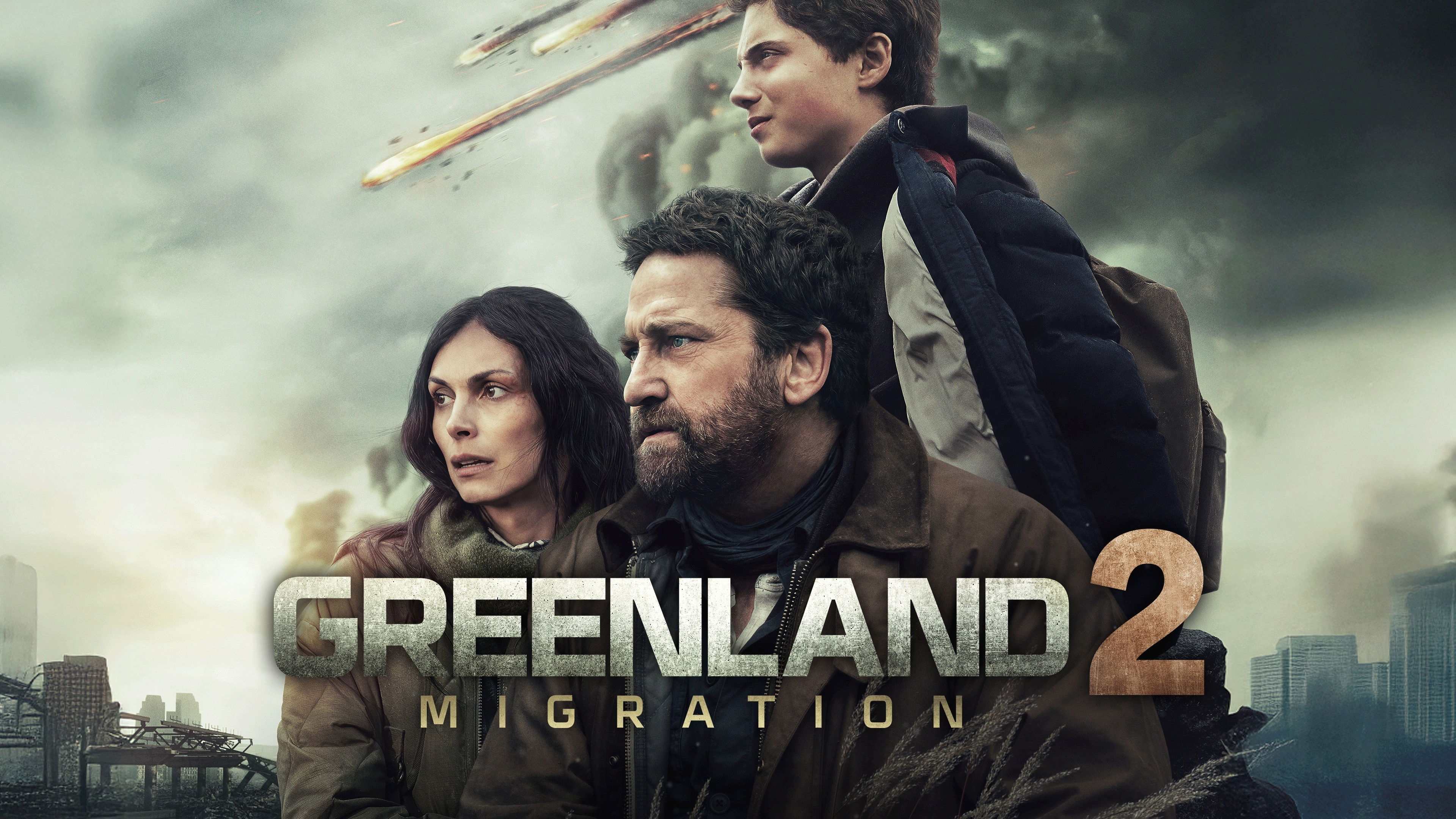
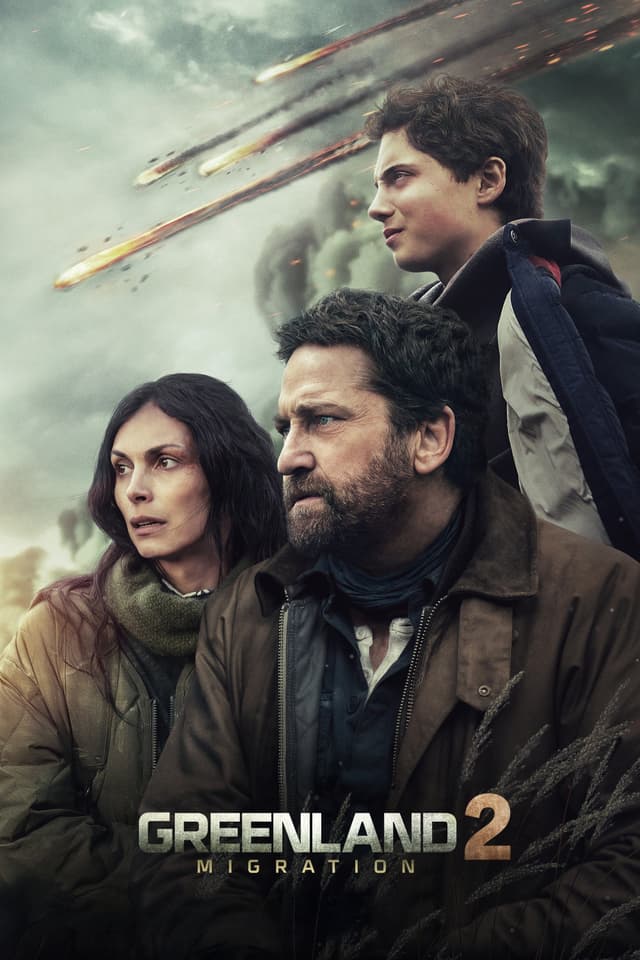
Months after a comet impact devastated Earth, John Garrity (Gerard Butler), his wife Allison (Morena Baccarin), and their son Nathan leave the safety of the underground Greenland shelter and journey across a fractured Europe in search of a permanent settlement. Their migration takes them through a flooded English coastline, a French warzone, and the volcanic remains of the impact zone as new threats emerge in the post-apocalyptic landscape.
What Is the Budget of Greenland 2: Migration (2026)?
Greenland 2: Migration (2026), directed by Ric Roman Waugh and distributed by Lionsgate in the United States, was produced on a reported budget of $90,000,000. The figure represents a significant escalation from the original Greenland (2020), which was made for roughly $35,000,000, and reflects the wider scale of a post-apocalyptic survival story set across multiple European countries after the comet strike that ended the first film. STX Entertainment had originally agreed to finance the sequel at $65,000,000 when it acquired worldwide distribution rights at the 2021 Cannes Film Festival for a reported $75,000,000 minimum guarantee, but the budget grew during the long pre-production cycle as the script expanded in scope.
Anton served as the lead financier, with Basil Iwanyk and Erica Lee's Thunder Road Pictures (the John Wick franchise) and Gerard Butler and Alan Siegel's G-BASE Entertainment co-producing. The investment positioned Migration as the centerpiece of a planned Greenland trilogy and the most expensive Gerard Butler vehicle since Geostorm (2017). Lionsgate picked up U.S. theatrical rights in May 2024, taking over a film that STX had originally intended to release itself before its corporate restructuring.
Key Budget Allocation Categories
The reported $90,000,000 budget was distributed across several major production areas:
- Above-the-Line Talent: Gerard Butler returned as star and producer through G-BASE, commanding a fee commensurate with his post-Plane standing as a reliable mid-budget action lead. Morena Baccarin reprised her role as Allison Garrity, and the sequel added Roman Griffin Davis (Jojo Rabbit) as the now-teenaged Nathan Garrity, Amber Rose Revah (The Punisher), Sophie Thompson, and William Abadie. Director Ric Roman Waugh, returning from the original film and the Butler vehicles Angel Has Fallen and Kandahar, took a director-producer rate that reflected his ongoing partnership with the star.
- UK Studio Stages and Backlot Work: Principal photography was anchored at Shinfield Studios in Berkshire, the purpose-built facility that has hosted productions including Disney's Star Wars series and the Wonka film. Stage rental, set construction for the underground Greenland bunker interiors, refugee camp environments, and a French warzone set piece consumed a significant portion of the physical production budget across roughly three months of UK shooting.
- Iceland Location Unit: A dedicated unit shot in Iceland to capture the volcanic, glacial, and ash-covered landscapes that stand in for the post-impact European wasteland. International travel, specialty cold-weather equipment, helicopter and drone photography over remote terrain, and Icelandic crew costs added meaningfully to the budget, though the country's 35% production rebate offset a portion of the on-the-ground spend.
- Visual Effects: Migration features extensive digital extensions for the destroyed Liverpool sequences, a flooded English coastline, French battlefield set pieces, and the ongoing comet-fragment fallout that drives the survival premise. Multiple vendor houses contributed shots, with photoreal water simulation, atmospheric ash, and large-scale environment work representing the heaviest line items in the post-production schedule.
- Production Design and Practical Set Pieces: The film stages a downed plane sequence, a refugee column, a crashed military convoy, and the climactic approach to the Greenland shelter complex. Practical builds for these set pieces, combined with vehicle work, weapons rentals, prosthetics, and stunt rigging, were core to the grounded look Waugh established in the first film and carried forward into the sequel.
- Score, Sound and Post-Production: Composer David Buckley, who scored the original Greenland, returned for the sequel. Editor Colby Parker Jr. and cinematographer Martin Ahlgren (Daredevil, Marriage Story) joined the picture. Post-production carrying costs grew as the long gap between principal photography in 2024 and the January 2026 theatrical release extended the overhead window.
- Marketing and Distribution: Lionsgate inherited the title from STX in May 2024 and committed an estimated $35,000,000 to $50,000,000 in worldwide prints and advertising, anchored by a January release slot positioned to dominate the typically soft post-holiday weekend. STX continued to handle international distribution through its global partner network.
How Does Greenland 2: Migration's Budget Compare to Similar Films?
At $90,000,000, Migration sits at the upper edge of mid-budget Gerard Butler action vehicles and well above the original Greenland. The comparison set illustrates how its commercial outcome diverged from peer films in the disaster, survival, and Butler-led action categories:
- Greenland (2020): Budget $35,000,000 | Worldwide $52,300,000. The pandemic-era original was a critical success and a respectable VOD performer that nearly broke even theatrically despite a fragmented global release. Migration spent 2.6x the original budget and earned less worldwide, reversing the franchise math.
- Geostorm (2017): Budget $120,000,000 | Worldwide $221,600,000. Butler's previous big-budget disaster vehicle cost 33% more than Migration and earned roughly five times as much, though both share the same problem of having to engineer a sequel-worthy commercial outcome on a premise that defaults to spectacle over character.
- Plane (2023): Budget $25,000,000 | Worldwide $74,200,000. Butler's most efficient recent action vehicle cost just over a quarter of Migration and earned 1.7x more worldwide, demonstrating the box office ceiling for grounded Butler thrillers and the risk of escalating budgets without commensurate audience growth.
- Moonfall (2022): Budget $138,000,000 | Worldwide $67,200,000. Roland Emmerich's disaster film stands as the closest cautionary peer: a mid-2020s apocalyptic spectacle that lost more than $70,000,000 against budget and helped retreat studio appetite for the genre at this price point.
- A Quiet Place (2018): Budget $17,000,000 | Worldwide $340,900,000. The Krasinski survival hit illustrates that post-apocalyptic genre material does not require a nine-figure investment to break out, a lesson the Greenland sequel's economics were unable to apply.
- San Andreas (2015): Budget $110,000,000 | Worldwide $474,000,000. Dwayne Johnson's disaster vehicle cost 22% more than Migration and earned more than ten times its worldwide gross, the model for how studio disaster films are supposed to perform when the formula works.
Greenland 2: Migration Box Office Performance
Greenland 2: Migration opened on January 9, 2026, in the United States across 2,710 theaters, with a one-day-earlier January 6 release in Austria. The film finished its domestic opening weekend with approximately $8,401,148, a soft result for a tentpole-priced sequel and well below the trajectory Lionsgate would have needed to recoup its investment. The film maintained a short 2.9-week average theatrical run per location and lost roughly 60% of its screens by its third frame.
Against a $90,000,000 production budget, the film needed approximately $200,000,000 to $220,000,000 in worldwide gross to reach profitability when accounting for marketing and distribution costs, a target it missed by a wide margin. Here is the financial breakdown:
Box Office Breakdown
Greenland 2 Migration

Migration returned approximately $0.23 in theatrical revenue for every $1 invested when measured against the midpoint of total estimated production and marketing spend, placing it among the most decisive studio losses of the early 2026 calendar year. Domestic gross of $17,770,308 against an international gross of $11,001,618 produced a 62/38 split heavily weighted toward North America, an unusual outcome for a sequel set entirely in Europe and a clear signal that the international audience that powered some of Butler's recent grounded thrillers did not turn up for the apocalyptic premise.
The disappointing theatrical run was partially offset by a strong streaming debut on HBO Max in May 2026, where the film climbed into the platform's weekly top ten and recovered some ancillary value for Anton and its co-financing partners. A planned third entry that producers had openly discussed during the sequel's development now appears unlikely on a similar budget.
Greenland 2: Migration Production History
Development on a Greenland sequel began almost immediately after the first film's pandemic-era VOD success in late 2020. Chris Sparling, who wrote the original, returned with co-writer Mitchell LaFortune to develop a script that would pick up months after the comet impact and follow the Garrity family as they leave the temporary Greenland shelter and attempt to migrate to a permanent settlement. STX Entertainment acquired worldwide distribution rights at the 2021 Cannes Film Festival for a reported $75,000,000 minimum guarantee, the highest pre-sale at that year's market.
The film entered a long pre-production phase that stretched across multiple delays tied to STX's corporate transition and the 2023 Hollywood strikes. Principal photography finally began on April 29, 2024, anchored at Shinfield Studios in Berkshire,
with location work across Alton in Hampshire, United Kingdom, and a dedicated unit shoot in Iceland that captured the volcanic and glacial landscapes used to stand in for a post-impact European wasteland. The UK production drew on the 25.5% Audio-Visual Expenditure Credit, while the Iceland unit benefitted from the country's 35% production rebate. The shoot wrapped in July 2024.
In May 2024, with STX in the process of being restructured under Najafi Companies, Lionsgate acquired U.S. theatrical distribution rights and took over marketing duties domestically. STX retained international distribution through its existing partner network. Post-production ran through 2025, with the long visual effects schedule pushing the release into the January 2026 corridor that Lionsgate ultimately announced in early 2025. The 21-month gap between wrap and theatrical release was unusually wide for a mid-budget studio action film and contributed to the carrying-cost burden on the production.
Awards and Recognition
Greenland 2: Migration received no significant awards recognition. The film failed to register at any major industry ceremonies, was not nominated at the Saturn Awards for genre filmmaking, and received no recognition from the Visual Effects Society Awards despite its extensive digital extensions of post-impact European environments. It also avoided Razzie nominations for the 2026 ceremony, in part because more publicly maligned commercial failures of the same season absorbed the negative attention.
The film's awards profile mirrors the original Greenland (2020), which similarly received no major nominations despite its strong VOD performance during the pandemic. Both entries occupy a genre and budget tier that is largely invisible to industry voting bodies, which tend to gravitate toward either prestige drama or higher-pedigree spectacle filmmaking. The combination of a January release, mixed reviews, and limited cultural footprint cemented Migration's position outside the 2026 awards conversation.
Critical Reception
Greenland 2: Migration received mixed reviews. The film holds a 49% approval rating on Rotten Tomatoes based on 105 critic reviews, with a critical consensus that reads: "The world ends more with a whimper in Greenland 2: Migration compared to its predecessor's big bang thrills, but Gerard Butler's sturdy star power keeps this continuation reasonably compelling." On Metacritic, the film scored 49 out of 100 based on 19 critics, indicating mixed or average reviews. The audience score on Rotten Tomatoes ran higher at 66%, a typical pattern for Butler-led action vehicles where general audiences respond more warmly than the critical establishment.
Critics broadly praised Butler's screen presence and the grounded approach to a genre that often defaults to camp, but objected to the slack pacing, episodic structure, and the dispatch-by-attrition treatment of supporting characters. Jesse Hassenger of The Guardian wrote that the sequel "doubles down on its predecessor's earnestness, to the point of alternating between grimly offing side characters at random and then getting all maudlin about its own pitilessness." Katie Walsh of Tribune News Service called it "a proudly, even defiantly optimistic view of what comes after disaster, which can serve for the viewer as either cathartic fictional balm, or Pollyanna-ish fantasy."
Negative notices were sharper. Louisa Moore of Screen Zealots described the film as "a totally lifeless disaster flick that somehow manages to be both boring and ridiculous at the same time," and The Hollywood Reporter's review flagged the sequel's rote structure as a missed opportunity to expand on the original's focused family-survival premise. Jayne Nelson of Radio Times noted that "from a flooded Liverpool to a French warzone, the family lurches from one calamity to another, all played out with deathly seriousness." The mixed reception, combined with the commercial collapse, has positioned Migration as a cautionary example of how a tightly scaled survival hit can lose its identity when scaled up to studio tentpole budgets.
Frequently Asked Questions
How much did it cost to make Greenland 2: Migration (2026)?
The reported production budget was $90,000,000. The film was financed primarily by Anton, with Basil Iwanyk and Erica Lee's Thunder Road Pictures and Gerard Butler and Alan Siegel's G-BASE Entertainment co-producing. STX originally agreed to a $65,000,000 budget when it acquired worldwide distribution rights at the 2021 Cannes Film Festival, but the figure grew during the long pre-production cycle.
How much did Greenland 2: Migration earn at the box office?
The film grossed $17,770,308 domestically and $11,001,618 internationally, for a worldwide total of $28,771,926. It opened to approximately $8,401,148 in the United States across 2,710 theaters on its January 9, 2026 opening weekend.
Was Greenland 2: Migration a box office bomb?
Yes. Against a $90,000,000 production budget and an estimated $35,000,000 to $50,000,000 in marketing spend, the film returned approximately $0.23 in worldwide gross for every $1 invested. The loss against total estimated investment came to roughly $96,000,000, making it one of the most decisive studio losses of the early 2026 calendar year.
Who directed Greenland 2: Migration?
Ric Roman Waugh directed the film, returning from the original Greenland (2020). He works regularly with Gerard Butler, having also directed Angel Has Fallen (2019) and Kandahar (2023). The screenplay was written by Chris Sparling, who wrote the first film, with co-writer Mitchell LaFortune.
Where was Greenland 2: Migration filmed?
Principal photography ran from April 29 to July 2024, anchored at Shinfield Studios in Berkshire and with location work in Alton, Hampshire, in the United Kingdom. A dedicated second unit shot in Iceland to capture volcanic and glacial landscapes used to stand in for the post-impact European wasteland. The UK production drew on the 25.5% Audio-Visual Expenditure Credit, while the Iceland unit benefitted from the country's 35% production rebate.
How does Greenland 2: Migration compare to the original Greenland?
The original Greenland (2020) cost approximately $35,000,000 and grossed $52,300,000 worldwide despite a fragmented pandemic-era release. The sequel spent 2.6 times the original budget and earned less worldwide ($28,771,926), reversing the franchise math. The original was widely viewed as a sleeper success on VOD; the sequel has been positioned as a commercial disappointment.
Who plays the Garrity family in Greenland 2: Migration?
Gerard Butler and Morena Baccarin reprise their roles as John and Allison Garrity. Roman Griffin Davis (Jojo Rabbit) takes over the role of their son Nathan, replacing Roger Dale Floyd from the original. The expanded supporting cast includes Amber Rose Revah, Sophie Thompson, William Abadie, Peter Polycarpou, and Tommie Earl Jenkins.
When did Greenland 2: Migration release on streaming?
The film began streaming on HBO Max in May 2026, roughly four months after its January 9, 2026 theatrical release. It performed well on the platform, climbing into the weekly top ten and recovering some ancillary value for Anton and its co-financing partners after the disappointing theatrical run.
What did critics think of Greenland 2: Migration?
The film received mixed reviews, with a 49% approval rating on Rotten Tomatoes based on 105 critic reviews and a 49 out of 100 score on Metacritic. The audience score on Rotten Tomatoes ran higher at 66%. Critics praised Gerard Butler's screen presence and the grounded approach but objected to the slack pacing, episodic structure, and the dispatch-by-attrition treatment of supporting characters.
Will there be a Greenland 3?
A third entry had been openly discussed by producers during the sequel's long development cycle, but the commercial underperformance of Migration makes a similarly budgeted continuation unlikely. Strong streaming performance on HBO Max in May 2026 may keep the property viable for a smaller-scale follow-up or a different format, but no Greenland 3 has been formally announced as of mid-2026.
Filmmakers
Greenland 2 Migration

Official Trailer
Build budgets like this one in Saturation
Start from an industry-standard feature film template, import the schedule and rates you already have, and let the cost report keep itself current as you spend. Real-time collaboration, no spreadsheets.