Green Lantern Budget
 AdventureActionThrillerScience Fiction1h 54m
Updated
Synopsis
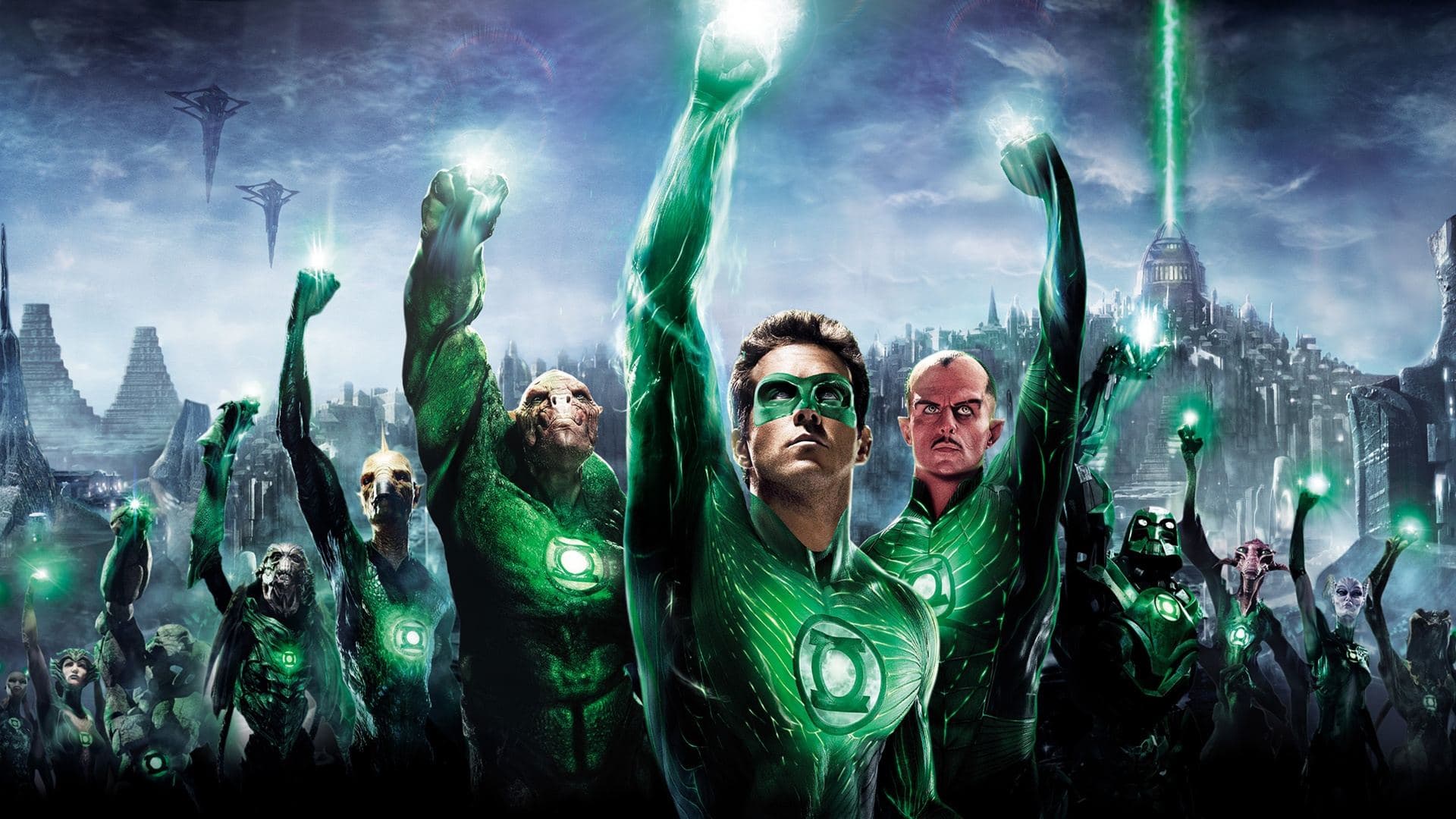
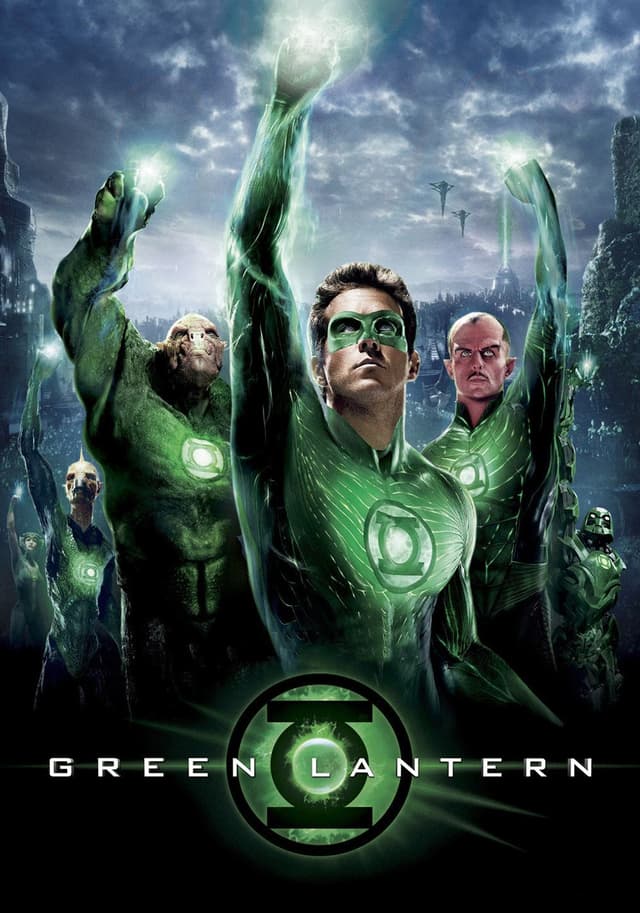
Cocky test pilot Hal Jordan is chosen by a power ring from the dying alien Abin Sur and becomes the first human member of the Green Lantern Corps, an intergalactic police force fueled by willpower. While the Corps leader Sinestro doubts that a human can master the ring, scientist Hector Hammond is mutated by a trace of Parallax inside the alien's body, and the fear-eating entity Parallax heads for Earth. Hal must overcome his own fear to save Carol Ferris and Coast City and defeat Parallax.
What Is the Budget of Green Lantern?
Green Lantern (2011), directed by Martin Campbell and released by Warner Bros. Pictures, had a production budget of $200,000,000. That is the figure Box Office Mojo and The Numbers both list. In March 2011 the Los Angeles Times reported that the film cost more than $200,000,000 to produce before Louisiana tax credits, and called it Warner's riskiest bet of the year: the studio's first attempt to build a summer tentpole from a DC character other than Batman or Superman. TheWrap's opening weekend report added that Warner spent another $100,000,000 to promote it, so counting marketing, the studio's reported outlay was about $300,000,000.
Warner did not carry the whole production cost itself. The film shot in Louisiana, whose incentive program at the time covered 30 percent of a production's local spending, and The Advocate reported in 2014 that the state promised about $35,000,000 in tax credits to Green Lantern. By the state's own cost-benefit analyses, it recouped only about $8,000,000 of that. The budget also grew late: in April 2011, two months before release, Warner added $9,000,000 to the visual effects budget and brought in additional effects houses.
Key Budget Allocation Categories
Warner Bros. has never published a line-item budget for Green Lantern, but the production record shows where the money went.
- Visual Effects: Martin Campbell said the film had about 1,300 visual effects shots. Sony Pictures Imageworks, the principal vendor, delivered more than 1,000 of them and built every Green Lantern costume as a computer-generated effect, including a full-body replacement for Ryan Reynolds, who wore a gray tracking suit on set, and even his mask. Fully digital characters such as Kilowog and Tomar-Re added to the load, and the $9,000,000 increase approved in April 2011 paid for extra vendors to finish on time.
- Louisiana Location Shoot: Principal photography ran from March 15 to August 6, 2010, in and around New Orleans, which doubled for the fictional Coast City. The Art Deco terminal at New Orleans Lakefront Airport stood in for Ferris Aircraft, and stunt-car test footage was shot in Madisonville. The production had first been scheduled to shoot at Fox Studios Australia.
- Reshoots and 3D Conversion: Key scenes were reshot in January 2011 at Warner Bros. Studios in Los Angeles, California, and the film was converted to 3D in post-production. Most of its 3,816 opening theaters showed it in 3D.
- Cast: Ryan Reynolds led a cast that included Blake Lively, Peter Sarsgaard, Mark Strong, Angela Bassett and Tim Robbins. Geoffrey Rush and Michael Clarke Duncan were added in 2011 to voice the digital characters Tomar-Re and Kilowog.
- Script Development: Greg Berlanti, Michael Green and Marc Guggenheim wrote three drafts by December 2008, Michael Goldenberg rewrote the screenplay, and Warner commissioned a sequel script while the first film was still shooting.
How Does Green Lantern's Budget Compare to Similar Films?
At $200,000,000, Green Lantern was the most expensive of the four superhero films released in summer 2011, and the lowest-grossing of the four. Figures below are Box Office Mojo's, across all releases.
- Thor (2011): Budget $150,000,000 | Worldwide $449,326,618. Marvel's origin story for another hero making his first big-screen appearance cost $50,000,000 less, grossed $212,125,446 more and took nearly 60% of its total overseas.
- X-Men: First Class (2011): Budget $160,000,000 | Worldwide $352,616,690. It opened two weeks earlier to $55,101,604, almost the same as Green Lantern's $53,174,303, but took $206,208,385 internationally to Green Lantern's $120,600,000.
- Captain America: The First Avenger (2011): Budget $140,000,000 | Worldwide $370,569,774. A period origin story from the same summer that cost $60,000,000 less and grossed $133,368,602 more.
- Superman Returns (2006): Budget $270,000,000 | Worldwide $391,081,192. Warner's previous attempt to relaunch a DC hero cost more and grossed more, yet its $52,535,096 opening weekend was within $640,000 of Green Lantern's.
- Deadpool (2016): Budget $58,000,000 | Worldwide $782,837,347. Ryan Reynolds' next superhero lead cost 29% of Green Lantern's budget and grossed 3.3 times as much.
Green Lantern Box Office Performance
Green Lantern premiered at Grauman's Chinese Theatre in Hollywood on June 15, 2011, and opened in the United States and Canada on June 17 in 3,816 theaters. It earned about $3,350,000 from midnight shows at 1,810 locations, $21,386,523 on its first day and $53,174,303 over the weekend, enough for first place but short of the roughly $60,000,000 that pre-release forecasts had predicted. In its second weekend it fell 66% to third place behind Cars 2 (2011) and Bad Teacher (2011), a steeper second-weekend drop than either Thor or X-Men: First Class, the summer's other superhero openings so far. It finished with $116,601,172 in the United States and Canada and $120,600,000 internationally, for $237,201,172 worldwide, according to Box Office Mojo. Its biggest overseas markets were Mexico at $12,470,854, Brazil at $10,266,555 and the United Kingdom at $10,082,852.
The prints and advertising estimate below is the $100,000,000 marketing spend TheWrap reported on opening weekend. The Numbers tracks a lower international total of $102,934,320, which gives $219,535,492 worldwide; Saturation uses Box Office Mojo's figure.
Box Office Breakdown
Green Lantern

At approximately -21%, "Green Lantern" returned roughly $0.79 for every $1 invested.
The real gap was wider than that, because theaters keep a share of every ticket. The Hollywood Reporter estimated the film needed about $500,000,000 worldwide to be considered financially solid, and some publications have put Warner's loss as high as $75,000,000. Home video helped only at the margins: The Numbers estimates domestic DVD and Blu-ray sales at $45,885,018. It also lagged its summer rivals abroad: Green Lantern took 50.8% of its total internationally, while Thor and X-Men: First Class each took close to 60% of theirs.
Green Lantern Production History
A Green Lantern film spent a decade in development before Warner Bros. made one. In 1997 the studio approached Kevin Smith, who turned it down, and Quentin Tarantino was offered the chance to write and direct. By 2004 Robert Smigel had written an action comedy to star Jack Black, which Warner dropped after a poor fan reaction online. David S. Goyer, whose script for Batman Begins (2005) had impressed the studio, was offered Green Lantern or The Flash and chose The Flash. In October 2007 Greg Berlanti signed to direct and to write with comic book writers Michael Green and Marc Guggenheim.
By February 2009 Berlanti was off the project, and he later confirmed he had been fired as both director and writer. Martin Campbell, director of GoldenEye (1995) and Casino Royale (2006), took over, and the release date moved from December 2010 to June 17, 2011. Reynolds, Bradley Cooper, Justin Timberlake and Jared Leto were the producers' top choices for Hal Jordan, and Reynolds was cast on July 10, 2009, after 20th Century Fox showed no interest in making the Deadpool film he wanted. Blake Lively, Peter Sarsgaard and Mark Strong joined in January 2010, Tim Robbins in February, and Temuera Morrison and Taika Waititi in March.
The production was first set to shoot at Fox Studios Australia in November 2009, slipped to January 2010, and then moved to Louisiana. Principal photography began in New Orleans on March 15, 2010; Angela Bassett joined as Amanda Waller nine days later, and Reynolds separated his shoulder during a July shoot. Filming wrapped on August 6, 2010. Reynolds told Empire in 2016 that the film started shooting with a poster and a release date but without a finished script.
Post-production was difficult. The first trailer, released in November 2010, drew a lukewarm response because the large effects sequences were not ready, and Warner delayed the marketing campaign. "We can't afford to do that again," said Sue Kroll, the studio's worldwide marketing president. Reshoots followed in January 2011, the effects budget rose by $9,000,000 in April, and nine minutes of finished footage shown at WonderCon that month drew a much better response. The film reached theaters at 114 minutes; an extended cut running 123 minutes came out on Blu-ray on October 14, 2011.
Warner had planned Green Lantern as the start of a new DC film series and teased a sequel in a mid-credits scene of Sinestro taking the yellow ring. In September 2011 the studio abandoned those plans, and Man of Steel (2013) launched the DC Extended Universe instead; a Green Lantern Corps film announced for 2020 was never made. Campbell said in 2021 that "the film did not work, really" and that he was partly responsible. Reynolds found his superhero hit with Deadpool five years later, and a mid-credits scene in Deadpool 2 (2018) has Deadpool travel back in time to shoot Reynolds as he finishes reading the Green Lantern script. Nathan Fillion later played the Green Lantern Guy Gardner in Superman (2025).
Awards and Recognition
Green Lantern was not nominated for an Academy Award or a BAFTA. Its recognition came from a craft award and from fan-voted ceremonies, mostly for Ryan Reynolds.
- Hollywood Post Alliance Awards: Won Outstanding Sound, Feature Film, on November 10, 2011.
- People's Choice Awards: Ryan Reynolds won Favorite Movie Superhero and was nominated for Favorite Movie Actor and Favorite Action Movie Actor in January 2012.
- Scream Awards: Won Most Anticipated Movie in October 2010, eight months before release; Reynolds was nominated for Best Superhero in 2011.
- Teen Choice Awards: Reynolds and Blake Lively were nominated for Choice Movie Actor and Actress in the sci-fi and fantasy categories in August 2011.
On the other side of the ledger, The Daily Telegraph named Green Lantern one of the ten worst films of 2011.
Critical Reception
Reviews were largely negative. Green Lantern holds 25% on Rotten Tomatoes from 248 reviews, with the consensus: "Noisy, overproduced, and thinly written, Green Lantern squanders an impressive budget and decades of comics mythology." Its Metacritic score is 39 out of 100 from 39 critics, indicating generally unfavorable reviews. Audiences were kinder: CinemaScore polls gave it a B, and its Rotten Tomatoes audience score is 45%.
Justin Chang of Variety called it "a highly unstable alloy of the serious, the goofy and the downright derivative," and Christy Lemire of the Associated Press called it a "joyless amalgamation of expository dialogue and special effects that aren't especially special." Roger Ebert wrote that the film "does not intend to be plausible. It intends to be a sound-and-light show." Manohla Dargis of The New York Times was negative overall but praised Reynolds, Sarsgaard, Strong and Bassett. Todd McCarthy of The Hollywood Reporter was more positive, finding enough "self-deprecating humor to suggest it doesn't take itself too seriously." Critics broadly liked Reynolds and faulted the script, which matches what Reynolds and Campbell later said about the production.
Frequently Asked Questions
How much did it cost to make Green Lantern (2011)?
Green Lantern had a production budget of $200,000,000, the figure listed by Box Office Mojo and The Numbers. TheWrap reported that Warner Bros. spent more than $200,000,000 to produce it and another $100,000,000 to promote it, about $300,000,000 in total.
How much did Green Lantern (2011) make at the box office?
Green Lantern grossed $237,201,172 worldwide, including $116,601,172 in the United States and Canada and $120,600,000 internationally, according to Box Office Mojo. It opened to $53,174,303 from 3,816 theaters on June 17, 2011.
Was Green Lantern (2011) profitable?
No. Against about $300,000,000 in production and marketing, its $237,201,172 worldwide gross leaves a shortfall of about $62,798,828, an ROI of roughly -21%, before theaters take their share. The Hollywood Reporter estimated it needed about $500,000,000 to be financially solid, and some publications put Warner's loss as high as $75,000,000.
Why do sources give different box office totals for Green Lantern?
Box Office Mojo and The Numbers agree on the $116,601,172 domestic gross but track international receipts differently. Box Office Mojo lists $120,600,000 internationally for $237,201,172 worldwide, while The Numbers lists $102,934,320 for $219,535,492. Saturation uses Box Office Mojo.
How much did Louisiana pay toward Green Lantern?
The Advocate reported that Louisiana promised about $35,000,000 in tax credits to Green Lantern through a program that covered 30 percent of a film's local costs. By the state's own cost-benefit analyses, it recouped only about $8,000,000 of that.
Did Green Lantern (2011) go over budget?
Warner Bros. never published a final cost, but spending rose late in production. Key scenes were reshot in January 2011, and in April 2011 the studio added $9,000,000 to the visual effects budget to hire more effects houses. The Los Angeles Times reported in March 2011 that the film cost more than $200,000,000 to produce before Louisiana tax credits.
Where was Green Lantern (2011) filmed?
Green Lantern was filmed in Louisiana from March 15 to August 6, 2010. New Orleans doubled for Coast City, New Orleans Lakefront Airport stood in for Ferris Aircraft, and test footage was shot in Madisonville. It was first scheduled for Fox Studios Australia, and reshoots took place at Warner Bros. Studios in Los Angeles in January 2011.
Why was there never a Green Lantern 2?
Warner Bros. commissioned a sequel script while the first film was shooting and teased it with a mid-credits scene of Sinestro taking the yellow ring. After the poor reviews and box office, the studio dropped the sequel in September 2011, and Man of Steel (2013) launched the DC Extended Universe instead.
How does Green Lantern's budget compare to Deadpool?
Deadpool (2016), Ryan Reynolds' next superhero lead, cost $58,000,000, 29% of Green Lantern's $200,000,000, and grossed $782,837,347 worldwide, 3.3 times Green Lantern's $237,201,172, according to Box Office Mojo.
What did critics think of Green Lantern (2011)?
Green Lantern holds 25% on Rotten Tomatoes from 248 reviews and a Metacritic score of 39 from 39 critics. Audiences polled by CinemaScore gave it a B. Critics generally liked Ryan Reynolds but faulted the script, and The Daily Telegraph named it one of the ten worst films of 2011.
Filmmakers
Green Lantern

Official Trailer
Build budgets like this one in Saturation
Start from an industry-standard feature film template, import the schedule and rates you already have, and let the cost report keep itself current as you spend. Real-time collaboration, no spreadsheets.