God's Not Dead Budget
 Drama1h 53m
Updated
Synopsis
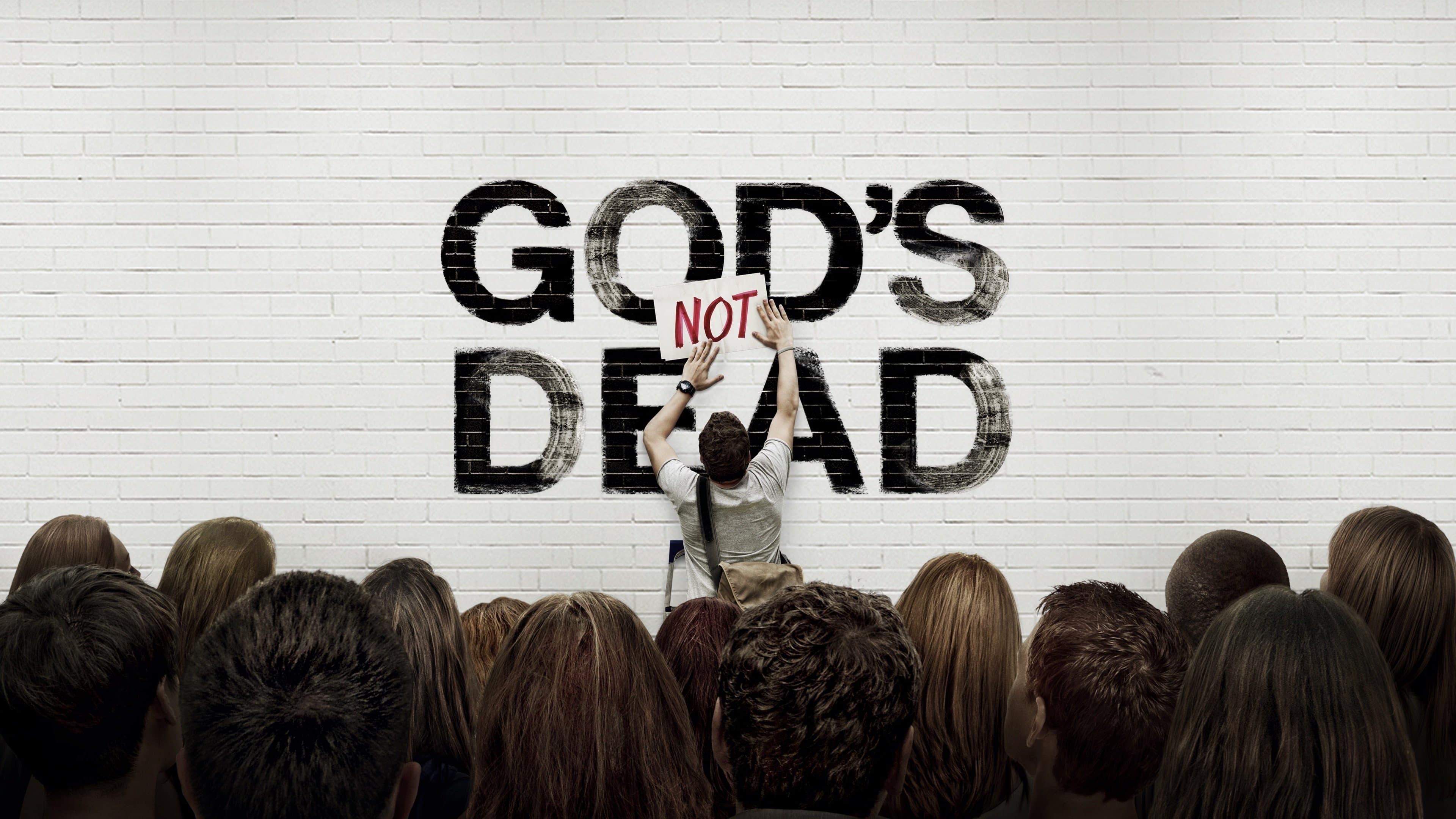
After he refuses to disavow his faith, a devout Christian student must prove the existence of God or else his college philosophy professor will fail him.
What Is the Budget of God's Not Dead?
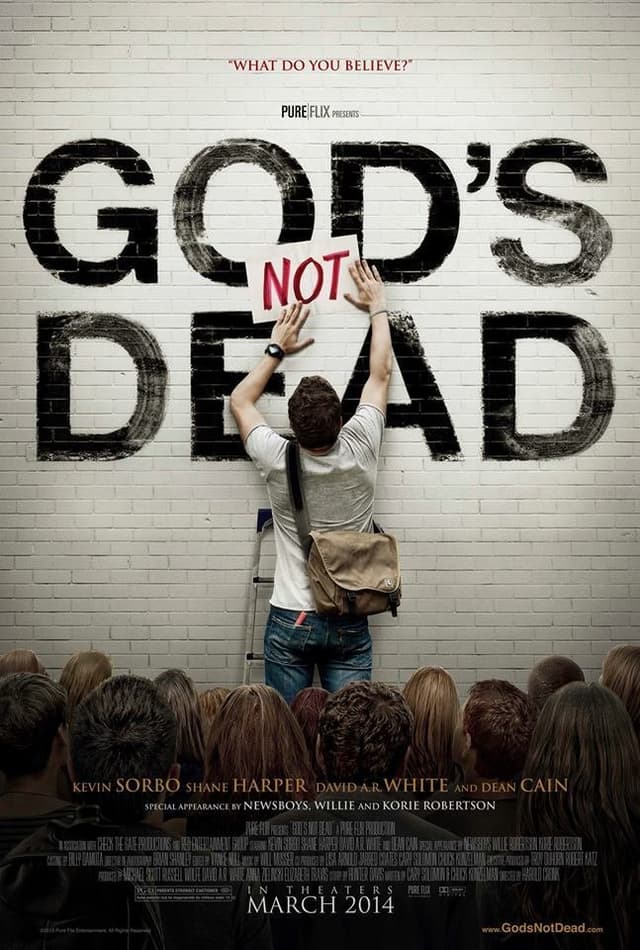
God's Not Dead (2014), directed by Harold Cronk and distributed by Pure Flix Entertainment, had a reported production budget of approximately $2,000,000. The film was produced as a low-budget independent faith drama and became one of the defining examples of micro-budget commercial success in the faith-based theatrical market, earning $64.7 million worldwide against a $2 million production cost. The ROI this represents is among the highest ever achieved by an independently produced faith film in theatrical distribution.
The $2 million budget reflects Pure Flix's model at the time: contained productions with direct faith community appeal, minimal above-the-line star investment, and distribution built on church and Christian organization engagement rather than mainstream theatrical marketing. The film's commercial performance fundamentally redefined what was commercially possible in the faith-based theatrical category.
Key Budget Allocation Categories
At $2,000,000, God's Not Dead was produced with the extreme discipline that micro-budget independent filmmaking requires. The production prioritized the elements essential to its specific premise:
- Cast and Dialogue-Driven Production — The film's core is a series of classroom debates, making performance and scripted dialogue the primary creative investment. Shane Harper as Josh and Kevin Sorbo as Professor Radisson anchor the central conflict. Sorbo's recognizable profile from television adds above-the-line value at a cost a micro-budget production can accommodate. The supporting ensemble of parallel storyline characters adds breadth without requiring significant additional star investment.
- University Location and Production Design — Setting the film on a college campus required location access, set dressing for classrooms and university environments, and production design that makes the academic setting feel authentic. For a film about a campus intellectual debate, the visual credibility of the university environment is essential to the premise's believability.
- Multiple Storyline Production — God's Not Dead weaves several parallel narratives alongside the central debate, including storylines about a Muslim girl, a Chinese student, a dying woman, and a pastor. Managing this narrative breadth within a $2 million budget required careful scheduling and production efficiency across multiple distinct story environments.
- Pure Flix Distribution Alignment — Pure Flix's distribution model, built on direct engagement with churches and Christian organizations to organize group screenings, is a production consideration as much as a distribution strategy. The film's content and marketing were designed to make it ideal for church group viewing, which is the mechanism that amplified its commercial reach far beyond what its production investment or marketing spend would otherwise suggest.
How Does God's Not Dead's Budget Compare to Similar Films?
At $2,000,000, God's Not Dead achieved a worldwide gross that most studio films at ten to twenty times the budget would consider a strong result. The comparisons that best contextualize this outcome:
- Facing the Giants (2006) — Budget $100,000 | Worldwide $10,178,331. The foundational micro-budget faith film that first demonstrated the commercial leverage of church community distribution. Facing the Giants earned more than one hundred times its budget. God's Not Dead, at twenty times Facing the Giants' budget, earned more than six times as much worldwide, showing that the model scales meaningfully with modest additional investment.
- The Passion of the Christ (2004) — Budget $30,000,000 | Worldwide $611,900,000. The landmark that demonstrated the extraordinary commercial leverage of faith community mobilization at scale. Mel Gibson's film established that Christian audiences, when fully engaged with a story that matters to them, will turn out in numbers that mainstream marketing alone cannot generate. God's Not Dead's $64.7 million on $2 million draws from the same community energy at a radically different production scale.
- Blue Like Jazz (2012) — Budget $1,500,000 | Worldwide $595,260. A faith-based independent film at a nearly identical budget that generated less than 1% of God's Not Dead's commercial result. The contrast illustrates how much specific narrative hook matters: the campus debate premise activated a specific cultural anxiety within the Christian community in 2014 that Blue Like Jazz's memoir-adaptation premise did not.
- Heaven Is for Real (2014) — Budget $12,000,000 | Worldwide $101,300,000. The faith biographical drama released the same year as God's Not Dead demonstrates the range of results possible in the faith-based theatrical market in 2014. Heaven Is for Real spent six times more and earned 57% more, suggesting that God's Not Dead's $2 million was dramatically more efficient than any production decision alone can explain.
- War Room (2015) — Budget $3,000,000 | Worldwide $73,000,000. The Kendrick Brothers' follow-up to Courageous, released the year after God's Not Dead, achieved a comparable result at 50% more budget, confirming that the faith community theatrical market in the mid-2010s was capable of generating extraordinary returns for films that activated the right community response.
God's Not Dead Box Office Performance
God's Not Dead earned $62,600,000 domestically and $64,700,000 worldwide at the box office, making it one of the most commercially successful independently produced faith films in history. The film opened in March 2014 across approximately 780 theaters and expanded rapidly based on strong word-of-mouth and church community engagement, eventually playing in over 2,000 theaters at its peak. The opening weekend of approximately $9,200,000 on fewer than 800 screens was one of the highest per-screen averages of its opening weekend.
A film typically needs to earn approximately twice its production budget to cover marketing and distribution costs. For God's Not Dead, that break-even threshold was roughly $4,000,000. Based on its theatrical footprint and Pure Flix's distribution model, Prints and Advertising costs are estimated at approximately $3,000,000, bringing the total estimated investment to around $5,000,000. With worldwide earnings of $64,700,000, the film cleared that threshold by an extraordinary margin.
Box Office Breakdown
God's Not Dead

At approximately +1,194%, God's Not Dead returned roughly $12.94 for every $1 invested during its theatrical run. This result places it among the most commercially efficient theatrical releases in independent film history, regardless of genre. The combination of a $2 million production cost and $64.7 million in worldwide revenue represents a commercial outcome that no conventional production or marketing strategy could have reliably predicted or manufactured. It was the result of a specific story activating a specific community at a specific cultural moment.
God's Not Dead Production History
God's Not Dead was produced by Pure Flix Entertainment and developed as a direct response to cultural conversations within the Christian community about the perceived hostility of secular academia toward religious belief. The film drew on a widely circulated anecdote about a philosophy professor demanding students declare God dead, a story that had circulated in Christian media and email forwards for years, giving the premise pre-built cultural resonance with its target audience before a single trailer was released.
The film's distribution strategy was built around church group screenings, with Pure Flix working directly with pastors and Christian organizations to coordinate theatrical attendance as organized community events. This model, combined with social media sharing within Christian networks, created a word-of-mouth amplification that extended the film's theatrical run far beyond what its initial 780-screen opening would typically support. The result was a production that became a cultural event within the faith community, spawning sequels and establishing Pure Flix as the primary commercial entity in faith-based theatrical distribution.
Awards and Recognition
God's Not Dead received strong audience recognition within the faith community, with church organizations, Christian media, and faith-based award circuits responding enthusiastically to the film's depiction of a student defending his beliefs in an academic setting. The film won multiple GMA Dove Awards and received recognition from Christian film organizations. Its commercial performance is itself the most significant form of recognition the faith community can offer a film: $64.7 million from a $2 million production is not a critical or awards outcome, it is a cultural event.
Critical Reception
Critical reception for God's Not Dead was sharply divided. Critics outside the faith community largely found the film's depiction of atheists, academics, and campus life as caricature, noting that the film's intellectual engagement with its own premise is shallow compared to genuine philosophical inquiry. The villain professor and the martyred student structure was widely criticized as a persecution fantasy rather than a realistic portrayal of campus religious life.
Within the faith community, the film resonated precisely because it dramatized anxieties about religious expression in secular institutions that many Christians experience as real. The gap between critical reception and commercial performance is perhaps wider for God's Not Dead than for any comparable film: a 16% on Rotten Tomatoes and $64.7 million worldwide are not numbers that typically coexist. They do here because the film was not made for critics; it was made for a community, and that community responded with extraordinary force.
Frequently Asked Questions
How much did it cost to make God's Not Dead (2014)?
The production budget was $17,000,000, covering principal photography, cast and crew salaries, locations, sets, post-production, and music. Marketing and distribution (P&A) costs are estimated at an additional $8,500,000 - $13,600,000, bringing the total studio investment to approximately $25,500,000 - $30,600,000.
How much did God's Not Dead (2014) earn at the box office?
God's Not Dead grossed $60,755,732 domestic, $-30,966,732 international, totaling $29,789,000 worldwide.
Was God's Not Dead (2014) profitable?
The film did not break even theatrically, earning $29,789,000 against an estimated $42,500,000 needed. Ancillary revenue may have improved the picture.
What were the biggest costs in producing God's Not Dead?
The primary cost drivers were above-the-line talent (Kevin Sorbo, Shane Harper, David A.R. White); talent compensation, authentic period production design, and meticulous post-production.
How does God's Not Dead's budget compare to similar drama films?
At $17,000,000, God's Not Dead is classified as a low-budget production. The median budget for wide-release drama films in the 2010s ranges from $30 - 80M for mid-budget to $150M+ for tentpoles. Comparable budgets: Away We Go (2009, $17,000,000); Deuce Bigalow: Male Gigolo (1999, $17,000,000); Jeepers Creepers 2 (2003, $17,000,000).
Did God's Not Dead (2014) go over budget?
There are no widely reported accounts of significant budget overruns for this production. However, studios rarely disclose precise budget overrun figures publicly. The reported production budget reflects the final estimated cost.
What was the return on investment (ROI) for God's Not Dead?
The theatrical ROI was 75.2%, calculated as ($29,789,000 − $17,000,000) ÷ $17,000,000 × 100. This measures gross revenue against production budget only - it does not account for P&A or exhibitor shares.
What awards did God's Not Dead (2014) win?
1 win total.
Who directed God's Not Dead and who were the key crew members?
Directed by Harold Cronk, written by Hunter Dennis, Chuck Konzelman, Cary Solomon, shot by Brian Shanley, with music by Will Musser, edited by Vance Null.
Where was God's Not Dead filmed?
God's Not Dead was filmed in United States of America.
Filmmakers
God's Not Dead

Official Trailer
Build budgets like this one in Saturation
Start from an industry-standard feature film template, import the schedule and rates you already have, and let the cost report keep itself current as you spend. Real-time collaboration, no spreadsheets.