Go! Budget
Updated
Synopsis
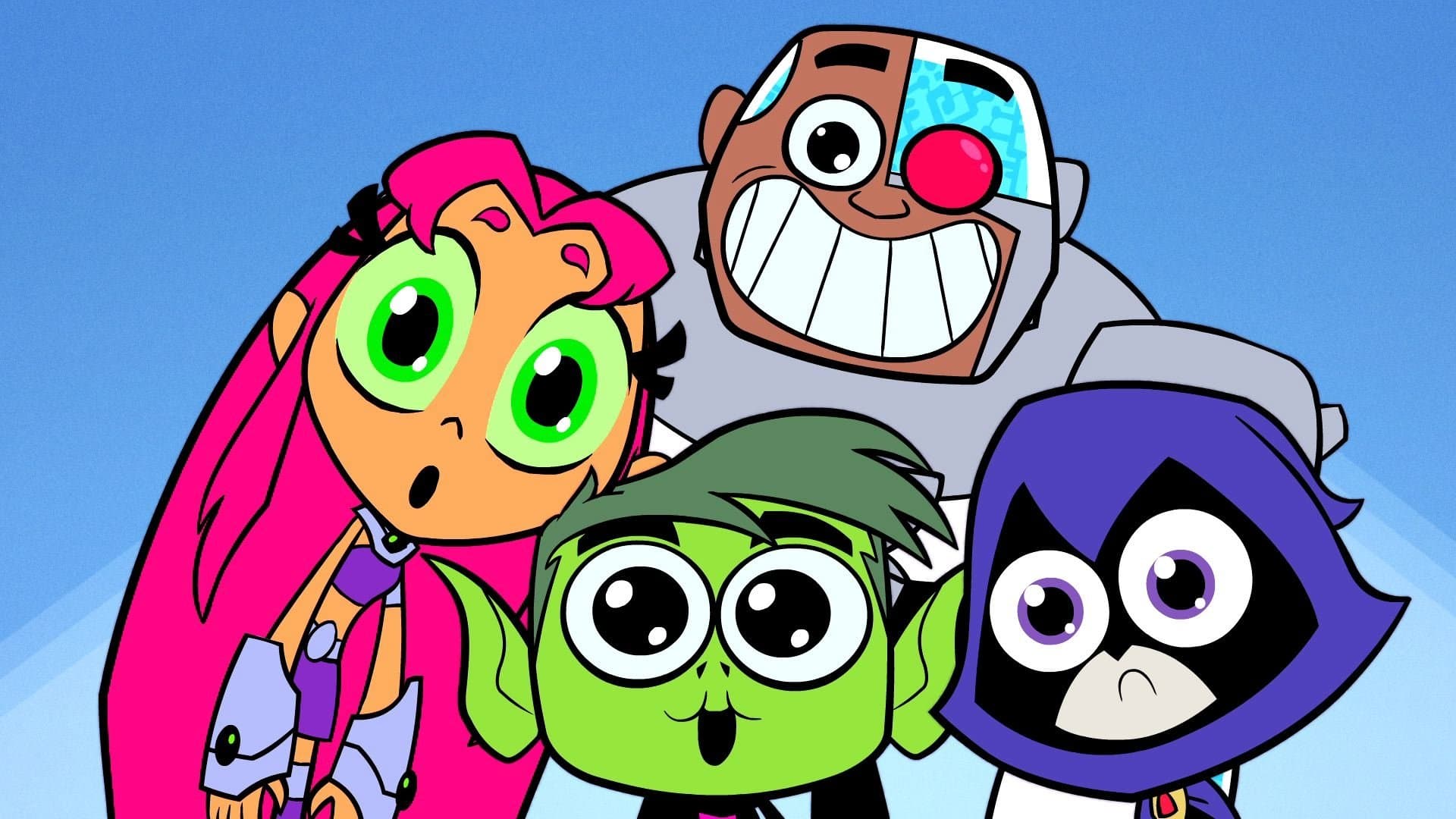
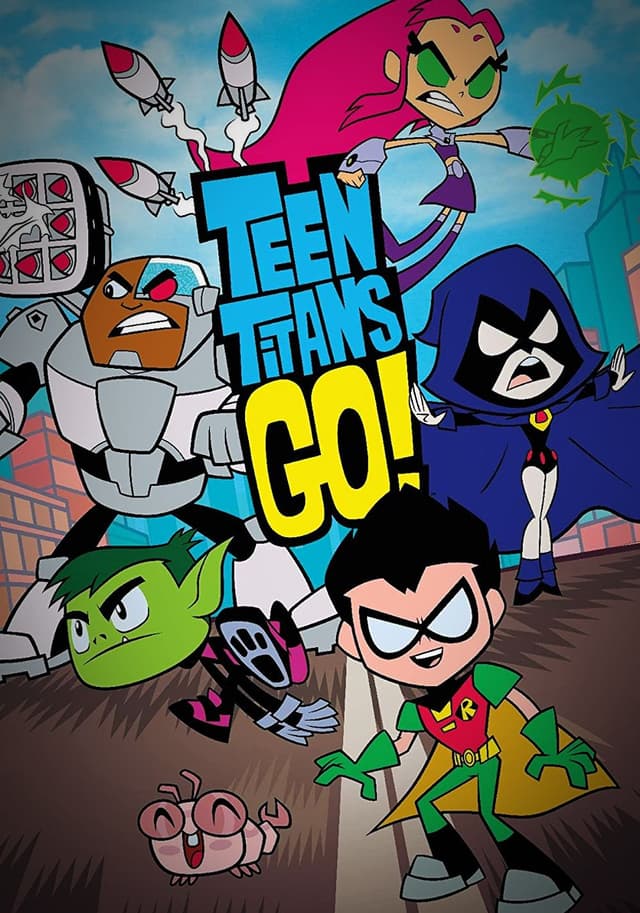
Teen Titans Go! (2013) is the Cartoon Network animated comedy produced by Warner Bros. Animation and DC Entertainment, repositioning the five teenage superheroes from the more serialized Teen Titans (2003 to 2006) animated series (Robin, Starfire, Raven, Beast Boy, Cyborg) into a slice-of-life comedy framework. Greg Cipes, Scott Menville, Khary Payton, Tara Strong, and Hynden Walch reprise their voice roles from the original series across more than 447 episodes spanning nine seasons between April 2013 and ongoing 2025 production. The franchise has extended into theatrical features (Teen Titans Go! To the Movies, 2018) and crossover productions.
What Is the Budget of Teen Titans Go! (2013)?
Teen Titans Go! (2013), the Cartoon Network animated series produced by Warner Bros. Animation and DC Entertainment, was produced on an estimated per-episode budget of approximately $400,000 to $600,000 across its 11-minute half-hour-formatted episodes (typically programmed as two 11-minute segments per 22-minute broadcast block). Across more than 447 episodes spanning nine seasons between April 2013 and ongoing 2025 production, the cumulative production spend is estimated at approximately $200,000,000 to $300,000,000 in period dollars. Specific Cartoon Network and Warner Bros. Animation budgets were not publicly disclosed, but the figures align with the standard premium Cartoon Network half-hour animated comedy tariff for the 2010s and early 2020s broadcast window.
The economics of the project were structured around Cartoon Network's flagship-comedy programming slot rather than a one-off limited animated production. Warner Bros. Animation, the Burbank-based Warner Bros. Entertainment animation arm, produced the series with DC Entertainment as creative-IP partner. The show served as a comedic reboot of the more serialized Teen Titans (2003 to 2006) Cartoon Network animated series, repositioning the same five teenage superhero characters (Robin, Starfire, Raven, Beast Boy, Cyborg) into a slice-of-life comedy framework.
Key Budget Allocation Categories
Teen Titans Go!'s per-episode spend broke down across the cost centers typical of a premium Cartoon Network animated comedy half-hour, with several show-specific items reflecting its recurring-cast voice ensemble and slice-of-life comedy structure:
- Voice Cast Compensation: Greg Cipes as Beast Boy, Scott Menville as Robin, Khary Payton as Cyborg, Tara Strong as Raven, and Hynden Walch as Starfire reprised their voice roles from the original Teen Titans (2003 to 2006) animated series across more than 447 Teen Titans Go! episodes. Voice-cast compensation across the five-member core ensemble, supported by rotating guest voice cast for episodic character introductions, formed the largest above-the-line line item.
- Korean and Indian Animation Outsourcing: Animation production was outsourced primarily to Korean and Indian animation studios (typical of Warner Bros. Animation's mid-2010s and early-2020s pipeline), reducing per-episode animation cost materially below a fully Burbank-based production equivalent. The outsourced animation pipeline, coordinated through Warner Bros. Animation's Burbank-based animation directors and production-management staff, drove the broader physical-production line items.
- Writers Room and Animation Direction: A staff writers room (8 to 12 writers per season) and a rotating animation-director pool delivered the multi-segment-per-episode animation comedy format. Aaron Horvath and Michael Jelenic served as executive producers from Season 4 onward, with their compensation reflecting the established showrunner-creator quote for a premium Cartoon Network animated comedy.
- Music and Songs: The show's signature recurring musical segments (frequent original songs across the run, including the Season 4 theatrical feature Teen Titans Go! To the Movies, 2018), drove a recurring music-budget premium above the standard Cartoon Network animated comedy norm. Original-songwriting compensation, recording, and licensing across the run formed a discrete music-budget line item.
- Background Art and Production Design: Background art across the Titans Tower (recurring primary setting), Jump City urban exteriors, and rotating Saturday-morning-cartoon-style fantastical environments formed a recurring weekly cost item. The pop-culture-reference-saturated visual style across the run absorbed substantial design-and-illustration time per episode.
- Pop-Culture Licensing and Parody Clearance: The show's recurring pop-culture parody and reference structure (DC Universe character appearances, broader superhero genre parody, occasional licensed-music-and-character cameos) required ongoing legal clearance and IP-licensing work. The broader IP-licensing line item sits within the standard Warner Bros. Animation in-house pipeline.
- Post-Production and Cartoon Network Delivery: Picture editing, sound design, and Cartoon Network delivery ran through Warner Bros. Animation's in-house post pipeline. The multi-segment-per-episode format requires elevated editorial time compared with a single-narrative animation half-hour.
- Theatrical Spinoff and Crossover Productions: The success of the broadcast run led to the theatrical Teen Titans Go! To the Movies (2018), produced on a separate budget of approximately $10,000,000 to $15,000,000 and released through Warner Bros. Pictures. Additional crossover productions (Teen Titans Go! See Space Jam, 2021; Teen Titans Go! vs. Teen Titans, 2019) extended the franchise economics beyond the core broadcast run.
How Does Teen Titans Go!'s Budget Compare to Similar Series?
At an estimated $400,000 to $600,000 per episode, Teen Titans Go! sat in the standard premium-tier Cartoon Network animated comedy economics, comparable to peer Cartoon Network and Disney Channel animated comedy half-hours of the same window:
- Adventure Time (2010): Estimated per-episode budget approximately $300,000 to $500,000. Cartoon Network's prior flagship animated comedy ran at a slightly lower per-episode tariff than Teen Titans Go!, illustrating the standard premium Cartoon Network animated comedy economics of the 2010s broadcast window.
- Regular Show (2010): Estimated per-episode budget approximately $300,000 to $500,000. Cartoon Network's contemporaneous animated comedy ran at a comparable per-episode tariff with similar outsourced-animation production economics.
- The Amazing World of Gumball (2011): Estimated per-episode budget approximately $400,000 to $600,000. Cartoon Network's mixed-media animated comedy ran at a comparable per-episode tariff with similar Korean-and-Indian-animation-outsourcing pipeline economics.
- Phineas and Ferb (2007): Estimated per-episode budget approximately $400,000 to $600,000. Disney Channel's contemporaneous animated comedy ran at a comparable per-episode tariff with similar outsourced-animation pipeline economics.
- Steven Universe (2013): Estimated per-episode budget approximately $400,000 to $600,000. Cartoon Network's contemporaneous Rebecca Sugar serialized animated drama-and-comedy hybrid ran at a comparable per-episode tariff with similar outsourced-animation pipeline economics.
- Teen Titans (2003): Estimated per-episode budget approximately $300,000 to $400,000. Cartoon Network's prior contemporaneous Teen Titans (2003 to 2006) animated series, on which Teen Titans Go! is a comedic reboot, ran at a lower per-episode tariff because of the smaller Korean-animation outsourcing pipeline available in the early 2000s.
Teen Titans Go! Season Performance and Franchise Expansion
Teen Titans Go! premiered on Cartoon Network on April 23, 2013 to strong opening ratings and steady ongoing audience figures across more than 12 years of continuous broadcast production. The economic framework breaks down as follows:
- Per-Episode Budget: estimated $400,000 to $600,000 across the nine-season-plus run
- Total Series Investment: estimated $200,000,000 to $300,000,000 across more than 447 episodes
- Network: Cartoon Network in the United States; HBO Max and Max in subsequent streaming windows; international Cartoon Network distribution across over 100 territories
- Audience/Ratings: Premiere drew approximately 3,300,000 US viewers, a Cartoon Network record at the time; subsequent seasons averaged approximately 1,500,000 to 2,500,000 across broadcast and streaming windows
- International Distribution: Cartoon Network international windows across over 100 territories; Max streaming in selected territories; merchandising, theme-park experience, and licensed-product extensions across the broader Warner Bros. Discovery merchandise pipeline
- Library/Syndication Value: Teen Titans Go! remains one of Cartoon Network's most-watched flagship animated comedies; HBO Max and Max library streaming, merchandising, theme-park experiences, and a 2018 theatrical feature have extended the franchise economics beyond the core broadcast run
Teen Titans Go!'s commercial trajectory has been the strongest of any Cartoon Network animated comedy of the 2010s and early 2020s. The 2018 theatrical Teen Titans Go! To the Movies grossed approximately $52,000,000 worldwide against a $10,000,000 to $15,000,000 production budget. The 2021 theatrical crossover Teen Titans Go! See Space Jam extended the franchise theatrical footprint alongside Space Jam: A New Legacy (2021). The 2019 streaming feature Teen Titans Go! vs. Teen Titans bridged the comedic reboot back to the more serialized 2003 Teen Titans continuity.
The franchise has continued to expand across merchandising, theme-park experiences, and licensed-product extensions through Warner Bros. Discovery's broader merchandise pipeline. Greg Cipes, Scott Menville, Khary Payton, Tara Strong, and Hynden Walch have continued to voice the core ensemble across more than 12 years of production, an unusual longevity for a continuous animated-comedy voice ensemble.
Teen Titans Go! Production History
Teen Titans Go! was developed at Warner Bros. Animation and DC Entertainment in 2012 and 2013 as a comedic reboot of the more serialized Teen Titans (2003 to 2006) Cartoon Network animated series. The pitch repositioned the same five teenage superhero characters (Robin, Starfire, Raven, Beast Boy, Cyborg) from the original series into a slice-of-life comedy framework, with shorter 11-minute segments and a comedic-domestic-and-superhero-parody premise centered on the team's shared life at Titans Tower in Jump City.
Casting the original Teen Titans voice ensemble (Greg Cipes as Beast Boy, Scott Menville as Robin, Khary Payton as Cyborg, Tara Strong as Raven, and Hynden Walch as Starfire) was a structural choice rather than an obvious one, given the meaningful tonal shift between the more serialized 2003 series and the comedic 2013 reboot. The voice-cast continuity provided immediate audience-recognition value while supporting the cross-reference structure between the two series.
Animation production was outsourced primarily to Korean and Indian animation studios across the run, with Warner Bros. Animation's Burbank-based animation directors and production-management staff coordinating the broader pipeline. Aaron Horvath and Michael Jelenic served as executive producers from Season 4 onward, with the writers room expanding across the run as the series grew into a flagship Cartoon Network slot.
Teen Titans Go! premiered on Cartoon Network on April 23, 2013, with the show quickly becoming the network's flagship animated-comedy slot across the 2010s. The 2018 theatrical Teen Titans Go! To the Movies, directed by Aaron Horvath and Peter Rida Michail, was developed in parallel with the broadcast run and represented the franchise's expansion beyond Cartoon Network programming. Subsequent crossover productions (Teen Titans Go! vs. Teen Titans, 2019; Teen Titans Go! See Space Jam, 2021) further extended the franchise across additional Warner Bros. property crossovers.
The show has continued in continuous production through 2025, with Season 9 in active production and a Season 10 in development. The continuous broadcast run across more than 12 years and more than 447 episodes makes Teen Titans Go! one of the longest-running animated comedies in Cartoon Network history, alongside The Powerpuff Girls (1998 to 2005) and Adventure Time (2010 to 2018).
Awards and Recognition
Teen Titans Go! has won the 2019 British Academy Children's Award for International Animation and the 2025 Children's and Family Emmy Award for Outstanding Voice Performer. The show has received additional Children's and Family Emmy nominations across its broadcast run alongside Annie Award nominations for animated comedy production craft.
The 2018 theatrical Teen Titans Go! To the Movies received favorable reviewer attention and Annie Award nominations in selected categories, although it did not generate major Academy Award traction. The 2021 theatrical crossover Teen Titans Go! See Space Jam and the 2019 streaming feature Teen Titans Go! vs. Teen Titans received additional industry recognition in the animation-craft-and-merchandising press.
The show's broader cultural footprint has been driven by audience-engagement metrics, franchise-extension performance, and the continuous voice-ensemble continuity across more than 12 years rather than by major industry-awards conversation. Teen Titans Go! is best understood as the most commercially-successful Cartoon Network animated comedy of the 2010s and early 2020s, with a franchise-extension footprint that has materially outperformed peer Cartoon Network animated comedies of the same era.
Critical Reception
Teen Titans Go! received mixed-to-positive critical reception at launch and across subsequent seasons. The first season holds a 67% critical approval rating on Rotten Tomatoes based on nine reviews, with later seasons receiving more divided critical attention. The shift from the more serialized 2003 Teen Titans toward the comedic 2013 reboot generated sustained debate within DC Comics fan press and broader animation-criticism circles across the run.
Common Sense Media and TV Guide both delivered positive reviews of the early seasons, praising the voice-cast chemistry, the slice-of-life comedy structure, and the rapid-cut comedic timing across the 11-minute segment format. The IGN and AnimationWorldNetwork reviews of the broadcast run praised the production design and the writers-room handling of the multi-segment-per-episode structure while flagging the tonal-shift contrast with the more serialized 2003 series.
Long-running DC Comics fan press has remained divided on Teen Titans Go!'s comedic reboot of the more serialized 2003 Teen Titans continuity, with the recurring meta-commentary debate driving sustained audience engagement across the broadcast run. The 2019 streaming feature Teen Titans Go! vs. Teen Titans was developed in part as a creative-and-meta response to the audience debate, with the comedic and serialized Titans variants confronting each other directly within the franchise. The continuous voice-ensemble continuity across more than 12 years has remained the show's most-praised consistent craft achievement.
Frequently Asked Questions
How much does each episode of Teen Titans Go! cost to produce?
Estimated per-episode budgets range from approximately $400,000 to $600,000 across the nine-season-plus run. Specific Cartoon Network and Warner Bros. Animation budgets are not publicly disclosed, but the figures align with the standard premium Cartoon Network half-hour animated comedy tariff for the 2010s and early 2020s broadcast window. Animation production is outsourced primarily to Korean and Indian animation studios, reducing per-episode cost materially below a fully Burbank-based equivalent.
How many episodes of Teen Titans Go! are there?
Teen Titans Go! has produced more than 447 episodes across nine seasons between April 23, 2013 and ongoing 2025 production. Each broadcast half-hour contains two 11-minute segments. Season 9 is in active production, with a Season 10 in development.
Who voices the characters in Teen Titans Go!?
Greg Cipes voices Beast Boy, Scott Menville voices Robin, Khary Payton voices Cyborg, Tara Strong voices Raven, and Hynden Walch voices Starfire. All five voice actors reprise their roles from the original Teen Titans (2003 to 2006) Cartoon Network animated series, providing more than 22 years of continuous voice continuity across both shows.
When did Teen Titans Go! premiere?
Teen Titans Go! premiered on Cartoon Network on April 23, 2013. The premiere drew approximately 3,300,000 US viewers, a Cartoon Network record at the time. The show has been in continuous broadcast production for more than 12 years.
How is Teen Titans Go! different from the 2003 Teen Titans?
Teen Titans Go! is a comedic reboot of the more serialized Teen Titans (2003 to 2006) Cartoon Network animated series, repositioning the same five teenage superhero characters (Robin, Starfire, Raven, Beast Boy, Cyborg) into a slice-of-life comedy framework with shorter 11-minute segments. The voice-cast continuity is preserved across both shows. The 2019 streaming feature Teen Titans Go! vs. Teen Titans bridged the two continuities directly.
Was Teen Titans Go! made into a movie?
Yes. Teen Titans Go! To the Movies (2018), directed by Aaron Horvath and Peter Rida Michail, was a theatrical feature released by Warner Bros. Pictures. The film cost approximately $10,000,000 to $15,000,000 and grossed approximately $52,000,000 worldwide. Subsequent crossover productions include Teen Titans Go! vs. Teen Titans (2019) and Teen Titans Go! See Space Jam (2021).
How does Teen Titans Go! compare to other Cartoon Network shows?
Teen Titans Go! sits in the same premium Cartoon Network half-hour animated comedy tier as Adventure Time (2010), Regular Show (2010), The Amazing World of Gumball (2011), and Steven Universe (2013). Per-episode budgets across the peer set ranged from approximately $300,000 to $600,000. Teen Titans Go!'s continuous 12-year-plus broadcast run makes it one of the longest-running animated comedies in Cartoon Network history.
Has Teen Titans Go! won any awards?
Yes. Teen Titans Go! won the 2019 British Academy Children's Award for International Animation and the 2025 Children's and Family Emmy Award for Outstanding Voice Performer. The show has received additional Children's and Family Emmy nominations across its broadcast run alongside Annie Award nominations for animated comedy production craft.
Where can I watch Teen Titans Go!?
Teen Titans Go! airs on Cartoon Network in the United States and is available on the Max streaming service. Cartoon Network international windows distribute the show across more than 100 territories worldwide. Merchandising, theme-park experiences, and licensed-product extensions across the broader Warner Bros. Discovery merchandise pipeline extend the franchise beyond the core broadcast run.
Will Teen Titans Go! end soon?
No public end date has been announced. Season 9 is in active production through 2025, with a Season 10 in development. Warner Bros. Animation and Cartoon Network have continued to invest in the property across more than 12 years of continuous production, with the franchise extending into theatrical features, streaming crossovers, and broader merchandising.
Filmmakers
Go!

Official Trailer
Build budgets like this one in Saturation
Start from an industry-standard feature film template, import the schedule and rates you already have, and let the cost report keep itself current as you spend. Real-time collaboration, no spreadsheets.