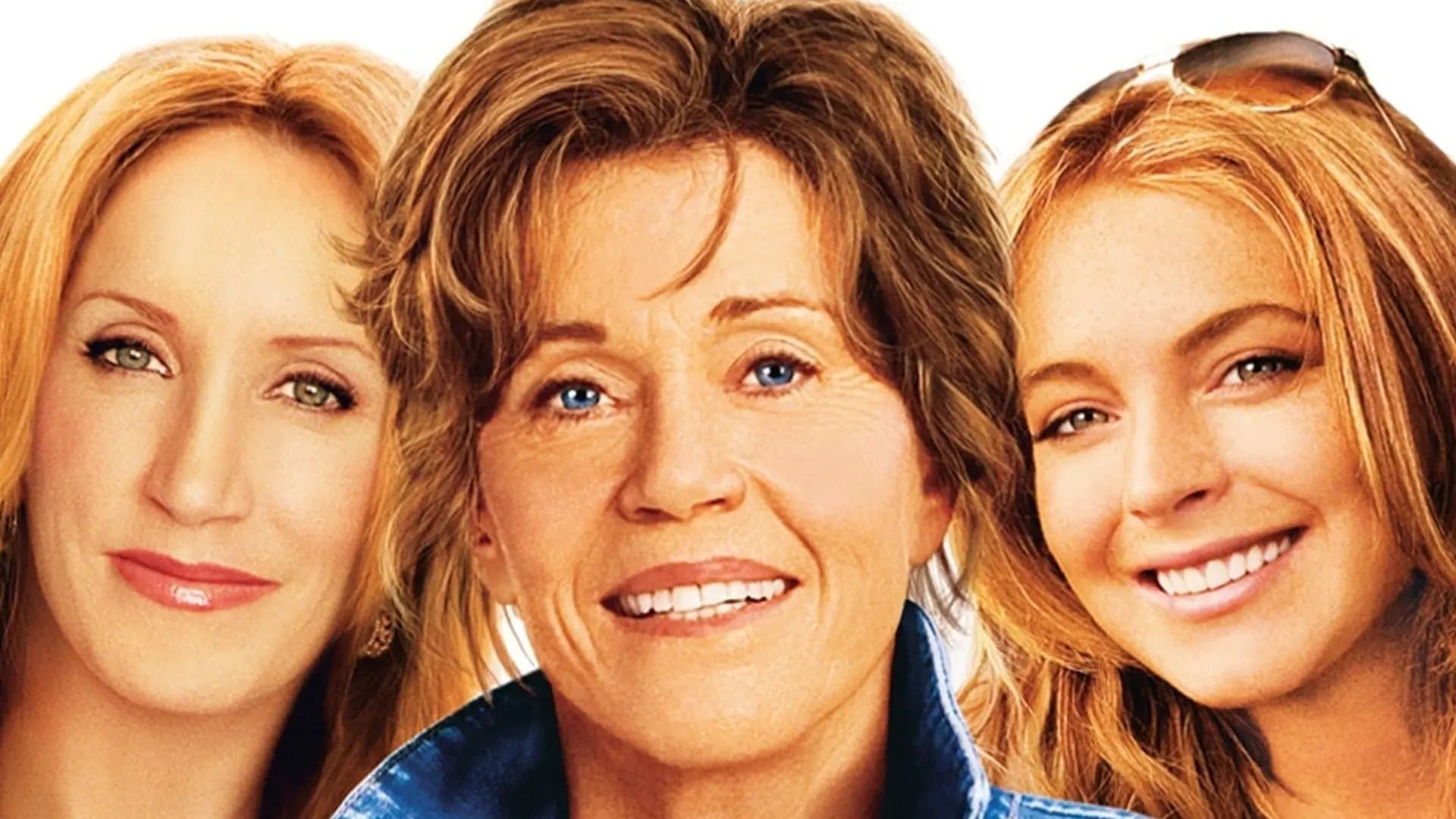
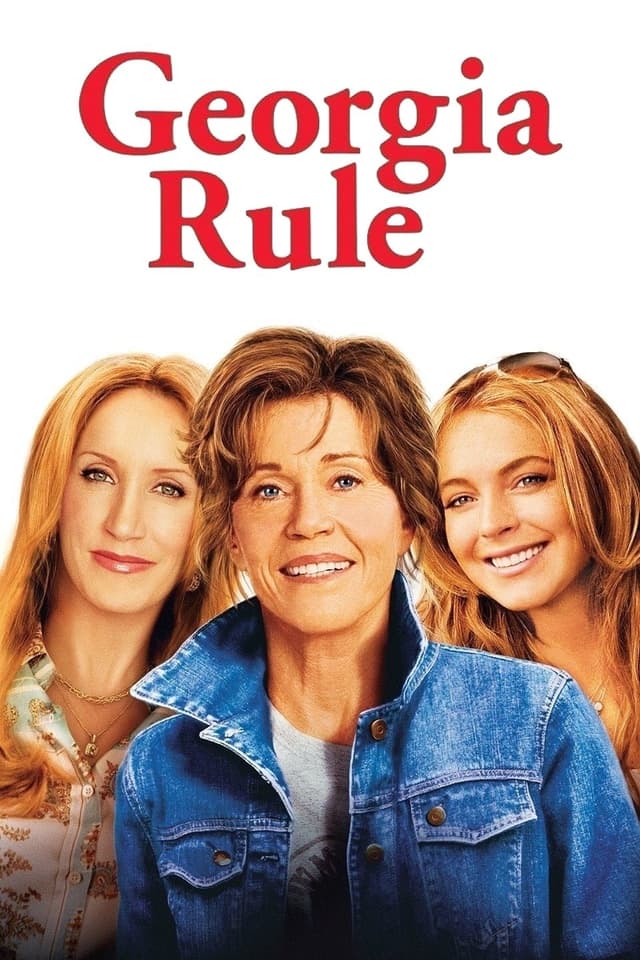
Georgia Rule Budget
 DramaComedyRomance1h 53m
Updated
Synopsis
When troubled teenager Rachel is shipped off to spend the summer with her tough-as-nails grandmother Georgia in small-town Idaho, the visit forces three generations of women to confront long-buried family secrets. As Rachel's revelations test the patience of her recovering-alcoholic mother Lilly and her by-the-book grandmother, the household rules of Georgia's home are pushed to the limit. Garry Marshall's multigenerational drama stars Jane Fonda, Lindsay Lohan, Felicity Huffman, and Dermot Mulroney.
What Is the Budget of Georgia Rule (2007)?
Georgia Rule (2007), directed by Garry Marshall and distributed by Universal Pictures, was produced on a reported budget of $20,000,000. The multigenerational family drama paired three actresses across three generations, Jane Fonda as the matriarch Georgia, Felicity Huffman as her estranged daughter Lilly, and Lindsay Lohan as Lilly's troubled teenage daughter Rachel, with Dermot Mulroney as Georgia's small-town veterinarian neighbor. Morgan Creek Productions financed the film through its long-standing output deal with Universal, with James G. Robinson serving as principal producer.
The investment reflected a calculated mid-budget approach typical of Garry Marshall's 2000s output: modest production scale, a single primary location, and a marquee cast assembled at favorable rates relative to their individual quotes. Compared with Marshall's tentpole studio comedies such as Princess Diaries 2: Royal Engagement (2004), the Georgia Rule budget came in at less than a third of the cost, betting on adult drama crossover rather than family-event scale. Morgan Creek targeted a domestic gross around $50,000,000 to recoup print, advertising, and overhead expenses.
Key Budget Allocation Categories
Georgia Rule's reported $20,000,000 budget broke out across the following core areas:
- Above-the-Line Talent: Jane Fonda commanded a top-tier rate for her return to studio leading roles after a 15-year absence following Stanley & Iris (1990), with the project marketed in part as her comeback vehicle. Lindsay Lohan, then 20 years old and at the peak of her tabloid-era marketability, was paid a reported $7,500,000, the largest single salary of her career to that point. Felicity Huffman arrived fresh off her Oscar nomination for Transamerica (2005) and a Desperate Housewives Emmy win, with Dermot Mulroney completing the lead ensemble. Garry Marshall directed from a script by Mark Andrus, the Oscar-nominated co-writer of As Good as It Gets (1997).
- California Location Shoot: Principal photography took place in California across the summer of 2006, with the fictional Idaho town of Hull recreated in the Sierra foothills around Loyalton, Sierraville, and additional units in Los Angeles and the Conejo Valley. Shooting in-state allowed Marshall to keep his preferred crew assembled and used California's above-the-line continuity rather than a Vancouver double, a choice that added several million to the line items but matched the film's western-rural visual identity.
- Crew and Below-the-Line: Cinematographer Karl Walter Lindenlaub (Independence Day, Rob Roy) and production designer Albert Brenner (Beaches, Pretty Woman, The Princess Diaries) anchored an experienced department-head roster, with editor Bruce Green completing his ninth collaboration with Marshall. Costume designer Gary Jones provided the small-town Idaho wardrobe spread across three generations of women.
- Score and Soundtrack: John Debney composed the score, his fifth collaboration with Garry Marshall after Princess Diaries, Princess Diaries 2, Raising Helen, and The Other Sister. The soundtrack budget also covered licensed needle drops including Mormon-related Beach Boys and country-pop selections used to underscore the small-town Idaho setting.
- Marketing and Distribution: Universal mounted a roughly $25,000,000 prints-and-advertising campaign, positioning the film as an upscale mid-May adult counterprogrammer against Spider-Man 3 and Shrek the Third. The marketing copy leaned hard on the three-generations-of-leading-ladies hook, with extensive Mother's Day weekend promotion and a Lindsay Lohan-fronted talk show circuit that was abruptly curtailed after the production-period controversy described below.
- Insurance and Production Overhead: Morgan Creek's completion bond and cast insurance carried elevated premium costs because of Lindsay Lohan's 2006 chemical-dependency history, an issue that became a public flashpoint when producer James G. Robinson sent a leaked letter to Lohan during production accusing her of repeated late arrivals and absences and warning that any further on-set behavior issues could constitute breach. The insurance and contingency line absorbed several days of lost or compressed shooting.
How Does Georgia Rule's Budget Compare to Similar Films?
At a reported $20,000,000, Georgia Rule sits squarely in the mid-budget adult-drama range characteristic of Garry Marshall's back-half career. The comparison set highlights how the film's commercial outcome diverged from its closest creative peers:
- Pretty Woman (1990): Budget $14,000,000 | Worldwide $463,406,268. Marshall's career-defining romantic comedy out-earned Georgia Rule by a factor of nearly 19, on a budget two-thirds the size, illustrating the dramatic falloff between Marshall's 1990s peak and his 2000s adult-drama work.
- The Princess Diaries (2001): Budget $26,000,000 | Worldwide $165,335,153. Marshall's Anne Hathaway breakout cost $6,000,000 more than Georgia Rule and earned nearly seven times its worldwide gross, confirming the family-event market was the safer commercial bet across the period.
- Crazy, Stupid, Love. (2011): Budget $50,000,000 | Worldwide $145,002,920. The Steve Carell/Ryan Gosling/Julianne Moore multigenerational relationship comedy cost more than twice as much but earned more than five times Georgia Rule's worldwide, demonstrating that the multigenerational ensemble template can succeed when paired with broader comedic positioning rather than upscale drama.
- Because I Said So (2007): Budget $40,000,000 | Worldwide $69,089,795. Universal's mother-daughter ensemble (Diane Keaton, Mandy Moore, Lauren Graham, Piper Perabo) released the same year cost twice as much and still struggled to break even, suggesting the wider 2007 female-skewed adult-drama market was soft regardless of star wattage.
- Stepmom (1998): Budget $50,000,000 | Worldwide $159,712,177. The Julia Roberts/Susan Sarandon two-generation family drama cost two-and-a-half times Georgia Rule and out-grossed it more than six-fold, the prior decade's benchmark for what the subgenre could achieve with A-list anchors.
- Raising Helen (2004): Budget $50,000,000 | Worldwide $49,719,403. Marshall's own Kate Hudson family dramedy three years prior cost two-and-a-half times Georgia Rule and barely cleared its production cost, foreshadowing the diminishing theatrical returns of his adult-drama mode.
Georgia Rule Box Office Performance
Georgia Rule opened on May 11, 2007, into a crowded Mother's Day weekend, finishing fourth at the domestic box office with $6,025,335 across 2,512 theaters, a per-screen average of $2,399. The opening trailed Spider-Man 3 in its second weekend ($59,200,000), 28 Weeks Later ($9,800,000), and Disturbia ($6,300,000). The film never expanded its audience and finished its domestic run at $19,098,925 after seven weeks.
Against a reported production budget of $20,000,000, the film needed approximately $55,000,000 to $65,000,000 in worldwide gross to reach profitability when accounting for marketing and distribution costs. Here is the financial breakdown:
Box Office Breakdown
Georgia Rule

Georgia Rule returned approximately $0.56 in theatrical revenue for every $1 invested when measured against total estimated production and marketing spend. The domestic share of the gross was $19,098,925 against just $5,920,495 internationally, a 76/24 split that confirmed the film traveled poorly outside North America despite Jane Fonda's Klute-era European cachet.
The commercial result effectively ended Garry Marshall's run of mid-budget adult dramas at Universal. His next theatrical feature, Valentine's Day (2010) at New Line/Warner Bros., pivoted decisively back to the ensemble-event template at a $52,000,000 budget. For Lindsay Lohan, Georgia Rule was her last live-action wide release in a starring role for more than a decade, with subsequent projects (I Know Who Killed Me, Labor Pains, Liz & Dick) shifting toward video-on-demand and television movie distribution.
Georgia Rule Production History
Development on Georgia Rule began at Morgan Creek Productions in the early 2000s under the working title Surrender, Idaho, with Mark Andrus drafting the screenplay around a multigenerational family confronting a buried abuse allegation. James G. Robinson developed the project as part of Morgan Creek's ongoing Universal output deal, attaching Garry Marshall as director on the strength of his prior multigenerational ensemble work (Beaches, The Other Sister, Raising Helen). Marshall accepted on the condition that he could cast his preferred three-generation ensemble.
Casting locked into place across 2005 and early 2006. Jane Fonda agreed to the title role of Georgia in what was billed as her return to leading roles after the 1990 retirement that followed Stanley & Iris, with the press cycle around her 2005 memoir My Life So Far feeding into the comeback narrative. Felicity Huffman signed on as Lilly fresh off her Oscar-nominated Transamerica performance, and Dermot Mulroney completed the adult cast. Lindsay Lohan was cast as Rachel in early 2006 against the studio's initial preference for a less tabloid-burdened actress, with Marshall publicly defending the choice based on her chemistry-read with Fonda.
Principal photography ran from July to September 2006, primarily in California, with the fictional Idaho town of Hull built up around Loyalton and Sierraville in the Sierra foothills near the Nevada border. Additional photography took place in Los Angeles and the Conejo Valley, and the Pacific Ocean opening sequence was shot on the Malibu coast. Marshall employed his customary repertory crew, including longtime editor Bruce Green and production designer Albert Brenner.
The production became a national story in late July 2006 when an internal letter from producer James G. Robinson to Lindsay Lohan was leaked to The Smoking Gun. The letter, dated July 25, 2006, accused Lohan of "ongoing, irresponsible and unprofessional behavior," including repeated late arrivals to set, failures to appear for scheduled shoot days that were attributed to nightclub activity, and a pattern that Robinson warned could constitute breach of contract. Lohan's representatives initially attributed the absences to heat exhaustion. The leaked letter dominated entertainment-industry coverage for several weeks and effectively defined the production's public profile, eclipsing later promotional efforts.
Post-production proceeded through fall 2006 and winter 2007, with the film delivered ahead of its May 11, 2007 release date. John Debney completed the score in early 2007, his fifth Marshall collaboration. The premiere took place at the Lincoln Center in New York on May 8, 2007. Both Fonda and Marshall publicly addressed the leaked Robinson letter during the press tour, with Marshall describing Lohan as "punctual" and "professional" on the days she did appear.
Awards and Recognition
Georgia Rule received no significant awards recognition. The film failed to register at the major industry ceremonies, including the Academy Awards, the Golden Globes, the Screen Actors Guild Awards, and the BAFTAs.
Jane Fonda was nominated for a Teen Choice Award (Choice Movie Hissy Fit) and a Razzie Award for Worst Supporting Actress, the latter alongside her Georgia Rule castmate Lindsay Lohan, who received a Razzie nomination for Worst Actress shared across her 2007 output (I Know Who Killed Me also factored into the nomination). The film additionally drew a Razzie nomination for Worst Screenplay for Mark Andrus. Neither Fonda nor Lohan won. The Razzie attention reflected the broader critical perception that the film mishandled its serious subject matter rather than any specific awards strength, positive or negative.
Critical Reception
Georgia Rule received broadly negative reviews. The film holds a 16% approval rating on Rotten Tomatoes based on 132 critic reviews, with a critical consensus that called it "an uneasy mix of tonal whiplash and tabloid backstory" whose serious subject matter sat awkwardly inside Garry Marshall's lighter directorial sensibility. On Metacritic, the film scored 41 out of 100, indicating generally unfavorable reviews. Audiences surveyed by CinemaScore gave the film a B, a result that confirmed the gap between critic and target-audience reception that has historically characterized Marshall's adult-drama output.
Critics objected primarily to the tonal collision between Marshall's sitcom-trained instincts and the script's incest-disclosure subplot, with multiple reviews flagging the film's sudden lurches between physical comedy and child-abuse exposition. The New York Times' Manohla Dargis called it "queasy" and noted that the film "treats the issue of child sexual abuse with all the gravitas of a sitcom subplot." Variety's Justin Chang wrote that the film "veers from light farce to grim melodrama with no transitional shock absorbers." Roger Ebert, more sympathetic to Marshall's career overall, awarded two-and-a-half stars and singled out Fonda's performance as the film's steadiest element while conceding the storytelling problems.
Performance praise was uneven across the ensemble. Lindsay Lohan drew mixed-to-negative reviews that frequently referenced her offscreen tabloid presence rather than her on-screen work. Felicity Huffman was most consistently praised for finding emotional truth in the underwritten role of Lilly. Jane Fonda received the strongest individual notices, with several critics treating her presence as a kind of preservation note from an earlier era of star-driven studio drama. The film's legacy has been shaped less by its content than by the Morgan Creek-Lohan production controversy, which became the most-cited reference point in subsequent industry coverage of Hollywood insurance practices and on-set conduct enforcement.
Frequently Asked Questions
How much did it cost to make Georgia Rule (2007)?
The reported production budget was $20,000,000. Morgan Creek Productions financed the film through its longstanding output deal with Universal Pictures, with James G. Robinson serving as principal producer.
How much did Georgia Rule earn at the box office?
The film grossed $19,098,925 domestically and $5,920,495 internationally, for a worldwide total of $25,019,420. It opened to $6,025,335 across 2,512 theaters on its May 11, 2007 Mother's Day weekend release, finishing fourth behind Spider-Man 3, 28 Weeks Later, and Disturbia.
Was Georgia Rule a box office bomb?
Yes, by industry standards. Against a $20,000,000 production budget and an estimated $25,000,000 in marketing spend, the film returned approximately $0.56 in worldwide gross for every $1 invested. Universal absorbed an estimated $20,000,000 loss after accounting for its total investment.
Who directed Georgia Rule?
Garry Marshall directed the film, working from a screenplay by Mark Andrus (As Good as It Gets). It was Marshall's fifth collaboration with composer John Debney following Princess Diaries, Princess Diaries 2: Royal Engagement, Raising Helen, and The Other Sister.
Where was Georgia Rule filmed?
Principal photography took place across California from July to September 2006. The fictional Idaho town of Hull was created in the Sierra foothills around Loyalton and Sierraville near the Nevada border, with additional units in Los Angeles, the Conejo Valley, and along the Malibu coast for the opening Pacific Ocean sequence.
What was the Lindsay Lohan letter controversy on Georgia Rule?
On July 25, 2006, producer James G. Robinson sent Lindsay Lohan an internal letter accusing her of "ongoing, irresponsible and unprofessional behavior" that included repeated late arrivals to set and missed shoot days attributed to nightclub activity. The letter was leaked to The Smoking Gun within days and dominated entertainment-industry coverage, warning that further misconduct could constitute breach of contract. Lohan's representatives initially attributed the absences to heat exhaustion.
How much was Lindsay Lohan paid for Georgia Rule?
Lindsay Lohan was reportedly paid $7,500,000 for Georgia Rule, the largest single payday of her career to that point. The figure reflected her peak tabloid-era marketability and was confirmed in several industry trade reports during and after production.
How does Georgia Rule compare to other Garry Marshall films?
Georgia Rule was a steep commercial step down from Marshall's peak work. Pretty Woman (1990) earned $463,406,268 worldwide on a $14,000,000 budget, and The Princess Diaries (2001) earned $165,335,153 on a $26,000,000 budget. Georgia Rule's $25,019,420 worldwide gross places it alongside Raising Helen (2004, $49,719,403) at the lower end of Marshall's 2000s adult-drama output.
What did critics think of Georgia Rule?
The film received broadly negative reviews, with a 16% approval rating on Rotten Tomatoes (132 critics) and a 41 out of 100 score on Metacritic. Audiences gave it a B CinemaScore. Critics objected primarily to the tonal collision between Garry Marshall's lighter directorial sensibility and the script's child sexual abuse disclosure subplot. Jane Fonda received the strongest individual notices among the cast.
Did Georgia Rule win any awards?
No. The film received no significant awards recognition. Jane Fonda and Lindsay Lohan both received Razzie nominations (Worst Supporting Actress and Worst Actress, respectively) and the screenplay drew a Razzie nomination for Worst Screenplay, but neither award was won. The film did not register at the Academy Awards, Golden Globes, SAG Awards, or BAFTAs.
Filmmakers
Georgia Rule

Official Trailer
Build budgets like this one in Saturation
Start from an industry-standard feature film template, import the schedule and rates you already have, and let the cost report keep itself current as you spend. Real-time collaboration, no spreadsheets.