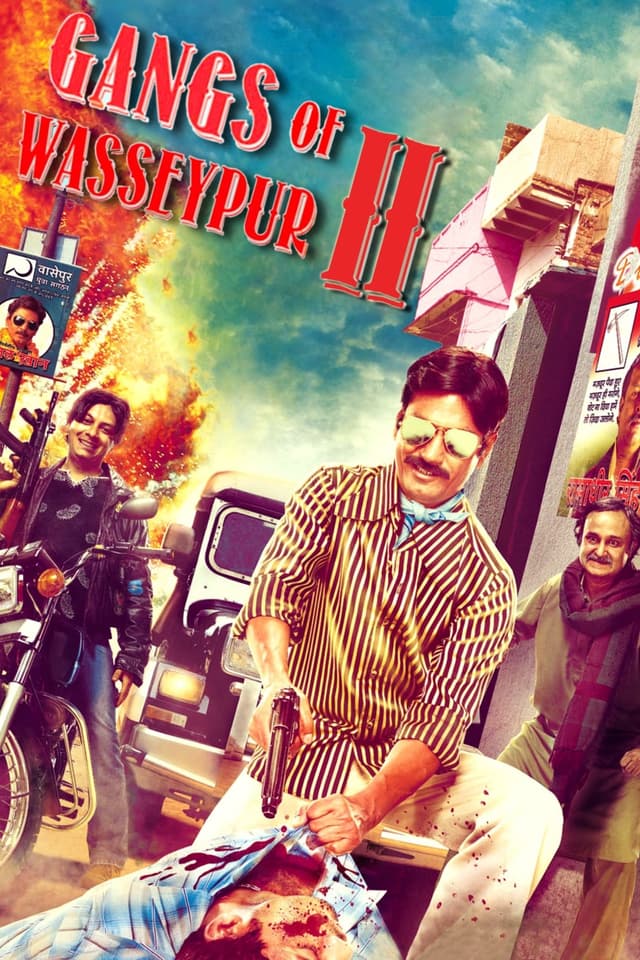
Gangs of Wasseypur – Part 2 Budget
Updated
Synopsis
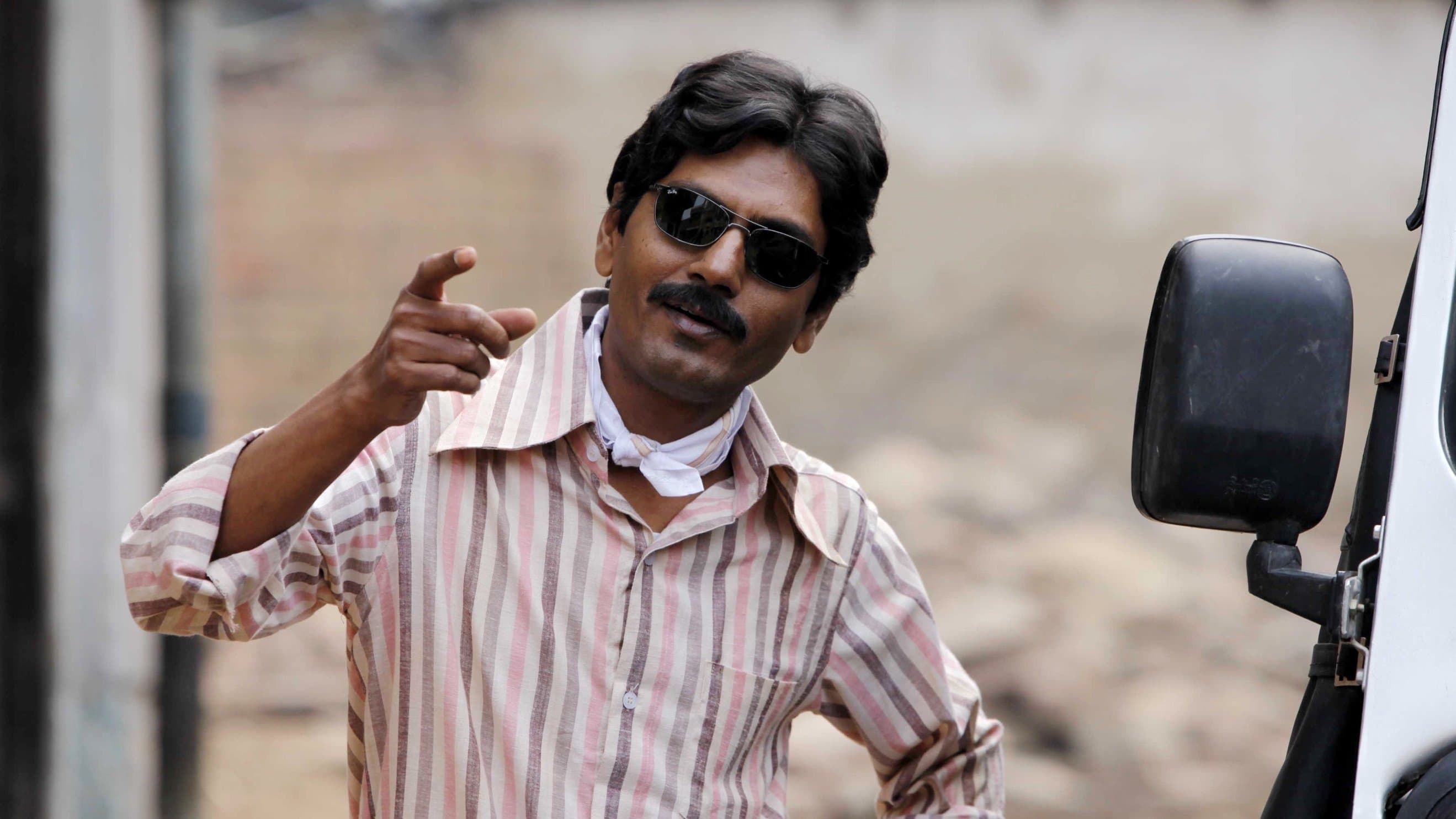
Picking up immediately after the events of Part 1, Gangs of Wasseypur Part 2 follows Faizal Khan, the introverted, hash-smoking middle son of Sardar Khan, as he unwillingly inherits leadership of the Khan clan after the family's patriarch is assassinated. Across the late 1980s, 1990s, and early 2000s, Faizal consolidates power in the coal belt of Wasseypur, eliminates rival clans, and pursues a generational vendetta against the politician Ramadhir Singh, while his younger brother Definite drifts toward becoming the family's most ruthless killer. The film closes the three-generation revenge cycle that began in Part 1 with the murder of Sardar Khan's father in 1941.
What Is the Budget of Gangs of Wasseypur Part 2 (2012)?
Gangs of Wasseypur Part 2 (2012), directed by Anurag Kashyap and produced by AKFPL and Viacom18 Motion Pictures, is the concluding half of a five-and-a-half hour Hindi-language crime saga that was originally conceived and shot as a single film and only split into two theatrical parts for Indian distribution. The combined production budget for both parts has been widely reported at roughly Rs 18 crore (approximately $3.3 million USD at 2012 exchange rates), with the cost of Part 2 typically allocated at $1,670,000, reflecting a near-even split with the slightly longer Part 1 across a shared shoot.
That budget bought a vast coal-belt epic spanning four decades and three generations of the Khan family, principal photography across rural Bihar and Jharkhand, an ensemble of more than seventy speaking parts, and a soundtrack of original folk, qawwali, and indie rock compositions. By Indian commercial-cinema standards the project sat well below the Rs 75 to 150 crore range of contemporaneous Bollywood tentpoles like Ek Tha Tiger or Agneepath, and the spend per minute of finished film, with both parts together running over 320 minutes, makes it one of the most efficient large-canvas productions of Indian independent cinema.
Key Budget Allocation Categories
The combined Part 1 and Part 2 spend was concentrated in a handful of high-impact line items, with Part 2 carrying the load of the climactic third-generation arc:
- Ensemble Cast and Above-the-Line Talent: The Part 2 ensemble of Nawazuddin Siddiqui (Faizal Khan), Manoj Bajpayee (Sardar Khan in flashback), Huma Qureshi, Richa Chadda, Tigmanshu Dhulia, Zeishan Quadri, Vineet Kumar Singh, and Pankaj Tripathi worked on independent-cinema rates well below mainstream Bollywood quotes, but the sheer headcount of speaking parts kept above-the-line costs meaningful. Anurag Kashyap directed and co-produced, consolidating fees on the executive side.
- Location Filming in Bihar and Jharkhand: Principal photography took place in the actual coal-mining belt the story depicts, around Wasseypur in Dhanbad (Jharkhand), Varanasi, and rural Bihar. Permits, security in a region historically dominated by coal-mafia politics, location dressing to reconstruct the 1970s through 2000s periods, and the logistics of moving a large unit through small-town India represented a substantial share of the budget.
- Period Recreation Across Four Decades: Part 2 covers the late 1980s through the mid-2000s, requiring production designer Wasiq Khan and costume designer Subodh Srivastav to outfit characters across multiple eras of changing fashions, vehicles, weapons, and consumer goods. Set dressing for Wasseypur coal yards, butcher shops, wedding halls, and political-rally interiors carried meaningful spend.
- Action, Stunts, and Practical Weapons Work: The film is built around extended gangland set pieces, including the climactic assassination of Faizal Khan, the shootout at the petrol pump, and dozens of smaller acts of violence. Practical squibs, working firearms with armorers, vehicle stunts on narrow lanes, and the choreography of long handheld takes by action director Sham Kaushal sat at the center of the production-cost stack.
- Music and Sound Design: Composer Sneha Khanwalkar travelled across Bihar to record indigenous folk singers, qawwali groups, and street performers, building a hybrid score with G. V. Prakash Kumar that mixed field recordings with original compositions like "Kaala Re" and "Taar Bijli." Lyricist Varun Grover's collaboration on a dozen original songs, combined with location sound capture across multiple states, made music one of the most distinctive budget lines.
- Cinematography and Camera Package: Cinematographer Rajeev Ravi shot Part 2 largely handheld on digital, blending observational long takes with set-piece coverage. The camera package, multiple bodies for parallel-unit work, low-light prime lenses for the night sequences, and the cost of moving gear between rural Jharkhand locations, was modest by international standards but represented a real share of the Indian indie budget.
- Editorial, Color, and Post-Production: Editor Shweta Venkat Mathew assembled both parts in parallel from over 200 hours of footage, with the cut of Part 2 carrying additional weight as the narrative climax. Post-production color, sound mixing at Future Works Mumbai, VFX cleanup, and Dolby certification for theatrical release in India and at Cannes added a sustained months-long post tail.
- Theatrical Release and Marketing in India: Viacom18 Motion Pictures handled the Indian theatrical release of Part 2 on August 8, 2012, less than seven weeks after Part 1, with a marketing campaign that leaned on the Cannes Directors' Fortnight premiere, festival reviews, and word-of-mouth from Part 1 audiences. Prints, advertising, and trade promotion in India typically sit outside the headline production figure but were essential to the commercial life of the project.
How Does Gangs of Wasseypur Part 2's Budget Compare to Similar Films?
Placing Gangs of Wasseypur Part 2 alongside other crime sagas, Indian independent dramas, and international references Anurag Kashyap has openly cited puts its scale into perspective:
- City of God (2002): Budget $3,300,000 | Worldwide $30,600,000. Fernando Meirelles' Brazilian favela epic is the closest international tonal reference, sharing the multi-generational gangland canvas and the use of non-professional and regional performers at a similar production cost. Kashyap has named City of God as a direct influence, and the two films sit at almost identical budget tiers.
- Goodfellas (1990): Budget $25,000,000 | Worldwide $46,800,000. Martin Scorsese's Mob chronicle costs roughly fifteen times what Part 2 spent yet sets the template for the rise-of-the-criminal-clan structure that Wasseypur reworks. Kashyap has repeatedly identified Goodfellas as a foundational text for the film's tonal mix of violence and dark comedy.
- The Godfather (1972): Budget $6,000,000 | Worldwide $250,300,000. Coppola's family saga influenced Part 2's third-generation succession arc around Faizal Khan. The historical-dollar gap to Wasseypur is real but smaller than it looks once inflation is factored in.
- Casino (1995): Budget $52,000,000 | Worldwide $116,100,000. Scorsese's Las Vegas crime epic operated at more than thirty times the Wasseypur Part 2 spend, yet shares the obsessive period detail and voice-over-driven structure that Kashyap deploys around the Khan family's coal-mafia rise.
- Reservoir Dogs (1992): Budget $1,200,000 | Worldwide $2,832,029. Quentin Tarantino's debut sat at roughly the same scale as a single half of Wasseypur and helped define the indie-crime aesthetic, including the ensemble of small-time criminals, that Kashyap pulls into a much larger generational frame.
- The Departed (2006): Budget $90,000,000 | Worldwide $291,500,000. Scorsese's remake of Infernal Affairs grossed roughly sixty times Wasseypur Part 2's theatrical receipts on a budget more than fifty times larger, illustrating the commercial gap between Hollywood star-driven crime cinema and Indian independent saga filmmaking.
Gangs of Wasseypur Part 2 Box Office Performance
Viacom18 Motion Pictures opened Gangs of Wasseypur Part 2 in Indian theatres on August 8, 2012, just seven weeks after Part 1's June 22 release. The two halves were treated commercially as separate films, with Part 2 entering a calendar that included direct competition from mainstream Bollywood titles, but the carryover audience from Part 1 and the lift from the Cannes Directors' Fortnight premiere produced strong opening-weekend metrics for an independent crime drama.
The available financial breakdown for Part 2:
Box Office Breakdown
Gangs of Wasseypur – Part 2

At a worldwide theatrical gross of approximately $4,900,000 against the allocated $1,670,000 production share, Part 2 returned roughly $2.93 for every $1 invested in production, comfortably clearing the standard 2x rule of thumb once P&A is factored in.
Beyond theatrical, Part 2's longer-term value has been driven by its inclusion alongside Part 1 in catalog deals with Netflix (which streamed the combined version internationally for years), home-video releases in India and the West, and the festival-driven international sales orchestrated around the Cannes premiere. The franchise has since produced a Netflix series adaptation, Sacred Games-adjacent industry recognition, and an extended afterlife in critical canon-building that has continued to monetize the original spend more than a decade after release.
Gangs of Wasseypur Part 2 Production History
Gangs of Wasseypur originated as a single screenplay by Anurag Kashyap, Akhilesh Jaiswal, Sachin Ladia, and Zeishan Quadri, the last of whom grew up in Wasseypur, Dhanbad, and brought first-hand familiarity with the region's coal-mafia politics. The script traced three generations of the Khan family from the 1940s through the mid-2000s, modelled in part on real Dhanbad crime dynasties, and ran long enough that Kashyap and Viacom18 ultimately decided to release it as two theatrical halves rather than one near-six-hour film.
Principal photography for both parts took place across Bihar and Jharkhand, primarily in and around Dhanbad, Varanasi, and Benaras, with additional unit work in Mumbai. Filming in India relied on the country's established crew base and the location authenticity of shooting in the actual coal belt the story depicts, including industrial sites, narrow Wasseypur lanes, and rural interiors that could not have been credibly reconstructed on a soundstage. The production navigated security concerns in regions historically tied to organized crime by coordinating with local fixers and authorities, and the long schedule allowed Kashyap to shoot in real time across multiple seasons.
Casting was anchored by Manoj Bajpayee as Sardar Khan in the Part 1 timeline (returning in Part 2 flashbacks) and Nawazuddin Siddiqui as Faizal Khan, the introverted third-generation heir who carries Part 2. Siddiqui's transformation from supporting player into leading-man status is widely credited to this role, while Huma Qureshi (debuting as Mohsina), Richa Chadda (returning as Nagma), Tigmanshu Dhulia (as antagonist Ramadhir Singh), Pankaj Tripathi (as Sultan), and Vineet Kumar Singh (as Danish Khan) filled out an ensemble in which over seventy speaking parts received character names.
Cinematographer Rajeev Ravi shot the project largely handheld on digital, prioritizing observational coverage and long takes over conventional shot-reverse-shot construction. Composer Sneha Khanwalkar travelled extensively across Bihar to record indigenous folk and qawwali performers, and the resulting soundtrack, alongside G. V. Prakash Kumar's additional compositions and Varun Grover's lyrics, became one of the most lauded music releases in Indian independent cinema of the 2010s. Editor Shweta Venkat Mathew assembled both halves from more than 200 hours of material, with the climactic Part 2 cut tracking the final assassination of Faizal Khan and the closing of the multi-generational revenge cycle.
The combined film premiered at the Cannes Directors' Fortnight on May 22, 2012, in a single back-to-back screening as the original five-and-a-half hour cut, generating substantial international press coverage. Viacom18 then released Part 1 in India on June 22, 2012, with Part 2 following on August 8, 2012, in a release strategy designed to capitalize on word-of-mouth between the two halves.
Awards and Recognition
Gangs of Wasseypur (treated as a combined work) was officially selected for the Directors' Fortnight at the Cannes Film Festival on May 22, 2012, where it screened as a single five-and-a-half hour film and generated some of the most extensive international press a Hindi independent film had received in years. The Cannes selection became the defining credit on the project and provided the platform for subsequent festival travel.
The film won the Best Picture (Critics' Choice) award at the 14th Mumbai Film Festival in 2012 and picked up multiple Filmfare Critics' Awards, including Best Actor (Critics) for Nawazuddin Siddiqui for his Faizal Khan performance across the project. At the Stardust Awards and Screen Awards, both Part 1 and Part 2 received nominations across acting, music, and direction categories, with Siddiqui repeatedly recognized for the breakthrough role.
The film has since featured prominently on canonical "best of" lists, most notably appearing on the British Film Institute's Sight & Sound 2022 critics' poll and being included in The Guardian's 2019 list of the 100 best films of the 21st century. Anurag Kashyap's direction has been recognized at retrospectives at MoMA, the Lincoln Center, and the British Film Institute in the years since release.
Critical Reception
Gangs of Wasseypur Part 2 received widespread critical acclaim from Indian and international reviewers and currently holds a 96% approval rating on Rotten Tomatoes from 28 reviews. The Indian press treated the two parts as a single accomplishment, with Anupama Chopra in Hindustan Times calling the project "epic in scope and brilliantly mounted" and Raja Sen at Rediff praising Nawazuddin Siddiqui's performance as "the stuff of legend."
International critics responded with similar enthusiasm following the Cannes premiere. Justin Chang in Variety wrote that the film was "the most extravagantly bingeable feast in Bollywood's recent crime-cinema renaissance," while Jay Weissberg, also in Variety, described it as "a sprawling, blood-soaked saga of revenge, family and the gradual collapse of the moral universe." The Hollywood Reporter's Boyd van Hoeij praised the "rough, vital filmmaking energy" and singled out Sneha Khanwalkar's soundtrack for the way it embedded the film in its regional soundscape.
In the decade since release, Part 2 has consolidated its reputation as a turning point in Indian independent cinema and the launchpad of Nawazuddin Siddiqui's career as a leading man. The combined Wasseypur project has been credited with paving the way for subsequent gritty Indian crime sagas, including Sacred Games, Mirzapur, and Paatal Lok, and Kashyap himself has cited the audience and critical response as the validation that allowed him to continue working at the budget scale and tonal register that defines his filmography.
Frequently Asked Questions
How much did it cost to make Gangs of Wasseypur Part 2 (2012)?
Gangs of Wasseypur Part 2 had a production budget of approximately $1,670,000, representing the Part 2 share of the combined Rs 18 crore (around $3.3 million) spend on both halves of the project. The combined film was shot as a single production and split into two for theatrical release.
How much did Gangs of Wasseypur Part 2 earn at the box office?
Gangs of Wasseypur Part 2 grossed approximately $4,900,000 worldwide. Viacom18 Motion Pictures opened the film in Indian theatres on August 8, 2012, seven weeks after Part 1, and the carryover audience plus the lift from the Cannes Directors' Fortnight premiere produced strong opening-weekend numbers for an independent crime drama.
Who directed Gangs of Wasseypur Part 2?
Anurag Kashyap directed Gangs of Wasseypur Part 2 from a screenplay co-written with Akhilesh Jaiswal, Sachin Ladia, and Zeishan Quadri. Kashyap also co-produced the film through AKFPL alongside Sunil Bohra and Guneet Monga, with Viacom18 Motion Pictures handling the Indian theatrical release.
Where was Gangs of Wasseypur Part 2 filmed?
Gangs of Wasseypur Part 2 was filmed primarily on location in the coal belt of Bihar and Jharkhand, including Dhanbad (the real Wasseypur), Varanasi, and surrounding rural areas, with additional unit work in Mumbai. The production used real industrial and small-town locations rather than soundstage reconstructions.
Was Gangs of Wasseypur Part 2 screened at Cannes?
Yes. The combined Gangs of Wasseypur (Part 1 and Part 2 together) was officially selected for the Directors' Fortnight at the 2012 Cannes Film Festival, where it premiered on May 22, 2012, as a single five-and-a-half hour screening. The Cannes selection drove the international press attention that supported the Indian theatrical release of both halves.
Why was Gangs of Wasseypur split into two parts?
Gangs of Wasseypur was originally written and shot as a single film, but at five and a half hours combined it was too long for standard Indian theatrical distribution. Anurag Kashyap and distributor Viacom18 decided to release it as two parts, with Part 1 on June 22, 2012, and Part 2 on August 8, 2012, to make the project commercially viable in cinemas.
Who stars in Gangs of Wasseypur Part 2?
Gangs of Wasseypur Part 2 stars Nawazuddin Siddiqui as Faizal Khan, with Manoj Bajpayee returning in flashback as Sardar Khan, Huma Qureshi as Mohsina, Richa Chadda as Nagma, Tigmanshu Dhulia as Ramadhir Singh, Zeishan Quadri as Definite, Vineet Kumar Singh as Danish Khan, and Pankaj Tripathi as Sultan. The film features more than seventy speaking parts.
Did Gangs of Wasseypur Part 2 win any awards?
Gangs of Wasseypur Part 2 (alongside Part 1) won the Best Picture Critics' Choice award at the 14th Mumbai Film Festival in 2012, and Nawazuddin Siddiqui won Best Actor (Critics) at the Filmfare Awards. The project was officially selected for the Cannes Directors' Fortnight and has since appeared on the British Film Institute's Sight & Sound 2022 critics' poll and The Guardian's 100 best films of the 21st century list.
What did critics think of Gangs of Wasseypur Part 2?
Critics responded with widespread acclaim, with Gangs of Wasseypur Part 2 holding a 96% approval rating on Rotten Tomatoes from 28 reviews. Variety's Justin Chang called it "the most extravagantly bingeable feast in Bollywood's recent crime-cinema renaissance," and Indian critics including Anupama Chopra and Raja Sen praised Nawazuddin Siddiqui's lead performance and Anurag Kashyap's direction.
Is Gangs of Wasseypur Part 2 based on a true story?
Gangs of Wasseypur Part 2 is a fictionalized work loosely modeled on the real coal-mafia dynasties of Dhanbad and Wasseypur in the Bihar and Jharkhand coal belt. Co-writer Zeishan Quadri grew up in Wasseypur and contributed first-hand knowledge of the region's organized-crime politics, but the Khan and Singh family arcs are dramatized rather than direct biographical accounts.
Filmmakers
Gangs of Wasseypur – Part 2

Official Trailer
Build budgets like this one in Saturation
Start from an industry-standard feature film template, import the schedule and rates you already have, and let the cost report keep itself current as you spend. Real-time collaboration, no spreadsheets.