Gaia Budget
 HorrorFantasyDrama1h 37m
Updated
Synopsis
A forestry employee, Gabi, becomes injured while patrolling South Africa's Tsitsikamma Forest and is rescued by Barend, a survivalist living off the grid with his teenage son Stefan. As Gabi recovers in their isolated cabin, she discovers that Barend and Stefan worship a vast fungal organism that has begun infecting and transforming nearby wildlife and humans alike, dragging her into a confrontation with a force that may be reclaiming the planet from its dominant species.
What Is the Budget of Gaia (2021)?
Gaia (2021), directed by Jaco Bouwer and distributed in North America by Decal, is a South African eco-horror film whose production budget was never publicly disclosed. As an independent feature produced by XYZ Films, Film Initiative Africa, and kykNET Films, the project sits firmly within the micro-budget arthouse horror tradition, where total production costs are estimated by industry observers to fall well below the $5 million mark typical of festival-circuit genre films. Without an official figure released by the financiers, the exact spend on Gaia remains one of the more closely held numbers in recent South African genre cinema.
What the budget enabled was a singular practical effects showcase set in the Tsitsikamma Forest, with the entire film carried by four actors and a dense, fungus-saturated production design. Director Jaco Bouwer, working from a screenplay by Tertius Kapp, prioritized location authenticity, prosthetic creature work by Petri du Toit, and a sustained mood of botanical menace over any of the spectacle-driven set pieces that drive blockbuster horror budgets upward. The result is a film whose ambition reads on screen far in excess of its likely cost.
Key Budget Allocation Categories
Although the exact figure is undisclosed, the following categories represent where an independent eco-horror of this scale typically concentrates its spend:
- Practical Creature and Prosthetic Effects: Petri du Toit designed the fungal mutants and prosthetic appliances, which dominate the film's third act. Custom-sculpted body suits, lichen and mushroom appliques applied to performers, and dressed creature props on set were the single most visible line item, replacing the CGI creature work a larger production might have used.
- Location Filming in the Tsitsikamma Forest: Principal photography took place along South Africa's Garden Route in the dense Tsitsikamma Forest, a protected indigenous rainforest. Permits, environmental coordinators, off-grid power generation, and logistics for moving a small crew through ancient woodland accounted for a meaningful share of the production cost.
- Cast and Above-the-Line Talent: The ensemble of four (Monique Rockman, Carel Nel, Alex van Dyk, and Anthony Oseyemi) kept above-the-line costs low, while Bouwer doubled as director and co-producer to compress the executive structure. Writer Tertius Kapp also produced, a common South African indie arrangement that consolidates fees.
- Visual Effects Integration: While prosthetics carried the creature work, the production still required digital cleanup, set extensions of the forest canopy, and selective spore and fungal growth augmentation. South African VFX houses provided cost-effective post that complemented the practical builds rather than replacing them.
- Cinematography and Specialty Camera Work: Cinematographer Jorrie van der Walt, who also produced, shot in long, contemplative takes with available light wherever possible. Low-light forest sensors, drone coverage of the canopy, and macro lenses for the fungal close-ups represent the camera package premium on what was otherwise a stripped-down shoot.
- Score and Sound Design: Composer Pierre-Henri Wicomb delivered an atonal, organic score, and the sound design team built a layered atmosphere of insect, fungal, and respiratory textures. For an indie horror, sound is often where additional budget is most visible, and Gaia's sonic environment punches well above its weight class.
- Festival and Distribution Costs: Submitting to South by Southwest, securing a North American distribution deal with Decal in March 2021, and supporting a limited theatrical and VOD launch in June 2021 carried marketing and delivery costs separate from production. These typically sit outside the headline production budget but were essential to the film's commercial life.
How Does Gaia's Budget Compare to Similar Films?
Placing Gaia alongside other eco-horror, body-horror, and arthouse genre titles puts its scale into context:
- Annihilation (2018): Budget $40,000,000 | Worldwide $43,100,000. Alex Garland's ecological body-horror operated at roughly forty times the likely cost of Gaia and yet pursues comparable themes of nature reclaiming the human form. Gaia's practical-effects approach to the same ideas underscores how arthouse genre cinema can reach similar emotional terrain at a fraction of the spend.
- In the Earth (2021): Ben Wheatley's pandemic-shot folk-horror about a forest organism is the closest tonal comparison, released the same year and built around a similarly small cast in a remote woodland. Both films treat the forest as antagonist and use mycological imagery, illustrating a 2021 cluster of fungal-horror titles operating at the indie scale.
- Possessor (2020): Brandon Cronenberg's body-horror produced by Rhombus Media and shot in Canada relies on practical and digital effects to disturb. Its niche festival rollout and limited theatrical strategy mirror the path Decal pursued with Gaia in North America.
- Men (2022): Alex Garland's folk-horror at A24 cost an estimated $20 million and produces nature-into-human transformations through hybrid practical and digital effects. Gaia delivers analogous imagery with prosthetics alone, the budgetary contrast revealing how much spectacle is achievable without a CGI pipeline.
- Color Out of Space (2019): Richard Stanley's Lovecraftian cosmic-horror reportedly cost around $6 million and grossed roughly $740,000 theatrically before strong VOD performance. Gaia's release profile, small theatrical footprint pivoting quickly to home viewing, follows the same indie-horror playbook.
Gaia Box Office Performance
Decal opened Gaia in a limited North American theatrical run on June 18, 2021, with video-on-demand availability following one week later on June 25, 2021. The release strategy was tailored to a niche genre audience rather than a wide commercial push, and the film never expanded beyond a small theatrical footprint before pivoting to home viewing platforms.
The available financial breakdown:
Box Office Breakdown
Gaia

At a reported worldwide theatrical gross of approximately $126,126, Gaia performed as expected for a limited-release foreign-language genre title in the post-pandemic landscape. Box office is not a meaningful measure of success for a film of this scale: independent eco-horror titles like Gaia are commercially driven by VOD rentals, streaming licensing, and international territorial sales rather than ticket revenue.
The film's longer-term commercial life played out across digital rental platforms, AVOD windows, and international distribution deals brokered by XYZ Films. For the financiers and South African coproducers, Decal's North American acquisition and the SXSW launch generated the festival prestige and platform visibility that justified the production spend independent of theatrical receipts.
Gaia Production History
Gaia originated as a collaboration between director Jaco Bouwer and writer Tertius Kapp, both seasoned figures in South African theatre and television. Kapp's screenplay developed the central conceit of a forestry employee encountering a survivalist father-and-son pair who worship a vast fungal organism in the Tsitsikamma Forest, drawing on Gaia hypothesis ecology and the visual vocabulary of body horror to interrogate humanity's relationship to the natural world.
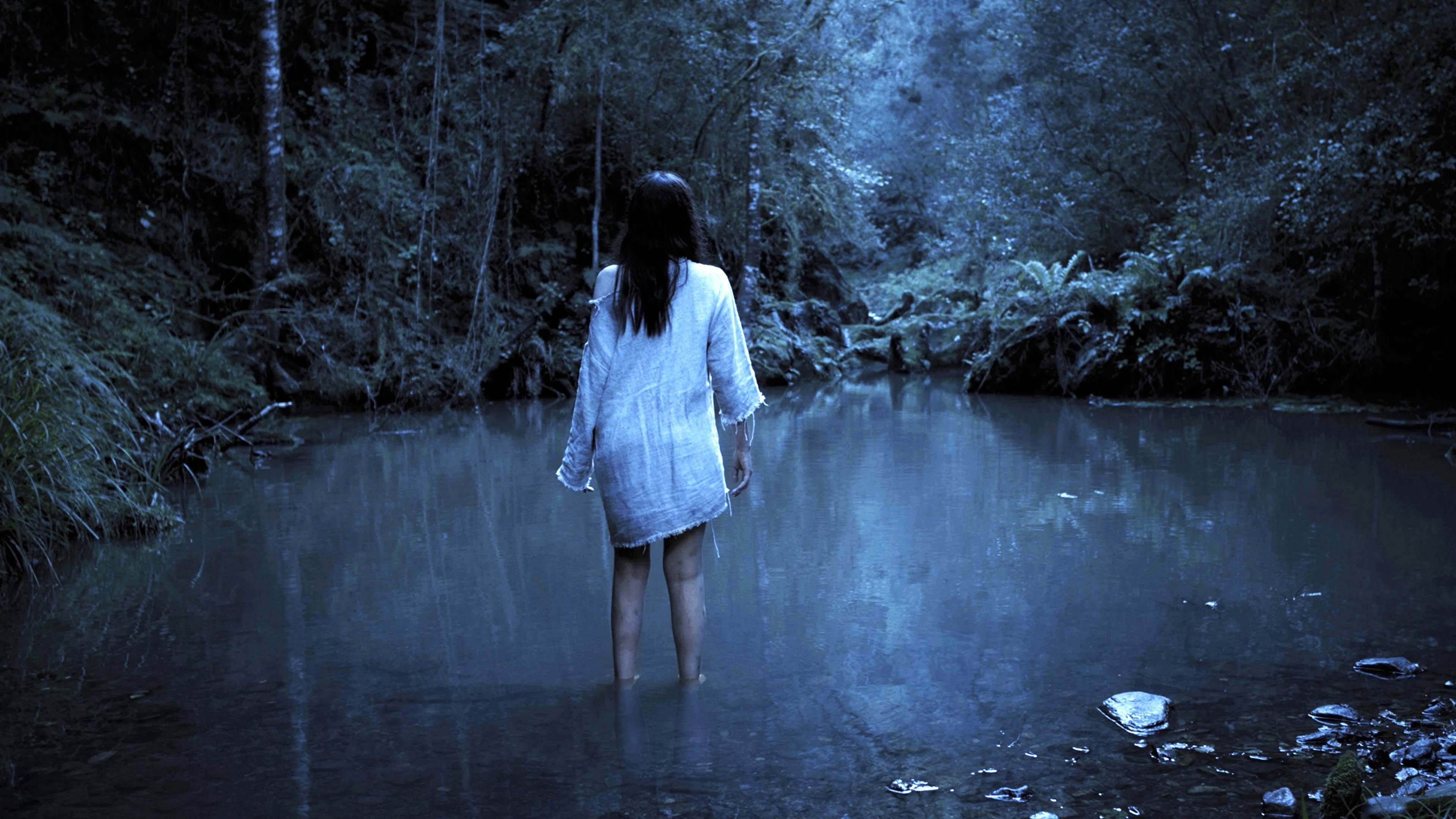
Principal photography was carried out entirely in South Africa, primarily in the Tsitsikamma Forest along the Garden Route in the Western and Eastern Cape provinces. The production benefited from the country's established crew base, indigenous-location access, and incentives that have made South Africa a sustained destination for independent international productions. Cinematographer Jorrie van der Walt, who also produced, shot extensively on location with a small unit, embedding the cast in the actual forest rather than recreating it on a soundstage.
Creature designer Petri du Toit built the fungal mutants, prosthetic appliances, and lichen-encrusted bodies that define the film's third act. The decision to commit to practical effects shaped both the production schedule and the performances, with actors Carel Nel and Alex van Dyk spending hours each day in prosthetic application. Composer Pierre-Henri Wicomb developed the score in parallel with editing by Leon Visser, and the finished film was completed in late 2020 in time for festival submission.
Gaia premiered at South by Southwest on March 16, 2021, in the Midnighters section, a slot historically reserved for genre cinema with festival breakout potential. Decal acquired North American distribution rights on March 5, 2021, ahead of the festival, and orchestrated the limited theatrical release on June 18, 2021, followed by a fast pivot to VOD on June 25, 2021. The compressed theatrical window reflected the pandemic-era release calendar that defined much of 2021 indie distribution.
Awards and Recognition
Gaia received its highest-profile recognition at South by Southwest 2021, where it was nominated in the Midnighters section and earned a Special Jury Recognition for Visual Effects, honoring Petri du Toit's creature design and prosthetic work. The SXSW recognition validated the practical-effects approach and gave Decal a marketing peg for the North American rollout.
The film went on to play festival slots including Fantasia International Film Festival in Montreal, Sitges Catalan International Film Festival in Spain, and the Imagine Film Festival in Amsterdam, where genre programmers responded to the production design and ecological themes. In South Africa, Gaia drew attention at local industry awards for the cinematography of Jorrie van der Walt and the production design supporting the creature work, cementing the film's reputation as a technical showcase for the country's genre filmmaking community.
Critical Reception
Gaia received largely positive reviews from critics, holding an 84% approval rating on Rotten Tomatoes from 67 reviews and a 64 out of 100 score on Metacritic. The Rotten Tomatoes critics' consensus described the film as "an effective slice of ecological horror" whose chilling visuals occasionally outpaced its narrative ambitions, a verdict echoed across the broader critical response. Audiences responded more cautiously, with a 45% Rotten Tomatoes audience score reflecting the divisive nature of the slow-paced, prosthetic-heavy approach.
Sheila O'Malley at RogerEbert.com called the film "a thought-provoking and disturbing experience," and Phuong Le in The Guardian singled out "the innovative visual effects, which combine CGI and practical makeup," as "truly mesmerising." Kyle Logan at Castle of Chills noted that while the film "sometimes feels like a bit of a mess, it never feels boring," crediting the thematic ambition. The shared throughline across reviews was admiration for the prosthetic craft and the Tsitsikamma Forest cinematography, paired with reservations about narrative pacing in the middle act.
Detractors found the philosophical dialogue between Carel Nel's Barend and Monique Rockman's Gabi over-extended, and several reviewers felt the ending tipped into ambiguity that did not pay off the buildup. Even skeptical reviews acknowledged the technical achievement of Petri du Toit's creature design, however, and the film's standing within the eco-horror subgenre has continued to grow on the strength of its visual identity.
Frequently Asked Questions
How much did it cost to make Gaia (2021)?
Gaia's production budget was not publicly disclosed. As an independent South African eco-horror produced by XYZ Films, Film Initiative Africa, and kykNET Films, the spend is estimated by industry observers to fall in the micro-budget arthouse range, well below $5 million, with the majority going to practical creature effects and Tsitsikamma Forest location work.
How much did Gaia earn at the box office?
Gaia grossed approximately $126,126 worldwide in its limited theatrical release. North American distributor Decal opened the film on June 18, 2021, with a fast pivot to video on demand on June 25, 2021. Theatrical revenue is not a primary success metric for a film of this scale, which earned the bulk of its commercial life through VOD and international licensing.
Who directed Gaia?
South African director Jaco Bouwer directed Gaia from a screenplay by Tertius Kapp. Bouwer, a veteran of South African theatre and television, also served as a producer on the film alongside Kapp, cinematographer Jorrie van der Walt, and Wikus du Toit.
Where was Gaia filmed?
Gaia was filmed entirely in South Africa, primarily in the Tsitsikamma Forest along the Garden Route in the Western and Eastern Cape provinces. The production embedded its small cast and crew in the actual indigenous rainforest rather than recreating the environment on a soundstage.
Did Gaia premiere at SXSW?
Yes. Gaia premiered at South by Southwest on March 16, 2021, in the festival's Midnighters section. The SXSW slot generated the prestige and platform visibility that supported the subsequent Decal acquisition and limited North American theatrical release.
Did Gaia win any awards?
Gaia received a Special Jury Recognition for Visual Effects at South by Southwest 2021, honoring creature designer Petri du Toit's practical fungal mutants and prosthetic work. The film also played Fantasia International Film Festival, Sitges, and Imagine Film Festival, drawing genre programmer recognition for its production design and cinematography.
How were the fungal creatures in Gaia made?
Creature designer Petri du Toit built the fungal mutants and lichen-encrusted prosthetic appliances using practical effects. Actors Carel Nel and Alex van Dyk spent hours each day in prosthetic application on set, with selective digital cleanup and forest extensions completing the look in post.
What did critics think of Gaia?
Critics responded positively, with Gaia holding an 84% Rotten Tomatoes approval rating from 67 reviews and a 64 on Metacritic. Reviewers praised the practical creature design and Tsitsikamma Forest cinematography, while some found the philosophical dialogue and middle-act pacing overextended. Audience scores were more divided, with a 45% Rotten Tomatoes audience rating.
Who distributed Gaia in North America?
Decal acquired North American distribution rights to Gaia on March 5, 2021, ahead of the SXSW premiere. The distributor handled the limited theatrical release on June 18, 2021, and the video-on-demand launch on June 25, 2021.
Is Gaia based on a true story?
No. Gaia is an original screenplay by Tertius Kapp, drawing on Gaia hypothesis ecology and body-horror conventions rather than a specific real-world event. The film uses the South African Tsitsikamma Forest setting and a fictional fungal organism to explore themes of environmental retribution and humanity's relationship to the natural world.
Filmmakers
Gaia

Official Trailer
Build budgets like this one in Saturation
Start from an industry-standard feature film template, import the schedule and rates you already have, and let the cost report keep itself current as you spend. Real-time collaboration, no spreadsheets.