Full Metal Jacket Budget
 DramaWar1h 57m
Updated
Synopsis
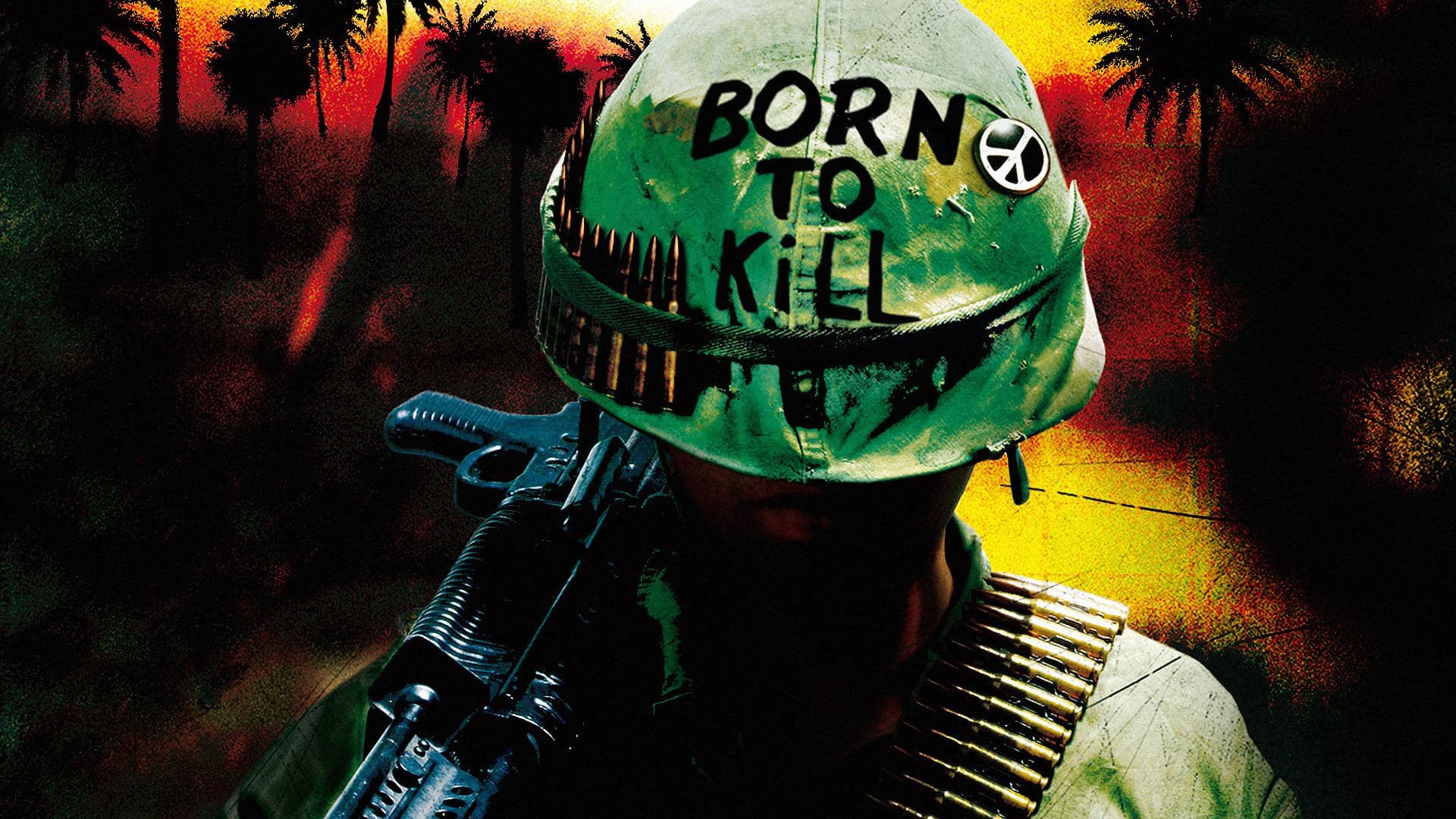
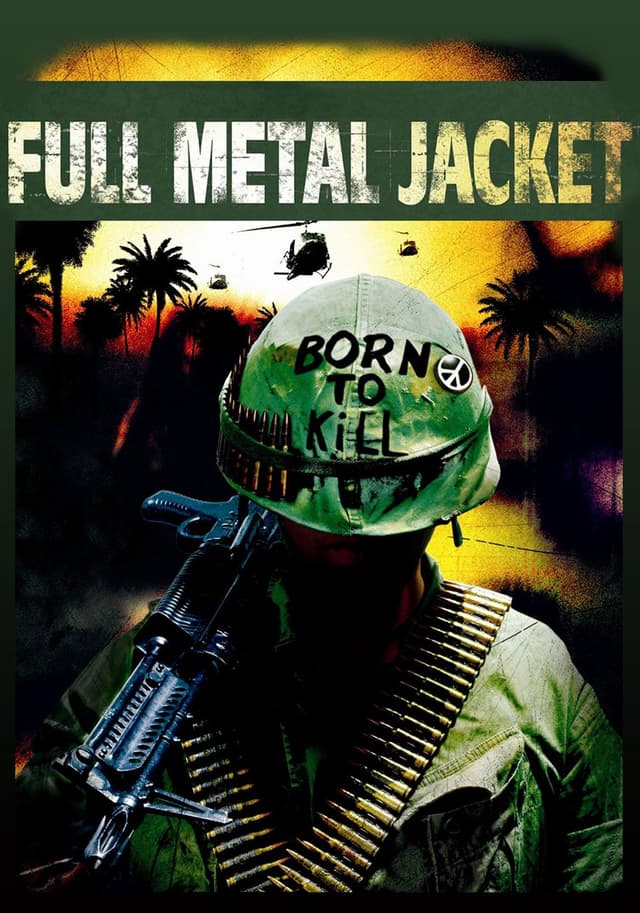
A two-segment look at the effect of the military mindset and war itself on Vietnam era Marines. The first half follows a group of recruits in boot camp under the command of the punishing Gunnery Sergeant Hartman. The second half shows one of those recruits, Joker, covering the war as a correspondent for Stars and Stripes, focusing on the Tet offensive.
What is the budget of Full Metal Jacket?
"Full Metal Jacket," a drama released in 1987, was directed by Stanley Kubrick and stars Matthew Modine, Adam Baldwin. The production budget was $30,000,000, placing it in the mid-budget range for drama productions of the 1980s.
Key Budget Allocation Categories
While specific budget breakdowns are not publicly available, typical cost drivers for a drama production like this include:
- Above-the-Line Talent: Drama films live or die on the strength of their performances.
- Location Filming & Period Production Design: Authentic locations , whether contemporary or historical , require scouting, permits, travel, lodging, and often significant dressing to match the story's time period.
- Post-Production, Color Grading & Score: The editorial process for dramas is typically longer than genre films, with careful attention to pacing and tone.
- Development: In early 1980, Stanley Kubrick contacted Michael Herr, author of the Vietnam War memoir Dispatches (1977), to discuss work on a film about the Holocaust but Kubrick discarded that idea in favor of a film about the Vietnam War.
What were the major cost factors in Full Metal Jacket?
Several factors contributed to the overall production costs of "Full Metal Jacket."
- Above-the-Line Talent: Above-the-Line Talent is one of the primary cost drivers in drama productions of this scale.
- Location Filming: Location Filming & Period Production Design is one of the primary cost drivers in drama productions of this scale.
- Post-Production: Post-Production, Color Grading & Score is one of the primary cost drivers in drama productions of this scale.
How Does Full Metal Jacket's Budget Compare to Similar Films?
At $30,000,000, Full Metal Jacket sits in the mid-budget range. Here is how it compares to productions with a similar budget:
- A Hologram for the King (2016): Budget $30,000,000, Worldwide Gross $9,169,507
- A Lot Like Love (2005): Budget $30,000,000, Worldwide Gross $42,886,719
- Big Momma's House (2000): Budget $30,000,000, Worldwide Gross $173,959,438
- Crazy Rich Asians (2018): Budget $30,000,000, Worldwide Gross $238,539,198
- Doomsday (2008): Budget $30,000,000, Worldwide Gross $22,472,631
The median budget for wide-release drama films in the era ranges from $30 to 80M for mid-budget to $150M+ for tentpoles.
Full Metal Jacket Box Office Performance
"Full Metal Jacket" earned $46,357,676 worldwide at the box office. Against a production budget of $30,000,000, the film showed modest profitability in theatrical release.
A film typically needs to earn approximately twice its production budget to cover marketing and distribution costs. For "Full Metal Jacket," that break-even threshold was roughly $60,000,000. With worldwide earnings of $46,357,676, the film fell short of that threshold but recouped its production costs in theatrical release.
Box Office Breakdown
Full Metal Jacket

At 54.5%, "Full Metal Jacket" returned its production investment but margin was tight after marketing and distribution costs.
Full Metal Jacket Production History
In early 1980, Stanley Kubrick contacted Michael Herr, author of the Vietnam War memoir Dispatches (1977), to discuss work on a film about the Holocaust but Kubrick discarded that idea in favor of a film about the Vietnam War. Herr and Kubrick met in England; Kubrick told Herr he wanted to make a war film but had yet to find a story to adapt. Kubrick discovered Gustav Hasford's novel The Short-Timers (1979) while reading the Kirkus Review.
Nine months of negotiations to cast Anthony Michael Hall as Private Joker were unsuccessful; Hall would later regret not doing the film. Val Kilmer was also considered for the role, and Bruce Willis declined a role because of commitments to his television series Moonlighting. Robert De Niro was also considered for the role, although Kubrick eventually felt that the audience would "feel cheated" if De Niro's character were killed in the first hour.
Principal photography began on August 27, 1985, and concluded on August 8, 1986. Scenes were filmed in Cambridgeshire, the Norfolk Broads, in eastern London at Millennium Mills and Beckton Gas Works in Newham and on the Isle of Dogs. Kubrick hired Anton Furst as the production designer, impressed by his work on The Company of Wolves (1984).
Awards and Recognition
Nominated for 1 Oscar. 8 wins & 15 nominations total
- Boston Society of Film Critics Award for Best Director
- David di Donatello for Best Producer
- Boston Society of Film Critics Award for Best Supporting Actor
- National Board of Review: Top Ten Films
Frequently Asked Questions
How much did it cost to make Full Metal Jacket (1987)?
The production budget was $30,000,000, covering principal photography, cast and crew salaries, locations, sets, post-production, and music. Marketing and distribution (P&A) costs are estimated at an additional $15,000,000 - $24,000,000, bringing the total studio investment to approximately $45,000,000 - $54,000,000.
How much did Full Metal Jacket (1987) earn at the box office?
Full Metal Jacket grossed $46,357,676 domestic, totaling $46,357,676 worldwide.
Was Full Metal Jacket (1987) profitable?
The film did not break even theatrically, earning $46,357,676 against an estimated $75,000,000 needed. Ancillary revenue may have improved the picture.
What were the biggest costs in producing Full Metal Jacket?
The primary cost drivers were above-the-line talent (Matthew Modine, Adam Baldwin, Vincent D'Onofrio); talent compensation, authentic period production design, and meticulous post-production; international production across United Kingdom, United States of America.
How does Full Metal Jacket's budget compare to similar drama films?
At $30,000,000, Full Metal Jacket is classified as a low-budget production. The median budget for wide-release drama films in the era ranges from $30 - 80M for mid-budget to $150M+ for tentpoles. Comparable budgets: A Hologram for the King (2016, $30,000,000); A Lot Like Love (2005, $30,000,000); Big Momma's House (2000, $30,000,000).
Did Full Metal Jacket (1987) go over budget?
There are no widely reported accounts of significant budget overruns for this production. However, studios rarely disclose precise budget overrun figures publicly. The reported production budget reflects the final estimated cost.
What was the return on investment (ROI) for Full Metal Jacket?
The theatrical ROI was 54.5%, calculated as ($46,357,676 − $30,000,000) ÷ $30,000,000 × 100. This measures gross revenue against production budget only - it does not account for P&A or exhibitor shares.
What awards did Full Metal Jacket (1987) win?
Nominated for 1 Oscar. 8 wins & 15 nominations total.
Who directed Full Metal Jacket and who were the key crew members?
Directed by Stanley Kubrick, written by Michael Herr, Gustav Hasford, Stanley Kubrick, shot by Douglas Milsome, with music by Vivian Kubrick, edited by Martin Hunter.
Where was Full Metal Jacket filmed?
Full Metal Jacket was filmed in United Kingdom, United States of America. Principal photography began on August 27, 1985, and concluded on August 8, 1986. Scenes were filmed in Cambridgeshire, the Norfolk Broads, in eastern London at Millennium Mills and Beckton Gas Works in Newham and on the Isle of Dogs.
Filmmakers
Full Metal Jacket

Official Trailer
Build budgets like this one in Saturation
Start from an industry-standard feature film template, import the schedule and rates you already have, and let the cost report keep itself current as you spend. Real-time collaboration, no spreadsheets.