Frequency Budget
 Thriller/Suspense
Updated
Synopsis
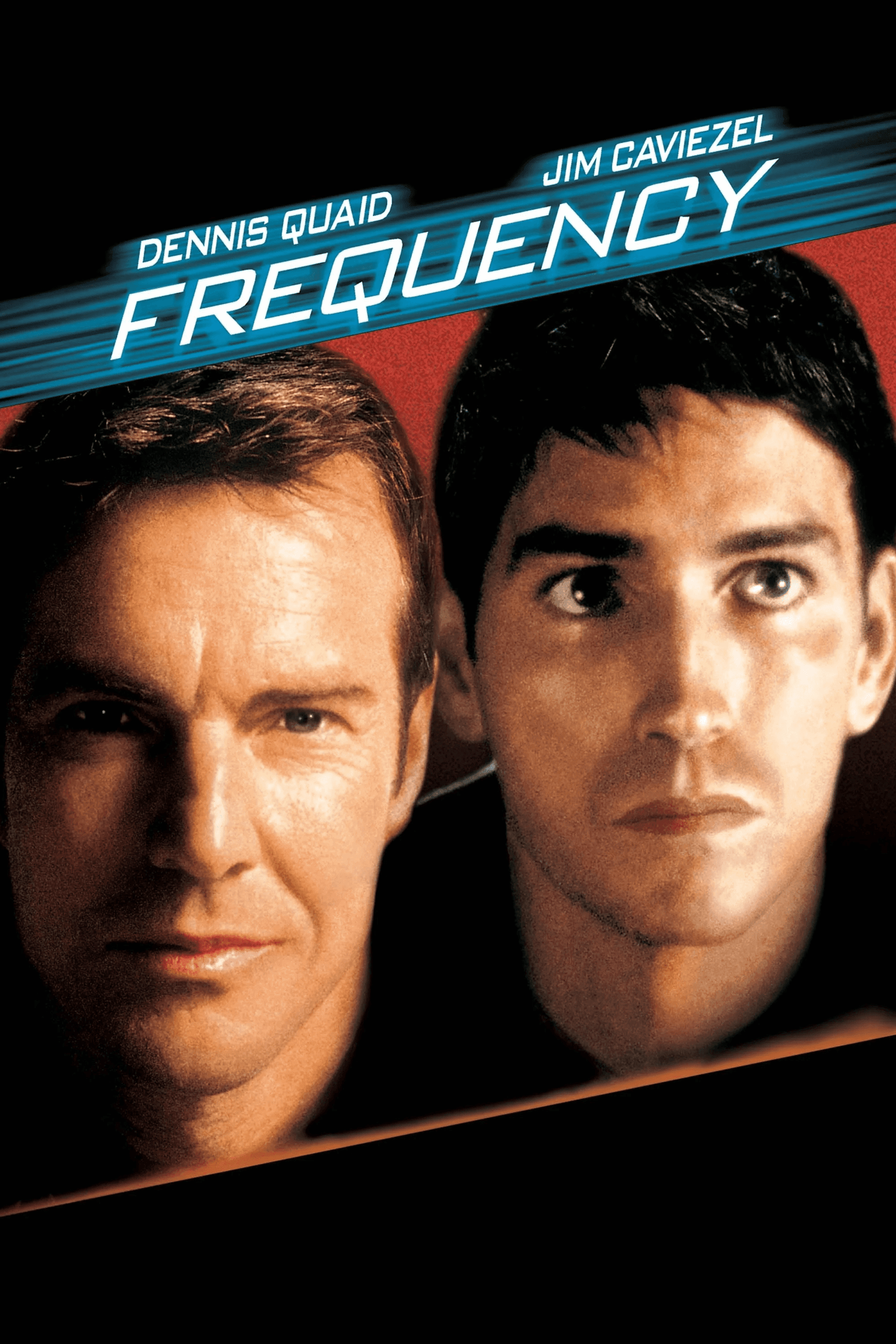
A New York City police detective in 1999 discovers his late father's ham radio still works across a freak solar storm and finds himself in communication with the man, who died in a 1969 firefighting accident. As the two reshape each other's timelines, the changes they make also activate a long-dormant serial killer case that now threatens both their lives.
What Is the Budget of Frequency (2000)?
Frequency (2000), directed by Gregory Hoblit and distributed by New Line Cinema, was produced on a budget of $31,000,000. Hawk Koch, Bill Carraro, Gregory Hoblit, and Toby Emmerich produced through New Line's in-house production infrastructure, with Hoblit reuniting with the New Line team that had supported his Primal Fear (1996) and Fallen (1998) thrillers. The film was developed as a Father's Day weekend 2000 release positioned for the emerging post-Sixth Sense supernatural-procedural marketplace.
The budget reflected an upper-mid-tier New Line investment, with the cost of mounting a dual-period production (1969 and 1999), assembling a marquee lead pairing (Dennis Quaid and Jim Caviezel) plus an established supporting tier (Andre Braugher, Elizabeth Mitchell), and underwriting practical period-accurate set construction in Toronto doubling for Queens. The math required the film to clear roughly $80,000,000 worldwide to break even after marketing, a target the film narrowly missed at the theatrical level. The page's slug references 2016 (the year of the unrelated CW television series Frequency that ran 2016-17) but the actual entry covers the 2000 theatrical feature directed by Gregory Hoblit.
Key Budget Allocation Categories
Frequency's $31,000,000 budget was distributed across several core production areas:
- Above-the-Line Talent: Dennis Quaid commanded a leading-actor fee built on his late-1990s career resurgence, with Jim Caviezel (then mid-career and pre-Passion of the Christ) at a featured-lead rate. Andre Braugher, Elizabeth Mitchell, and Shawn Doyle filled out the supporting tier. Gregory Hoblit commanded a feature-director fee appropriate to his established New Line track record on Primal Fear and Fallen.
- Dual-Period Production Design: The film required two distinct 1969 and 1999 period environments, with production designer Paul Eads building or dressing extensive 1969 Queens settings (Sullivan family home, fire-station interiors, period neighborhood streets) and 1999 contemporary equivalents that could be visually paralleled across the two timelines. Period vehicle picture cars, costuming, and street dressing drove substantial below-the-line spending.
- Toronto Production: Principal photography took place primarily in Toronto, with the city doubling for Queens, New York. Toronto's established crew infrastructure, favorable Canadian dollar exchange, and Ontario provincial production tax credits substantially offset below-the-line costs compared to a New York-based production at the same budget tier.
- Fire Sequence Coordination: The film required a major mid-act 1969 New York City firefighting sequence, with practical pyrotechnic effects, breakaway set construction, fire-safety coordination, and a multi-week stunt unit. Stunt coordinator Tony Cecere oversaw the practical fire effects, with the sequence widely cited in trade press as one of the film's most ambitious production undertakings.
- Visual Effects: Beyond the fire sequence, the film required moderate VFX coverage for the aurora borealis solar-storm visual motif, ham-radio glow effects, and various digital cleanup. The VFX budget line was modest relative to the film's practical-effects priorities but still represented a meaningful share of total spend.
- Music: Composer Michael Kamen wrote the original score. The soundtrack featured period-accurate 1969 needle drops with associated licensing fees, including Garth Brooks's "When You Come Back to Me Again," which was specifically written for the film's end credits and became a Top 5 Country chart hit.
How Does Frequency's Budget Compare to Similar Films?
At $31,000,000, Frequency sits in the typical range for late-1990s and early-2000s mid-budget supernatural thrillers. The comparison set illustrates how the cycle's commercial outcomes varied by concept and cast:
- The Sixth Sense (1999): Budget $40,000,000 | Worldwide $672,806,432. M. Night Shyamalan's benchmark supernatural thriller cost $9M more than Frequency and earned roughly 10 times its worldwide gross, the cycle's commercial peak.
- Stir of Echoes (1999): Budget $12,000,000 | Worldwide $21,124,053. David Koepp's same-period Kevin Bacon supernatural thriller cost less than 40% of Frequency and earned less than a third of its worldwide gross, illustrating the cycle's smaller-budget commercial floor.
- The Mothman Prophecies (2002): Budget $32,000,000 | Worldwide $55,545,818. Mark Pellington's Richard Gere supernatural thriller cost roughly the same as Frequency and earned $13M less worldwide.
- Dragonfly (2002): Budget $60,000,000 | Worldwide $50,929,765. Universal's Kevin Costner supernatural thriller cost nearly twice Frequency and earned less worldwide, a clearer commercial disappointment.
- Final Destination (2000): Budget $23,000,000 | Worldwide $112,880,294. New Line's same-year supernatural thriller cost $8M less than Frequency and earned $44M more worldwide, the year's stronger New Line genre play.
Frequency Box Office Performance
Frequency opened on April 28, 2000, debuting to $9,069,775 in its opening weekend across 2,605 theaters, finishing fifth on the chart behind Gladiator's second weekend, U-571, Where the Heart Is, and The Flintstones in Viva Rock Vegas. The opening was below New Line's tracking projections, which had targeted an $11M to $13M debut on the strength of the Father's Day-weekend marketing positioning and the Quaid-Caviezel pairing. The film posted strong second-week holds, however, building positive word-of-mouth from the supernatural-thriller audience.
Against a $31,000,000 production budget, Frequency needed roughly $80,000,000 in worldwide gross to reach profitability when accounting for marketing and distribution costs. Here is the financial breakdown:
Box Office Breakdown
Frequency

Frequency returned approximately $1.20 in theatrical revenue for every $1 invested when measured against total estimated production and marketing spend, placing it just barely below theatrical break-even. The domestic share of the gross was $45,011,193 against an international share of $23,068,478, a 66/34 split heavily weighted toward North America, reflecting the property's very-American father-son and New York setting.
New Line recouped a meaningful share of the modest theatrical shortfall through robust home entertainment, television licensing, and the long-tail commercial life of the Garth Brooks end-credits song. The film achieved sustained cable-television and DVD afterlife, becoming a regular fixture of Father's Day-adjacent programming. CBS later developed a 2016-17 television series adaptation of the film of the same name, the Frequency CW series that ran for thirteen episodes before cancellation.
Frequency Production History
Development began in the late 1990s, with screenwriter Toby Emmerich (then a New Line executive who would later become the studio's president) writing the script as his first produced feature credit. Emmerich's script integrated a sentimental father-son emotional core with a ham-radio time-bending sci-fi conceit and an underlying serial-killer procedural, a multi-genre blend that took multiple drafts to balance.
Gregory Hoblit attached as director in 1999 after his New Line success with Primal Fear (1996) and Fallen (1998). Hoblit, a veteran of NYPD Blue and Hill Street Blues television, brought a procedural-grounded sensibility to the supernatural conceit. Dennis Quaid and Jim Caviezel signed in the same year, with Quaid as the 1969 firefighter John Sullivan and Caviezel as his 1999 detective son. Andre Braugher (Homicide: Life on the Street) and Elizabeth Mitchell (then pre-Lost) filled out the supporting cast.
Principal photography ran in late 1999 in Toronto, with the city doubling extensively for Queens, New York. The dual-period production required full set redress between 1969 and 1999 sequences, with production designer Paul Eads coordinating period-accurate dressing across multiple practical locations. Toronto's established crew infrastructure and Ontario provincial production tax credits substantially offset below-the-line costs.
Post-production wrapped in early 2000, with New Line positioning the film for an April 28 release window timed to leverage the Father's Day-weekend marketing corridor and the post-Easter adult-drama marketplace. The marketing campaign emphasized the father-son emotional core, the time-bending ham-radio hook, and the supernatural-thriller positioning, with Garth Brooks's end-credits song "When You Come Back to Me Again" receiving substantial radio promotion as a marketing tie-in.
Awards and Recognition
Frequency received limited industry awards recognition. It was not nominated at the Academy Awards or Golden Globes.
Garth Brooks received a Golden Globe nomination for Best Original Song for "When You Come Back to Me Again," co-written with Jenny Yates. The song subsequently became a Top 5 Billboard Country chart hit and remained a regular Brooks live-show staple for decades. Frequency received a Saturn Award nomination for Best Science Fiction Film at the 27th Saturn Awards. Dennis Quaid received a Saturn Award nomination for Best Supporting Actor. The film generated meaningful trade-press conversation about the resurgence of mid-budget original supernatural thrillers in the post-Sixth Sense marketplace, and Toby Emmerich's screenplay credit became a regular reference point as he subsequently rose through New Line's executive ranks.
Critical Reception
Frequency received broadly positive reviews. The film holds a 71% approval rating on Rotten Tomatoes based on 128 critic reviews, with a critical consensus that praised it as an emotionally engaging supernatural thriller. On Metacritic, the film scored 65 out of 100, indicating generally favorable reviews. Audiences surveyed by CinemaScore gave the film a B+, signaling viable word-of-mouth that supported the film's strong second-week box-office holds.
Critics broadly praised Gregory Hoblit's direction, the Quaid-Caviezel emotional dynamic, Toby Emmerich's screenplay, and Michael Kamen's score. Roger Ebert awarded the film three and a half stars, writing that "what Frequency captures most beautifully is the longing for a chance to reach back across time and say something to someone we have lost." The New York Times' Stephen Holden called it "an unusually moving piece of science fiction, anchored by performances that ground its more outlandish conceits in recognizable emotional truth."
Among genre publications, the reception was particularly strong, with Empire and Total Film both placing the film among the strongest mid-budget thrillers of 2000. Trade-press conversations highlighted the screenplay's confident genre-blending across supernatural, time-bending, and serial-killer-procedural elements, an unusual structural ambition for a $31M April release. The strong critical reception, combined with the modest commercial result and the subsequent 2016 CW television series adaptation, has cemented Frequency as one of the more respected mid-budget original supernatural thrillers of the early 2000s.
Frequently Asked Questions
How much did it cost to make Frequency (2000)?
The production budget was $31,000,000. The film was financed by New Line Cinema and produced by Gregory Hoblit's in-house New Line production team alongside Toby Emmerich (then a New Line executive who later became the studio's president).
How much did Frequency earn at the box office?
The film grossed $45,011,193 domestically and $23,068,478 internationally, for a worldwide total of $68,079,671. It opened to $9,069,775 across 2,605 theaters on April 28, 2000, finishing fifth on the chart.
Was Frequency profitable?
The theatrical run came in marginally below break-even, posting a $0 to $7M loss against $56M to $61M total investment. New Line recouped a meaningful share through home entertainment, television licensing, and the long-tail commercial life of the Garth Brooks end-credits song.
Why does the slug say 2016 if the film is from 2000?
The slug references 2016, the year the unrelated CW television series Frequency debuted (running 2016-17 for thirteen episodes before cancellation). The CMS entry, the budget figure, the cast, and the box office data all refer to the 2000 theatrical feature directed by Gregory Hoblit. The slug is preserved for SEO continuity.
Who directed Frequency (2000)?
Gregory Hoblit directed the film. Hoblit had previously directed Primal Fear (1996) and Fallen (1998), both also for New Line, and he was a veteran of NYPD Blue and Hill Street Blues television.
Where was Frequency filmed?
Principal photography ran in late 1999 primarily in Toronto, with the city doubling extensively for Queens, New York. The dual-period production required full set redress between 1969 and 1999 sequences. Toronto's established crew infrastructure and Ontario provincial production tax credits substantially offset below-the-line costs.
Who stars in Frequency (2000)?
Dennis Quaid stars as the 1969 firefighter John Sullivan and Jim Caviezel as his 1999 detective son John Francis "Johnny" Sullivan. Andre Braugher (Homicide: Life on the Street) and Elizabeth Mitchell (then pre-Lost) fill out the supporting cast.
What is "When You Come Back to Me Again" from Frequency?
It is the film's end-credits song, written by Garth Brooks and Jenny Yates and performed by Brooks. The song received a Golden Globe nomination for Best Original Song, became a Top 5 Billboard Country chart hit, and remained a regular Brooks live-show staple for decades.
How does Frequency compare to other supernatural thrillers of the era?
Frequency cost $31M and earned $68M worldwide. The Sixth Sense (1999) cost $40M and earned $672.8M, the cycle's benchmark. Final Destination (2000), New Line's same-year genre play, cost $23M and earned $112.9M. The Mothman Prophecies (2002) cost $32M and earned $55.5M.
What did critics think of Frequency?
The film holds a 71% approval rating on Rotten Tomatoes (128 reviews) and scored 65 out of 100 on Metacritic. Audiences gave it a B+ CinemaScore. Roger Ebert awarded three and a half stars, calling it a film that "captures most beautifully the longing for a chance to reach back across time and say something to someone we have lost."
Filmmakers
Frequency

Official Trailer
Build budgets like this one in Saturation
Start from an industry-standard feature film template, import the schedule and rates you already have, and let the cost report keep itself current as you spend. Real-time collaboration, no spreadsheets.