Fast & Furious Budget
 ActionCrimeThriller1h 47m
Updated
Synopsis
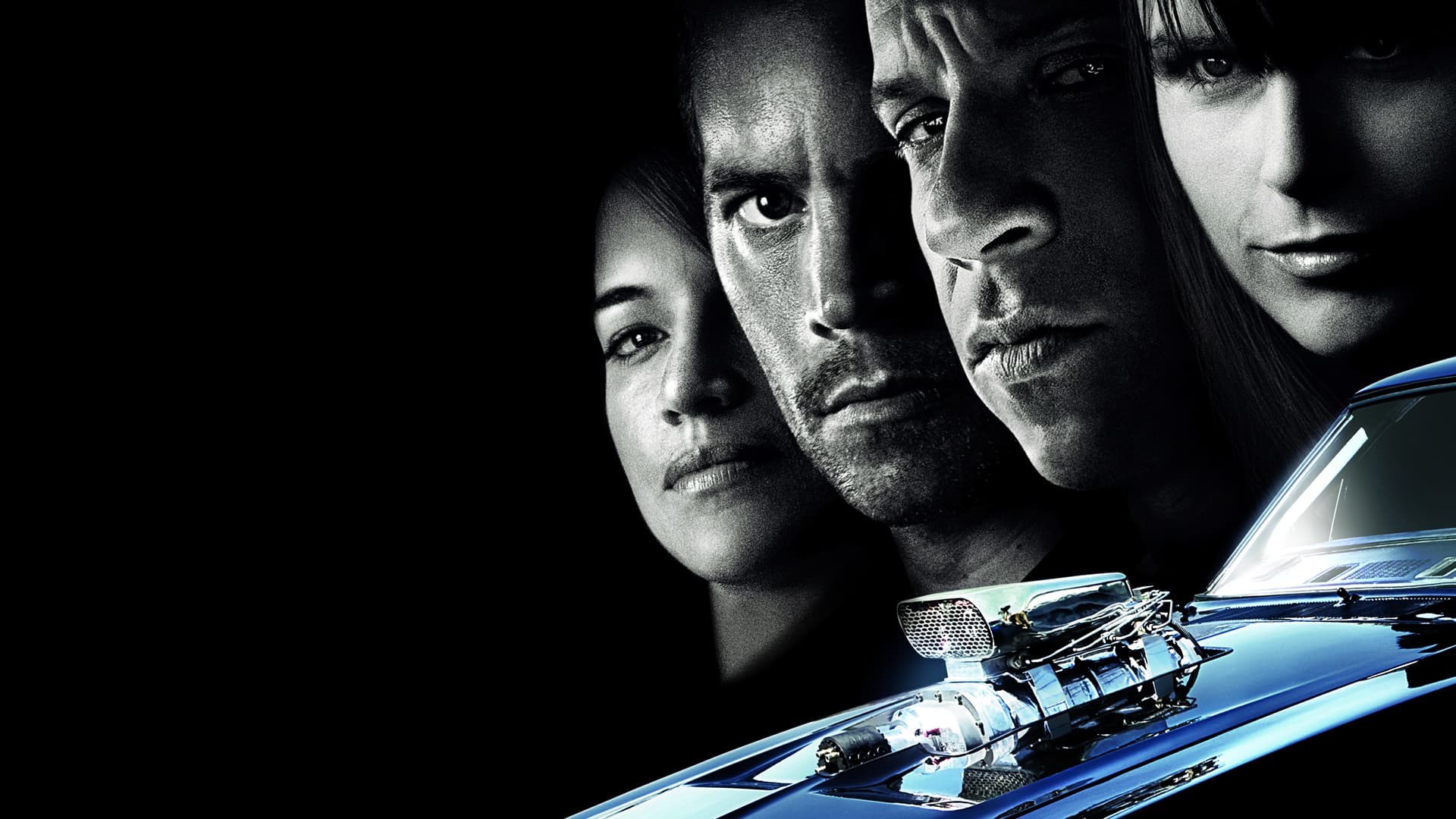
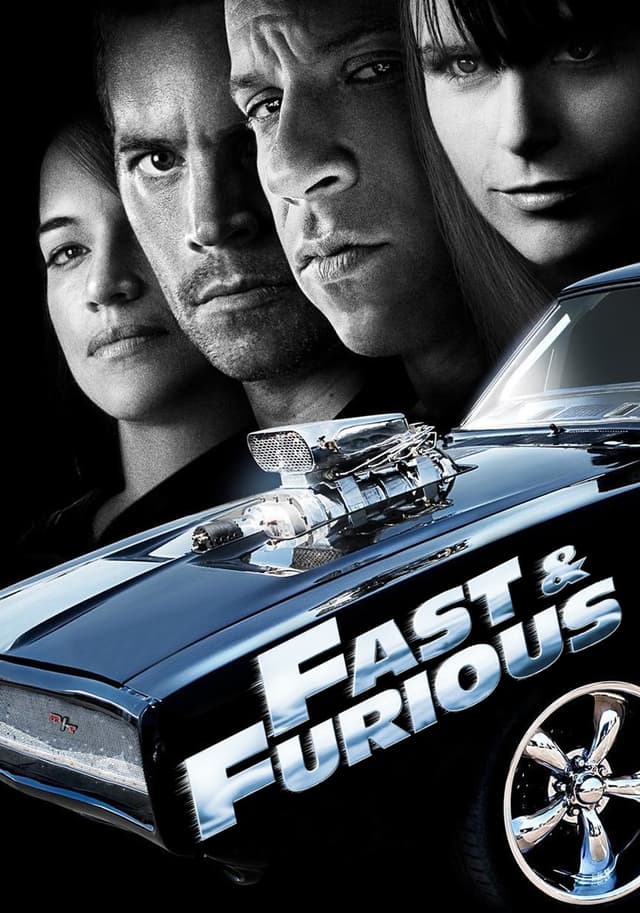
When a vicious crime cartel leaves Dominic Toretto's former lover dead in Mexico, the fugitive street racer returns to Los Angeles for revenge. Federal agent Brian O'Conner is drawn into the same investigation, and the two reluctantly team up to infiltrate a heroin smuggling ring that runs drugs across the border in modified street cars.
What Is the Budget of Fast & Furious (2009)?
Fast & Furious (2009), directed by Justin Lin and distributed by Universal Pictures, was produced on a reported budget of $85,000,000. The film was financed by Universal Pictures, Original Film, One Race Films, and Relativity Media as the fourth installment in The Fast and the Furious franchise and the first to reunite the original 2001 cast of Vin Diesel, Paul Walker, Michelle Rodriguez, and Jordana Brewster.
The budget reflected a calculated reboot strategy. Universal had paid Vin Diesel a significant fee to anchor a cameo in The Fast and the Furious: Tokyo Drift (2006), which set up his return as the franchise lead in this fourth installment. The studio committed $85,000,000, roughly $40,000,000 more than the $45,000,000 spent on Tokyo Drift, betting that the original cast reunion combined with director Justin Lin's continuation from Tokyo Drift could relaunch the franchise as a global tentpole property. The math assumed worldwide gross above $200,000,000 to clear marketing and reach profitability.
Key Budget Allocation Categories
Fast & Furious's reported $85,000,000 budget was distributed across several core production areas:
- Above-the-Line Talent: Vin Diesel returned to the lead role of Dominic Toretto at a major star fee that reflected his post-XXX (2002) and post-Riddick (2004) marquee value. Paul Walker, Michelle Rodriguez, and Jordana Brewster commanded returning-franchise star fees, with John Ortiz, Laz Alonso, and Gal Gadot (in her feature debut) joining the supporting cast at scale-appropriate rates.
- Vehicle and Stunt Department: The signature franchise vehicle fleet, comprising heavily modified street cars sourced and prepared by the Fast & Furious in-house vehicle department, represented a major below-the-line line item. Stunt coordination led by Mike Gunther covered the opening Dominican Republic tanker heist, the Mexican border tunnel chase, and the closing freeway sequence.
- Mexico and Los Angeles Production: Principal photography ran across Mexico City, Punta Cana in the Dominican Republic, and Los Angeles. The multi-location shoot involved international travel, lodging, local crew, and location permits across three countries, building substantial below-the-line cost relative to a single-country production.
- Visual Effects: ILM and a vendor pool delivered the digital tunnel-chase compositing, environment extensions for the Mexican border sequences, and seamless integration of vehicle stunts with digital enhancements. The VFX work was meaningful but contained, consistent with the franchise's pre-Fast Five emphasis on practical stunt photography over CGI.
- Score and Music: Composer Brian Tyler returned from Tokyo Drift to score the film, while the soundtrack budget covered original hip-hop and Latin music tracks central to the franchise's audio identity. Music licensing for needle drops in the street-racing sequences represented a major line item.
- Reshoots and Marketing Buildout: Universal positioned the April 3, 2009 release window as the de facto launch of the year's summer movie season, with a marketing campaign emphasizing the original cast reunion across television, online, and outdoor placements. Some reshoots during summer 2008 added incremental costs to the production budget.
How Does Fast & Furious's Budget Compare to Similar Films?
At $85,000,000, Fast & Furious sits in the upper-mid range of late-2000s action franchises. The comparison set illustrates the budget tier and the franchise's subsequent escalation:
- The Fast and the Furious: Tokyo Drift (2006): Budget $85,000,000 | Worldwide $158,968,612. The previous franchise installment cost the same as Fast & Furious but underperformed, validating Universal's reboot bet.
- Fast Five (2011): Budget $125,000,000 | Worldwide $626,137,675. The subsequent installment cost $40,000,000 more and earned roughly 73 percent more worldwide, capturing the franchise pivot to ensemble heist filmmaking that Fast & Furious had set up.
- Furious 7 (2015): Budget $190,000,000 | Worldwide $1,515,341,399. The eventual franchise peak cost more than twice what Fast & Furious spent and earned more than four times the worldwide gross, illustrating the trajectory the 2009 reboot enabled.
- Taken 2 (2012): Budget $45,000,000 | Worldwide $376,704,539. Fox's contemporaneous mid-budget action sequel cost roughly half what Fast & Furious spent and earned a comparable worldwide gross, providing a peer for action-franchise economics.
Fast & Furious Box Office Performance
Fast & Furious opened on April 3, 2009 to $70,950,500 in its first weekend across 3,461 theaters, setting a then-record opening for the franchise and for an April release at the time. The film ultimately grossed $155,064,265 domestically against $208,100,000 internationally for a worldwide total of $363,164,265. Here is the financial breakdown:
Box Office Breakdown
Fast & Furious

Fast & Furious returned approximately $2.20 to $2.50 in worldwide gross for every $1 invested when measured against total estimated production and marketing spend, marking it a major theatrical winner and the breakthrough that secured the franchise's future. The international share was 57.3 percent of the worldwide gross, a significantly heavier overseas tilt than the previous franchise entries and an early signal of the global growth trajectory that would carry the property to Furious 7.
The strong opening and worldwide gross gave Universal the confidence to invest in larger-scale subsequent installments, beginning with the $125,000,000 Fast Five (2011) that pivoted the franchise toward ensemble heist filmmaking. The 2009 reboot is widely regarded as the inflection point that transformed Fast & Furious from a mid-budget street-racing series into a $5-billion-plus global tentpole franchise.
Fast & Furious Production History
Development began in 2007 at Universal Pictures, with producer Neal H. Moritz of Original Film leading the effort to reunite the original 2001 cast. Justin Lin, who had directed The Fast and the Furious: Tokyo Drift (2006), returned to direct his second franchise installment. Chris Morgan, who had written Tokyo Drift, returned to write the screenplay.
Vin Diesel had already established his return in a cameo at the end of Tokyo Drift, and a deal in 2007 brought him back as the franchise lead with executive producer involvement through One Race Films. Paul Walker, Michelle Rodriguez, and Jordana Brewster signed on to reprise their original characters. Gal Gadot, then a former Miss Israel and an Israeli military veteran, made her feature debut as Gisele Yashar.
Principal photography ran from June through October 2008 across Mexico, the Dominican Republic, and California. The Punta Cana opening tanker-heist sequence and the Mexico City unit anchored the international portion of the shoot, while the Los Angeles unit handled the studio interiors and the closing freeway sequence. Stunt coordinator Mike Gunther and the franchise vehicle department prepared the modified street-car fleet for principal photography.
Post-production through winter 2008-2009 included visual effects work at Industrial Light & Magic and a vendor pool, plus Brian Tyler's score recording and soundtrack assembly. The April 3, 2009 release positioned the film as the de facto launch of the year's summer movie season, with a marketing campaign emphasizing the original cast reunion that delivered the record-breaking opening weekend.
Awards and Recognition
Fast & Furious received limited awards recognition consistent with action-franchise releases. The film won the 2010 Teen Choice Award for Choice Movie: Action Adventure and was nominated at the BMI Film & TV Awards for Brian Tyler's score. It received no Academy Award, Golden Globe, BAFTA, or major industry-craft attention, which is typical for the franchise tier.
The film's legacy within awards conversation has been minimal in direct terms but considerable in industry impact. Industry analysts widely cite Fast & Furious as the inflection point that transformed the franchise economics, and Vin Diesel has subsequently received multiple People's Choice and MTV Movie & TV Award nominations for his continued franchise lead role.
Critical Reception
Fast & Furious received mixed-to-negative reviews. The film holds a 28% approval rating on Rotten Tomatoes based on 195 critic reviews, with a critical consensus that praised the action sequences but flagged the formulaic story. On Metacritic, the film scored 45 out of 100, indicating mixed or average reviews. Audiences surveyed by CinemaScore gave the film an A-, a strong audience response that confirmed the franchise reunion delivered for its target demographic.
Critics broadly praised the action sequences, particularly the opening Dominican Republic tanker heist and the Mexican border tunnel chase, but objected to the perfunctory plotting and the routine antagonist. Roger Ebert awarded the film two and a half stars and wrote that "the picture knows exactly what it wants to be and accomplishes that with brutal efficiency." Variety's Justin Chang noted that "the cast reunion delivers some pleasures, but the picture itself is content to lap its predecessors."
Defenses of the film highlighted Justin Lin's confident action staging and the franchise-best chemistry between the original cast. The mixed critical reception combined with the strong audience response and breakthrough commercial performance established a template that the franchise has repeated for more than a decade, with each subsequent installment delivering similar critic-audience splits and similar or expanded commercial outcomes.
Frequently Asked Questions
How much did it cost to make Fast & Furious (2009)?
The reported production budget was $85,000,000, financed by Universal Pictures, Original Film, One Race Films, and Relativity Media. The budget was identical to The Fast and the Furious: Tokyo Drift (2006) and represented Universal's investment in reuniting the original 2001 cast.
How much did Fast & Furious earn at the box office?
The film grossed $155,064,265 domestically and $208,100,000 internationally for a worldwide total of $363,164,265. It opened to $70,950,500 across 3,461 theaters on April 3, 2009, setting a then-record opening for the franchise and for an April release at the time.
Was Fast & Furious a box office success?
Yes. Against the $85,000,000 production budget and an estimated $60,000,000 to $80,000,000 marketing spend, the film returned approximately $2.20 to $2.50 in worldwide gross for every $1 invested. It is widely regarded as the inflection point that transformed the franchise into a global tentpole property.
Who directed Fast & Furious (2009)?
Justin Lin directed the film, returning to the franchise after directing The Fast and the Furious: Tokyo Drift (2006). Lin subsequently directed Fast Five (2011), Fast & Furious 6 (2013), Fast & Furious 6 (2013), and F9 (2021), becoming the most prolific director in the franchise.
Who stars in Fast & Furious?
Vin Diesel stars as Dominic Toretto, with Paul Walker as Brian O'Conner, Michelle Rodriguez as Letty Ortiz, and Jordana Brewster as Mia Toretto. John Ortiz plays the antagonist Arturo Braga, Laz Alonso plays Fenix Calderon, and Gal Gadot makes her feature debut as Gisele Yashar.
Where was Fast & Furious filmed?
Principal photography ran from June through October 2008 across Mexico City, Punta Cana in the Dominican Republic, and Los Angeles. The Punta Cana opening tanker-heist sequence and the Mexico City unit anchored the international portion. The Los Angeles unit handled the studio interiors and the closing freeway sequence.
Is Fast & Furious the fourth movie in the franchise?
Yes. Fast & Furious is the fourth installment in The Fast and the Furious franchise, following The Fast and the Furious (2001), 2 Fast 2 Furious (2003), and The Fast and the Furious: Tokyo Drift (2006). It is the first installment to reunite the original 2001 cast and is widely regarded as the franchise reboot.
What did critics think of Fast & Furious?
Critics gave the film mixed-to-negative reviews, with a 28% approval rating on Rotten Tomatoes based on 195 critics and a 45 out of 100 on Metacritic. Audiences responded much more favorably, giving the film an A- CinemaScore. Critics praised the action sequences but objected to the perfunctory plotting.
How does Fast & Furious set up Fast Five?
Fast & Furious ends with the cast en route to break Dominic Toretto out of prison transport, setting up the heist-team ensemble premise that Fast Five (2011) fully embraced. The film also introduces Gal Gadot as Gisele Yashar, who became a major recurring character through Fast & Furious 6 (2013).
Did Fast & Furious win any awards?
The film won the 2010 Teen Choice Award for Choice Movie: Action Adventure and was nominated at the BMI Film & TV Awards for Brian Tyler's score. It received no Academy Award, Golden Globe, BAFTA, or major industry-craft attention, which is typical for the franchise tier.
Filmmakers
Fast & Furious

Build budgets like this one in Saturation
Start from an industry-standard feature film template, import the schedule and rates you already have, and let the cost report keep itself current as you spend. Real-time collaboration, no spreadsheets.