Enron: The Smartest Guys in the Room Budget
 Documentary110 minutes
Updated
Synopsis
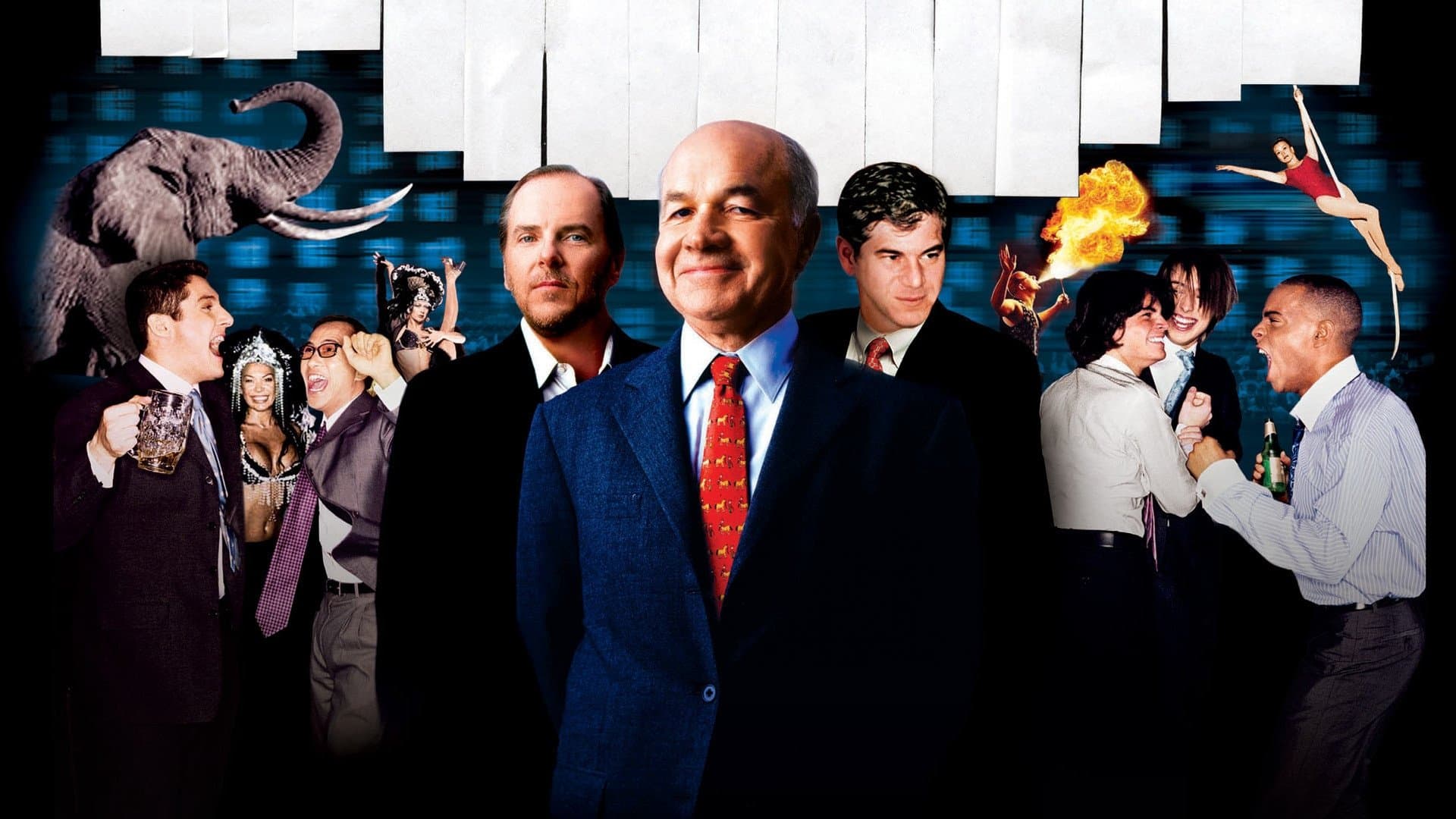
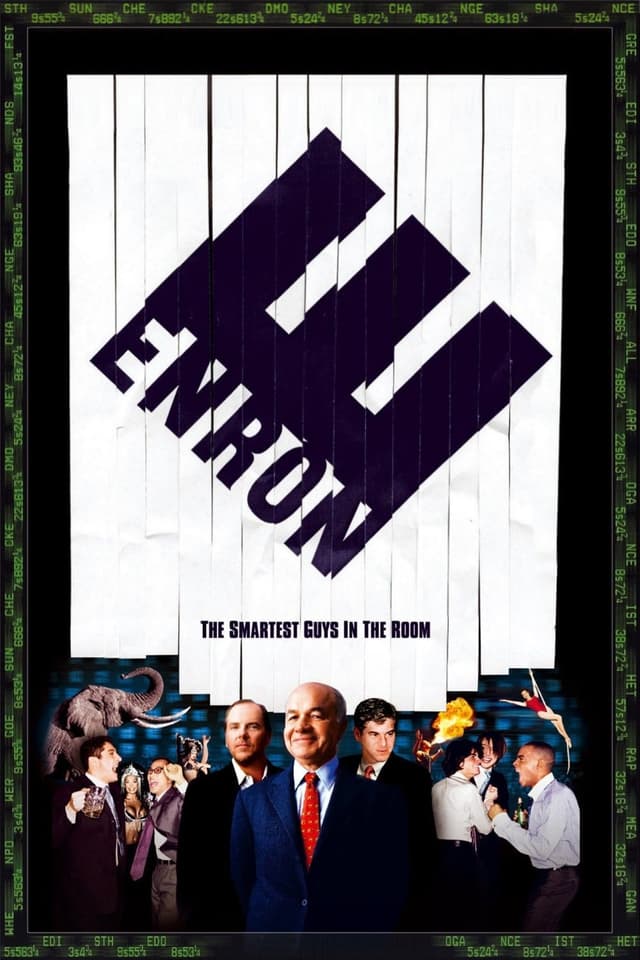
Enron dives from the seventh largest US company to bankruptcy in less than a year in this tale told chronologically. The emphasis is on human drama, from suicide to 20,000 people sacked: the personalities of Ken Lay (with Falwellesque rectitude), Jeff Skilling (he of big ideas), Lou Pai (gone with $250 M), and Andy Fastow (the dark prince) dominate. Along the way, we watch Enron game California's deregulated electricity market, get a free pass from Arthur Andersen (which okays the dubious mark-to-market accounting), use greed to manipulate banks and brokerages (Merrill Lynch fires the analyst who questions Enron's rise), and hear from both Presidents Bush what great guys these are.
What Is the Budget of Enron: The Smartest Guys in the Room?
Enron: The Smartest Guys in the Room was produced on a budget of approximately $2.5 million, financed by Magnolia Pictures and 2929 Entertainment, the production company owned by Mark Cuban and Todd Wagner. The film was directed by Alex Gibney, whose subsequent career would include Taxi to the Dark Side (2007, Academy Award winner), Catching the Friedmans (2003) as producer, and Going Clear (2015). The film was based on the 2003 book of the same name by Bethany McLean and Peter Elkind of Fortune magazine, both of whom appear as primary interview subjects.
The $2.5 million budget covered extensive archival research and footage licensing, the interview campaign with former Enron employees, executives, regulators, and journalists, and the reconstruction sequences depicting Enron's trading operations and executive culture. Enron had collapsed in December 2001 in what was at the time the largest corporate bankruptcy in American history, wiping out $74 billion in shareholder value and destroying the retirement savings of thousands of Enron employees whose 401(k) accounts were invested primarily in Enron stock.
Key Budget Allocation Categories
- Bethany McLean and Peter Elkind Research Integration: McLean and Elkind had spent years reporting on Enron before and after its collapse for Fortune magazine, and their book provided the film's primary source material and investigative framework. McLean was among the first journalists to publicly question Enron's financial transparency, publishing "Is Enron Overpriced?" in Fortune in March 2001, nine months before the company's collapse. Their participation as on-screen subjects and research consultants provided Gibney access to the documentary record they had accumulated over years of reporting.
- Audio Recordings of Enron Traders: Among the film's most significant source material were audio recordings of Enron energy traders in California during the 2000-2001 California energy crisis, in which Enron traders deliberately withheld power from the California grid to drive up spot electricity prices. The recordings, obtained through regulatory proceedings, captured traders laughing about the fires burning in California, mocking the elderly residents who couldn't afford their power bills, and using profane nicknames for the manipulation strategies. Licensing these recordings and the regulatory documents associated with them required legal and research coordination with the Federal Energy Regulatory Commission.
- Archival Footage and Document Research: Enron's collapse generated an enormous documentary record including Securities and Exchange Commission filings, congressional testimony, internal corporate communications obtained through discovery, and television news coverage of the company's rise and fall. Gibney's research team processed this material over an extended pre-production period to identify the most damning and most cinematically effective documents for inclusion in the film. Archival footage licensing from television news organizations, stock footage libraries, and corporate communications archives represented a significant budget line.
- Interview Campaign Across Former Employees, Regulators, and Analysts: The film interviews former Enron employees including traders, accountants, and executives, as well as journalists, financial analysts who had independently questioned Enron's accounting, and California government officials who had dealt with the energy crisis. Coordinating an interview campaign across subjects who in some cases faced legal exposure for their Enron-related activities required careful planning and legal consultation about what former employees could say on camera without compromising ongoing litigation.
- Magnolia Pictures Distribution and Marketing: Magnolia Pictures, which had also distributed Food, Inc. and other Participant Media documentary releases, handled the theatrical marketing campaign. Mark Cuban and Todd Wagner's ownership of both 2929 Entertainment (production) and Magnolia Pictures (distribution) allowed an unusual level of integration between production and distribution strategy, with both companies motivated to maximize the film's theatrical and DVD commercial performance.
How Does Enron: The Smartest Guys in the Room's Budget Compare to Similar Films?
Enron sits at the standard investigative documentary budget level for a film with extensive archival research and a multi-month interview campaign. Its domestic performance of $4.1 million was strong for a corporate malfeasance documentary without celebrity involvement.
- The Corporation (2003): Budget ~$2M | Domestic $1.1M. Jennifer Abbott and Mark Achbar's Canadian documentary examining the legal personhood and psychopathic behavior of corporations spent a comparable amount to Enron and found a much smaller domestic theatrical audience, partly because its abstract analytical approach lacked the dramatic narrative of the Enron collapse. Enron's specific cast of characters and their documented misconduct gave Gibney's film the dramatic structure that corporate critique documentaries typically lack.
- Inside Job (2010): Budget ~$2M | Worldwide $8M. Charles Ferguson's documentary about the 2008 financial crisis, which won the Academy Award for Best Documentary Feature, spent a comparable amount to Enron and found a larger worldwide theatrical audience five years later. The 2008 crisis affected a far broader audience than Enron's collapse, explaining the gap, though both films demonstrated that financial malfeasance is a commercially viable documentary subject.
- Too Big to Fail (2011): Budget ~$8M | HBO Film. HBO's dramatized account of the 2008 financial crisis, starring William Hurt, James Woods, and Ed Asner, spent more than three times what Enron cost but bypassed theatrical for HBO distribution. Enron's documentary format allowed it to include actual audio recordings and testimony that a dramatized version could only approximate.
- Capitalism: A Love Story (2009): Budget ~$4M | Worldwide $14.4M. Michael Moore's documentary about the 2008 financial crisis, released the same year as Inside Job, found a worldwide gross more than three times Enron's domestic performance despite spending more than Enron cost. Moore's participatory documentary persona drove theatrical attendance that the interview-based investigative approach of Gibney and Ferguson could not replicate.
Enron: The Smartest Guys in the Room Box Office Performance
Enron: The Smartest Guys in the Room opened April 22, 2005, through Magnolia Pictures in a limited release expanding nationally through May and June. The domestic total finished at $4.1 million. International theatrical distribution was limited, with the film finding its primary international audience through television broadcast and DVD distribution rather than theatrical exhibition, so the worldwide figure is essentially equal to the domestic gross.
Against a production budget of approximately $2.5 million and an estimated $1.5 million in prints and advertising for the domestic theatrical release, the total investment was approximately $4 million. With theaters retaining roughly 50 percent of gross, Magnolia's share of the domestic theatrical gross was approximately $2 million, below the total investment in theatrical alone. DVD sales and television broadcast licensing, where the film found a much larger audience than its theatrical run, brought it to overall profitability.
Box Office Breakdown
Enron: The Smartest Guys in the Room

For every dollar invested in production, Enron returned approximately $1.63 at the domestic box office. Accounting for P&A, the film returned approximately $0.51 for every dollar of total investment in theatrical. The film's legacy value extended well beyond its theatrical performance: the Academy Award nomination for Best Documentary Feature (2006) positioned it as the definitive documentary account of the Enron scandal, and the film became a standard teaching resource in business school courses on corporate ethics and financial fraud that sustained its audience across the following decade.
Enron: The Smartest Guys in the Room Production History
Alex Gibney was approached to direct the film adaptation of McLean and Elkind's book after the book's publication in 2003 demonstrated strong public interest in a comprehensive account of the Enron scandal. Gibney, who had produced Capturing the Friedmans (2003) and directed smaller documentary projects, saw the Enron story as a subject that could accommodate his interest in institutional failure and individual moral compromise. McLean and Elkind agreed to participate as on-screen subjects and to give Gibney access to the research they had accumulated.
The research phase centered on the audio recordings of Enron energy traders that had been obtained through Federal Energy Regulatory Commission proceedings. These recordings, in which traders can be heard joking about the California energy crisis they were engineering, provided Gibney with material that no dramatic recreation could have matched. The discovery that Enron traders had nicknamed their market manipulation strategies "Death Star," "Fat Boy," and "Ricochet" gave the film its most absurdist and damning content.
The interview campaign included former Enron employees who were willing to speak on camera about the company's culture, including traders, accountants, and mid-level executives. Obtaining access to individuals who had either cooperated with federal prosecutors or were still under investigation required careful legal coordination. Several key figures, including former Enron Chairman Kenneth Lay and former CEO Jeffrey Skilling, declined to participate, though both appear extensively in archival footage.
The film premiered at the Sundance Film Festival in January 2005, where it was acquired by Magnolia Pictures for theatrical distribution. The Sundance premiere generated significant press coverage and established the film's position as the documentary account of the Enron scandal, which had continued to generate news through the ongoing federal prosecution of Lay and Skilling. Both were convicted in May 2006; Lay died in July 2006 before sentencing, and Skilling was sentenced to 24 years in federal prison, later reduced.
Awards and Recognition
Enron: The Smartest Guys in the Room was nominated for the Academy Award for Best Documentary Feature at the 78th Academy Awards (2006), losing to March of the Penguins. The Academy nomination established Gibney's reputation as the leading documentarian of American institutional failure, a designation reinforced by Taxi to the Dark Side's win at the 80th Academy Awards (2008) and by his subsequent films about Scientology, the NSA, and Silicon Valley.
The film received the International Documentary Association Award nomination for Best Feature Documentary and was recognized by the Producers Guild of America with a nomination in the Documentary category. It is regularly cited in lists of the greatest financial crisis documentaries and has been used in the curricula of business schools and law schools as a case study in corporate governance failure, accounting fraud, and the limitations of market self-regulation. The film's most enduring cultural contribution is its introduction of the Enron trader audio recordings to a mass audience, recordings that remain the most vivid primary document of the company's willingness to manipulate markets at human cost.
Critical Reception
Enron: The Smartest Guys in the Room holds a 97% approval rating on Rotten Tomatoes, with critics broadly praising the film's clarity of argument, its use of primary source material, and Gibney's skill in making complex financial fraud comprehensible to a general audience. Metacritic scored it 80 out of 100, indicating generally favorable reviews. The film's IMDb rating of 7.7 out of 10 reflects a general audience that found it infuriating and illuminating in equal measure.
Critics consistently cited the audio recordings of Enron traders as the film's most devastating material. The recordings of traders laughing about the fires burning in California, a fire they associate with the power shortages their market manipulation is causing, were described by A.O. Scott in The New York Times as "chilling" and by Roger Ebert as evidence of a "corporate culture of mendacity and theft that at times seems more like a crime syndicate than a business." The human cost of the California energy crisis, including deaths of elderly residents unable to afford electricity during summer heat waves, gave the trader recordings their moral weight.
Critics who raised reservations noted that the film's focus on the most spectacular and criminal elements of Enron's failure did not fully account for the role of Wall Street analysts, credit rating agencies, and accounting firm Arthur Andersen in enabling the fraud to continue as long as it did. These actors appear in the film but are not subjected to the same documentary scrutiny as Lay, Skilling, and the traders. Gibney's subsequent career demonstrated that he was aware of these limitations: his later films on comparable subjects, including Inside Job director Charles Ferguson's treatment of the financial crisis, engaged more systematically with the enabling institutions.
Frequently Asked Questions
How much did Enron: The Smartest Guys in the Room cost to make?
The production budget was approximately $1,500,000. Magnolia Pictures co-financed the documentary with Jigsaw Productions, drawing on archival news footage, internal Enron communications obtained during the criminal proceedings, and interviews with former executives, employees, and journalists.
How much did Enron earn at the box office?
The film grossed $4,070,124 domestically and $1,150,000 internationally, for a worldwide total of approximately $5,200,000. It opened to a strong limited $77,000 on April 22, 2005 before expanding through Magnolia's specialty distribution platform.
What is Enron: The Smartest Guys in the Room about?
The documentary traces the rise and December 2001 collapse of Enron Corporation, the Houston energy-trading firm whose accounting fraud cost employees billions in pension losses and triggered the most consequential American corporate scandal of the late twentieth century. Ken Lay and Jeffrey Skilling are the central figures.
Is Enron based on a book?
Yes. The film adapts the 2003 bestseller The Smartest Guys in the Room: The Amazing Rise and Scandalous Fall of Enron by Bethany McLean and Peter Elkind, two Fortune magazine journalists whose original 2001 article on the company's opaque accounting prompted broader media scrutiny.
Who directed Enron: The Smartest Guys in the Room?
Alex Gibney directed the film. Gibney went on to win the Academy Award for Best Documentary Feature for Taxi to the Dark Side (2007) and directed Going Clear (2015), The Inventor (2019), and Citizen K (2019), making him one of the most prolific contemporary documentary filmmakers.
Who narrates Enron?
Peter Coyote narrates the documentary. Coyote, an actor with extensive narration credits including the Ken Burns history series The Pacific Century (1992) and The West (1996), brings restrained authority to the chronological structure.
Did Enron win the Best Documentary Oscar?
No. The film was nominated for Best Documentary Feature at the 78th Academy Awards on March 5, 2006, but lost to March of the Penguins. It did win the Independent Spirit Award for Best Documentary Feature and a Writers Guild of America Award for Best Documentary Screenplay.
Where was Enron filmed?
Interview principal photography took place in Houston, Texas (Enron's headquarters location), New York, Washington D.C., and California. Archival footage was sourced from internal Enron training tapes, broadcast news coverage, and U.S. Senate and Department of Justice proceedings.
What did critics think of Enron?
The film received exceptional reviews, with a 97% approval rating on Rotten Tomatoes and an 82 out of 100 score on Metacritic. Critics universally praised Alex Gibney's clear-eyed structural approach to a complex financial scandal that had often been deemed too technical for general audiences.
Where can I stream Enron: The Smartest Guys in the Room?
The film is available on Amazon Prime Video as part of the streaming service's documentary collection. It is also available for digital purchase on Apple TV and Google Play, and remains in active educational distribution to business schools and law programs.
Official Trailer
Build budgets like this one in Saturation
Start from an industry-standard feature film template, import the schedule and rates you already have, and let the cost report keep itself current as you spend. Real-time collaboration, no spreadsheets.