
Death Note Budget
Updated
Synopsis
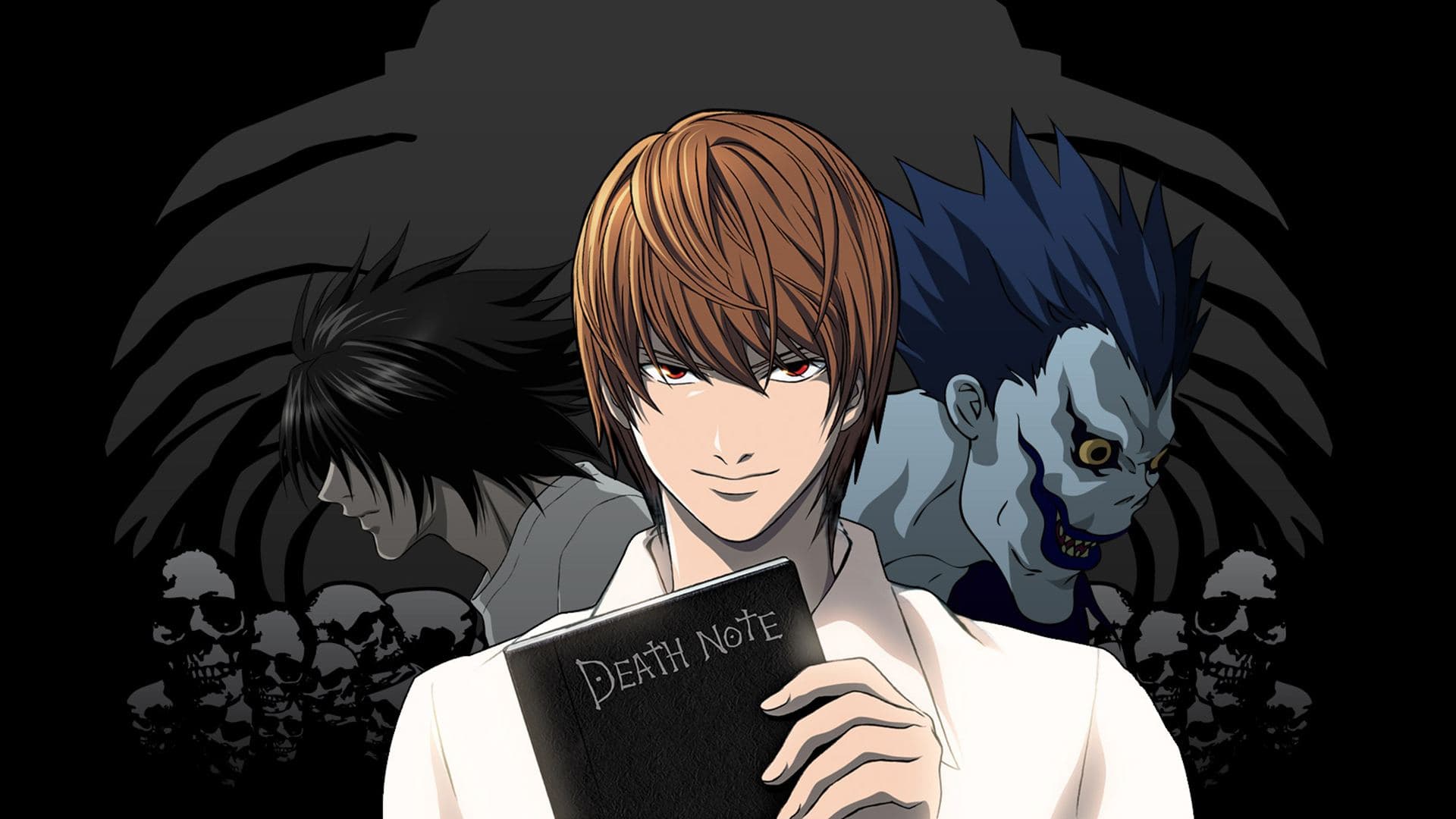
Light Yagami is an ace high school student with great prospects who is bored out of his mind. Everything changes when he finds the Death Note, a notebook dropped by a rogue shinigami death god. Any human whose name is written in the notebook dies, and Light embarks on a secret crusade to eliminate criminals from the world while being hunted by an elite international detective known only as L.
What Is the Budget of Death Note (2006)?
Death Note (2006), produced by Madhouse and broadcast by Nippon Television Network from October 3, 2006 to June 26, 2007, was a 37-episode anime adaptation of Tsugumi Ohba and Takeshi Obata's manga of the same name. The series was financed through a Japanese television production committee model that included Nippon Television Network, Madhouse, Shueisha (the manga publisher), VAP (the music and video distributor), Konami, and D.N. Dream Partners. Total production cost is estimated at $11,000,000 to $19,000,000 across the full 37-episode run, with per-episode budgets in the $300,000 to $500,000 range typical of premium-tier late-night anime production in the mid-2000s.
The Japanese production committee model (seisaku iinkai houshiki) spreads financial risk across multiple stakeholders, each of whom contributes capital in exchange for ancillary rights. For Death Note, Nippon TV held broadcast rights, Shueisha controlled publishing and merchandise, VAP held home video and music rights, and Konami licensed game adaptation rights. This structure allowed each partner to recoup investment through its own revenue stream while sharing risk on the series itself, a financing approach that has become the standard for Japanese anime production since the late 1990s.
Key Budget Allocation Categories
Death Note's estimated $300,000 to $500,000 per-episode budget was distributed across:
- Animation Production: Madhouse Studios in Tokyo handled all animation production in-house, with Tetsuro Araki directing and Toshiyuki Inoue serving as principal animation director and character designer. Madhouse's reputation as a premium-tier studio with credits including Perfect Blue, Paranoia Agent, and Tokyo Godfathers commanded above-average rates for animation labor and supervision.
- Voice Cast: Mamoru Miyano voiced Light Yagami and Kappei Yamaguchi voiced L in the original Japanese version. Voice actors in Japan are paid through the Geinōjin agency system on a per-episode basis, with lead performers in a premium late-night anime earning approximately $400 to $700 per episode in the mid-2000s, well below American voice-acting rates.
- Music and Score: Hideki Taniuchi and Yoshihisa Hirano composed the original score. The series' opening themes "the WORLD" by Nightmare and "What's up, people?!" by Maximum the Hormone, along with closing themes "Alumina" by Nightmare and "Zetsubou Billy" by Maximum the Hormone, were commercially licensed and contributed to home-video and soundtrack sales.
- Writing and Adaptation: Toshiki Inoue (no relation to Toshiyuki) handled the principal series composition and script writing across the 37 episodes, working from the source manga by Tsugumi Ohba and Takeshi Obata. The Shueisha relationship gave Madhouse direct access to the original creators for adaptation guidance, with both Ohba and Obata credited in the broadcast version.
- Production Committee Overhead: The seisaku iinkai (production committee) structure added approximately 8 to 12 percent in administrative and partnership overhead on top of pure production costs, covering committee management, licensing administration, and inter-partner royalty distribution.
- Broadcast Standards Compliance: Death Note aired in the 24:55 to 25:25 late-night slot on Nippon TV (Wednesday after midnight in Japan Standard Time), which carried lower content-restriction overhead than primetime slots. The late-night placement was a deliberate strategic choice to allow the series' darker thematic material, including the on-screen depiction of mass murder, to clear broadcast standards.
How Does Death Note's Budget Compare to Similar Series?
At an estimated $300,000 to $500,000 per episode, Death Note sits in the premium tier of mid-2000s Japanese anime production. The comparison set illustrates how its economics relate to peer projects:
- Code Geass: Lelouch of the Rebellion (2006): Estimated $400,000 to $600,000 per episode | 25 episodes for season one. Sunrise's contemporaneous flagship cost roughly the same as Death Note per episode and was the closest direct peer in scale, narrative ambition, and target audience.
- Naruto (2002-2007): Estimated $150,000 to $250,000 per episode | 220 episodes. Pierrot's long-running shonen series cost roughly half what Death Note did per episode and ran approximately six times as long, reflecting the difference between premium-tier limited-run anime and mass-market long-form production.
- Cowboy Bebop (1998-1999): Estimated $300,000 to $400,000 per episode | 26 episodes. Sunrise's landmark series sits in roughly the same per-episode tier as Death Note and represents the gold standard for Madhouse-tier production economics.
- Fullmetal Alchemist: Brotherhood (2009-2010): Estimated $400,000 to $600,000 per episode | 64 episodes. Bones' second full adaptation of the Fullmetal Alchemist manga ran at a budget tier above Death Note, reflecting the slightly higher production values of the 2009-2010 era and a longer run.
- Avatar: The Last Airbender (2005-2008): Estimated $1,000,000 per episode | 61 episodes. Nickelodeon's American animated series produced through DR Movie in South Korea cost roughly two to three times what Death Note did per episode, illustrating the per-episode cost differential between American premium animation and Japanese late-night anime.
Death Note Box Office and Broadcast Performance
Death Note was a television anime series broadcast on Nippon Television Network from October 3, 2006 to June 26, 2007 and therefore has no theatrical box office. Its commercial performance was measured through Japanese broadcast ratings, home-video sales, and downstream international licensing. Here is the financial breakdown:
Box Office Breakdown
Death Note

Death Note was a commercial breakout for Madhouse and Nippon TV. Japanese home-video sales of the original DVD release through 2008 totaled an estimated 600,000 units across the nine-volume set, generating $25,000,000 to $35,000,000 in retail revenue with substantial wholesale flow-through to the production committee. The 2008 Blu-ray rerelease and subsequent box-set editions added additional revenue.
International licensing was the largest single revenue source. Viz Media acquired North American rights and broadcast the series on Cartoon Network's Adult Swim block beginning in October 2007, with subsequent DVD release driving multiple printings. Madman Entertainment handled Australia and New Zealand. Anime Limited acquired UK rights. By 2015, the series was licensed in more than 35 territories with downstream revenue from Netflix streaming acquisition (added globally in 2017) representing one of the largest single rights payments in the franchise's history.
Death Note Production History
Development on the Death Note anime began at Madhouse in early 2006, immediately after Shueisha's Weekly Shonen Jump concluded its serialization of the manga in May 2006 after 108 chapters. The production committee structure was assembled by Nippon Television Network and Madhouse, with Shueisha contributing as the manga publisher and rights holder, VAP as the home-video distributor, and Konami acquiring game adaptation rights. The committee finalized the budget and 37-episode order in mid-2006, with director Tetsuro Araki, character designer Masaru Kitao, and music director Hideki Taniuchi attached.
Araki, who had previously directed Aoi Bungaku Series and was a rising in-house Madhouse director, was selected for his strength in tightly paced thriller construction. The adaptation hewed closely to the source manga, with both creators Tsugumi Ohba and Takeshi Obata consulted on key narrative choices including the structural decision to retain both major story arcs across the 37 episodes rather than splitting the series across two seasons. Character designer Masaru Kitao adapted Obata's distinctive elongated character proportions for animation, with particular attention paid to the costume and posture details that defined the L character.
Production took place in Tokyo at Madhouse's headquarters with frame production outsourced to several Madhouse subcontractor studios across Japan and South Korea. The series' premiere on Nippon Television Network on October 3, 2006 in the post-midnight Wednesday slot drew strong opening ratings of 4.6 percent household, and the series held a remarkably steady 3.5 to 5.2 percent rating across the run, an unusual achievement for a 37-episode narrative anime in the late-night slot. The series finale on June 26, 2007 drew a peak rating of 6.4 percent, the highest rating of the run.
The production committee model facilitated rapid franchise extension. Live-action film adaptations directed by Shusuke Kaneko released in 2006 (during the anime broadcast) further expanded the property in Japan, with subsequent novel adaptations, video game releases through Konami, and merchandise. The franchise extended internationally through the 2017 Netflix live-action film adaptation directed by Adam Wingard.
Awards and Recognition
Death Note received major recognition across Japanese anime industry ceremonies. The series won the 2007 Tokyo International Anime Fair Animation of the Year award and received nominations across Japan Media Arts Festival and Animage Anime Grand Prix ceremonies. Mamoru Miyano won the Best Actor award at the 2nd Seiyu Awards in 2008 for his performance as Light Yagami, the youngest male winner in the category at that time.
International recognition followed the Viz Media licensing in 2007-2008. The series won the 2008 American Anime Award for Best Series and earned multiple nominations at the Annie Awards for Best Animated Television Production. The series has been consistently ranked in the top tier of all-time anime polls by IGN, MyAnimeList, and Crunchyroll, regularly appearing on lists of the most influential anime of the 2000s.
Critical Reception
Death Note received exceptionally strong reviews from anime critics, manga press, and mainstream television critics across both Japanese and international markets. The series holds a 9.0 out of 10 rating on IMDb across more than 350,000 user reviews, an 8.62 out of 10 on MyAnimeList from approximately 3,000,000 ratings, and consistently appears in the top 25 of all-time anime rankings on Japanese and international polls. Critical consensus described the series as a masterwork of psychological-thriller adaptation, praising Araki's direction, the Light-versus-L cat-and-mouse construction, and the moral ambiguity of the protagonist.
Anime News Network rated the series an A across its episode reviews and called it "one of the most sustained psychological thrillers in television animation." IGN ranked Death Note number one on its 2009 list of the top 25 anime of the decade, with critic Charles White writing that "Death Note rewards close attention and rewatches in a way few series ever achieve." The Guardian's television critic Stuart Heritage called the Adult Swim broadcast "the gateway drug for a generation of British viewers who would not otherwise have engaged with Japanese animation."
Long-term reception has solidified Death Note's reputation as one of the defining anime series of the 2000s. Academic analyses in journals including Mechademia and Animation Studies have examined the series' use of religious iconography, moral philosophy, and surveillance themes. The series is regularly cited in writing on adaptation, contemporary horror, and the international rise of streaming-distributed anime. Its influence on subsequent psychological-thriller anime including Psycho-Pass (2012), Monster (2004-2005), and 91 Days (2016) is widely acknowledged in the genre.
Frequently Asked Questions
How much did Death Note (2006) cost to make?
Total production cost is estimated at $11,000,000 to $19,000,000 across the full 37-episode run, with per-episode budgets in the $300,000 to $500,000 range typical of premium-tier late-night anime production in the mid-2000s. The series was financed through a Japanese production committee model led by Nippon Television Network and Madhouse.
Is Death Note (2006) a film or a TV series?
Death Note (2006) is a 37-episode anime television series produced by Madhouse and broadcast on Nippon Television Network from October 3, 2006 to June 26, 2007. It is not a film. The CMS entry labeled "Death Note (2006)" refers to the Madhouse anime. There were also separate Japanese live-action film adaptations released in 2006 directed by Shusuke Kaneko, and a 2017 Netflix live-action film directed by Adam Wingard.
How many episodes are in Death Note?
Death Note ran for 37 episodes, adapting Tsugumi Ohba and Takeshi Obata's 108-chapter manga across both major story arcs. The series did not receive a second season, and the original Madhouse anime concluded the full narrative within the 37-episode run.
Who directed the Death Note anime?
Tetsuro Araki directed the series at Madhouse. Araki later directed Attack on Titan seasons one through three at Wit Studio and MAPPA, and Highschool of the Dead. Series composition (lead writing) was by Toshiki Inoue, with character design adapted from Takeshi Obata's manga art by Masaru Kitao.
Where did Death Note air originally?
The series originally aired in the post-midnight Wednesday slot (24:55 to 25:25 JST, Tuesday into Wednesday) on Nippon Television Network in Japan, from October 3, 2006 to June 26, 2007. North American broadcast on Cartoon Network's Adult Swim block began in October 2007 through Viz Media licensing.
Who is the production committee behind Death Note?
The Death Note production committee included Nippon Television Network (broadcast), Madhouse (animation), Shueisha (manga publisher and merchandise), VAP (home video and music), Konami (games), and the D.N. Dream Partners administrative entity. The committee structure spread financial risk across multiple stakeholders, each holding distinct ancillary rights.
How did Death Note perform commercially?
The series was a commercial breakout for Madhouse and Nippon TV. Average household ratings ran 3.5 to 5.2 percent across the broadcast, peaking at 6.4 percent for the final episode. Japanese DVD sales totaled an estimated 600,000 units across the nine-volume original release. International licensing across more than 35 territories plus 2017 Netflix global streaming acquisition pushed lifetime revenue into the $50,000,000 to $100,000,000 range, well above the production investment.
Where can I watch Death Note (2006)?
The series is available on Netflix globally, on Hulu in the United States, on Crunchyroll in select territories, and on Viz Media's direct platform. Physical Blu-ray and DVD releases remain in print through Viz Media in North America, Madman Entertainment in Australia, and Anime Limited in the United Kingdom.
What did critics think of Death Note?
Reviews were exceptionally strong. The series holds a 9.0 out of 10 on IMDb across 350,000-plus reviews and an 8.62 out of 10 on MyAnimeList from approximately 3,000,000 ratings. IGN ranked it number one on its 2009 list of the top 25 anime of the decade. Anime News Network rated it an A across episode reviews, calling it "one of the most sustained psychological thrillers in television animation."
Did Death Note win any awards?
Yes. The series won the 2007 Tokyo International Anime Fair Animation of the Year award and the 2008 American Anime Award for Best Series. Lead voice actor Mamoru Miyano won Best Actor at the 2nd Seiyu Awards in 2008 for his performance as Light Yagami, the youngest male winner in the category at that time.
Filmmakers
Death Note

Official Trailer
Build budgets like this one in Saturation
Start from an industry-standard feature film template, import the schedule and rates you already have, and let the cost report keep itself current as you spend. Real-time collaboration, no spreadsheets.