Cosmos Budget
Updated
Synopsis
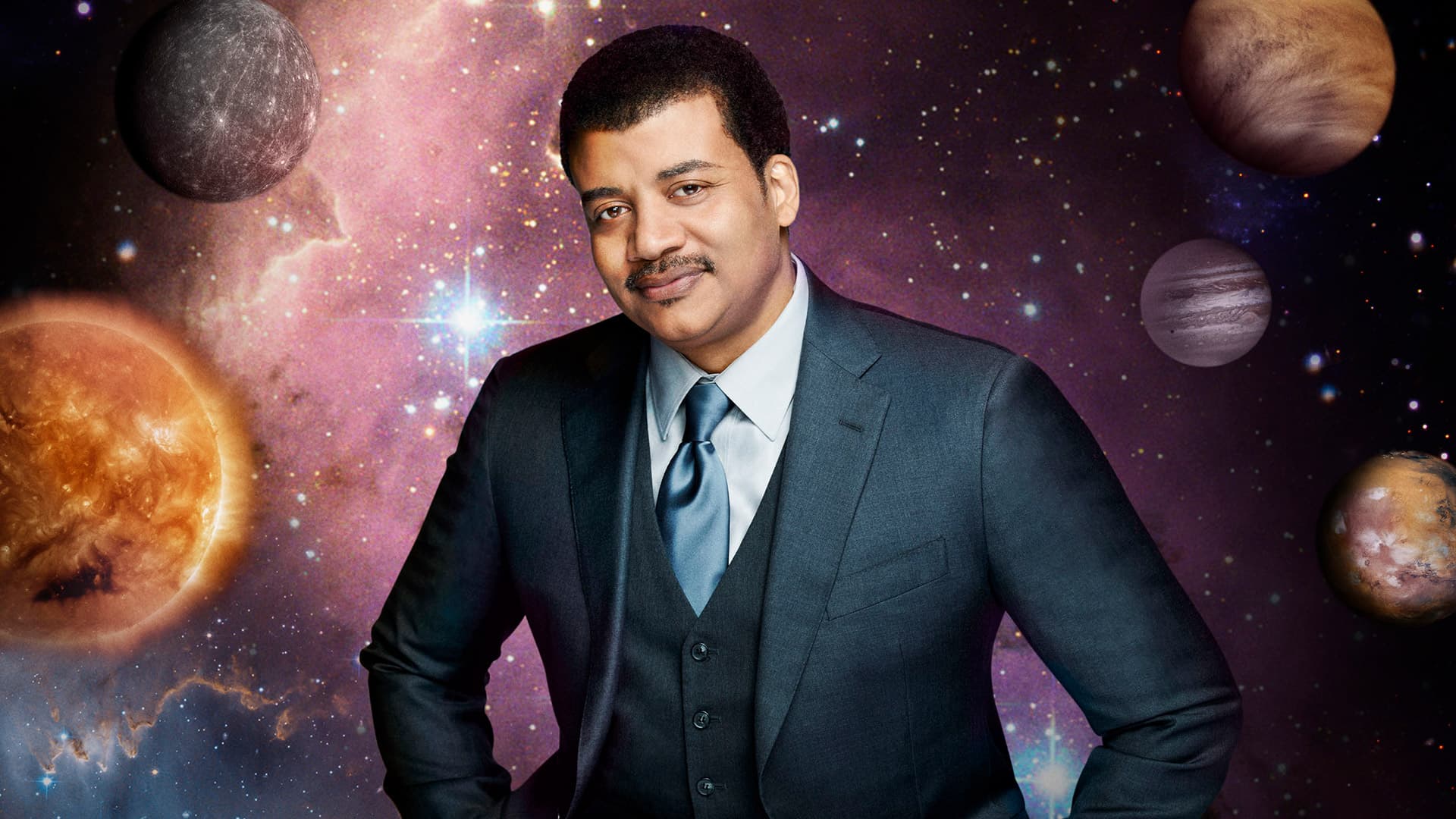
Astrophysicist Neil deGrasse Tyson hosts a sweeping 13-part science series that picks up the thread of Carl Sagan's 1980 Cosmos, voyaging through the universe to explore the laws of nature, the history of scientific discovery, and humanity's place among the stars. Developed by Ann Druyan and Steven Soter, the show pairs photoreal location work and animated historical reenactments to communicate frontier science to a global broadcast audience.
What Is the Budget of Cosmos: A Spacetime Odyssey (2014)?
Cosmos: A Spacetime Odyssey (2014) is a 13-episode documentary science series developed for Fox Broadcasting Company and National Geographic Channel by Ann Druyan, Steven Soter, Brannon Braga, and Seth MacFarlane. The series' total production budget was not officially disclosed by Fox or its co-producers Cosmos Studios, Fuzzy Door Productions, Santa Fe Studios, and National Geographic, but industry reporting and post-broadcast trade press placed the per-episode cost at approximately $5,000,000 to $7,000,000, putting the full 13-episode run in the $65,000,000 to $90,000,000 range. That figure made Cosmos one of the most expensive non-scripted television commissions of its broadcast year.
The series was conceived as a global television event simulcast across 10 Fox-owned channels in 181 countries and 45 languages, which justified an unusual cost structure for a science documentary. The budget supported full HD photography across multiple international locations, custom animated sequences for historical reenactments and abstract scientific visualization, an original Alan Silvestri score recorded with full orchestra, and a marketing campaign positioned to compete with scripted broadcast drama rather than typical educational programming.
Key Budget Allocation Categories
Cosmos: A Spacetime Odyssey's per-episode production cost was distributed across several core areas that distinguish it from a standard science documentary:
- Host and Above-the-Line: Neil deGrasse Tyson commanded a primary on-camera presenter rate as the host across all 13 episodes, with associated travel, security, and post-broadcast publicity touring. Executive producer fees for Ann Druyan, Steven Soter, Brannon Braga, and Seth MacFarlane represented an additional above-the-line cost layered onto the standard documentary line item.
- Animated Historical Sequences: The series' signature recreations of figures including Giordano Bruno, William Herschel, Clair Patterson, and Michael Faraday were produced as fully animated sequences with voice performances by Seth MacFarlane, Patrick Stewart, Richard Gere, and other recognizable actors. Each animation block required design, storyboarding, animation, voice recording, and music, at studio-feature quality rather than television-documentary scale.
- International Location Photography: Tyson and the production unit shot at observatories, particle accelerators, geological sites, and historical landmarks across the United States, Europe, and Asia. International location work in this volume requires advance permitting, multi-country freight of camera and lighting equipment, and travel for a small but professional crew.
- Visual Effects and Scientific Visualization: Sequences depicting cosmological events, deep-time biology, and quantum-scale physics were produced by feature-grade visual effects vendors using particle simulation, volumetric lighting, and astronomical data sets. The Ship of the Imagination sequences alone required a custom CG asset pipeline.
- Original Score and Music: Composer Alan Silvestri delivered an original orchestral score performed with full orchestra. Music licensing, recording session costs, and orchestrator fees were a recurring line item across the run.
- Marketing and Global Simulcast: The international rollout across 10 Fox-owned networks and 220 territories required dubbing into 45 languages, regional marketing campaigns, and coordinated press tours in multiple markets. The marketing layer was unusually expensive for a documentary commission.
How Does Cosmos: A Spacetime Odyssey's Budget Compare to Similar Series?
At an estimated $5,000,000 to $7,000,000 per episode, Cosmos: A Spacetime Odyssey sat at the top of the science and natural-history documentary tier. Comparable productions illustrate the range:
- Planet Earth II (2016): Budget approximately £6,400,000 per episode for the six-episode run, or roughly $8,500,000. The BBC Natural History Unit landmark sat just above Cosmos in per-episode spend, reflecting wildlife photography's extreme logistical cost.
- Our Planet (2019): Budget approximately $50,000,000 to $60,000,000 across eight episodes. Netflix's Silverback Films co-production sat in roughly the same per-episode range and used a similar global photography model.
- The Universe (2007-2015): Budget approximately $1,000,000 to $1,500,000 per episode on History Channel. The cable science series ran at one fifth of Cosmos' per-episode spend and demonstrates the standard documentary baseline.
- Cosmos: A Personal Voyage (1980): Budget approximately $8,000,000 in 1980 dollars across 13 episodes (roughly $26,000,000 in 2014 dollars). Carl Sagan's original series, on a per-episode adjusted basis, cost roughly one third of the 2014 follow-up, reflecting the dramatic increase in visual-effects, animation, and on-location production costs over the intervening decades.
Cosmos: A Spacetime Odyssey Box Office Performance
As a broadcast television documentary series, Cosmos: A Spacetime Odyssey did not generate theatrical box office revenue. Its commercial performance is measured in global broadcast reach, advertising rates, downstream Blu-ray and DVD sales, and streaming-rights licensing. The series premiered on March 9, 2014, with a simulcast across 10 Fox-owned networks in 181 countries, an unprecedented launch for a documentary.
The commercial picture for the run is summarized as follows:
- Estimated Total Production Cost: approximately $65,000,000 to $90,000,000 across 13 episodes
- Original Broadcast Window: March 9, 2014 to June 8, 2014 on Fox and National Geographic Channel
- Theatrical Gross: not applicable, television documentary series
- Global Reach: simulcast in 181 countries and 45 languages across 10 Fox-owned networks
- Home Video and Streaming: released on Blu-ray and DVD, currently available on Disney+, Hulu, and digital purchase
- Sequel Order: spawned the 2020 follow-up Cosmos: Possible Worlds, 13 additional episodes, with Tyson returning as host
The series exceeded Fox's commercial expectations and led directly to the 2020 follow-up Cosmos: Possible Worlds, a second 13-episode season co-produced by Fox and National Geographic. The combined library has continued to generate streaming and home-video revenue through the 2020s, with the brand serving as the flagship science-documentary asset across the National Geographic and Disney+ platforms.
Cosmos: A Spacetime Odyssey Production History
Ann Druyan and Steven Soter, the writing partners on Carl Sagan's original 1980 Cosmos, began developing a follow-up series with Druyan's Cosmos Studios in the late 2000s. Family Guy and Star Trek creator Seth MacFarlane joined as an executive producer in 2010 and used his Fox relationship to broker the unusual broadcast-network commission. Brannon Braga, the former Star Trek showrunner, came on as showrunner and director, and Neil deGrasse Tyson agreed to host after meeting Druyan to discuss the project's scientific framing.
Principal photography ran across 2012 and 2013 in the United States, Italy, Spain, Iceland, Norway, and other locations chosen for their scientific and historical resonance. The animation, visual effects, and post-production were spread across vendors in Los Angeles, Vancouver, and Santa Fe Studios in New Mexico, with state production incentives helping anchor the post-production tax efficiency.
The series premiered with a global simulcast on March 9, 2014, attended by President Barack Obama, who recorded a video introduction. Subsequent episodes aired weekly through June 8, 2014, with National Geographic Channel handling the documentary repeat window the following night.
Awards and Recognition
Cosmos: A Spacetime Odyssey won the 2014 Peabody Award in the education category, the Robert B. Balles Prize in Critical Thinking from the Committee for Skeptical Inquiry, and the 4th Critics' Choice Television Award for Best Reality Series. The series received 13 Primetime Emmy Award nominations across its run, winning four including Outstanding Writing for Nonfiction Programming for Ann Druyan and Steven Soter and Outstanding Sound Editing for a Nonfiction Program.
The series was also recognized with Television Critics Association Award nominations for Outstanding Achievement in News and Information, and Neil deGrasse Tyson's hosting performance was widely cited in year-end best-of-television lists by The New York Times, Time, and Vulture. Carl Sagan's original 1980 Cosmos lineage, combined with the 2014 broadcast scale, positioned the series as the leading mainstream science communication event of its decade.
Critical Reception
Cosmos: A Spacetime Odyssey received broadly positive reviews. The series holds an 83% approval rating on Rotten Tomatoes based on critic reviews and a Metacritic score in the upper 70s for the premiere. Critics praised Neil deGrasse Tyson's warmth and clarity as a host, the animated historical sequences voiced by Patrick Stewart, Seth MacFarlane, and Richard Gere, and Alan Silvestri's score, but some reviewers questioned the dramatic licensing of certain historical recreations and the simplification of cosmological mechanisms required by the broadcast format.
The series triggered a public discussion about the role of broadcast television in mainstream science communication, with The New York Times calling it "the most ambitious science documentary in a generation" and Variety praising its "unapologetic intellectual scope on a Fox prime-time slot." Religious and creationist critics objected to specific episodes covering evolution and the age of the universe, controversies that Fox and National Geographic publicly stood behind and that contributed to the series' cultural footprint beyond its raw ratings.
Frequently Asked Questions
How much did Cosmos: A Spacetime Odyssey (2014) cost to produce?
A specific budget was not officially disclosed, but industry estimates place the per-episode cost at approximately $5,000,000 to $7,000,000. Across the full 13-episode run, the total production cost likely ran between $65,000,000 and $90,000,000, making it one of the most expensive non-scripted television commissions of 2014.
When did Cosmos: A Spacetime Odyssey air?
The series premiered March 9, 2014, with a global simulcast across 10 Fox-owned networks in 181 countries and 45 languages. The 13-episode run concluded June 8, 2014. A sequel series, Cosmos: Possible Worlds, aired in 2020.
Who hosted Cosmos: A Spacetime Odyssey?
Astrophysicist Neil deGrasse Tyson hosted all 13 episodes. Tyson, the director of the Hayden Planetarium at the American Museum of Natural History, was approached by Ann Druyan and Steven Soter, the writing partners on Carl Sagan's original 1980 Cosmos, with Seth MacFarlane serving as the executive producer who brokered the Fox commission.
Who created Cosmos: A Spacetime Odyssey?
The series was developed by Ann Druyan and Steven Soter, continuing the work of Carl Sagan from the original 1980 Cosmos: A Personal Voyage. Seth MacFarlane and Brannon Braga came on as executive producers, with Braga also serving as showrunner and director.
How does Cosmos: A Spacetime Odyssey compare to Carl Sagan's 1980 Cosmos?
Carl Sagan's original 1980 series cost approximately $8,000,000 in 1980 dollars, equivalent to roughly $26,000,000 in 2014 dollars, while the 2014 follow-up ran approximately $65,000,000 to $90,000,000 across 13 episodes. The 2014 version retained the original's narrative format and the Ship of the Imagination motif while upgrading to full HD photography, animated reenactments, and a global broadcast simulcast.
Who voiced the historical figures in Cosmos: A Spacetime Odyssey?
Seth MacFarlane voiced Giordano Bruno, Patrick Stewart voiced William Herschel, Richard Gere voiced Clair Patterson, and Cary Elwes voiced Edmond Halley. The animated sequences were produced by the Fuzzy Door Productions team in collaboration with the Cosmos Studios animation department.
Did Cosmos: A Spacetime Odyssey win any Emmy Awards?
Yes. The series received 13 Primetime Emmy Award nominations and won four, including Outstanding Writing for Nonfiction Programming for Ann Druyan and Steven Soter and Outstanding Sound Editing for a Nonfiction Program. It also won the 2014 Peabody Award in the education category and the Critics' Choice Television Award for Best Reality Series.
Where was Cosmos: A Spacetime Odyssey filmed?
Principal photography took place across 2012 and 2013 in the United States, Italy, Spain, Iceland, Norway, and other locations chosen for their scientific and historical resonance. Visual effects and animation were produced at vendors in Los Angeles, Vancouver, and Santa Fe Studios in New Mexico.
What did critics think of Cosmos: A Spacetime Odyssey?
The series received broadly positive reviews, holding an 83% approval rating on Rotten Tomatoes and Metacritic scores in the upper 70s. The New York Times called it "the most ambitious science documentary in a generation," and Variety praised its "unapologetic intellectual scope on a Fox prime-time slot."
Was there a sequel to Cosmos: A Spacetime Odyssey?
Yes. Cosmos: Possible Worlds, a second 13-episode season, premiered in 2020 on National Geographic Channel and Fox Broadcasting Company, with Neil deGrasse Tyson returning as host and Ann Druyan continuing as showrunner. The two seasons together form the modern Cosmos brand.
Filmmakers
Cosmos

Official Trailer
Build budgets like this one in Saturation
Start from an industry-standard feature film template, import the schedule and rates you already have, and let the cost report keep itself current as you spend. Real-time collaboration, no spreadsheets.