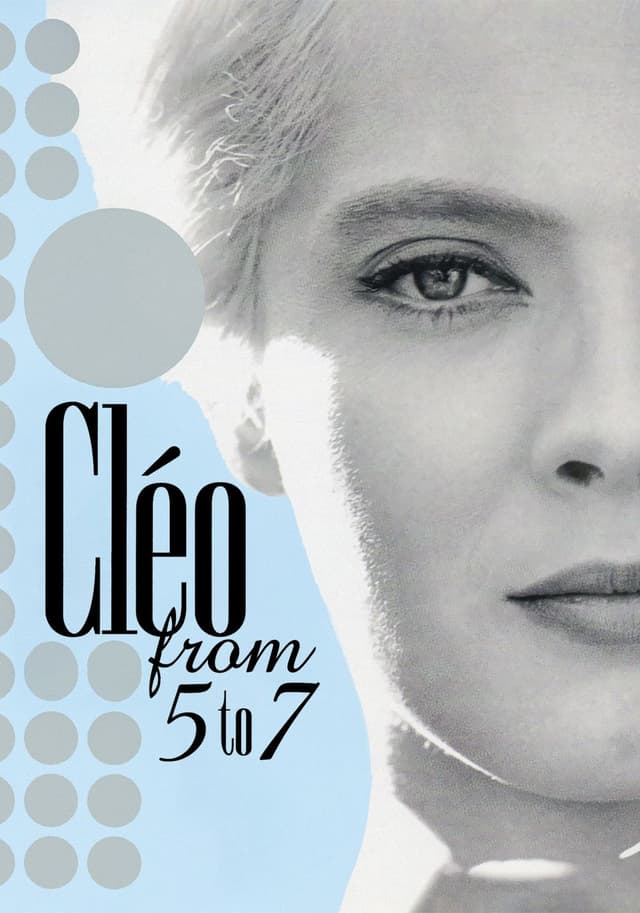
Cléo from 5 to 7 Budget
Updated
Synopsis
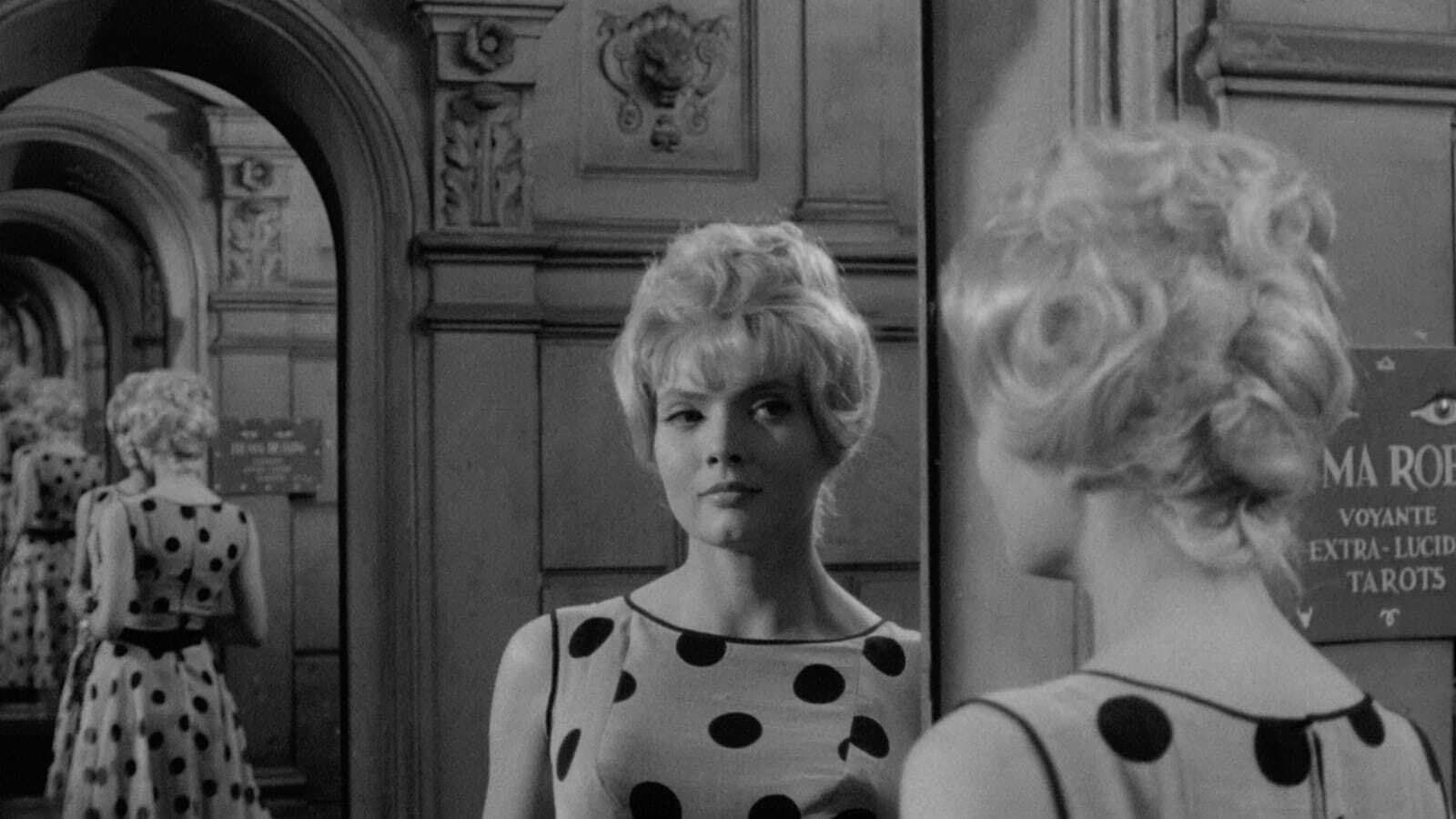
A Parisian pop singer, Cléo Victoire, drifts through ninety minutes of her life on the afternoon of June 21, 1961, as she waits for the results of a biopsy that may confirm she has cancer. Agnès Varda films the action in something close to real time across the streets, cafés, and parks of Paris, weaving in cameos by Jean-Luc Godard and Anna Karina alongside a Michel Legrand score.
What Is the Budget of Cléo from 5 to 7 (1962)?
Cléo from 5 to 7 (Cléo de 5 à 7) (1962), written and directed by Agnès Varda, was produced by Rome-Paris Films, the joint venture between Georges de Beauregard and Carlo Ponti that financed many of the first wave of Left Bank and Cahiers du cinéma features, in co-production with Varda's own Ciné-Tamaris. No itemized production budget has ever been published, but the film falls within the documented French New Wave cost band of the early 1960s. Beauregard's Rome-Paris Films had a stated working budget of roughly 400,000 to 600,000 French francs per low-budget feature in 1961 and 1962, equivalent to approximately $80,000 to $120,000 at the contemporary exchange rate. Adjusted for inflation, that figure converts to roughly $850,000 to $1,275,000 in 2025 dollars.
Varda completed Cléo on a markedly tight schedule. Principal photography ran across summer 1961 on Paris streets, in real locations rather than studio sets, with a small crew and natural light wherever possible. The financial model leaned on three pillars: Beauregard's producer equity covering above-the-line and key crew, the Centre national du cinéma (CNC) selective avance sur recettes subsidy program supporting auteur-driven projects, and pre-sales to French and Italian distributors covering the bulk of completion costs. The film was selected in competition at Cannes 1962 within months of its release, validating the financing model and cementing Varda's standing as the Left Bank counterpart to Godard, Truffaut, and Chabrol.
Key Budget Allocation Categories
The estimated 400,000 to 600,000 franc production budget for Cléo from 5 to 7 was distributed across:
- Above-the-Line Talent: Lead Corinne Marchand was cast for her musical theatre background and screen presence rather than star wattage, keeping her compensation at French New Wave scale. Supporting cast Antoine Bourseiller, Dominique Davray, and Dorothée Blanck similarly worked at scale rates. Cameos by Jean-Luc Godard, Anna Karina, Eddie Constantine, Sami Frey, Yves Robert, Danièle Delorme, Jean-Claude Brialy, and Michel Legrand cost essentially nothing, exchanged as favors among the Paris filmmaking community.
- Paris Location Shoot: Varda staged Cléo across real Paris locations, including Café du Dôme on Montparnasse, Rue de Rivoli, Parc Montsouris, and the streets around the 14th arrondissement. Location filming kept set construction costs near zero, with a few interior sequences shot on a small soundstage. The unit moved through the city using a single camera and skeleton crew, recording wild sound for synchronization in post-production.
- Cinematography and Equipment: Jean Rabier (later a Claude Chabrol regular) shot the bulk of the film in 35mm black and white with a brief color title sequence, working with Alain Levent and Paul Bonis. Equipment was rented in short blocks rather than for the duration of the production. Varda's use of natural light minimized lighting package costs but extended shooting hours to capture the late-afternoon sun the script demanded.
- Music and Score: Michel Legrand composed an original score that included three diegetic songs performed by the Cléo character on screen, with Legrand himself appearing as the composer Bob in the film. Music budget covered original composition, the on-camera musical sequence, and orchestra session work in Paris, totaling an estimated 50,000 to 75,000 francs.
- Post-Production: Editing was handled by Pascale Laverrière and Janine Verneau at facilities in Paris on a compressed schedule that allowed the film to compete at Cannes in May 1962. Sound design, music edit, and color timing were completed at standard French post-production houses.
- Distribution Print and Marketing: French theatrical release was handled by Athos Films in April 1962, with international rollout following the Cannes selection. Marketing spend was minimal in the New Wave tradition, with publicity built around festival placement and trade-press coverage rather than paid advertising.
How Does Cléo from 5 to 7's Budget Compare to Similar Films?
At an estimated 400,000 to 600,000 francs, Cléo from 5 to 7 sat within the New Wave low-budget envelope. The comparison set illustrates the cost structure of early 1960s French auteur cinema and how Cléo aligned with peer features:
- Breathless (1960): Estimated budget approximately 400,000 francs. Godard's debut, produced by Beauregard, became the financial template for Rome-Paris Films' low-budget New Wave slate. Breathless grossed over 2,000,000 admissions in France and recouped its costs many times over.
- The 400 Blows (1959): Estimated budget approximately 700,000 francs. Truffaut's feature debut for Les Films du Carrosse was modestly more expensive than the Beauregard model but operated on identical principles of location shooting, small crews, and short schedules.
- Last Year at Marienbad (1961): Budget approximately 1,500,000 francs. Alain Resnais' Left Bank counterpart to Cléo cost roughly three times as much, driven by elaborate baroque chateau locations and a longer schedule that placed it in a different financial tier than Varda's street-level production.
- Vivre sa vie (1962): Estimated budget approximately 500,000 francs. Godard's twelve-tableau Paris film, released the same year as Cléo, is the closest formal and financial cousin, sharing the New Wave commitment to real locations, contained casts, and economy of means.
- Jules and Jim (1962): Estimated budget approximately 1,000,000 francs. Truffaut's more elaborate period production cost roughly double Cléo and represented the upper bound of New Wave budgets before the movement's key directors transitioned to mid-budget studio features later in the decade.
Cléo from 5 to 7 Box Office Performance
Cléo from 5 to 7 opened in French cinemas on April 11, 1962 following its Cannes selection. CNC records report French theatrical admissions of approximately 358,000 over the original release window, a modest but credible performance for an auteur feature without star casting. Lifetime French admissions across rereleases, restoration tours, and the Criterion-driven repertory circuit have pushed the cumulative total higher, with Janus Films and Ciné-Tamaris maintaining the film in continuous distribution since the 1990s. Here is the financial breakdown:
Box Office Breakdown
Cléo from 5 to 7

The film returned a clear profit on its original theatrical window through French admissions alone, with the international art-house circuit and decades of repertory rerelease adding incremental revenue. Janus Films acquired North American rights for theatrical and 16mm distribution in the 1960s, and the Criterion Collection released the film on home video in 2000 and again in 2007 with a restored transfer that drove a fresh wave of academic and cinephile demand.
Cléo from 5 to 7's real commercial value has always been catalog rather than launch. The film is a fixture of university film studies syllabi, art-house repertory bookings, and feminist film theory curricula, generating consistent rental and home-video revenue that has continued to compound across formats from VHS through DVD, Blu-ray, and digital streaming on platforms including the Criterion Channel and Max.
Cléo from 5 to 7 Production History
Varda began writing Cléo from 5 to 7 in late 1960 with the working title La Petite Fille, conceived as a real-time portrait of a woman confronting mortality. She had completed only one previous feature, La Pointe Courte (1955), and had spent the intervening years working as the official photographer of the Théâtre National Populaire. Her path back to filmmaking ran through the Left Bank circle that included Alain Resnais, Chris Marker, Jacques Demy (whom she married in 1962), and writers Marguerite Duras and Jean Cayrol.
Georges de Beauregard agreed to produce through Rome-Paris Films on a low-budget contract that gave Varda final cut. The deal mirrored Beauregard's arrangements with Godard, Demy, and Chabrol, allowing the producer to amortize a stable production infrastructure across multiple auteur projects per year. Varda secured supplementary financing through CNC subsidies and pre-sales to Italian distributors.
Principal photography took place across June, July, and August 1961 in Paris, with Jean Rabier behind the camera. Varda mapped the film's real-time chronology onto specific Paris locations, choreographing Marchand's walk from her apartment to Café du Dôme, the taxi ride across the Seine, the visit to the Parc Montsouris, and the chance encounter with the young soldier that closes the film. The short film-within-the-film starring Godard and Anna Karina, screened on a private projector in one sequence, was shot separately as a silent comedy pastiche during a single afternoon.
Post-production at Paris facilities, with editing by Pascale Laverrière and Janine Verneau, was completed in early 1962 in time for Cannes submission. The film premiered in competition at the 15th Cannes Film Festival on May 12, 1962 and was nominated for the Palme d'Or, ultimately losing to Anselmo Duarte's O Pagador de Promessas. French theatrical release followed in April 1962 (note: the Cannes screening followed the theatrical opening, which was sequenced to capitalize on festival press).
Awards and Recognition
Cléo from 5 to 7 received the Prix Méliès in 1962, awarded annually by the French Association of Film Critics to the best French film of the year. The film was nominated for the Palme d'Or in competition at Cannes 1962. It was selected by the Critics' Week section at later festival cycles for retrospective screenings and remains in the Cannes Classics restoration circuit.
Long-term critical recognition has been substantial. The film placed at number 14 on the 2022 Sight & Sound critics' poll of the greatest films of all time, the highest ranking ever achieved by a film directed by a woman in that poll's seven-decade history. It was previously included in the 2012 Sight & Sound critics' top 100. Cahiers du cinéma named it one of the 100 best films in cinema history in their 2008 retrospective list, and Empire magazine ranked it among the 500 greatest films in their 2008 poll. The British Film Institute, MoMA, Cinémathèque Française, and Criterion Collection all maintain the film in permanent collection or continuous distribution.
Critical Reception
Cléo from 5 to 7 received strong positive reviews at the time of release and its critical reputation has only grown across the six decades since. The film holds a 99 percent approval rating on Rotten Tomatoes based on 70 critic reviews, with a critical consensus that calls it "a profound meditation on mortality, identity, and the meaning of life, observed with a feminine sensibility that was groundbreaking for its time." On Metacritic, the film scores 89 out of 100 based on 13 reviews, indicating universal acclaim. Audience scores on Rotten Tomatoes register 88 percent and the film holds a 7.8 out of 10 weighted user rating on IMDb across more than 25,000 user reviews.
Contemporary reviews at Cannes 1962 and in the French press positioned Cléo within the broader New Wave conversation, with critics at Cahiers du cinéma, Positif, and L'Express drawing connections between Varda's real-time structure and the documentary realism of her photography background. Georges Sadoul in Les Lettres françaises called the film "a Paris symphony with a heart" and singled out Corinne Marchand's performance and Michel Legrand's score.
Subsequent critical writing has emphasized Varda's feminist intervention into a New Wave landscape dominated by male directors. Molly Haskell, Laura Mulvey, B. Ruby Rich, Sandy Flitterman-Lewis, and Kelly Reichardt have all written extensively on the film's treatment of Cléo's self-image, the male gaze, and the embodied experience of awaiting a medical diagnosis. The 2022 Sight & Sound ranking at number 14 marked an extraordinary critical consensus that places Cléo from 5 to 7 in the established canon of essential cinema.
Frequently Asked Questions
How much did Cléo from 5 to 7 (1962) cost to make?
No itemized budget has been published. Industry estimates and producer accounts place the cost at approximately 400,000 to 600,000 French francs (roughly $80,000 to $120,000 in 1962 dollars), consistent with the Rome-Paris Films low-budget New Wave model that produced Breathless, Vivre sa vie, and a slate of early 1960s auteur features.
Who produced Cléo from 5 to 7?
Georges de Beauregard and Carlo Ponti produced through their joint venture Rome-Paris Films, in co-production with Agnès Varda's own Ciné-Tamaris. The film also received CNC selective avance sur recettes support.
When and where was Cléo from 5 to 7 filmed?
Principal photography ran across June, July, and August 1961 entirely on Paris locations, including Café du Dôme on Montparnasse, Rue de Rivoli, Parc Montsouris, and the streets of the 14th arrondissement. The crew used natural light and a single 35mm camera throughout.
Is Cléo from 5 to 7 shot in real time?
The film unfolds in something close to real time. Varda mapped Cléo's ninety-minute walk through Paris from her apartment to the hospital onto a 90-minute runtime, though the actual chronology covers a slightly longer afternoon (roughly 5:00 PM to 6:30 PM rather than 5:00 to 7:00 as the title suggests). The real-time structure is one of the film's most studied formal devices.
Who composed the music for Cléo from 5 to 7?
Michel Legrand composed the score and appears on screen as the composer Bob who plays piano for Cléo in one of the film's most famous sequences. Legrand wrote three diegetic songs performed by Corinne Marchand as Cléo, including "Sans toi," and provided the orchestral score.
Did Cléo from 5 to 7 win any awards?
The film won the Prix Méliès in 1962, awarded by the French Association of Film Critics to the best French film of the year. It was nominated for the Palme d'Or in competition at Cannes 1962. Subsequent critical recognition includes a number 14 ranking on the 2022 Sight & Sound critics' poll of the greatest films of all time.
How did Cléo from 5 to 7 perform at the box office?
CNC records show approximately 358,000 French theatrical admissions in the original 1962 release. International distribution through Janus Films in North America and other art-house distributors added incremental theatrical revenue, and decades of repertory rerelease through the Criterion Collection have continued to generate home-video and streaming revenue.
Which other New Wave filmmakers cameo in Cléo from 5 to 7?
The short film-within-the-film features Jean-Luc Godard and Anna Karina in a silent comedy pastiche, alongside Eddie Constantine, Sami Frey, Danièle Delorme, Jean-Claude Brialy, and Yves Robert. Michel Legrand appears in the main narrative as Bob the composer. The film is in part a Left Bank New Wave document of its own community.
What did critics think of Cléo from 5 to 7?
The film received strong positive reviews at Cannes 1962 and in the French press. Its critical reputation has grown steadily across the decades, reaching universal acclaim by the 2010s. The film holds a 99 percent approval rating on Rotten Tomatoes and an 89 out of 100 Metacritic score, and was ranked the 14th greatest film of all time in the 2022 Sight & Sound critics' poll.
Where can I watch Cléo from 5 to 7?
The film is available on the Criterion Collection Blu-ray and DVD, on the Criterion Channel, on Max in the United States via the Criterion Channel partnership, and through digital purchase platforms including Apple TV and Amazon. Janus Films licenses theatrical screenings for repertory cinemas and university film series.
Filmmakers
Cléo from 5 to 7

Build budgets like this one in Saturation
Start from an industry-standard feature film template, import the schedule and rates you already have, and let the cost report keep itself current as you spend. Real-time collaboration, no spreadsheets.