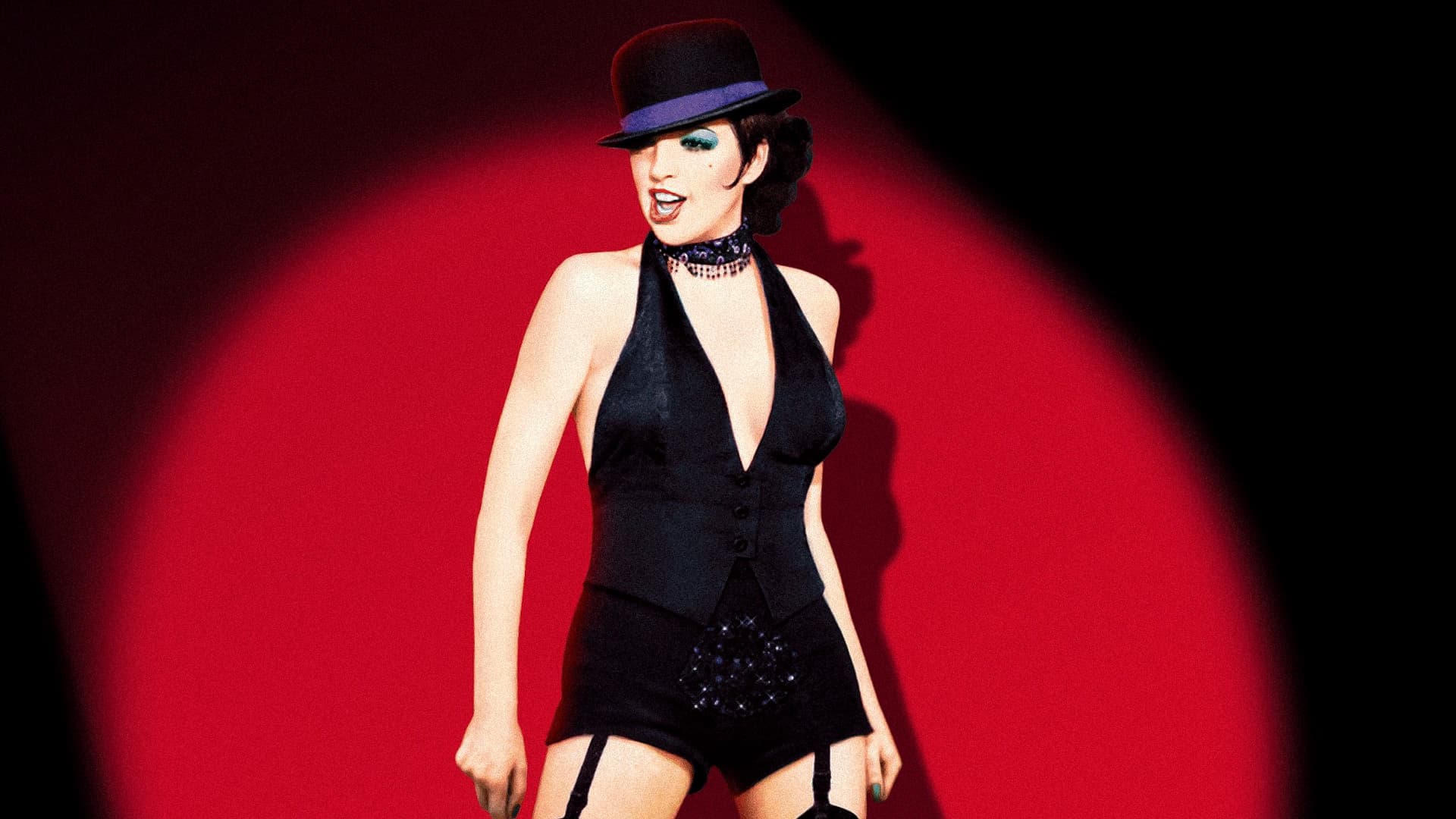
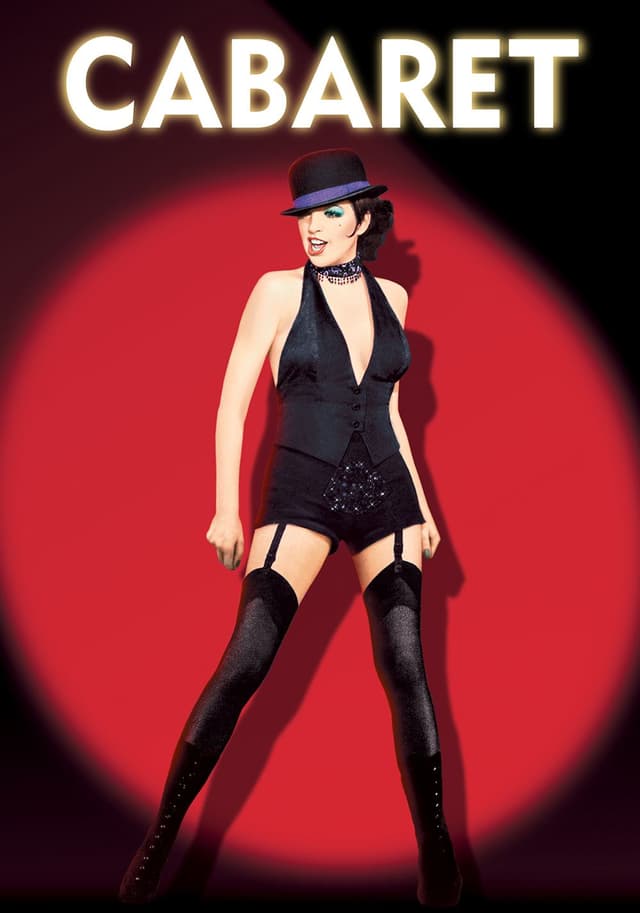
Cabaret Budget
 MusicRomanceDrama2h 4m
Updated
Synopsis
Cambridge University student Brian Roberts arrives in Berlin in 1931 to complete his German studies. Without much money, he plans on making a living teaching English while living in an inexpensive rooming house, where he befriends another of the tenants, American Sally Bowles. She is outwardly a flamboyant, perpetually happy person who works as a singer at the decadent Kit Kat Klub, a cabaret styled venue. Sally's outward façade is matched by that of the Klub, overseen by the omnipresent Master of Ceremonies. Sally draws Brian into her world, and initially wants him to be one of her many lovers, until she learns that he is a homosexual, albeit a celibate one. Among their other friends are his students, the poor Fritz Wendel, who wants to be a gigolo to live a comfortable life, and the straight-laced and beautiful Natalia Landauer, a Jewish heiress. Fritz initially sees Natalia as his money ticket, but eventually falls for her. However Natalia is suspect of his motives and cannot overcome their religious differences. Also into Sally and Brian's life comes the wealthy Baron Maximilian von Heune, who has the same outlook on life as Sally, but who has the money to support it. Max is willing to lavish his new friends with gifts and his favors. Around them all is the Nazi uprising, to which they seem to pay little attention or care. But they ultimately learn that life in all its good and particularly bad continues to happen to them and around them.
What is the budget of Cabaret?
"Cabaret," a music released in 1972, was directed by Bob Fosse and stars Liza Minnelli, Michael York. The production budget was $4,600,000, placing it in the micro-budget range for music productions of the 1970s.
Key Budget Allocation Categories
While specific budget breakdowns are not publicly available, typical cost drivers for a music production like this include:
- Above-the-Line Talent: Drama films live or die on the strength of their performances.
- Location Filming & Period Production Design: Authentic locations , whether contemporary or historical , require scouting, permits, travel, lodging, and often significant dressing to match the story's time period.
- Post-Production, Color Grading & Score: The editorial process for dramas is typically longer than genre films, with careful attention to pacing and tone.
- Casting: Feuer had cast Liza Minnelli as Sally Bowles and Joel Grey (reprising his stage role) long before Fosse was attached to the project.
What were the major cost factors in Cabaret?
Several factors contributed to the overall production costs of "Cabaret."
- Above-the-Line Talent: Above-the-Line Talent is one of the primary cost drivers in music productions of this scale.
- Location Filming: Location Filming & Period Production Design is one of the primary cost drivers in music productions of this scale.
- Post-Production: Post-Production, Color Grading & Score is one of the primary cost drivers in music productions of this scale.
How Does Cabaret's Budget Compare to Similar Films?
At $4,600,000, Cabaret sits in the micro-budget range. Here is how it compares to productions with a similar budget:
- Secrets & Lies (1996): Budget $4,500,000, Worldwide Gross $13,417,292
- Hard Boiled (1992): Budget $4,500,000, Worldwide Gross $2,592,782
- Get Out (2017): Budget $4,500,000, Worldwide Gross $255,407,969
- Donnie Darko (2001): Budget $4,500,000, Worldwide Gross $7,500,000
- Requiem for a Dream (2000): Budget $4,500,000, Worldwide Gross $7,390,108
The median budget for wide-release music films in the era ranges from $30 to 80M for mid-budget to $150M+ for tentpoles.
Cabaret Box Office Performance
"Cabaret" earned $41,326,446 domestically and $42,800,000 worldwide at the box office. Against a production budget of $4,600,000, the film performed strongly at the box office.
A film typically needs to earn approximately twice its production budget to cover marketing and distribution costs. For "Cabaret," that break-even threshold was roughly $9,200,000. With worldwide earnings of $42,800,000, the film cleared that threshold comfortably.
Box Office Breakdown
Cabaret

At 830.4%, "Cabaret" earned roughly $9.3 for every $1 invested in production.
Cabaret Production History
Feuer had cast Liza Minnelli as Sally Bowles and Joel Grey (reprising his stage role) long before Fosse was attached to the project. Fosse was given the choice of using Grey as Master of Ceremonies, at studio insistence, or walking away from the production. He ultimately backed down on his "It's either me or Joel" threat, but relations between them were cool.
Fosse and Feuer traveled to West Germany in order to finish assembling the film crew. During this time, Fosse highly recommended Robert L. Surtees for cinematographer, but Feuer and the top executives saw Surtees's work on Sweet Charity as one of the film's many artistic problems.
Awards and Recognition
Won 8 Oscars. 35 wins & 17 nominations total
- Academy Award for Best Actress: Liza Minnelli (45th Academy Awards)
- National Board of Review Award for Best Film
- Academy Award for Best Supporting Actor: Joel Grey (45th Academy Awards)
- Academy Award for Best Director: Bob Fosse (45th Academy Awards)
- Academy Award for Best Original Song Score: Ralph Burns (45th Academy Awards)
- National Board of Review: Top Ten Films
- Silver nugget for the best foreign film
- Academy Award for Best Film Editing: David Bretherton (45th Academy Awards)
Frequently Asked Questions
How much did it cost to make Cabaret (1972)?
The production budget was $4,600,000, covering principal photography, cast and crew salaries, locations, sets, post-production, and music. Marketing and distribution (P&A) costs are estimated at an additional $2,300,000 - $3,680,000, bringing the total studio investment to approximately $6,900,000 - $8,280,000.
How much did Cabaret (1972) earn at the box office?
Cabaret grossed $41,326,446 domestic, $1,473,554 international, totaling $42,800,000 worldwide.
Was Cabaret (1972) profitable?
Yes. Against a production budget of $4,600,000 and estimated total costs of ~$11,500,000, the film earned $42,800,000 theatrically - a 830% ROI on production costs alone.
What were the biggest costs in producing Cabaret?
The primary cost drivers were above-the-line talent (Liza Minnelli, Michael York, Helmut Griem); talent compensation, authentic period production design, and meticulous post-production; international production across Germany, United States of America.
How does Cabaret's budget compare to similar music films?
At $4,600,000, Cabaret is classified as a micro-budget production. The median budget for wide-release music films in the era ranges from $30 - 80M for mid-budget to $150M+ for tentpoles. Comparable budgets: Secrets & Lies (1996, $4,500,000); Hard Boiled (1992, $4,500,000); Get Out (2017, $4,500,000).
Did Cabaret (1972) go over budget?
Based on available production reports, there were indications of budget pressures during production. Detailed figures on budget overruns are not typically disclosed publicly.
What was the return on investment (ROI) for Cabaret?
The theatrical ROI was 830.4%, calculated as ($42,800,000 − $4,600,000) ÷ $4,600,000 × 100. This measures gross revenue against production budget only - it does not account for P&A or exhibitor shares.
What awards did Cabaret (1972) win?
Won 8 Oscars. 35 wins & 17 nominations total.
Who directed Cabaret and who were the key crew members?
Directed by Bob Fosse, written by Jay Presson Allen, shot by Geoffrey Unsworth, with music by John Kander, edited by David Bretherton.
Where was Cabaret filmed?
Cabaret was filmed in Germany, United States of America. Fosse and Feuer traveled to West Germany in order to finish assembling the film crew. During this time, Fosse highly recommended Robert L.
Filmmakers
Cabaret

Official Trailer
Build budgets like this one in Saturation
Start from an industry-standard feature film template, import the schedule and rates you already have, and let the cost report keep itself current as you spend. Real-time collaboration, no spreadsheets.