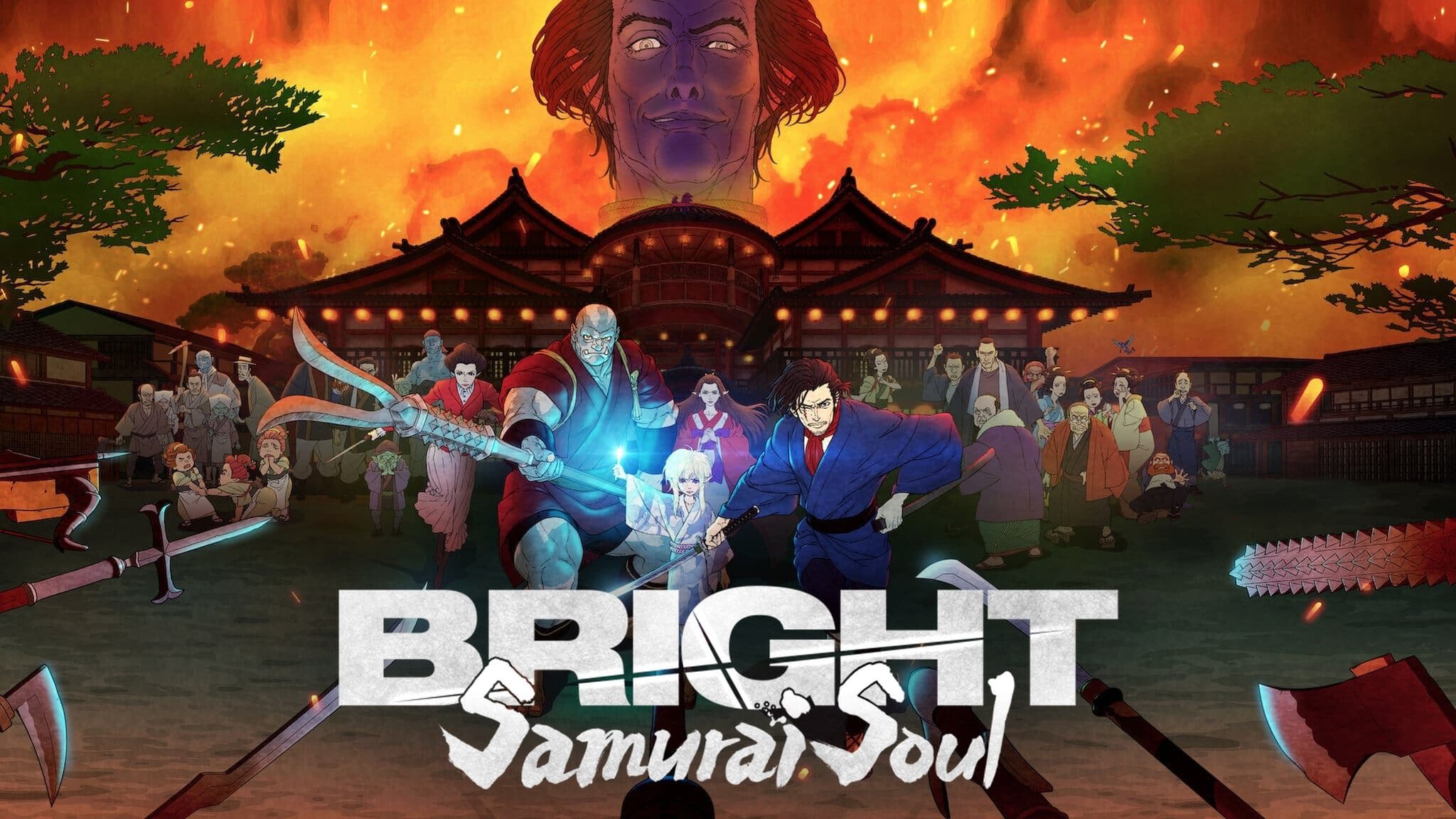
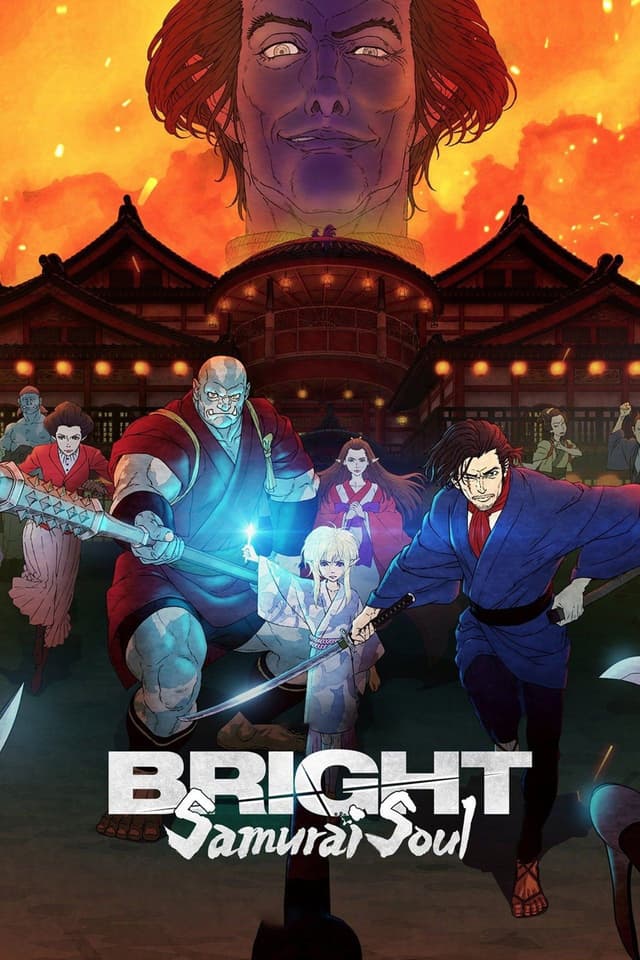
Bright Samurai Soul Budget
 AnimationActionFantasy1h 20m
Updated
Synopsis
In late-Edo-period Japan, a former samurai named Izou and an orc bandit named Raiden reluctantly join forces to escort a young elf and a magic wand to a hidden elf community. As civil war engulfs the dying shogunate, the unlikely band navigates ronin, the imperial army, and the dark magic that the wand attracts to anyone who carries it.
What Is the Budget of Bright: Samurai Soul (2021)?
Bright: Samurai Soul (2021), directed by Kyohei Ishiguro and produced by Arect and Netflix, was released globally on Netflix on October 12, 2021. The animated feature-length spinoff of the David Ayer Bright (2017) live-action franchise was Netflix's first wholly Japan-produced anime feature commissioned through its dedicated anime-production pipeline. The production budget has not been publicly disclosed, but trade reporting from Variety and Animation Magazine placed the cost at approximately $8,000,000 to $12,000,000, materially below the $90,000,000 budget of the live-action Bright (2017) and broadly consistent with the upper end of Netflix's Japan-anime feature commissioning tier.
Netflix's Japan content team commissioned the project as part of its mid-2010s push to build a dedicated anime original-features line. The streamer's deal with Arect, a Japanese animation studio with prior credits in television-anime production, structured the project as a work-for-hire commission with Netflix retaining worldwide streaming rights and Arect handling all production responsibilities at its Tokyo facilities. The budget reflects Japanese feature-anime cost norms, which run materially below American theatrical-animation costs for comparable runtimes.
Key Budget Allocation Categories
The estimated $8,000,000 to $12,000,000 production budget covered:
- Animation Production: Arect handled all animation production at its Tokyo facilities, with key animators, in-betweeners, and background artists drawn from the studio's in-house roster supplemented by external Japanese subcontractors. Animation production accounted for roughly 55 to 65 percent of total spend on a Japanese anime feature of this scale, well above the equivalent line item for American theatrical-animation budgets.
- Direction and Storyboards: Kyohei Ishiguro directed, with character designs by Atsushi Saito. Ishiguro, who had previously directed the Children of the Whales anime series, brought a director's rate at the upper end of the Japanese feature-anime tier. Storyboards and animation supervision required the largest non-production line item.
- Voice Cast (Japanese): Yuki Nomura voiced the samurai Izou, Daisuke Hirakawa the orc Raiden, and Shion Wakayama the elf Sonya. Japanese voice talent on anime productions is compensated through Nippon Actors Union scale, considerably below the corresponding rates in American animation.
- Voice Cast (Localized Dubs): Netflix's standard practice of commissioning English, French, German, Spanish, Portuguese, and additional language dubs added an incremental localization line item beyond the original Japanese production. The English dub featured Simu Liu as Izou, recorded in late 2020 ahead of his Shang-Chi release.
- Original Score: Composer Michiru Oshima delivered an orchestral score recorded with a session ensemble in Tokyo, incorporating traditional Japanese instrumentation and Western-classical orchestral textures. The score budget on a Japanese anime feature typically runs $300,000 to $750,000 inclusive of composer fees, orchestra recording, and licensing.
- Cinematography and Animation Direction: Animation direction by Atsushi Saito coordinated the look and movement across the production, with a deliberately painterly visual style that distinguished Samurai Soul from the harder line-art conventions of contemporary Netflix anime originals.
- Post-Production: Editorial, sound design, sound mixing, and color finishing were completed at Tokyo-based post facilities. Netflix's technical-delivery requirements (4K HDR masters, multi-language subtitle tracks, multi-language closed-caption tracks) added incremental cost beyond the typical Japanese-domestic anime delivery package.
How Does Bright: Samurai Soul's Budget Compare to Similar Films?
At an estimated $8,000,000 to $12,000,000, the film fits the upper end of Netflix's Japan-anime feature commissioning tier. The comparison set illustrates how the property's economics align with peer Netflix anime releases:
- Bright (2017): Budget approximately $90,000,000 | Estimated 88,000,000 Netflix households in the first 30 days. The David Ayer live-action original cost roughly nine times Samurai Soul and represented Netflix's then-largest film commission at the time of its 2017 release.
- Drifting Home (2022): Estimated budget approximately $7,000,000. Hiroyasu Ishida's Netflix-distributed Studio Colorido anime offers a contemporaneous reference point for Netflix-licensed Japan-anime features at a slightly lower budget tier.
- Belle (2021): Budget approximately $30,000,000 | Worldwide $73,000,000. Mamoru Hosoda's theatrical anime offers an upper-bound reference for what high-investment Japan-anime feature production costs when targeting theatrical distribution and awards campaigning.
- A Whisker Away (2020): Estimated budget approximately $6,000,000. The Netflix-released Studio Colorido anime from the previous year offers a lower-bound reference for Netflix-commissioned Japan-anime features.
- Demon Slayer: Mugen Train (2020): Budget approximately $15,000,000 | Worldwide $507,128,486. The theatrical Aniplex anime feature illustrates the financial ceiling for Japan-anime feature production when supported by theatrical distribution and a prior-series fanbase.
Bright: Samurai Soul Box Office Performance
Bright: Samurai Soul premiered on Netflix on October 12, 2021 with no theatrical release. Netflix does not publicly disclose viewership figures for its anime original features, but the film did not chart on the streamer's top-ten US originals list in any week of its release window, a notable absence given Netflix's typical promotion pattern for tentpole anime originals. The film performed more strongly in Japanese and Southeast Asian engagement than in the US and European markets, where the underlying Bright (2017) property had been the strongest. Without a theatrical window, conventional box office figures do not apply:
Box Office Breakdown
Bright Samurai Soul

The mid-performance result, combined with the broader cooling of the Bright franchise after the David Ayer live-action original's mixed reception, contributed to Netflix's decision to put the planned live-action Bright 2 on indefinite hold by late 2022. Will Smith's departure from the project amid the broader fallout from the 2022 Academy Awards incident finalized the franchise's pause. As of late 2025, no further Bright content has entered active development at Netflix.
Bright: Samurai Soul has remained continuously available on Netflix since launch and continues to draw catalog viewing within the broader Netflix anime library. Director Kyohei Ishiguro returned to series and feature anime work at Arect and other studios in the years following the film's release, and the production team's capability demonstration supported subsequent Arect commissions.
Bright: Samurai Soul Production History
Development on a Bright animated spinoff began at Netflix in 2018, shortly after the David Ayer live-action original's December 2017 release. The original Bright had drawn an estimated 88,000,000 Netflix households in its first 30 days according to internal disclosure, validating the property despite mixed critical reception and prompting expansion into both a planned live-action sequel and ancillary content tiers. The animated-spinoff concept fit Netflix's mid-2010s push to build out franchise universes across multiple production formats simultaneously.
Netflix's Japan content team brought Arect to the project in 2019, with Kyohei Ishiguro attached as director. The creative team relocated the Bright universe's urban-fantasy premise (orcs, elves, and humans coexisting in a magical world) to a late-Edo-period Japanese setting, replacing the original's Los Angeles streetscape with samurai-era Japan and the original's LAPD/Magic Task Force institutional framing with the dying Tokugawa shogunate. Writer Michiko Yokote adapted the screenplay, working with Ishiguro to define the Izou-Raiden-Sonya central trio.
Production at Arect ran through 2020 and into 2021, including pandemic-era remote-collaboration adjustments. Character design by Atsushi Saito drew on both classical samurai-aesthetic references and contemporary anime conventions, with the orc and elf designs deliberately differentiated from their live-action Bright counterparts to avoid the uncanny visual translation that 1:1 design adaptation would have produced. Voice recording in Tokyo was completed in mid-2021 for the original Japanese version, with the English dub recorded in Los Angeles immediately afterward.
The October 12, 2021 Netflix release date positioned the film in the streamer's Q4 2021 anime push, alongside the original-anime series Komi Can't Communicate and the second season of Beastars. Marketing emphasized the standalone-feature nature of the film and the Bright universe connection, with the Bright (2017) live-action film promoted alongside the anime in Netflix's in-service recommendation algorithm. The film's muted performance was a contributing factor in Netflix's eventual decision to pause the live-action Bright 2 development.
Awards and Recognition
Bright: Samurai Soul received no major awards recognition. The film did not register at the Annie Awards, the Tokyo Anime Award Festival, or the Japanese Animation Awards, in line with the typical pattern for Netflix-commissioned anime features that bypass the theatrical and festival awards-campaigning circuit. Crunchyroll Anime Awards did not include the film in its 2022 nominee slates.
Director Kyohei Ishiguro's involvement drew specialist-press profile coverage in Animation Magazine and Anime News Network, but no formal honors followed. The muted awards footprint mirrors the broader pattern for Netflix-anime feature originals released into a release window dominated by theatrical anime tentpoles such as Demon Slayer: Mugen Train and Belle.
Critical Reception
Bright: Samurai Soul received mixed-to-negative reviews. The film holds an aggregate score around 53% approval on Rotten Tomatoes based on a small critic-review sample (the film was not widely covered by major US critical outlets), with critical consensus noting the visual accomplishment of the period-Japan setting while flagging a derivative script and pacing issues. The audience score on Rotten Tomatoes sits at 45%.
Anime News Network's Jacob Chapman called the film "a visually attractive but narratively familiar entry in the Netflix anime feature line," and IGN's Akhil Arora wrote that "Samurai Soul borrows the Bright franchise's urban-fantasy premise without adding much to it, leaving an anime that looks better than it plays." The Hollywood Reporter's Frank Scheck noted that "the Bright connection feels superficial; the same story told without the franchise IP would have landed cleaner."
Less favorable reviews focused on the screenplay structure and the unclear connection to the Bright universe. Polygon's Petrana Radulovic wrote that the film "neither services existing Bright fans with deep franchise lore nor invites new viewers in with a strong standalone premise." More favorable reviews praised the animation and the score, with Crunchyroll News and Otaquest both highlighting the painterly visual style as a meaningful achievement within the Japan-anime feature tier. The mixed-to-negative critical reception, combined with the muted streaming performance, contributed to the Bright franchise's subsequent indefinite pause at Netflix.
Frequently Asked Questions
How much did Bright: Samurai Soul (2021) cost to make?
Netflix and Arect have not publicly disclosed the budget. Trade reporting from Variety and Animation Magazine places the cost at approximately $8,000,000 to $12,000,000, materially below the $90,000,000 budget of the live-action Bright (2017) and broadly consistent with the upper end of Netflix's Japan-anime feature commissioning tier.
Is Bright: Samurai Soul a sequel to Bright?
Bright: Samurai Soul is a standalone spinoff rather than a direct sequel. It shares the original Bright universe's urban-fantasy premise (orcs, elves, and humans coexisting in a magical world) and includes a magic wand of the same type that drove the original's plot, but the story is set in late-Edo-period Japan rather than contemporary Los Angeles, with no returning characters from the live-action film.
Who directed Bright: Samurai Soul?
Kyohei Ishiguro directed for Tokyo-based studio Arect. Ishiguro had previously directed the Children of the Whales anime series. The screenplay was adapted by Michiko Yokote, working from a story premise developed by the Netflix Japan content team in collaboration with the original Bright franchise team.
Who voices Bright: Samurai Soul in English?
Simu Liu voices the samurai Izou in the English dub, recorded in Los Angeles in late 2020 ahead of his Shang-Chi and the Legend of the Ten Rings (2021) release. Fred Mancuso voices Raiden, and Yuzu Harada voices Sonya. The original Japanese cast features Yuki Nomura, Daisuke Hirakawa, and Shion Wakayama.
Will there be a Bright 2?
No live-action Bright 2 has reached production. Netflix put the planned sequel on indefinite hold by late 2022, with Will Smith's departure from the project amid the broader fallout from the 2022 Academy Awards incident finalizing the pause. As of late 2025, no further Bright content has entered active development at Netflix.
When is Bright: Samurai Soul set?
The film is set in late-Edo-period Japan, during the closing years of the Tokugawa shogunate (roughly the 1860s). The Bright universe's urban-fantasy premise is overlaid on the historical setting, with orcs and elves coexisting alongside samurai, ronin, and the imperial army that brought down the shogunate.
How long is Bright: Samurai Soul?
The film runs 80 minutes, a deliberately compact feature-anime runtime that matches the pacing conventions of the Netflix-commissioned anime feature tier. The runtime accommodates the central road trip from rural Japan to the hidden elf community and the climactic confrontation with the wand-seeking antagonists.
Did Bright: Samurai Soul win any awards?
No. The film received no major awards recognition. It did not register at the Annie Awards, the Tokyo Anime Award Festival, the Japanese Animation Awards, or the Crunchyroll Anime Awards. The muted awards footprint mirrors the broader pattern for Netflix-anime feature originals that bypass the theatrical and festival awards-campaigning circuit.
Where can I watch Bright: Samurai Soul?
The film is available exclusively on Netflix in all territories where the streamer operates. It received no theatrical release and remains continuously available on the service since its October 12, 2021 premiere.
What did critics think of Bright: Samurai Soul?
The film received mixed-to-negative reviews, with an approximately 53 percent approval rating on Rotten Tomatoes (from a small critic-review sample). Critics noted the visual accomplishment of the period-Japan setting while flagging a derivative script and unclear connection to the broader Bright universe. The mixed reception, combined with the muted streaming performance, contributed to the Bright franchise's subsequent indefinite pause at Netflix.
Filmmakers
Bright Samurai Soul

Official Trailer
Build budgets like this one in Saturation
Start from an industry-standard feature film template, import the schedule and rates you already have, and let the cost report keep itself current as you spend. Real-time collaboration, no spreadsheets.