Bright Lights, Big City Budget
 DramaRomance1h 47m
Updated
Synopsis
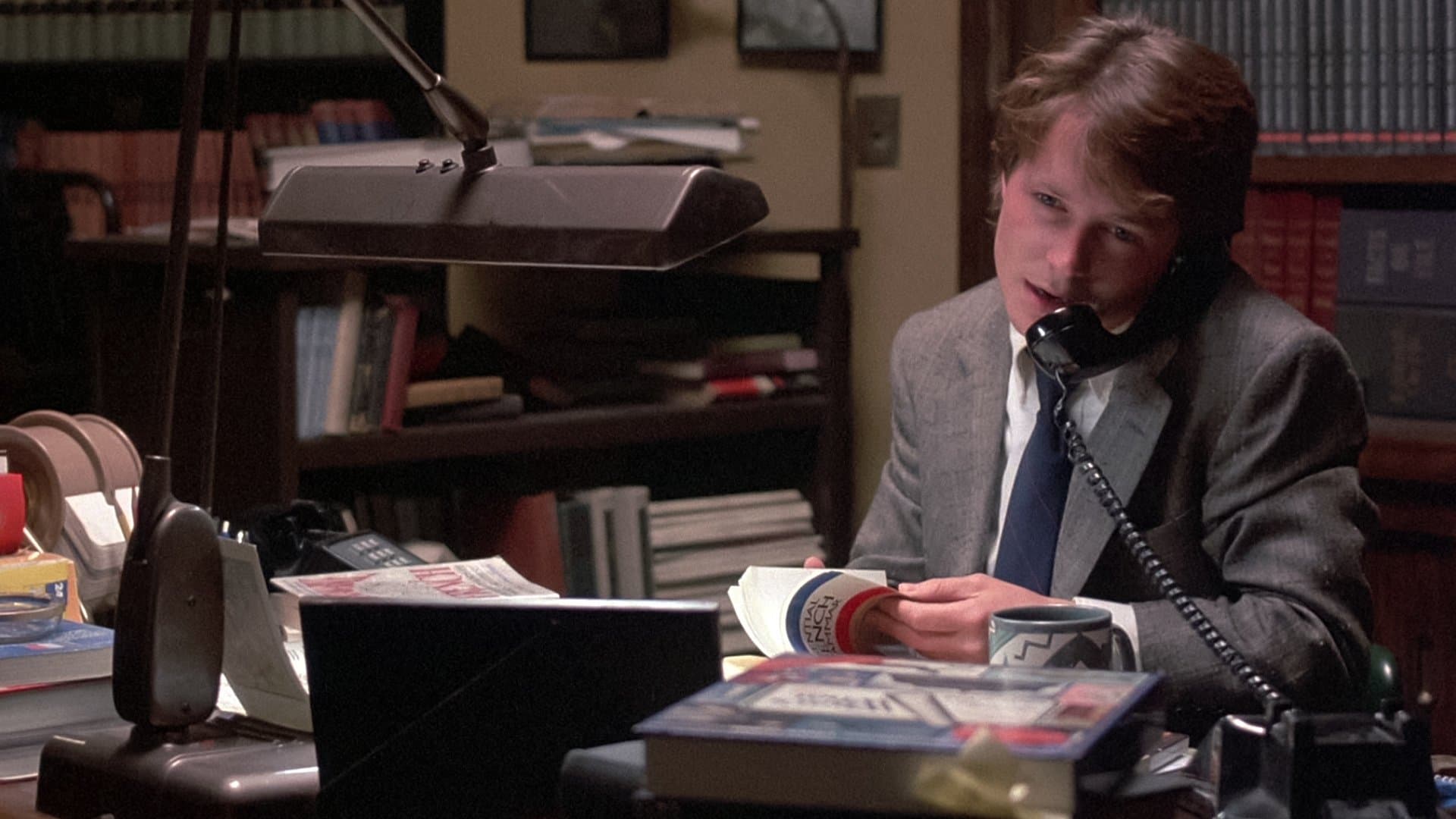
"Bright Lights, Big City" is a poignant exploration of ambition, love, and the disillusionment that often accompanies the pursuit of success in the fast-paced world of New York City. The story follows Jamie Conway, a young and aspiring writer who finds himself caught in the whirlwind of the city's nightlife. As he navigates the vibrant yet chaotic landscape, Jamie grapples with the pressures of his career, the complexities of his relationships, and the haunting memories of his past.
Amidst the allure of parties and the intoxicating energy of the city, Jamie's life spirals into a struggle with substance abuse and emotional turmoil. His journey is marked by encounters with a cast of colorful characters, including his estranged wife, who embodies the life he yearns for but cannot attain. As Jamie confronts his demons, he must ultimately decide whether to embrace the superficial glamour of his surroundings or seek a deeper, more meaningful existence. The film serves as a powerful commentary on the cost of ambition and the search for identity in a world that often prioritizes success over authenticity.
What is the budget of Bright Lights, Big City?
"Bright Lights, Big City," a drama released in 1988, was directed by James Bridges and stars Michael J. Fox, Kiefer Sutherland. The production budget was $25,000,000, placing it in the mid-budget range for drama productions of the 1980s.
Key Budget Allocation Categories
While specific budget breakdowns are not publicly available, typical cost drivers for a drama production like this include:
- Above-the-Line Talent: Drama films live or die on the strength of their performances.
- Location Filming & Period Production Design: Authentic locations , whether contemporary or historical , require scouting, permits, travel, lodging, and often significant dressing to match the story's time period.
- Post-Production, Color Grading & Score: The editorial process for dramas is typically longer than genre films, with careful attention to pacing and tone.
- Development: In 1984, Robert Lawrence, a vice president at Columbia Pictures, championed Jay McInerney's novel against resistance from older executives.
What were the major cost factors in Bright Lights, Big City?
Several factors contributed to the overall production costs of "Bright Lights, Big City."
- Above-the-Line Talent: Above-the-Line Talent is one of the primary cost drivers in drama productions of this scale.
- Location Filming: Location Filming & Period Production Design is one of the primary cost drivers in drama productions of this scale.
- Post-Production: Post-Production, Color Grading & Score is one of the primary cost drivers in drama productions of this scale.
How Does Bright Lights, Big City's Budget Compare to Similar Films?
At $25,000,000, Bright Lights, Big City sits in the mid-budget range. Here is how it compares to productions with a similar budget:
- 1408 (2007): Budget $25,000,000, Worldwide Gross $133,000,000
- A Journal for Jordan (2021): Budget $25,000,000, Worldwide Gross $6,700,000
- Abandon (2002): Budget $25,000,000, Worldwide Gross $10,719,357
- All My Life (2020): Budget $25,000,000, Worldwide Gross $2,000,000
- August Rush (2007): Budget $25,000,000, Worldwide Gross $66,122,026
The median budget for wide-release drama films in the era ranges from $30 to 80M for mid-budget to $150M+ for tentpoles.
Bright Lights, Big City Box Office Performance
"Bright Lights, Big City" earned $16,118,077 worldwide at the box office. Against a production budget of $25,000,000, the film faced challenges in theatrical release. Home video, streaming, and ancillary revenue may have contributed to its overall performance.
A film typically needs to earn approximately twice its production budget to cover marketing and distribution costs. For "Bright Lights, Big City," that break-even threshold was roughly $50,000,000. With worldwide earnings of $16,118,077, the film did not reach break-even in theatrical release.
Box Office Breakdown
Bright Lights, Big City

At -35.5%, "Bright Lights, Big City" did not recoup its production budget through theatrical release alone.
Bright Lights, Big City Production History
In 1984, Robert Lawrence, a vice president at Columbia Pictures, championed Jay McInerney's novel against resistance from older executives. He felt that the book spoke to his generation and described it as "Graduate, with a little bit of Lost Weekend." He met with McInerney while he was still working on the screenplay. Tom Cruise was offered first refusal on the script while McInerney and Schumacher were attempting to capture the novel's distinctive voice.
Awards and Recognition
2 nominations total
Critical Reception
Bright Lights, Big City was released on April 1, 1988, in 1,196 theaters, and grossed USD $5.1 million during its opening weekend. It was a box office bomb, making $16.1 million domestically, well below its budget of $25 million.
Frequently Asked Questions
How much did Bright Lights, Big City cost to make?
The production budget was $18,000,000. United Artists produced and distributed the film through MGM/UA Communications, with Mirage Enterprises co-producing under producer Sydney Pollack's output deal with the studio.
How much did Bright Lights, Big City earn at the box office?
The film grossed $16,142,989 domestically and limited international totals, for a worldwide total of approximately $16,200,000. It opened to $4,000,000 on April 1, 1988, finishing fourth behind Beetlejuice, Biloxi Blues, and Police Academy 5.
Is Bright Lights, Big City based on a book?
Yes. The film adapts Jay McInerney's 1984 novel of the same name, the celebrated second-person novel about a young Manhattan magazine fact-checker descending into a cocaine-driven nightlife after the death of his mother and the departure of his wife. McInerney wrote the screenplay himself.
Who stars in Bright Lights, Big City?
Michael J. Fox stars as Jamie Conway, replacing original casting plans for Tom Cruise. Kiefer Sutherland plays his nightlife enabler Tad Allagash, with Phoebe Cates as the estranged wife Amanda, Dianne Wiest as his late mother, Frances Sternhagen as the fact-checking chief Megan, Tracy Pollan as Vicky, and Swoosie Kurtz as Megan's colleague.
Who directed Bright Lights, Big City?
James Bridges directed the film. Bridges had previously directed The China Syndrome (1979) and Urban Cowboy (1980, $14,000,000 budget, $46,900,000 worldwide), and Bright Lights, Big City was his final feature before his death in 1993. The film was widely criticized as a misjudged fit for both director and Michael J. Fox.
Where was Bright Lights, Big City filmed?
Principal photography took place in New York City, with extensive location work covering Times Square, Greenwich Village, the Upper East Side, and Brooklyn. The mid-1980s Manhattan locations have made the film a frequently cited time capsule of the city's pre-cleanup era.
What did critics think of Bright Lights, Big City?
The film received largely negative reviews, with a 38% approval rating on Rotten Tomatoes. Critics objected to Michael J. Fox's casting as the dissipated narrator, viewing it as miscast given his television-friendly persona on Family Ties, and felt the screenplay flattened the novel's second-person interiority.
Was Bright Lights, Big City a box office bomb?
Yes. Against the $18,000,000 production budget and an estimated $10,000,000 to $15,000,000 in marketing spend, the worldwide gross of approximately $16,200,000 represented a clear theatrical loss. Home video and cable broadcast revenue narrowed the gap but did not close it.
How does Bright Lights, Big City compare to other 1980s yuppie-disillusionment films?
The film sits alongside Less Than Zero (1987, $8,000,000 budget, $12,400,000 worldwide), the Bret Easton Ellis adaptation that opened five months earlier, and prefigures American Psycho (2000). All three films struggled commercially but have developed strong reputations as cultural documents of the late-1980s East Coast professional class.
Did Bright Lights, Big City win any awards?
The film received no major nominations at the Academy Awards, Golden Globes, or other top guild awards. Donald Fagen's contributions to the soundtrack, particularly the original track Century's End, attracted positive attention separate from the film itself.
Official Trailer
Build budgets like this one in Saturation
Start from an industry-standard feature film template, import the schedule and rates you already have, and let the cost report keep itself current as you spend. Real-time collaboration, no spreadsheets.