Bon Voyage Budget
Updated
Synopsis
In June 1940, as Nazi forces advance on Paris, a celebrated film star, an Interior Minister, a young physics student carrying secret heavy-water canisters, an aspiring novelist falsely imprisoned for murder, and a journalist all converge on a single grand hotel in Bordeaux. As the French government and high society flee south, their tangled romances, political intrigues, and wartime survival schemes collide in the last days before German occupation.
What Is the Budget of Bon Voyage (2004)?
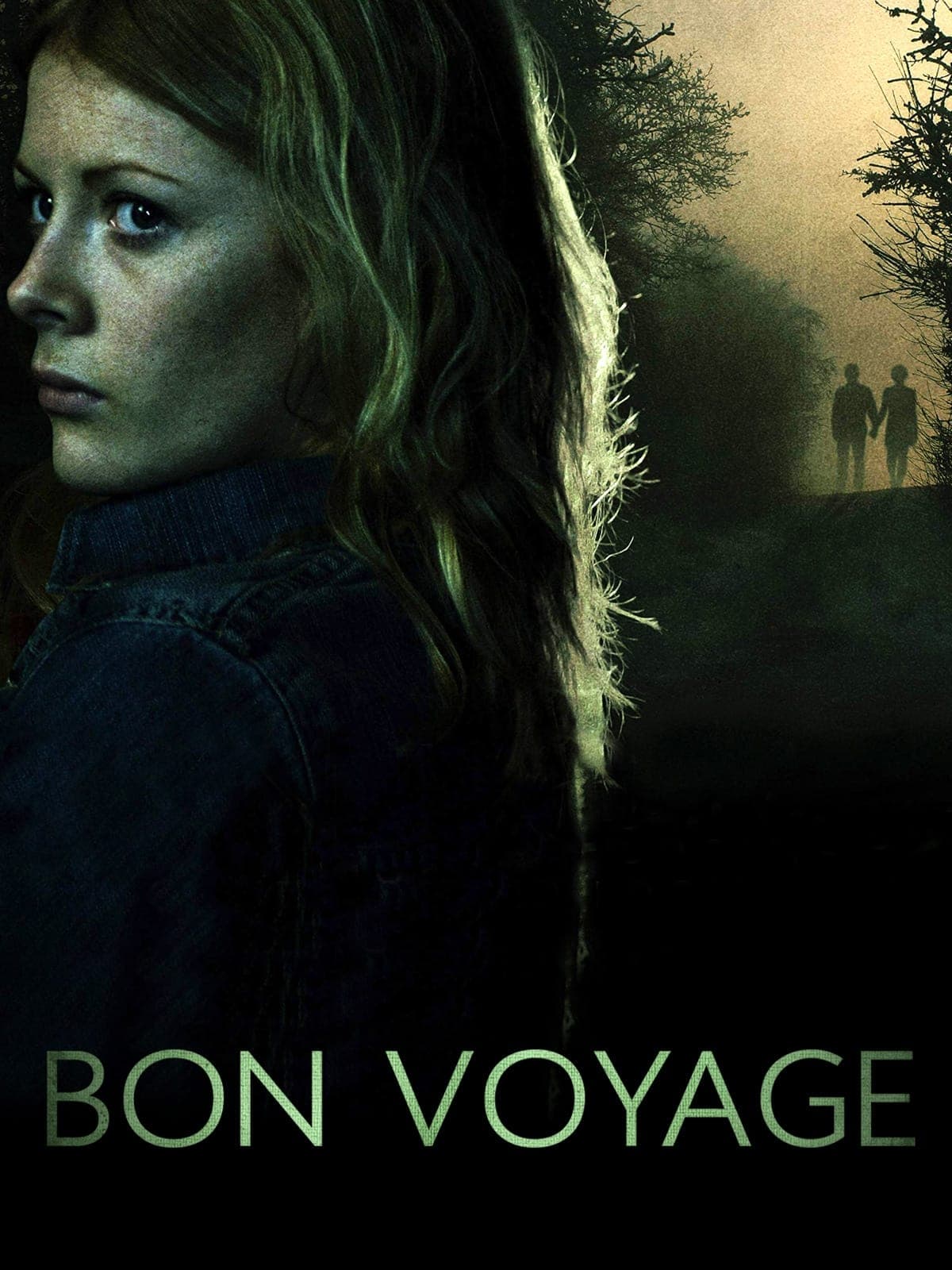
Bon Voyage, directed by Jean-Paul Rappeneau and released in France on April 16, 2003 before its American theatrical run by Sony Pictures Classics in 2004, was produced on a reported budget of approximately €24,100,000, equivalent to roughly $25,000,000 at then-prevailing exchange rates. That figure placed it among the most expensive French productions of its release year and reflected the film's sweeping ensemble cast, period reconstruction of 1940 France, and the elaborate hotel and rail set pieces that anchor its central acts.
The production was financed by ARP Sélection through producers Laurent and Michel Pétin, with international sales arranged through France's standard ecosystem of broadcaster pre-sales and tax shelter financing. The budget was sized for a film aiming squarely at French theatrical and international art-house markets rather than a global blockbuster release, with a calibration that assumed strong domestic French theatrical and selective international distribution would carry the recoupment burden.
Key Budget Allocation Categories
Bon Voyage's approximately $25,000,000 budget was distributed across several core production areas:
- Above-the-Line Talent: Isabelle Adjani and Gérard Depardieu were the two highest-paid French film actors of their era, and casting them as a tandem lead pair commanded top French theatrical rates. Co-stars Virginie Ledoyen, Grégori Derangère, Yvan Attal, and Peter Coyote rounded out an ensemble of established and rising French and international talent, each at appropriate scale.
- Period Production Design and Wardrobe: The film required full 1940 reconstruction of Paris under threat, a Bordeaux grand hotel populated by hundreds of refugees, rail and road convoys, German troop columns, and the period-appropriate cars, costumes, and props for every speaking and background character. Production designer Jacques Rouxel led a substantial art department to deliver the scale.
- Cinematography and Lighting: Thierry Arbogast, Luc Besson's longtime collaborator and one of France's most expensive cinematographers, shot the film in a glossy classical style. Lighting elaborate hotel ballroom and lobby sequences for an ensemble of more than a dozen named characters drove significant equipment, gaffer, and grip costs throughout principal photography.
- Original Score: Composer Gabriel Yared, who had won the Academy Award for The English Patient, delivered an orchestral score for the film. Original composition, orchestra session costs at a Paris recording studio, and music rights administration were a major line item on the production ledger.
- Sets, Locations, and Extras: The film blended studio-built hotel interiors, location work at French heritage properties standing in for 1940 Bordeaux, and exterior road sequences that required closed roads, period vehicle convoys, and hundreds of period-costumed extras in the famous refugee column sequence.
- Post-Production and Visual Effects: Light visual effects work covered period-extension matte paintings, aerial bombing inserts, and cleanup of modern incursions into the period locations. Editorial, sound design, and color timing were completed at French post houses.
How Does Bon Voyage's Budget Compare to Similar Films?
Bon Voyage's approximately $25,000,000 production cost places it among the larger French ensemble period pieces of its era. The comparison set illustrates how Rappeneau's budget mapped against peers:
- Cyrano de Bergerac (1990): Budget approximately $20,000,000 | Worldwide gross approximately $50,000,000. Rappeneau's own previous swashbuckling period epic, also starring Gérard Depardieu, set the template for a French studio-scale literary adaptation and is the cleanest direct comparison.
- A Very Long Engagement (2004): Budget approximately $56,600,000 | Worldwide gross approximately $69,400,000. Jean-Pierre Jeunet's World War I drama released the same year cost more than twice as much and earned more than four times Bon Voyage's worldwide haul.
- Joyeux Noël (2005): Budget approximately $22,000,000 | Worldwide gross approximately $17,000,000. The Christian Carion World War I drama operated at near-identical budget scale and earned a comparable worldwide gross, illustrating the standard ceiling for a serious French war drama.
- Indochine (1992): Budget approximately $25,000,000 | Worldwide gross approximately $34,000,000. Régis Wargnier's Oscar-winning French colonial drama, also starring Catherine Deneuve, is the closest budget twin to Bon Voyage and demonstrates the upside ceiling for the format.
Bon Voyage Box Office Performance
Bon Voyage opened in France on April 16, 2003, and grossed approximately €13,800,000 in its French theatrical run, drawing roughly 1,200,000 admissions. The film was selected as France's official submission for the 76th Academy Awards Best Foreign Language Film category but did not earn a nomination. Sony Pictures Classics handled the United States theatrical release in early 2004, where the film grossed $1,202,720 in domestic limited release.
Against an estimated $25,000,000 production budget and theatrical marketing spend in the $8,000,000 to $12,000,000 range across territories, the financial breakdown was:
Box Office Breakdown
Bon Voyage

The film returned roughly $0.45 in theatrical revenue for every $1 invested when measured against total production and marketing spend, a disappointing theatrical outcome that was partially offset by the French broadcaster pre-sales typical of the country's tax-credit financing model. The picture's long-tail value sits in its standing as a César-winning prestige title that continues to trade in French television and home-video catalogs.
Bon Voyage Production History
Bon Voyage was Jean-Paul Rappeneau's sixth feature as director and his first since The Horseman on the Roof (1995). He developed the screenplay over several years with co-writers Patrick Modiano, the future Nobel laureate in literature, Gilles Marchand, Julien Rappeneau, and Jérôme Tonnerre, building an ensemble framework that could move from political farce to romantic comedy to wartime thriller within the confines of a single Bordeaux grand hotel in the summer of 1940.
Principal photography took place across French heritage locations standing in for 1940 Bordeaux, on Paris streets dressed for the period, and on purpose-built studio sets at Studio Arpajon and other Parisian facilities. The production tapped the French tax credit system available for qualifying domestic productions, with financing arranged through ARP Sélection and a syndicate of French broadcaster pre-sales.
The film opened the 53rd Berlin International Film Festival out of competition on February 6, 2003 before its French theatrical release in April 2003 and its delayed Sony Pictures Classics United States release in February 2004. Rappeneau, in promotional interviews, framed the project as a deliberate return to classical French ensemble filmmaking in the style of Marcel Carné and the films of his own earlier swashbuckling work.
Awards and Recognition
Bon Voyage received eight César Award nominations at the 29th ceremony in 2004, the French film industry's highest honors, and won three: Best Cinematography for Thierry Arbogast, Best Production Design for Jacques Rouxel, and the Most Promising Actor for Grégori Derangère. The film was nominated for Best Film, Best Director, Best Original Screenplay, Best Original Score, and Best Costume Design, with the wins concentrated in the craft and rising-talent categories rather than the top performance and director slots.
France selected Bon Voyage as its official submission for the Best Foreign Language Film category at the 76th Academy Awards in 2004, though the film did not advance to the final nomination round. It also received recognition at the European Film Awards and was honored at the Lumières Awards, the French equivalent of the Golden Globes voted on by foreign press in France.
Critical Reception
Bon Voyage received generally positive reviews. The film holds a 77% approval rating on Rotten Tomatoes, with the critical consensus calling it "froth, but stylish and giddily entertaining," and scored 68 out of 100 on Metacritic, indicating generally favourable reviews. The film was not polled by CinemaScore due to its limited art-house release in the United States.
Critics broadly praised the ensemble performances, with Isabelle Adjani and Gérard Depardieu singled out for their charisma and command of the screwball-thriller tone, and the production design and Thierry Arbogast's cinematography earning particular notice. Some critics found the multiple intersecting plotlines difficult to track and noted that the film's political content was lighter than its serious wartime setting might warrant. The Hollywood Reporter described it as "a sumptuous historical entertainment with a champagne fizz," and Variety called it "a feast for the eyes that occasionally sacrifices substance for style."
Frequently Asked Questions
How much did Bon Voyage (2004) cost to make?
The reported production budget was approximately €24,100,000, equivalent to roughly $25,000,000 at then-prevailing exchange rates. That figure placed it among the most expensive French productions of its release year and covered the sweeping ensemble cast, period 1940 reconstruction, and elaborate hotel and rail set pieces.
How much did Bon Voyage earn at the box office?
The film grossed approximately €13,800,000 in France on roughly 1,200,000 admissions, and $1,202,720 in the United States through Sony Pictures Classics. Worldwide theatrical gross was approximately $15,000,000, well below the $25,000,000 production budget before broadcaster and home-video revenue.
Who directed Bon Voyage (2004)?
Jean-Paul Rappeneau directed the film. It was his sixth feature and his first since The Horseman on the Roof (1995). Rappeneau co-wrote the screenplay with future Nobel laureate Patrick Modiano, Gilles Marchand, Julien Rappeneau, and Jérôme Tonnerre.
Who stars in Bon Voyage (2004)?
Isabelle Adjani and Gérard Depardieu lead an ensemble that also includes Virginie Ledoyen, Grégori Derangère, Yvan Attal, and American actor Peter Coyote. Adjani plays a movie star, Depardieu plays a powerful Interior Minister, and Derangère plays an aspiring novelist falsely accused of murder.
Did Bon Voyage win any awards?
Yes. The film won three César Awards at the 29th ceremony in 2004: Best Cinematography for Thierry Arbogast, Best Production Design for Jacques Rouxel, and Most Promising Actor for Grégori Derangère. It received eight César nominations in total, including Best Film, Best Director, and Best Original Screenplay.
Was Bon Voyage nominated for an Academy Award?
France selected Bon Voyage as its official submission for the Best Foreign Language Film category at the 76th Academy Awards in 2004, but the film did not advance to the final nomination round.
Where was Bon Voyage filmed?
Principal photography took place across French heritage locations standing in for 1940 Bordeaux, on Paris streets dressed for the period, and on purpose-built studio sets at Studio Arpajon and other Parisian facilities. The production made use of the French tax credit system available for qualifying domestic productions.
Who composed the Bon Voyage score?
Gabriel Yared composed the orchestral score for the film. Yared had won the Academy Award for Best Original Score for The English Patient (1996) and brought a classical Hollywood sweep to the wartime ensemble piece.
How did critics receive Bon Voyage?
Reviews were generally positive. The film holds a 77% approval rating on Rotten Tomatoes and a 68 out of 100 score on Metacritic, indicating generally favourable reviews. Critics praised the ensemble cast, the production design, and Thierry Arbogast's cinematography, while some found the multiple intersecting plotlines difficult to track.
How does Bon Voyage compare to other French period dramas?
At approximately $25,000,000, Bon Voyage cost about the same as Régis Wargnier's Indochine (1992) and Christian Carion's Joyeux Noël (2005). Jean-Pierre Jeunet's contemporaneous A Very Long Engagement (2004) cost more than twice as much, at approximately $56,600,000, and earned roughly four times Bon Voyage's worldwide gross.
Filmmakers
Bon Voyage

Official Trailer
Build budgets like this one in Saturation
Start from an industry-standard feature film template, import the schedule and rates you already have, and let the cost report keep itself current as you spend. Real-time collaboration, no spreadsheets.