Black Hawk Down Budget
 ActionWarHistory2h 25m
Updated
Synopsis
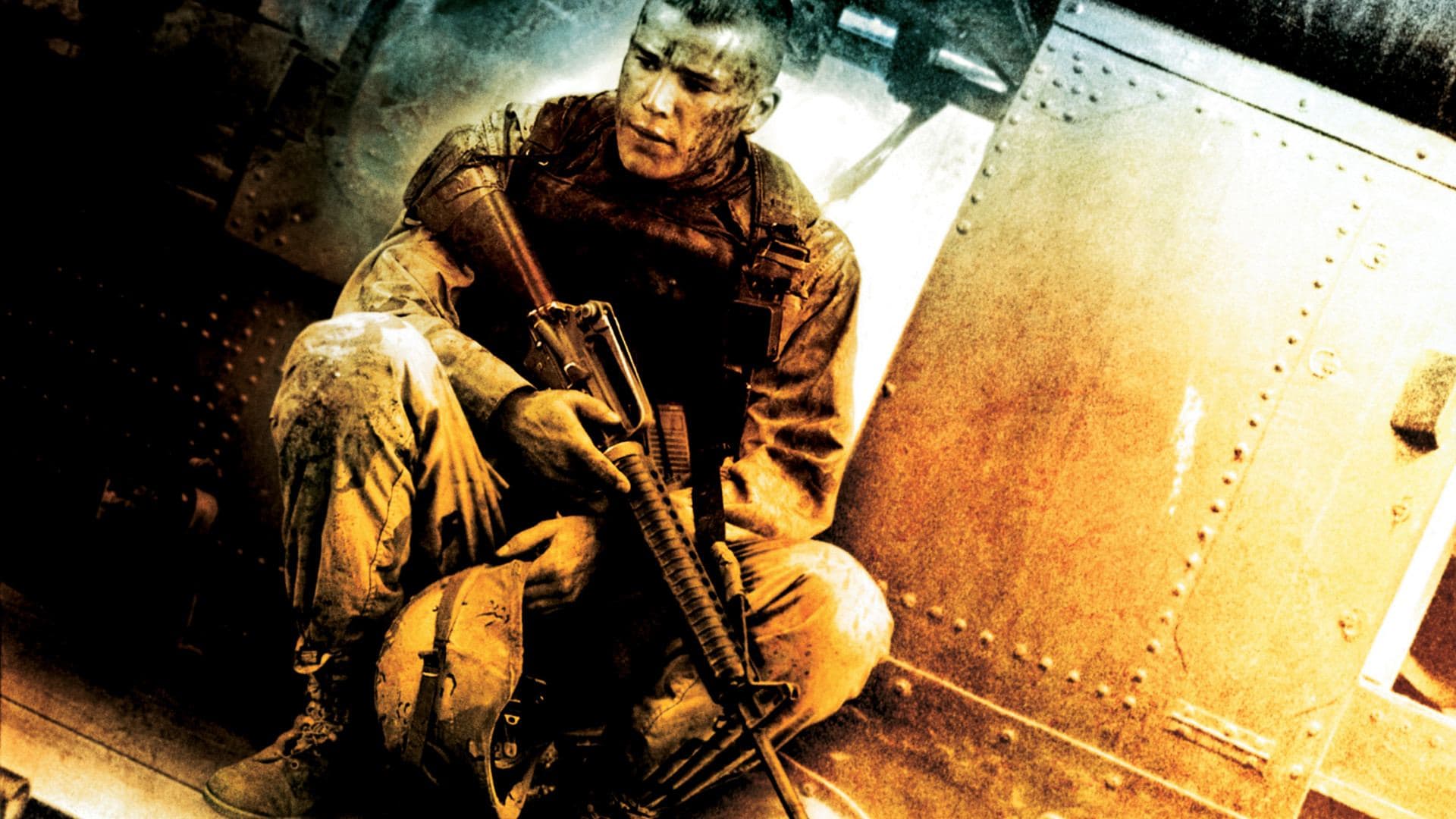
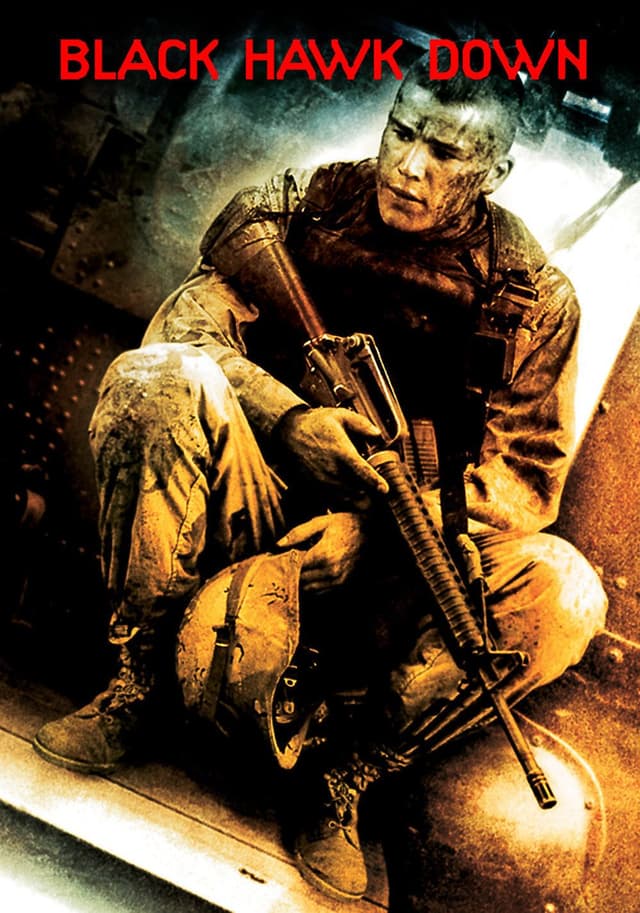
In 1993, an elite group of American Rangers and Delta Force soldiers are sent to Somalia on a critical mission to capture a violent warlord whose corrupt regime has lead to the starvation of hundreds of thousands of Somalis. When the mission goes terribly wrong, the men find themselves outnumbered and literally fighting for their lives.
What is the budget of Black Hawk Down?
"Black Hawk Down," an action released in 2001, was directed by Ridley Scott and stars Josh Hartnett, Eric Bana. The production budget was $92,000,000, placing it in the high-budget range for action productions of its era.
Key Budget Allocation Categories
While specific budget breakdowns are not publicly available, typical cost drivers for an action production like this include:
- Stunts, Action Sequences & Visual Effects: Action films allocate a substantial portion of their budget to choreographing and executing practical stunts, pyrotechnics, and CGI-heavy sequences.
- Above-the-Line Talent (Cast & Director): A-list talent commands significant upfront fees plus backend participation.
- Production Design, Sets & Locations: Action films frequently require multiple international shooting locations, large-scale set construction, vehicle acquisitions and modifications, and specialized equipment , all of which drive production costs well above those of dialogue-driven genres.
- Filming & Locations: Filming began in March 2001 in Kénitra, Morocco, and concluded in late June.
What were the major cost factors in Black Hawk Down?
Several factors contributed to the overall production costs of "Black Hawk Down."
- Stunts: Stunts, Action Sequences & Visual Effects is one of the primary cost drivers in action productions of this scale.
- Above-the-Line Talent (Cast: Above-the-Line Talent (Cast & Director) is one of the primary cost drivers in action productions of this scale.
- Production Design: Production Design, Sets & Locations is one of the primary cost drivers in action productions of this scale.
How Does Black Hawk Down's Budget Compare to Similar Films?
At $92,000,000, Black Hawk Down sits in the high-budget range. Here is how it compares to productions with a similar budget:
- A Good Day to Die Hard (2013): Budget $92,000,000, Worldwide Gross $304,654,182
- Bad Boys for Life (2020): Budget $90,000,000, Worldwide Gross $426,505,244
- Asterix at the Olympic Games (2008): Budget $97,250,400, Worldwide Gross $131,856,927
- Beetlejuice Beetlejuice (2024): Budget $99,000,000, Worldwide Gross $452,000,435
- 1917 (2019): Budget $100,000,000, Worldwide Gross $446,064,352
The median budget for wide-release action films in the 2000s ranges from $30 to 80M for mid-budget to $150M+ for tentpoles.
Black Hawk Down Box Office Performance
"Black Hawk Down" earned $108,638,745 domestically and $172,989,651 worldwide at the box office. Against a production budget of $92,000,000, the film showed modest profitability in theatrical release.
A film typically needs to earn approximately twice its production budget to cover marketing and distribution costs. For "Black Hawk Down," that break-even threshold was roughly $184,000,000. With worldwide earnings of $172,989,651, the film fell short of that threshold but recouped its production costs in theatrical release.
Box Office Breakdown
Black Hawk Down

At 88%, "Black Hawk Down" returned its production investment but margin was tight after marketing and distribution costs.
Black Hawk Down Production History
Filming began in March 2001 in Kénitra, Morocco, and concluded in late June. Although the filmmakers considered filming in Jordan, they found the city of Amman too built up and landlocked. Scott and production designer Arthur Max subsequently turned to Morocco, where they had previously worked on Gladiator.
The musical score for Black Hawk Down was composed by Hans Zimmer, who previously collaborated with director Scott on several films including Thelma & Louise (1991) and Gladiator (2000). Zimmer developed the score through a collaboration with a variety of musicians that blended "east African rhythms and sounds with a more conventional synthesizer approach." In doing so, Zimmer avoided a more traditional composition in favor of an experimental approach that would match the tone of the film. "I wanted to do it like the way the movie was," said Zimmer.
Awards and Recognition
Won 2 Oscars. 11 wins & 37 nominations total
- Academy Award for Best Film Editing: Pietro Scalia (74th Academy Awards)
- Academy Award for Best Sound: Michael Minkler (74th Academy Awards)
- Academy Award for Best Sound: Chris Munro (74th Academy Awards)
- Academy Award for Best Sound: Myron Nettinga (74th Academy Awards)
- National Board of Review: Top Ten Films
Critical Reception
Audiences polled by CinemaScore gave the film an average grade of "A-" on an A+ to F scale.
Frequently Asked Questions
How much did Black Hawk Down cost to make?
The production budget was $92,000,000. Revolution Studios produced the film with Jerry Bruckheimer Films and Scott Free Productions, with Sony Pictures and Columbia Pictures distributing worldwide. The budget was unusually large for a director-driven war film at the time.
How much did Black Hawk Down earn at the box office?
The film grossed $108,638,745 domestically and $64,400,000 internationally, for a worldwide total of approximately $173,000,000. It opened to $179,823 in a limited release on December 28, 2001, before expanding nationwide on January 18, 2002, when it earned $28,611,000 in its first wide weekend.
Is Black Hawk Down based on a true story?
Yes. The film dramatizes the October 3 to 4, 1993 Battle of Mogadishu, in which a U.S. military operation to capture lieutenants of Somali warlord Mohamed Farrah Aidid escalated into an extended firefight that killed 19 American servicemen and several hundred Somalis. The film adapts Mark Bowden's 1999 nonfiction book of the same name.
Who directed Black Hawk Down?
Ridley Scott directed the film, his second collaboration with producer Jerry Bruckheimer after the unproduced Hannibal development. Scott had directed Gladiator (2000, $103,000,000 budget, $465,400,000 worldwide) the previous year, and Black Hawk Down extended his commercial reputation following Hannibal (2001).
Who stars in Black Hawk Down?
The large ensemble cast includes Josh Hartnett as Staff Sergeant Matt Eversmann, Ewan McGregor as Specialist John Grimes, Tom Sizemore as Lieutenant Colonel Danny McKnight, Eric Bana as Sergeant First Class Norm Hooten, William Fichtner as Sergeant First Class Jeff Sanderson, Sam Shepard as Major General William F. Garrison, and Orlando Bloom in an early role as Todd Blackburn.
Where was Black Hawk Down filmed?
Principal photography took place in Rabat and Sale, Morocco, doubling for Mogadishu, with additional location work at Ouarzazate. The U.S. Department of Defense provided significant logistical support, including Black Hawk and Little Bird helicopters with active-duty Army pilots and Army Rangers serving as advisors and extras.
What did critics think of Black Hawk Down?
The film received largely positive reviews, with a 77% approval rating on Rotten Tomatoes and a 74 out of 100 score on Metacritic. Critics praised Ridley Scott's direction, Slawomir Idziak's cinematography, and the immersive battle sequences, while a minority objected to what they viewed as an absence of Somali perspective on the events.
Did Black Hawk Down win any Oscars?
Yes. The film won the Academy Award for Best Film Editing for Pietro Scalia and Best Sound for Michael Minkler, Myron Nettinga, and Chris Munro. It received additional nominations for Best Director and Best Cinematography. The Oscars came at the 74th Academy Awards in March 2002.
Was Black Hawk Down profitable?
Yes, modestly. Against the $92,000,000 production budget and an estimated $40,000,000 to $50,000,000 in global marketing spend, the worldwide gross of $173,000,000 produced a clear theatrical profit. Strong home video and cable broadcast revenue extended profitability significantly across the early 2000s.
How does Black Hawk Down compare to other Ridley Scott war films?
Black Hawk Down sits between Gladiator (2000, $103,000,000 budget, $465,400,000 worldwide) and Kingdom of Heaven (2005, $130,000,000 budget, $218,100,000 worldwide) in budget and worldwide gross. It is the most contemporary-set war film in Scott's filmography and has retained a strong reputation among military and journalism communities.
Official Trailer
Build budgets like this one in Saturation
Start from an industry-standard feature film template, import the schedule and rates you already have, and let the cost report keep itself current as you spend. Real-time collaboration, no spreadsheets.