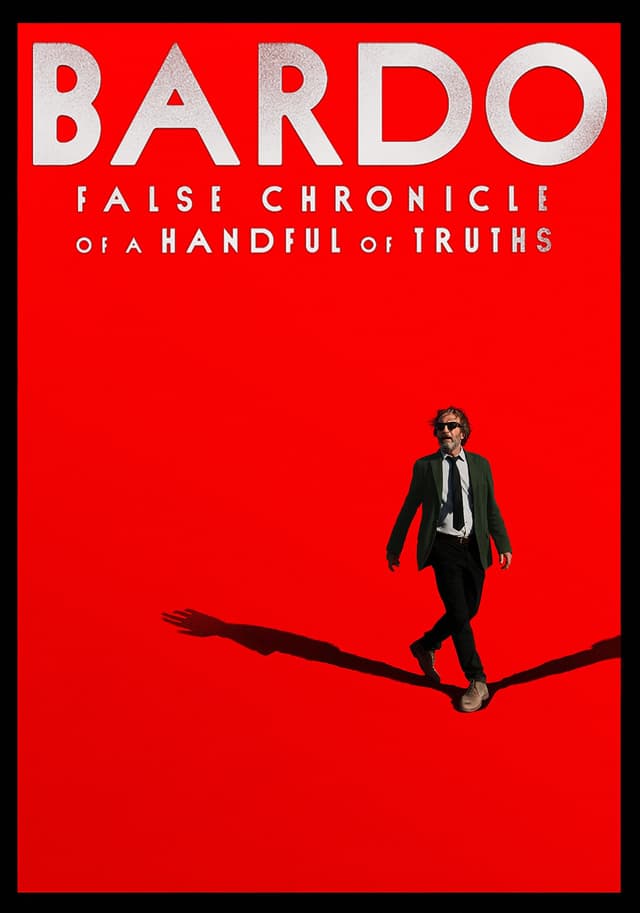
BARDO, False Chronicle of a Handful of Truths Budget
 ComedyDrama2h 39m
Updated
Synopsis
Mexican-American journalist and documentarian Silverio Gama returns to Mexico City from his Los Angeles home to receive a major international award, embarking on an introspective journey that blurs memory, dream, and present reality. Across surrealist visions encompassing his complicated relationship with his homeland, his ambivalence about American assimilation, and his guilt over his deceased son, Silverio confronts the contradictions of his life. Alejandro Gonzalez Inarritu's autobiographical epic stars Daniel Gimenez Cacho, Griselda Siciliani, Iker Sanchez Solano, and Ximena Lamadrid.
What Is the Budget of Bardo (2022)?
Bardo, False Chronicle of a Handful of Truths (2022), directed by Alejandro Gonzalez Inarritu and released by Netflix, was produced as a major Mexican-American prestige co-production with a budget that has not been formally publicly disclosed. Industry estimates place the figure in the $25,000,000 to $35,000,000 USD range based on the scale of the surrealist production design, the multi-country shooting schedule across Mexico and Los Angeles, and the late-2020s prestige Netflix original benchmark. Netflix financed the picture as part of its prestige Mexican-cinema investment alongside contemporaneous originals from Alfonso Cuaron and Guillermo del Toro.
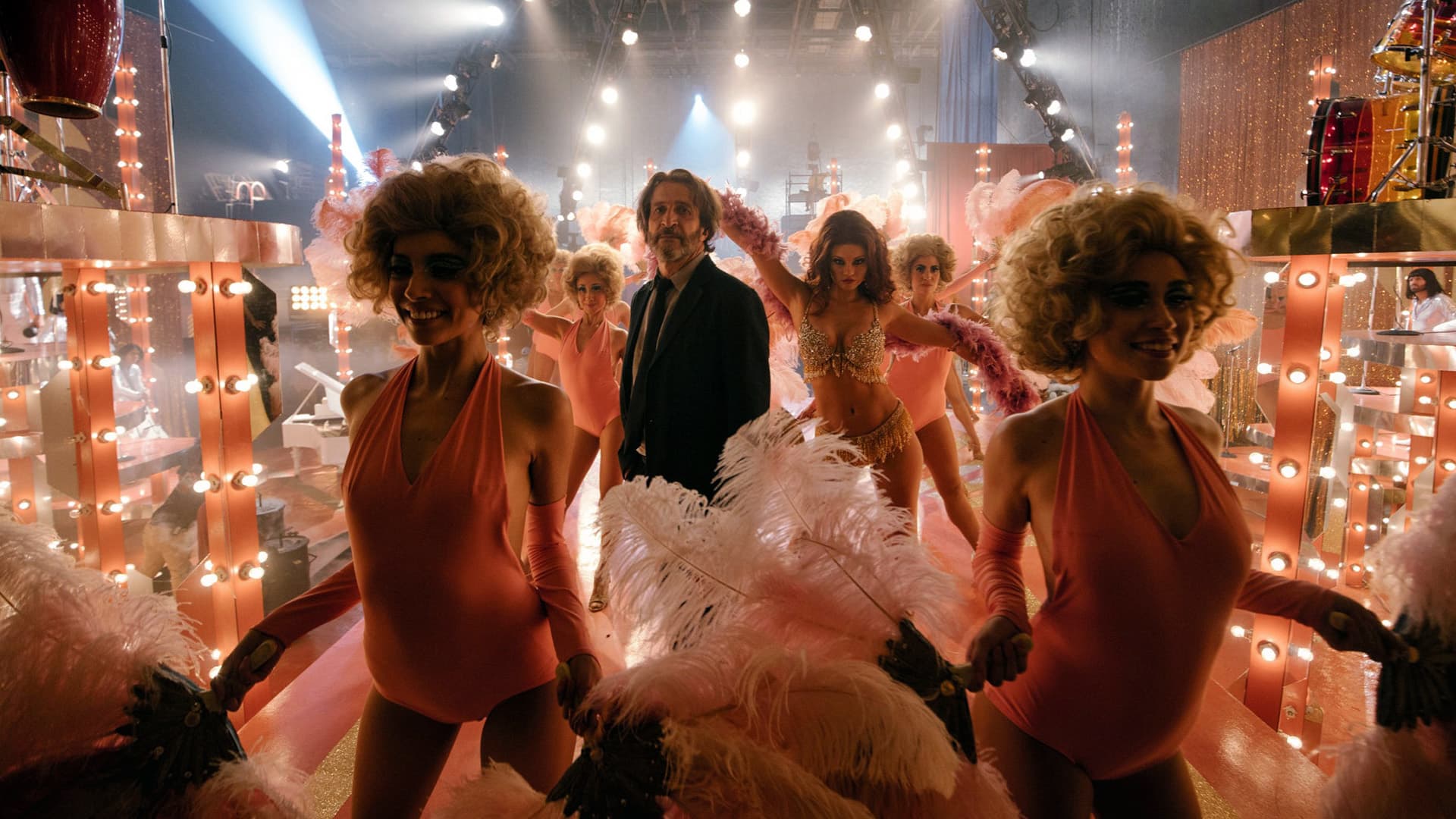
The investment reflected Netflix's explicit prestige-auteur strategy: a major surrealist production design encompassing dream-sequence set pieces (the desert pyramid, the colonial Mexican plaza, the Los Angeles dance hall, the metro train), elaborate special-effects sequences, an experimental long-take cinematographic approach by Darius Khondji, and a Mexican-Spanish principal cast led by Daniel Gimenez Cacho. The picture was Inarritu's first feature since The Revenant (2015), and his first Spanish-language picture since Amores Perros (2000).
Key Budget Allocation Categories
Bardo's estimated $25,000,000 to $35,000,000 budget was distributed across several major production areas:
- Above-the-Line Talent Alejandro Gonzalez Inarritu (four-time Academy Award winner) commanded a top-tier directorial fee through his Anonymous Content / Redrum Films co-production banner. Lead actor Daniel Gimenez Cacho (a senior Mexican character actor with a long Almodovar and Cuaron filmography) anchored the picture at a substantial Mexican-cinema lead rate. Supporting players Griselda Siciliani, Iker Sanchez Solano, and Ximena Lamadrid filled out the family ensemble.
- Mexico City Multi-Location Shoot Principal photography took place across Mexico City and the surrounding region, including the Zocalo, the Anthropology Museum, multiple metro stations, the Chapultepec park, and various suburban neighborhoods. Mexican film incentives, including the Mexican Film Institute (IMCINE) co-production participation, materially reduced the picture's effective Mexican production cost.
- Surrealist Set Construction The picture's most elaborate set pieces required substantial standalone construction: the dream-sequence desert pyramid built in Baja California, the Cortes-and-Mexico City plaza historical reconstruction, the LA dance-hall set, and the climactic metro train sequence. Production designer Eugenio Caballero (Academy Award winner for Pan's Labyrinth) oversaw the elaborate construction budget.
- Cinematography Cinematographer Darius Khondji delivered a deliberately elaborate long-take approach with extensive Steadicam and dolly work, requiring extended rehearsal and complex blocking across each major set piece. The 65mm digital camera package (ARRI Alexa 65) was the picture's principal technical equipment investment.
- Visual Effects and Compositing VFX house Industrial Light & Magic supervised the picture's elaborate dream-sequence compositing, including the Cortes pyramid sequence, the levitating-bodies set piece, and the metro-train transformation. The visual effects budget was substantial relative to the picture's nominally arthouse positioning.
- Costume Costume designer Anna Terrazas dressed the cast across multiple time periods and dream-sequence contexts, requiring extensive period and surrealist costume design work that supported the picture's elaborate visual identity.
- Score and Sound Composer Bryce Dessner (a frequent Inarritu collaborator from The Revenant) delivered an experimental orchestral score with prominent Mexican folk-music elements. Sound design supervisor Martin Hernandez (a longtime Inarritu collaborator) coordinated the picture's elaborate immersive audio mix, including the picture's signature Atmos-mixed dream sequences.
How Does Bardo's Budget Compare to Similar Films?
At an estimated $25,000,000 to $35,000,000 USD, Bardo sits in the upper-tier range for late-2010s and early-2020s prestige Netflix originals from Mexican and Latin American auteurs. The comparison set illustrates how its scale tracked against peer productions:
- Roma (2018): Budget approximately $15,000,000 | Netflix streaming exclusive. Alfonso Cuaron's autobiographical Mexico City epic, released four years before Bardo, cost roughly half and earned 10 Academy Award nominations including Best Picture, providing the direct prestige-Netflix-Mexican-cinema template Bardo extended.
- Birdman (2014): Budget $18,000,000 | Worldwide $103,215,094. Alejandro Gonzalez Inarritu's previous Spanish-and-English-language picture cost roughly half of Bardo and earned the Academy Award for Best Picture, providing the direct Inarritu prestige template.
- The Revenant (2015): Budget $135,000,000 | Worldwide $533,000,000. Inarritu's most expensive picture cost roughly four to five times Bardo and earned the Academy Award for Best Director, providing the high-end Inarritu commercial template.
- Pinocchio (2022): Budget approximately $35,000,000 | Netflix streaming exclusive. Guillermo del Toro's Netflix stop-motion feature, released the same year as Bardo, operated on the upper-tier prestige Netflix original budget envelope and provided the direct contemporaneous Mexican-auteur Netflix template.
- The Shape of Water (2017): Budget $19,500,000 | Worldwide $195,243,196. Guillermo del Toro's Best Picture-winning fantasy cost less than Bardo and earned a major worldwide theatrical run, providing the prestige-arthouse-fantasy template that Netflix-era Mexican auteur work has frequently been compared against.
Bardo Box Office Performance
Bardo received a deliberately limited theatrical release in October and November 2022 ahead of its global Netflix streaming launch on December 16, 2022. The theatrical run was a qualifying release for awards consideration rather than a commercial proposition, with the picture screening in approximately 70 cinemas across the United States, Mexico, and select international markets. The limited theatrical gross was approximately $148,000 globally, with the picture's commercial proposition residing entirely in Netflix streaming engagement.
Against an estimated $25,000,000 to $35,000,000 production budget, the financial breakdown reflects the Netflix prestige-streaming commercial model:
Box Office Breakdown
BARDO, False Chronicle of a Handful of Truths

Bardo's commercial performance is opaque by design as a Netflix streaming exclusive. The picture's deliberate limited theatrical positioning was an awards-qualifying strategy rather than a commercial proposition, with Netflix's broader streaming engagement substituting for traditional theatrical revenue. The picture's commercial outcome is best understood as part of Netflix's broader prestige-auteur investment strategy alongside Roma (2018), The Irishman (2019), Mank (2020), and other late-decade prestige Netflix originals.
Industry coverage of Netflix's prestige-auteur investments indicates that platform engagement and awards-cycle visibility serve as the principal commercial measure for these picture types, with Bardo's mixed critical reception and limited awards traction representing a notably softer outcome than the Roma (2018) precedent against which it was positioned.
Bardo Production History
Alejandro Gonzalez Inarritu developed Bardo as an autobiographical-fantasy project following his American filmmaking period (Babel, Birdman, The Revenant) and his interest in returning to Spanish-language Mexican cinema for the first time since Amores Perros (2000) and his subsequent emigration to Los Angeles. Inarritu co-wrote the screenplay with Nicolas Giacobone, his collaborator on Birdman, drawing on Inarritu's own complicated relationship with his homeland and his ambivalence about American assimilation.
Netflix attached as financier and distributor in 2019, with the picture positioned as a major prestige Mexican-cinema investment alongside the platform's prior Roma (2018) success with Alfonso Cuaron. Pre-production began in 2020, with COVID-19 pandemic disruptions delaying principal photography by approximately a year. Casting brought Daniel Gimenez Cacho, a senior Mexican character actor with a long Almodovar (Bad Education) and Cuaron (Y Tu Mama Tambien) filmography, as the protagonist Silverio Gama.
Principal photography took place across 2021 in Mexico City and the surrounding region, including the Zocalo, the Anthropology Museum, multiple metro stations, the Chapultepec park, and various suburban neighborhoods. Additional location work took place in Baja California for the dream-sequence desert pyramid and in Los Angeles for the U.S.-set sequences. Mexican film incentives, including the Mexican Film Institute (IMCINE) co-production participation, materially reduced the picture's effective Mexican production cost.
Post-production was completed in summer and fall 2022 for the Venice Film Festival competition premiere on September 1, 2022. Following the Venice premiere, Inarritu re-edited the picture, removing approximately 22 minutes from the original 174-minute Venice cut for the final 152-minute Netflix release. The re-edit was a notable instance of a major-festival prestige picture undergoing substantial post-festival restructuring before its broad release.
Awards and Recognition
Bardo received scattered industry awards recognition relative to expectations. The picture premiered in competition at the 79th Venice International Film Festival 2022, where it did not win major awards. At the 95th Academy Awards (2023), the picture received one nomination for Best Cinematography for Darius Khondji, with Khondji ultimately losing to James Friend for All Quiet on the Western Front. Bardo was Mexico's official submission for Best International Feature Film at the Academy Awards but did not advance to the shortlist.
At the Critics' Choice Awards, the picture received the Best Foreign Language Film nomination but did not win. At the Hollywood Critics Association Awards, the picture received scattered craft category recognition. The picture's overall awards profile fell substantially short of the Roma (2018) precedent against which it was positioned, with the post-Venice re-edit and the mixed critical reception both contributing to the contained awards-cycle profile.
Critical Reception
Bardo received mixed reviews. The film holds a 67% approval rating on Rotten Tomatoes based on 209 critic reviews (after the post-Venice re-edit), with a critical consensus calling it 'a deeply personal autobiographical odyssey whose ambition and craftsmanship cannot fully compensate for its self-indulgent excesses.' On Metacritic, the film scored 56 out of 100, indicating mixed or average reviews. As a primarily streaming release, the picture did not receive CinemaScore polling.
Variety's Owen Gleiberman called the picture 'a magnificent excess that nonetheless contains some of the most striking imagery of Alejandro Gonzalez Inarritu's career,' and The Hollywood Reporter's David Rooney wrote that the picture was 'a self-indulgent but undeniably ambitious autobiographical epic.' The Guardian's Peter Bradshaw gave the picture three out of five stars, calling it 'an exhausting but visually astonishing dream-fantasia.' Manohla Dargis of the New York Times wrote that the picture was 'an extravagant, prolonged solipsism.'
Comparative critical analyses with Roma (2018) consistently positioned Cuaron's autobiographical work as the superior prestige-Mexican-cinema-Netflix achievement, with Bardo's expansive surrealist approach and 152-minute running time cited as the principal critical challenges. The picture's critical reputation has stabilized at mixed across the months and years since release, with retrospective coverage tending to position it as an ambitious but flawed late-career Inarritu work alongside the more universally acclaimed Birdman (2014) and The Revenant (2015).
Frequently Asked Questions
How much did Bardo (2022) cost to make?
The official production budget has not been publicly disclosed. Industry estimates place the figure in the $25,000,000 to $35,000,000 USD range based on the scale of the surrealist production design, the multi-country shooting schedule, and the late-2020s prestige Netflix original benchmark.
How much did Bardo earn at the box office?
Bardo received a deliberately limited theatrical release in October and November 2022 ahead of its global Netflix streaming launch on December 16, 2022. The limited theatrical gross was approximately $148,000 globally, with the picture's commercial proposition residing entirely in Netflix streaming engagement, which Netflix does not publicly report.
Who directed Bardo?
Alejandro Gonzalez Inarritu directed the picture as his first feature since The Revenant (2015), and his first Spanish-language picture since Amores Perros (2000). Inarritu co-wrote the screenplay with Nicolas Giacobone, his collaborator on Birdman (2014).
Was Bardo re-edited after Venice?
Yes. Following the September 2022 Venice Film Festival competition premiere, Alejandro Gonzalez Inarritu re-edited the picture, removing approximately 22 minutes from the original 174-minute Venice cut for the final 152-minute Netflix release. The re-edit was a notable instance of a major-festival prestige picture undergoing substantial post-festival restructuring.
Where was Bardo filmed?
Principal photography took place across 2021 in Mexico City and the surrounding region, including the Zocalo, the Anthropology Museum, multiple metro stations, the Chapultepec park, and various suburban neighborhoods. Additional location work took place in Baja California for the dream-sequence desert pyramid and in Los Angeles for the U.S.-set sequences.
Who stars in Bardo?
Daniel Gimenez Cacho stars as protagonist Silverio Gama, a Mexican-American journalist and documentarian. Cacho is a senior Mexican character actor with a long Almodovar (Bad Education) and Cuaron (Y Tu Mama Tambien) filmography. Supporting players include Griselda Siciliani, Ximena Lamadrid, and Iker Sanchez Solano.
Is Bardo autobiographical?
Yes, substantially. Alejandro Gonzalez Inarritu has confirmed that the picture draws heavily on his own complicated relationship with Mexico and his ambivalence about his American filmmaking period (Babel, Birdman, The Revenant), as well as his emigration from Mexico to Los Angeles. The protagonist Silverio Gama is presented as a Mexican-American journalist and documentarian, fictionalizing Inarritu's own background.
What awards did Bardo win?
Bardo received one Academy Award nomination for Best Cinematography for Darius Khondji at the 95th Academy Awards (2023). The picture was Mexico's official submission for Best International Feature Film but did not advance to the shortlist. At the Critics' Choice Awards, the picture received the Best Foreign Language Film nomination but did not win.
How does Bardo compare to Roma?
Comparative critical analyses with Roma (2018) consistently positioned Alfonso Cuaron's earlier autobiographical Mexico City picture as the superior prestige-Mexican-cinema-Netflix achievement. Bardo's expansive surrealist approach, 152-minute running time (152 minutes after the post-Venice re-edit), and mixed critical reception fell substantially short of the Roma precedent.
What did critics think of Bardo?
Bardo received mixed reviews. It holds a 67% approval rating on Rotten Tomatoes from 209 critics and a 56 out of 100 score on Metacritic. Variety's Owen Gleiberman called it 'a magnificent excess,' and The Hollywood Reporter's David Rooney called it 'a self-indulgent but undeniably ambitious autobiographical epic.' The Guardian's Peter Bradshaw gave it three out of five stars.
Filmmakers
BARDO, False Chronicle of a Handful of Truths

Official Trailer
Build budgets like this one in Saturation
Start from an industry-standard feature film template, import the schedule and rates you already have, and let the cost report keep itself current as you spend. Real-time collaboration, no spreadsheets.