Avatar Fire and Ash Budget
 Science FictionAdventureFantasy3h 18m
Updated
Synopsis
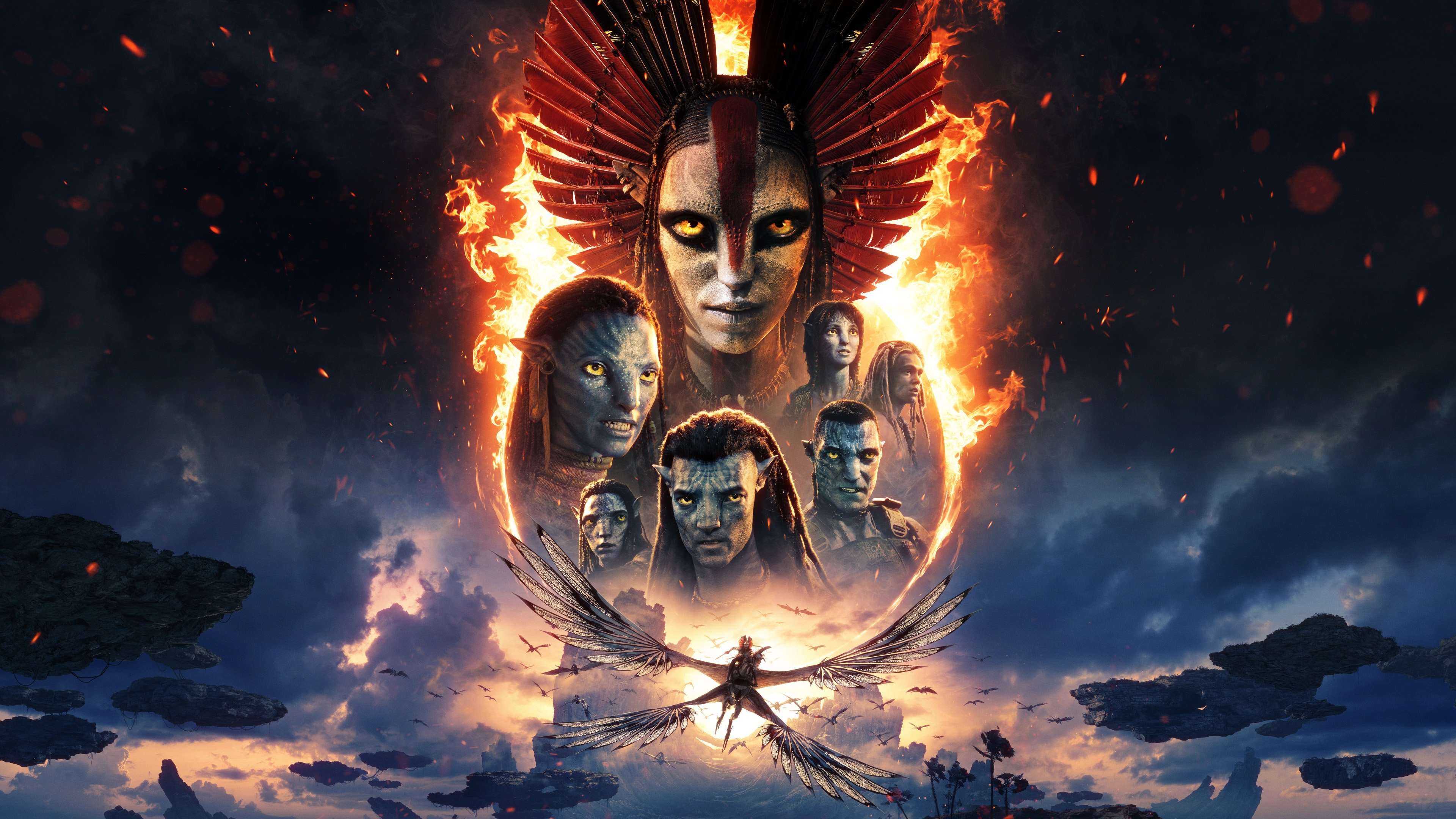
Following the death of their eldest son Neteyam, Jake Sully and Neytiri face new threats from both the returning RDA forces and the Mangkwan, a warlike Na'vi fire clan led by the ruthless Varang. As Spider gains the ability to breathe Pandora's air and old alliances fracture, the Sully family must unite reef and forest clans to protect the peaceful Tulkun whales and fight for the future of Pandora.
What Is the Budget of Avatar: Fire and Ash?
Avatar: Fire and Ash (2025), directed by James Cameron and distributed by 20th Century Studios, was produced on an estimated budget of $350 to $400 million, placing it among the most expensive films ever made. The third installment in Cameron's Avatar franchise continues the story of Jake Sully and the Na'vi on Pandora, introducing new clans and environments while expanding the mythology Cameron has been building since the original 2009 film.
The production's extraordinary cost reflects the franchise's reliance on cutting-edge performance capture technology, fully digital environments rendered by Weta FX in Wellington, New Zealand, and a multi-year production schedule that overlapped significantly with Avatar: The Way of Water. Cameron filmed Fire and Ash's performance capture sessions simultaneously with the second film, beginning in September 2017, with live-action photography in New Zealand resuming in 2020 after COVID-19 delays. The result is a film where virtually every frame required extensive digital creation, pushing per-shot costs far beyond what traditional live-action blockbusters incur.
Key Budget Allocation Categories
The estimated $350 to $400 million budget was distributed across several major production areas:
- Visual Effects and Digital Environment Creation: Weta FX handled the film's massive VFX workload, rendering fully digital Pandoran environments, Na'vi character animation, creature work, and atmospheric effects. Every scene featuring Na'vi characters required full-body performance capture translated into photoreal CG animation. The sheer volume of VFX shots across a 160-plus-minute runtime made this the single largest budget category, likely consuming upward of 40% of total production costs.
- Performance Capture Technology and Stage Infrastructure: Cameron's production utilized a purpose-built performance capture volume in Manhattan Beach, California, equipped with proprietary camera systems that allowed the director to see real-time CG composites of actors within digital environments. The underwater performance capture system, developed for The Way of Water and refined for Fire and Ash, required specialized tanks, breathing apparatus for actors, and custom camera rigs capable of recording facial expressions beneath the surface.
- Above-the-Line Talent: The ensemble cast, including Sam Worthington, Zoe Saldana, Sigourney Weaver, Stephen Lang, Kate Winslet, and Oona Chaplin, represented significant compensation costs. Cameron's own fee as writer, director, and producer, plus producers Jon Landau (who passed away in July 2024 during post-production) and the executive producer team, added to the above-the-line spend.
- New Zealand Production and Location Work: Live-action elements were filmed in New Zealand, which served as both a practical location and the home base for Weta FX. The New Zealand production involved extensive set construction, location scouting for reference environments, and coordination with local crews across multiple shooting blocks spanning several years.
- Music, Sound Design, and Post-Production Pipeline: The post-production process extended through 2024, with sound design, scoring, color grading, and final VFX delivery consuming months of specialized work. The 3D presentation required additional stereoscopic rendering passes, and IMAX-specific formatting added further post-production complexity.
How Does Avatar: Fire and Ash's Budget Compare to Similar Films?
At $350 to $400 million, Fire and Ash sits in the upper tier of film production budgets. Comparing it with franchise entries and contemporaries:
- Avatar (2009): Budget $237,000,000 | Worldwide $2,923,706,026. Cameron's original cost roughly 35% less and became the highest-grossing film of all time. The first film's budget included significant R&D investment in performance capture and stereoscopic 3D technology that subsequent sequels could leverage without repeating.
- Avatar: The Way of Water (2022): Budget $350,000,000 to $460,000,000 | Worldwide $2,320,250,281. The second sequel carried a similarly massive budget and crossed $2.3 billion worldwide. Fire and Ash's simultaneous filming with Way of Water theoretically created efficiencies, though the extended post-production timeline offset some savings.
- Avengers: Endgame (2019): Budget $356,000,000 | Worldwide $2,799,439,100. Marvel's culminating event film cost a comparable amount and earned nearly $2.8 billion. Both productions demonstrate that budgets above $350 million require worldwide grosses well north of $1 billion to reach profitability.
- Star Wars: The Force Awakens (2015): Budget $306,000,000 | Worldwide $2,071,310,218. Disney's Star Wars revival cost less than Fire and Ash while grossing over $2 billion, aided by the franchise's 30-year absence generating intense demand.
- Pirates of the Caribbean: On Stranger Tides (2011): Budget $410,600,000 | Worldwide $1,045,713,802. The most expensive Pirates film earned just over $1 billion, demonstrating the risk inherent in budgets of this magnitude when a franchise's commercial trajectory is declining.
Avatar: Fire and Ash Box Office Performance
Avatar: Fire and Ash opened globally on December 19, 2025, earning $347.1 million worldwide in its opening weekend, including $89.2 million domestically. The film benefited from premium format surcharges (IMAX, Dolby Cinema, 3D) that boosted per-ticket revenue.
Box Office Breakdown
Avatar Fire and Ash

At approximately +297%, Avatar: Fire and Ash returned roughly $3.97 for every $1 invested during its theatrical run.
While the lowest-grossing Avatar film to date, falling short of The Way of Water's $2.32 billion and the original's $2.92 billion, Fire and Ash cleared its break-even threshold of $700 to $800 million nearly twice over. The 73/27 international-to-domestic split followed the franchise's established pattern, with particularly strong performance in China and across European markets. Additional revenue from home video, streaming licensing, and theme park integration will increase returns further.
Avatar: Fire and Ash Production History
James Cameron first outlined plans for Avatar sequels shortly after the original film's record-breaking theatrical run in 2009 and 2010. What began as a two-sequel plan eventually expanded to four planned sequels, with Cameron announcing in 2016 that he would shoot Avatar 2 and 3 simultaneously to manage the franchise's extended timelines and complex production requirements.
Performance capture for Fire and Ash began on September 25, 2017, running concurrently with Avatar: The Way of Water at Cameron's purpose-built stage in Manhattan Beach, California. The simultaneous production approach allowed actors to perform scenes for both films in the same capture sessions, with Cameron and his team sorting footage between the two projects. Performance capture wrapped in November 2018, covering the bulk of the character work for both sequels.
Live-action photography, primarily shot in New Zealand, was interrupted by the COVID-19 pandemic. Production resumed in June 2020 under strict health protocols, with filming wrapping in December 2020. The New Zealand shoot captured practical reference elements, physical sets, and live-action plates that would be composited with Weta FX's digital environments.
Post-production extended through 2024, with Weta FX assembling the film's thousands of VFX shots in Wellington. The process was marked by the death of longtime Cameron collaborator and producer Jon Landau in July 2024, a loss Cameron described as deeply personal. The film's nine release date delays between its original 2015 target and the final December 2025 opening reflected both the scope of the technical work and Cameron's insistence on completing each sequence to his standards before moving on.
Awards and Recognition
Avatar: Fire and Ash received recognition primarily in technical categories, consistent with the franchise's history. At the 98th Academy Awards, the film won Best Visual Effects and received a nomination for Best Costume Design. The BAFTA Awards honored the film with Best Special Visual Effects.
The Saturn Awards recognized Fire and Ash with five wins, including Best Science Fiction Film and Best Direction for Cameron. Multiple critics' groups and visual effects societies cited the film's digital environment work and performance capture achievements as advancing the state of the art, particularly the underwater sequences that built on the technology introduced in The Way of Water.
Critical Reception
Avatar: Fire and Ash received mixed-to-positive reviews, earning a 66% approval rating on Rotten Tomatoes based on 355 reviews and a 61 out of 100 on Metacritic from 59 critics. Audiences responded more favorably, with a CinemaScore of A.
Supporters praised the film's visual ambition and world-building. Pete Hammond called it "a true epic" and "a visual knockout," while several critics noted that Cameron's commitment to expanding Pandora's ecosystem and cultures gave the franchise a richness that few blockbuster series attempt. The introduction of the Ash People and volcanic environments provided new visual territory that reviewers found compelling, even when the narrative structure followed familiar Cameron patterns.
Detractors argued that the film lacked the unprecedented spectacle of the original and the emotional core of The Way of Water's family-under-siege storyline. David Ehrlich acknowledged the technical refinement but noted the film "lack[s] the unprecedented spectacle" of its predecessors. Critics pointed to the elongated runtime and the franchise's reliance on archetypal character dynamics as limitations, suggesting that Cameron's technological innovation was outpacing his storytelling ambitions. The 66% Rotten Tomatoes score represents the lowest critical approval in the franchise, though the A CinemaScore indicates that audiences who chose to see the film in theaters left satisfied.
Frequently Asked Questions
How much did it cost to make Avatar Fire and Ash?
Avatar: Fire and Ash was produced on an estimated budget of $350,000,000 to $400,000,000, making it one of the most expensive films ever made. The cost reflects years of performance capture work at a purpose-built stage in Manhattan Beach, California, extensive visual effects by Weta FX in New Zealand, and a production timeline that overlapped with Avatar: The Way of Water. Marketing and distribution costs added an estimated $150,000,000, bringing the total investment to roughly $500,000,000 to $550,000,000.
How much did Avatar Fire and Ash earn at the box office?
Avatar: Fire and Ash earned $404,300,000 domestically and $1,086,000,000 internationally for a worldwide total of approximately $1,490,000,000. It opened to $89,200,000 domestically and $347,100,000 globally in its opening weekend. While the lowest-grossing Avatar film to date, it is the 16th highest-grossing film of all time.
Was Avatar Fire and Ash profitable?
Yes. With a worldwide gross of approximately $1,490,000,000 against an estimated total investment of $500,000,000 to $550,000,000 (production plus marketing), Avatar: Fire and Ash surpassed its estimated break-even threshold of $700,000,000 to $800,000,000 by a wide margin. The film achieved an ROI of roughly 297% on its production budget alone, and additional revenue from home video, streaming licensing, and theme park integration will increase returns further.
What were the biggest costs in producing Avatar Fire and Ash?
The largest cost category was visual effects and digital environment creation by Weta FX, estimated at over 40% of the total budget. Every scene featuring Na'vi characters required full-body performance capture translated into photoreal CG animation across a 160-plus-minute runtime. Other major costs included the proprietary underwater performance capture system (with specialized tanks, breathing apparatus, and custom camera rigs), above-the-line talent fees for the ensemble cast and James Cameron's compensation as writer-director-producer, New Zealand production and set construction, and an extended post-production pipeline through 2024 including stereoscopic 3D and IMAX formatting.
How does Avatar Fire and Ash's budget compare to similar films?
At $350,000,000 to $400,000,000, Fire and Ash sits alongside the most expensive films ever produced. Avatar: The Way of Water cost a similar $350,000,000 to $460,000,000 and grossed $2,320,000,000. Avengers: Endgame cost $356,000,000 and earned $2,799,000,000. The original Avatar cost $237,000,000 and reached $2,924,000,000. Pirates of the Caribbean: On Stranger Tides, the most expensive Pirates film at $411,000,000, earned only $1,046,000,000, illustrating the risk when franchise momentum declines.
Did Avatar Fire and Ash go over budget?
There are no confirmed public reports that Avatar: Fire and Ash exceeded its planned budget. However, the production timeline stretched considerably: performance capture began in September 2017 (filmed simultaneously with The Way of Water), live-action photography in New Zealand was interrupted by COVID-19 in 2020, and post-production extended through 2024. The film underwent nine release date delays between its original 2015 target and the final December 2025 opening, suggesting the scope and timeline expanded significantly from initial plans.
What was the ROI of Avatar Fire and Ash?
Using the midpoint production budget of $375,000,000, Avatar: Fire and Ash achieved an ROI of approximately 297%, calculated as (Worldwide Gross $1,490,000,000 minus Budget $375,000,000) divided by Budget $375,000,000 times 100. This figure reflects theatrical revenue only. When factoring in the estimated $150,000,000 marketing spend, the return on total investment is lower but the film is still solidly profitable, having cleared its break-even estimate of $700,000,000 to $800,000,000 nearly twice over.
What awards did Avatar Fire and Ash win?
Avatar: Fire and Ash won Best Visual Effects at the 98th Academy Awards and received a nomination for Best Costume Design. The film also won Best Special Visual Effects at the BAFTAs. At the Saturn Awards, it received five wins including Best Science Fiction Film and Best Direction for James Cameron. Multiple critics' groups and visual effects societies recognized the film's digital environment work and advances in underwater performance capture technology.
Who directed Avatar Fire and Ash?
Avatar: Fire and Ash was directed by James Cameron, who also co-wrote the screenplay with Shane Salerno, Josh Friedman, and Rick Jaffa. Cameron served as writer, director, and producer on the film, continuing his role as the creative architect of the Avatar franchise since its inception. The film was produced by Cameron alongside Jon Landau, who passed away in July 2024 during post-production.
Where was Avatar Fire and Ash filmed?
Performance capture was filmed at James Cameron's purpose-built stage in Manhattan Beach, California, beginning in September 2017. The stage featured proprietary camera systems and an underwater performance capture tank for the film's aquatic sequences. Live-action photography took place in New Zealand, which served as both a practical location and the home base for Weta FX. New Zealand filming was interrupted by COVID-19 and resumed in June 2020 under health protocols, wrapping in December 2020. Post-production and VFX work were completed at Weta FX's facilities in Wellington, New Zealand through 2024.
Filmmakers
Avatar Fire and Ash

Official Trailer
Build budgets like this one in Saturation
Start from an industry-standard feature film template, import the schedule and rates you already have, and let the cost report keep itself current as you spend. Real-time collaboration, no spreadsheets.