Autumn Sonata Budget
 Drama1h 33m
Updated
Synopsis
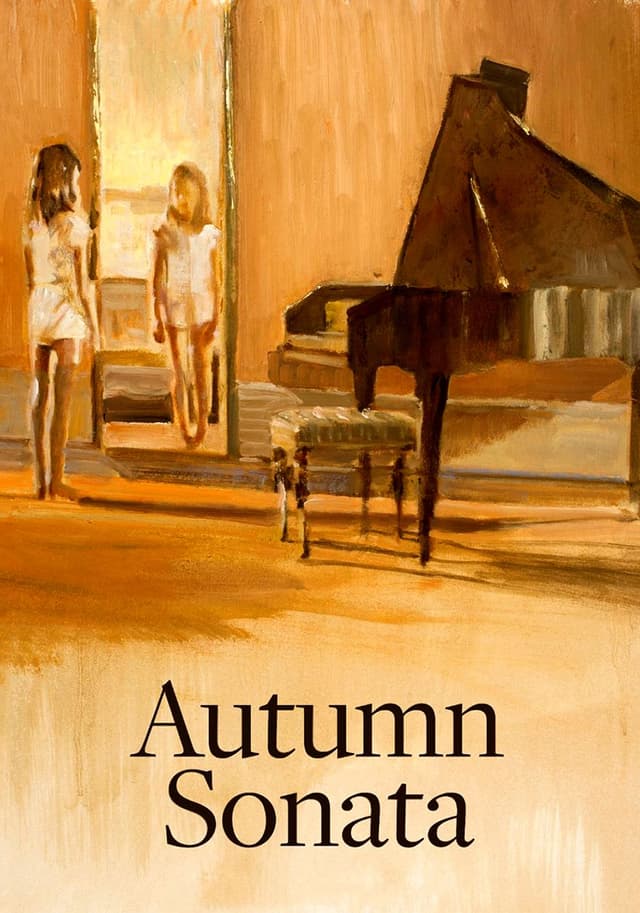
A concert pianist visits her neglected daughter at her remote country home in Norway, where a long-buried reservoir of resentment, longing, and unfinished mothering breaks open across a single confrontational night. Their reckoning is complicated by the presence of the pianist's disabled younger daughter, whose care has fallen to the older sister.
What Is the Budget of Autumn Sonata (1978)?
Autumn Sonata (1978), written and directed by Ingmar Bergman, was produced on a budget that has never been publicly itemized in Swedish or international trade reporting. The film was made in Norway during Ingmar Bergman's tax exile from Sweden, financed by Lew Grade's ITC Entertainment (the British media conglomerate behind The Muppet Show and Raise the Titanic), Personafilm, and Suecia Film. Industry estimates and Bergman scholarship place the production cost in the range of US $1,500,000 to US $3,000,000 in 1978 dollars (equivalent to approximately US $7,400,000 to US $14,800,000 in 2024 purchasing power), in line with comparable European art-house features anchored by a major star.
Ingmar Bergman had left Sweden in 1976 following a tax-fraud accusation (later proved baseless) that led to a public and personal crisis. He worked in West Germany and Norway during this period before returning to Sweden in 1984. Autumn Sonata was one of his most internationally financed projects, with ITC Entertainment providing the bulk of the production capital to secure English-language distribution.
Key Budget Allocation Categories
The estimated US $1,500,000 to US $3,000,000 production budget was distributed across the following areas:
- Above-the-Line Talent: Ingrid Bergman, returning to a major film role after her television work in The Visit (1964) and A Matter of Time (1976), commanded the largest single fee on the production. Director Ingmar Bergman (no relation to Ingrid) took his customary above-the-line writer-director fee. Co-star Liv Ullmann was a frequent Bergman collaborator and at the height of her international visibility.
- Norway Location and Studio Production: The film was shot in Norway during Ingmar Bergman's exile from Sweden. Principal photography took place at Norsk Film studios outside Oslo, with the central drama unfolding almost entirely in a single Norwegian country house interior.
- Cinematography: Sven Nykvist, Bergman's lifelong cinematographer, shot the film. The intimate two-handed performance demands extreme attention to lighting, color, and close-up work that even by 1978 was a Nykvist trademark.
- Costume and Production Design: The film required upper-middle-class period European interiors and wardrobe appropriate to a successful concert pianist and her daughters' country house.
- Music and Concert-Scene Production: Several scenes involve piano performance, with Chopin's Prelude in A minor and other classical pieces incorporated into the dramatic structure. Pianist Käbi Laretei performed the off-camera music.
- International Distribution and Marketing: ITC Entertainment positioned the film for major-market theatrical distribution in the United States, the United Kingdom, and continental Europe through New World Pictures and other regional partners.
How Does Autumn Sonata's Budget Compare to Similar Films?
Comparable late-1970s European prestige art-house dramas offer context:
- Cries and Whispers (1972): Budget undisclosed (estimated similar to Autumn Sonata) | Worldwide US $1,500,000. Bergman's previous mother-daughters-death drama earned five Academy Award nominations including Best Picture and won for Cinematography (Sven Nykvist).
- Scenes from a Marriage (1973): Budget undisclosed (originally a television miniseries) | Worldwide art-house release. Bergman's television-to-theatrical Liv Ullmann collaboration occupied the same critical tier.
- Face to Face (1976): Budget undisclosed | Worldwide art-house release. Bergman's Liv Ullmann television-to-theatrical breakdown drama sat in the same financial bracket and earned Ullmann an Academy Award nomination.
- Anne of the Thousand Days (1969): Budget US $4,000,000 | Worldwide US $11,170,000. The contemporaneous British prestige drama cost more and demonstrates the upper end of late-1970s prestige cinema budgets.
- Two Women (1960): Budget undisclosed | Worldwide art-house release. Vittorio De Sica's Sophia Loren mother-daughter drama, also Oscar-winning, provides the closest comparison from prior decades for a star-anchored European prestige film.
Autumn Sonata Box Office Performance
Autumn Sonata opened in Sweden on October 8, 1978 and was released internationally over the following year. ITC Entertainment held English-language distribution rights, with New World Pictures handling the United States release. The film performed strongly within its art-house segment without ever crossing into mainstream commercial release:
Box Office Breakdown
Autumn Sonata

The film has remained continuously in commercial circulation since 1978, with major re-release windows including its inclusion in The Criterion Collection on DVD (2000) and Blu-ray (2013), the Criterion Channel and HBO Max streaming runs, and theatrical revivals tied to Bergman retrospectives. The cumulative long-tail revenue has substantially exceeded any single-release accounting.
Autumn Sonata's commercial success was tied directly to Ingrid Bergman's Academy Award nomination for Best Actress in 1979, which extended the international theatrical window through award-season visibility. Her death in August 1982 prompted a wave of repertory programming that further extended the film's commercial life.
Autumn Sonata Production History
Ingmar Bergman wrote Autumn Sonata in 1976 during his tax exile from Sweden, while based in Munich and Norway. He had long wanted to work with Ingrid Bergman, the Swedish-American Hollywood legend (three-time Academy Award winner for Gaslight, Anastasia, and Murder on the Orient Express), but the two had never collaborated despite their shared nationality and overlapping careers. The screenplay was tailored specifically to Ingrid Bergman, exploring the role of an internationally celebrated concert pianist whose career has come at the expense of her two daughters' emotional development.
Principal photography took place in summer 1977 in Norway, primarily at Norsk Film studios outside Oslo. Liv Ullmann played the daughter Eva alongside Lena Nyman as her disabled sister Helena. The compressed shooting schedule (Bergman was famously efficient) ran for approximately eight weeks. Sven Nykvist's cinematography emphasized extreme close-ups and intimate lighting that became a hallmark of late-period Bergman.
Ingrid Bergman was reportedly initially uncomfortable with Ingmar Bergman's directorial methods, which prioritized extensive rehearsal and extremely demanding emotional preparation. Her on-set conflicts with the director have been the subject of substantial subsequent biographical writing, and Ingmar Bergman himself addressed the difficult collaboration in his 1987 autobiography The Magic Lantern. Despite the tension, the performance is widely considered the finest screen acting of Ingrid Bergman's career.
The film premiered at the New York Film Festival in October 1978 ahead of its Swedish theatrical opening. It received four Academy Award nominations including Best Actress and Best Original Screenplay. Ingrid Bergman died in August 1982 at age 67, and Autumn Sonata stands as her final theatrical screen performance.
Awards and Recognition
Autumn Sonata received two Academy Award nominations at the 51st Academy Awards in 1979: Best Actress for Ingrid Bergman and Best Original Screenplay for Ingmar Bergman. Ingrid Bergman lost the Best Actress award to Jane Fonda for Coming Home; the Best Original Screenplay award went to Robert C. Jones, Nancy Dowd, and Waldo Salt also for Coming Home.
At the Golden Globe Awards, Ingrid Bergman won the Best Actress in a Motion Picture - Drama award, with the film also winning Best Foreign Language Film. At the BAFTA Awards, Ingrid Bergman won Best Actress and the film was nominated for Best Direction. The National Board of Review named Ingrid Bergman Best Actress for her performance, and the New York Film Critics Circle gave Bergman its Best Actress prize and named Autumn Sonata one of its top films of 1978. Additional recognition included the Guldbagge Award (Sweden's national film prize) for Best Film of 1978.
Critical Reception
Autumn Sonata received overwhelmingly positive reviews. The film holds a 96% approval rating on Rotten Tomatoes based on 51 critic reviews, with a critical consensus describing it as "a wrenching, beautifully acted family drama." On Metacritic, the film scores 87 out of 100 from collected reviews, indicating universal acclaim.
Vincent Canby of The New York Times described the film as "the most ravaging, the most achingly intimate of Ingmar Bergman's recent works." Roger Ebert wrote that the film "depicts a confrontation between mother and daughter with such painful clarity that it sets a standard against which other family dramas can be measured." Pauline Kael at The New Yorker, generally skeptical of Bergman's late period, called the film "the most direct, the most fierce" of his recent work.
Contemporary critical analysis has positioned the film as one of the defining examples of late-period Ingmar Bergman, alongside Scenes from a Marriage (1973) and Fanny and Alexander (1982). Ingrid Bergman's lead performance is regularly cited in best-screen-acting retrospectives, including the American Film Institute's 100 Greatest Performances ranking. The film's critical reputation has remained essentially unchallenged since its release.
Frequently Asked Questions
How much did it cost to make Autumn Sonata (1978)?
The production budget was never publicly itemized. Industry estimates and Bergman scholarship place the cost in the range of US $1,500,000 to US $3,000,000 in 1978 dollars. The film was financed by Lew Grade's ITC Entertainment, Personafilm, and Suecia Film during Ingmar Bergman's tax exile from Sweden.
Who directed Autumn Sonata?
Ingmar Bergman wrote and directed the film. It was made during his tax exile from Sweden, when he was based in Munich and Norway after the 1976 tax-fraud accusation that prompted his temporary departure from Sweden.
Are Ingrid Bergman and Ingmar Bergman related?
No. Despite sharing a surname and Swedish nationality, Ingrid Bergman (1915 to 1982) and Ingmar Bergman (1918 to 2007) were not related. Autumn Sonata was their only collaboration. They had long wanted to work together, but the project did not come together until 1977.
Was Autumn Sonata Ingrid Bergman's last film?
It was her final theatrical screen performance. She subsequently appeared only in the 1982 television miniseries A Woman Called Golda, in which she played Israeli prime minister Golda Meir, before her death from cancer in August 1982. The Golda Meir role earned her a posthumous Emmy Award and Golden Globe.
Where was Autumn Sonata filmed?
Principal photography took place in summer 1977 in Norway, primarily at Norsk Film studios outside Oslo. The film was made during Ingmar Bergman's exile from Sweden following a 1976 tax-fraud accusation.
Did Autumn Sonata receive Academy Award nominations?
Yes. The film received two Academy Award nominations at the 51st Academy Awards in 1979: Best Actress for Ingrid Bergman and Best Original Screenplay for Ingmar Bergman. Both nominations lost to Coming Home (Jane Fonda for Best Actress; Robert C. Jones, Nancy Dowd, and Waldo Salt for Best Original Screenplay).
Who is the cinematographer of Autumn Sonata?
Sven Nykvist, Ingmar Bergman's lifelong cinematographer, shot the film. Nykvist had already won an Academy Award for his work on Cries and Whispers (1972) and would go on to win a second for Fanny and Alexander (1982). His Autumn Sonata work is regularly cited as a master class in close-up cinematography.
What is Autumn Sonata about?
A celebrated concert pianist visits her neglected daughter at her remote Norway country home. Over a single confrontational night, the two women excavate years of resentment, longing, and unfinished mothering. The presence of the pianist's disabled younger daughter, whose care has fallen to the older sister, intensifies the reckoning.
What did critics think of Autumn Sonata?
The film received overwhelmingly positive reviews, with a 96% approval rating on Rotten Tomatoes and a Metacritic score of 87 out of 100. Critics praised Ingrid Bergman's lead performance as the finest of her career, Sven Nykvist's cinematography, and Ingmar Bergman's screenplay.
Where can I watch Autumn Sonata?
The film is available in The Criterion Collection on DVD and Blu-ray and streams on the Criterion Channel and other licensed platforms. Theatrical revival screenings appear regularly at repertory venues during Ingmar Bergman and Ingrid Bergman retrospectives.
Filmmakers
Autumn Sonata

Official Trailer
Build budgets like this one in Saturation
Start from an industry-standard feature film template, import the schedule and rates you already have, and let the cost report keep itself current as you spend. Real-time collaboration, no spreadsheets.