Atlantis: The Lost Empire Budget
 Adventure
Updated
Synopsis
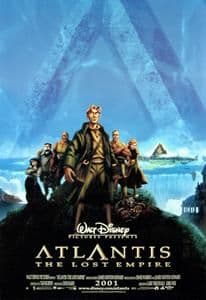
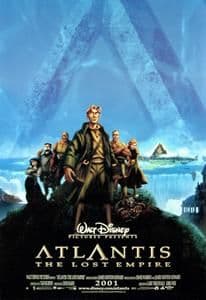
In 1914, a young, idealistic linguist and cartographer named Milo Thatch joins an expedition financed by his late grandfather's benefactor to find the lost civilization of Atlantis. Their submarine, the Ulysses, descends into uncharted ocean trenches where they discover a still-thriving Atlantean people and uncover a conspiracy that threatens the city's survival.
What Is the Budget of Atlantis: The Lost Empire (2001)?
Atlantis: The Lost Empire (2001), directed by Gary Trousdale and Kirk Wise and produced by Walt Disney Feature Animation, was made on a reported budget of $120,000,000, with some industry sources citing figures as high as $90,000,000 to $100,000,000 for production proper plus an additional $20,000,000 in promotion and marketing carrying costs. The production marked Disney's first attempt to break from the musical fairy-tale formula that had defined the studio's animation renaissance throughout the 1990s, repositioning the animation department for a more action-adventure, science-fiction sensibility aimed at older boys and male teens.
Producer Don Hahn, who had shepherded Beauty and the Beast and The Lion King, oversaw the project as Disney's bet on a non-musical, PG-rated animated tentpole. The budget reflected the considerable ambition of marrying traditional 2D character animation with extensive CGI environments, vehicles, and effects, plus widescreen Cinemascope-style framing that no Disney animated feature had attempted since The Black Cauldron (1985).
Key Budget Allocation Categories
Atlantis: The Lost Empire's $120,000,000 budget was distributed across these major production areas:
- Production Length: The film entered active development in 1996 and spent approximately four and a half years in production, with story development running through 1998, voice recording and animation beginning in 1999, and a final delivery date of summer 2001. The extended timeline meant carrying a substantial team across multiple departments for an unusually long stretch.
- Character Animation Team: Lead character animators including John Pomeroy (Milo), Michael Surrey (Audrey), Russ Edmonds (Vinny), and Yoshimichi Tamura (Cookie) commanded substantial salaries reflecting Disney's premium tier of traditional animation talent. The team employed comic book artist Mike Mignola (Hellboy) as a production designer, a creative choice that shaped the film's distinctive blocky, angular visual style.
- CGI Integration: Disney's CGI team built complex vehicles including the submarine Ulysses, the Aqua-Evac vessels, the digger tunnel-borer, and the climactic Atlantean Leviathan sea-creature guardian. The integration of 2D characters with 3D environments and vehicles required custom software pipelines and added significant cost.
- Voice Cast: Michael J. Fox headlined the cast as Milo Thatch, with James Garner as Commander Rourke, Cree Summer as Kida, Leonard Nimoy as the Atlantean King, John Mahoney, Don Novello, Florence Stanley, Phil Morris, and Claudia Christian in supporting roles. The cast also recorded extended in-character dialogue for trailers and home video extras.
- Constructed Atlantean Language: Disney hired linguist Marc Okrand, creator of Klingon for Star Trek, to design a fully functioning Atlantean language with its own grammar, syntax, and writing system. The language was developed across all visible signage, dialogue subtitles, and tie-in materials.
- James Newton Howard Score: Composer James Newton Howard's orchestral score required full studio recording sessions at Sony Pictures Studios with a large orchestra, plus original songs that were ultimately cut from the final film when Disney pivoted away from the musical model.
- Marketing and Cross-Media Tie-Ins: The film launched alongside a Disney Adventures comic prequel, McDonald's Happy Meal tie-ins, an extensive video game line, and a planned sequel that was eventually downgraded to a direct-to-video release.
How Does Atlantis: The Lost Empire's Budget Compare to Similar Films?
At $120,000,000, Atlantis: The Lost Empire sits in the upper-mid tier of late-1990s and early-2000s Disney animated features. Comparable productions:
- Tarzan (1999): Budget $130,000,000 | Worldwide $448,191,819. Disney's previous animated feature spent slightly more and grossed nearly 2.5 times what Atlantis earned, showing how the musical-formula stickier audience drove much stronger commercial results.
- The Emperor's New Groove (2000): Budget $100,000,000 | Worldwide $169,328,540. Disney's contemporaneous attempt at a non-musical comedic adventure cost less and earned slightly less worldwide.
- Treasure Planet (2002): Budget $140,000,000 | Worldwide $109,578,115. Disney's follow-up science-fiction animated tentpole, also a Trousdale-Wise style project (directed by Ron Clements and John Musker), cost more and earned less, accelerating the studio's pivot away from traditional 2D animation.
- Brother Bear (2003): Budget $128,000,000 | Worldwide $250,397,798. The Disney animated feature that followed Atlantis and Treasure Planet returned to a more traditional emotional storytelling mode.
- Shrek (2001): Budget $60,000,000 | Worldwide $487,853,320. DreamWorks Animation's CGI feature, released six weeks before Atlantis, cost half as much and grossed more than 2.5 times, illustrating how the CGI revolution was already reshaping the animated feature landscape.
Atlantis: The Lost Empire Box Office Performance
Atlantis: The Lost Empire opened on June 8, 2001 (in a limited four-theater release for one week before going wide) and expanded to 3,011 theaters on June 15, 2001. The wide-release opening weekend earned $20,332,000, finishing second behind Shrek's fifth weekend. The film's worldwide gross totaled $186,053,725.
Against a reported production budget of $120,000,000, the film needed approximately $260,000,000 worldwide to reach profitability when accounting for marketing and distribution costs. The financial breakdown:
Box Office Breakdown
Atlantis: The Lost Empire

Atlantis: The Lost Empire returned approximately $1.10 in worldwide theatrical revenue for every $1 invested when measured against total estimated production and marketing spend, making it a marginal theatrical performer that fell well short of Disney's expectations. The domestic share of $84,052,884 against an international share of $102,000,841 reflected the typical Disney animated feature split, but the overall total was less than half what Tarzan had earned two years earlier.
The disappointing performance forced significant changes at Disney Feature Animation. A planned television spin-off, Team Atlantis, was canceled mid-production, with completed episodes repurposed as the direct-to-video sequel Atlantis: Milo's Return (2003). The film's home video and DVD performance was substantially stronger, helping the project recoup its remaining costs through ancillary windows.
Atlantis: The Lost Empire Production History
Development on Atlantis: The Lost Empire began in 1996, when directors Gary Trousdale and Kirk Wise pitched a Jules Verne-inspired science-fiction adventure to Disney Feature Animation president Peter Schneider following the completion of Hunchback of Notre Dame (1996). Producer Don Hahn signed on to oversee the project, and screenwriter Tab Murphy was brought in to develop the story alongside David Reynolds. The decision was made early to eschew the musical numbers that had defined Disney's renaissance era, instead pursuing a tightly paced adventure structure modeled on Jules Verne's Twenty Thousand Leagues Under the Sea and Indiana Jones-style serials.
Hellboy creator Mike Mignola was recruited as a production designer in late 1996, an unusual choice that shaped the film's distinctive blocky, angular character design and high-contrast color palette. Linguist Marc Okrand, who had created the Klingon language for Star Trek, was hired to develop a fully functional Atlantean language with original grammar, syntax, and a unique writing system that appears throughout the film's signage and dialogue.
Animation production ran from 1999 through early 2001 across Disney's Burbank and Orlando studios, with the Florida facility handling significant sequences. The film was the last major project completed at Disney-MGM Studios Florida before the location's eventual closure. Voice recording with Michael J. Fox, James Garner, Leonard Nimoy, and the rest of the cast was completed throughout 1999 and 2000.
CGI integration was handled by an in-house team, with vehicles including the submarine Ulysses, the digger, and the Aqua-Evac vessels designed in 3D and composited with 2D character animation. The climactic Leviathan sea-creature guardian sequence required some of the most complex 2D/3D blending ever attempted at Disney Animation.
The film premiered at the El Capitan Theatre in Los Angeles on June 3, 2001, with a limited release the following week and wide expansion on June 15, 2001.
Awards and Recognition
Atlantis: The Lost Empire received modest awards recognition. The film was nominated for the Saturn Award for Best Animated Film at the 28th Saturn Awards in 2002, losing to Shrek. It also received nominations for Best Family Live Action or Animated Motion Picture at the 2002 Young Artist Awards and several Annie Award nominations for production design and individual animation categories.
The film received an Annie Award nomination for Production Design in an Animated Feature Production (Mike Mignola, David Goetz, Matt Codd), and James Newton Howard's score was nominated at the Sierra Award for Outstanding Composer. The film's commercial underperformance meant it did not feature in Best Animated Feature considerations at major industry ceremonies, including the inaugural Academy Award for Best Animated Feature won by Shrek.
Critical Reception
Atlantis: The Lost Empire received mixed reviews. The film holds a 49% approval rating on Rotten Tomatoes based on 152 critic reviews, with the critical consensus that the film boasted impressive visuals but a shaky story. On Metacritic, the film scored 52 out of 100, indicating mixed or average reviews. Audiences surveyed by CinemaScore gave the film an A-, indicating strong enthusiasm among those who saw it on opening weekend.
Roger Ebert gave the film three stars out of four, praising its "breathless adventure" and willingness to depart from Disney formula, writing that it was "another step in the gradual transformation of the Disney animated film from the timid trots of the past few years into something more adventurous." The New York Times' A.O. Scott was less enthusiastic, calling the film visually impressive but narratively rushed. Variety's Todd McCarthy noted the film's debt to Jules Verne and Hayao Miyazaki's Castle in the Sky (1986).
The film's reputation has improved considerably in retrospect, with critical reassessment positioning it as a cult favorite among Disney animated films. Its distinctive visual design, the worldbuilding of the Atlantean language, and Mignola's production design have been the subject of extensive academic and fan analysis, and the film's commercial failure is now widely cited as a turning point that accelerated Disney's transition away from traditional 2D animation toward CGI features.
Frequently Asked Questions
How much did Atlantis: The Lost Empire (2001) cost to make?
The production budget was $120,000,000, with some industry sources citing a lower production figure of $90,000,000 to $100,000,000 plus marketing carrying costs. The film was produced by Walt Disney Feature Animation across approximately four and a half years of development and production.
How much did Atlantis: The Lost Empire earn at the box office?
The film grossed $84,052,884 domestically and $102,000,841 internationally, for a worldwide total of $186,053,725. It opened to $20,332,000 in wide release on June 15, 2001, finishing second behind the fifth weekend of Shrek.
Was Atlantis: The Lost Empire a box office success?
No. While the film grossed $186,053,725 worldwide against a $120,000,000 budget, the disappointing performance failed to meet Disney's expectations and forced the cancellation of a planned television spin-off, Team Atlantis, with completed episodes repurposed as the direct-to-video sequel Atlantis: Milo's Return (2003).
Who directed Atlantis: The Lost Empire?
Gary Trousdale and Kirk Wise co-directed the film, the same team behind Disney's Beauty and the Beast (1991) and The Hunchback of Notre Dame (1996). Producer Don Hahn, who also produced both of those earlier films, oversaw the project.
How does Atlantis compare to other Disney animated films?
Atlantis: The Lost Empire spent $120,000,000 and earned $186,053,725 worldwide, an underperformance compared with the studio's previous animated feature Tarzan (1999), which cost $130,000,000 and grossed $448,191,819. The disappointing returns contributed to Disney's eventual pivot away from traditional 2D animation toward CGI.
Who voices the characters in Atlantis: The Lost Empire?
Michael J. Fox voices the lead Milo Thatch, with James Garner as Commander Rourke, Cree Summer as Princess Kida, Leonard Nimoy as the Atlantean King, John Mahoney as Mr. Whitmore, Don Novello as Vinny, Florence Stanley as Mrs. Packard, Phil Morris as Dr. Sweet, and Claudia Christian as Helga.
Is the Atlantean language in the film real?
Yes, it is a fully constructed language designed by linguist Marc Okrand, who also created the Klingon language for the Star Trek franchise. Okrand built grammar, syntax, vocabulary, and a unique writing system that appears throughout the film in signage, dialogue subtitles, and tie-in materials.
Why did the planned Atlantis sequel become a direct-to-video release?
Disney had developed a television spin-off series titled Team Atlantis that was in production when the theatrical film underperformed. The series was canceled mid-production, and three completed episodes were re-edited into the direct-to-video sequel Atlantis: Milo's Return (2003).
What did critics think of Atlantis: The Lost Empire?
The film received mixed reviews, with a 49% Rotten Tomatoes approval rating from 152 critics and a 52 out of 100 Metacritic score. Audiences gave it an A- CinemaScore. Roger Ebert gave the film three stars and praised its willingness to depart from the Disney formula.
Did Atlantis: The Lost Empire win any awards?
The film received a Saturn Award nomination for Best Animated Film at the 28th Saturn Awards in 2002, losing to Shrek. It also received Annie Award nominations for Production Design and individual animation categories, as well as a Young Artist Award nomination for Best Family Live Action or Animated Motion Picture.
Filmmakers
Atlantis: The Lost Empire

Build budgets like this one in Saturation
Start from an industry-standard feature film template, import the schedule and rates you already have, and let the cost report keep itself current as you spend. Real-time collaboration, no spreadsheets.