A Moment of Innocence Budget
Updated
Synopsis
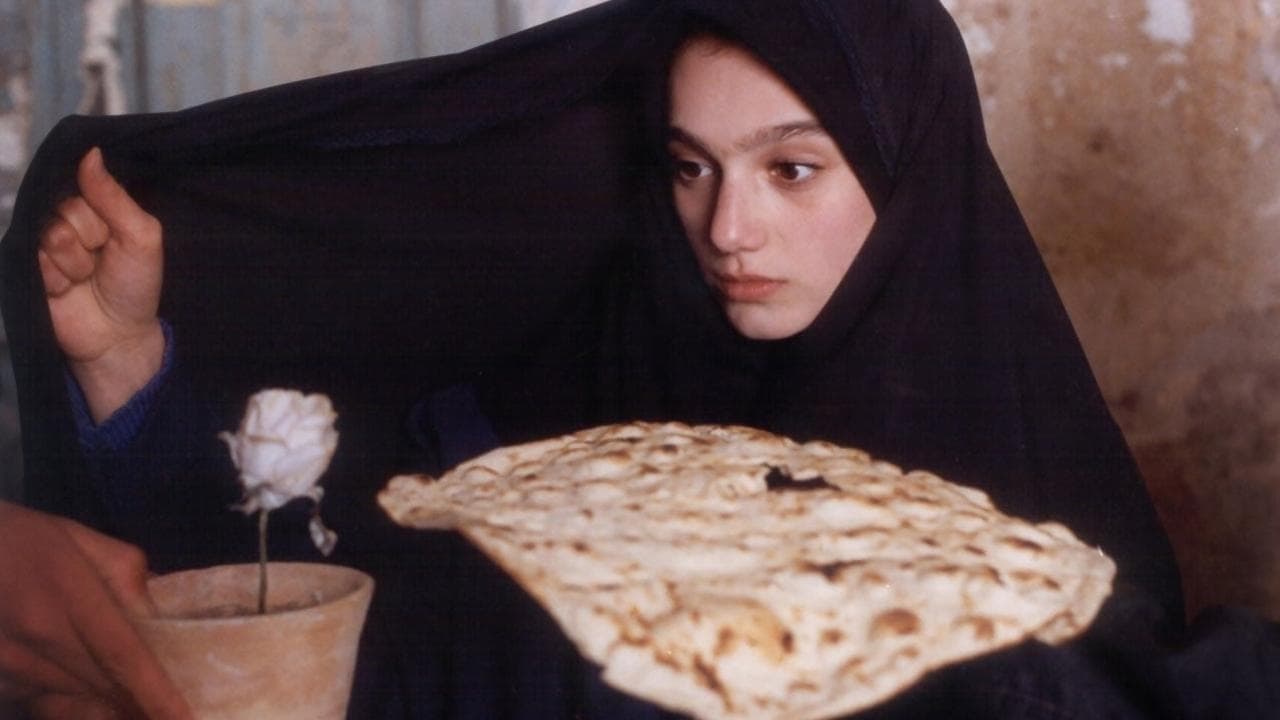
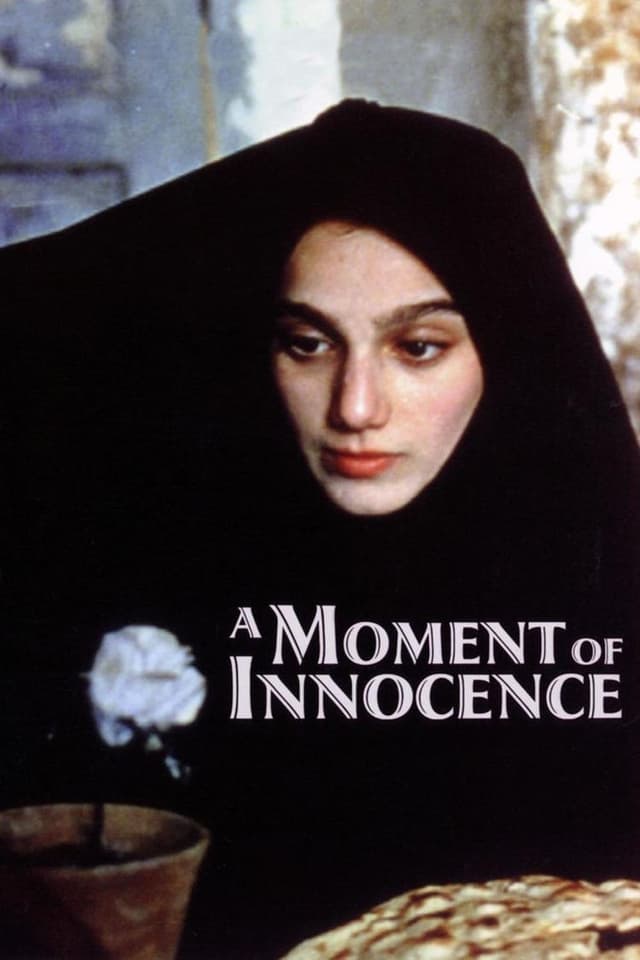
Two decades after a teenage Mohsen Makhmalbaf stabbed a Tehran police officer at a 1974 protest, the filmmaker tracks down the real officer and the two men collaborate on a film about the incident, each directing a younger actor to play himself. The result is a semi-autobiographical metafiction in which memory, reenactment, and reconciliation collide across a single Tehran afternoon, culminating in one of the most celebrated freeze-frame endings in Iranian cinema.
What Is the Budget of A Moment of Innocence (1997)?
A Moment of Innocence (Nun va Goldoon), Mohsen Makhmalbaf's 1996 Iranian semi-autobiographical feature, has no publicly disclosed production budget. The film was produced by Abolfazl Alagheband for Makhmalbaf Film House with French co-production support from MK2 Productions, an arrangement that placed the film inside the post-revolutionary Iranian arthouse cinema model rather than any commercial financing structure. Iranian films of this period operated under a state-managed system in which budgets were rarely itemized publicly and never reported through Western industry channels such as Box Office Mojo or The Numbers.
Working from the production profile, a four-actor cast built around non-professional and semi-professional performers (including the real Tehran police officer Makhmalbaf had stabbed in 1974), a compact Tehran shoot using natural light and minimal equipment, a 78-minute runtime, and the involvement of MK2 as an international co-producer, the working budget for A Moment of Innocence almost certainly fell in the $150,000 to $400,000 range typical of Iranian New Wave features of the mid-1990s. Productions of this kind were financed through a combination of Makhmalbaf Film House's own resources, the Farabi Cinema Foundation's production support, and modest European co-production cash from MK2, layered with substantial in-kind contributions from cast and crew working at below-market rates.
Key Budget Allocation Categories
While the film's exact financial breakdown has not been released, its production approach points to a handful of dominant cost lines characteristic of Iranian New Wave cinema:
- Non-Professional and Semi-Professional Cast: The four central performers (Mirhadi Tayebi as The Policeman, Mohsen Makhmalbaf as The Director, Ammar Tafti and Ali Bakhsi as their younger selves) were cast for autobiographical authenticity rather than market value. Tayebi was the actual policeman Makhmalbaf had stabbed two decades earlier, while the two younger actors were non-professionals recruited specifically for the project, keeping above-the-line talent costs minimal.
- Tehran Location Shoot: Principal photography took place on the streets and in the neighborhoods of Tehran where the original 1974 incident had occurred. Shooting in real locations rather than constructed sets eliminated most production-design spending, though it added permit, security, and crowd-control overhead specific to working under Iranian Ministry of Culture and Islamic Guidance oversight.
- Lean Iranian Crew: Mid-1990s Iranian New Wave productions typically operated with crews of 15 to 25 people, with department heads doubling as operators and assistants handling multiple roles. Below-the-line costs were almost certainly the largest single line item, even as headcount remained small relative to a Western feature of comparable runtime.
- 35mm Film Stock and Lab Processing: Like nearly all Iranian features of the era, A Moment of Innocence was shot on 35mm color stock, with film and lab processing representing a significant fixed cost. Mahmoud Kalari's cinematography favored natural light and observational framing, which kept lighting-package rental costs low but did not reduce the underlying stock and processing bill.
- Editing and Post-Production: Makhmalbaf edited the film himself, eliminating an editor's fee but absorbing the post-production schedule into his own time. Composer Madjid Entezami's score and sound design by Nezamoddin Kiaie, who would win the Crystal Simorgh for Best Sound Recording at Fajr, completed in-country in Tehran at lower rates than equivalent European post houses.
- International Co-Production and Subtitling: MK2's involvement covered the French-language subtitling, festival print costs, and international sales-agent expenses required to deliver the film to Locarno and the subsequent European festival circuit. This share of the budget was small in absolute terms but disproportionately important for the film's global circulation.
- Festival Delivery and Print Logistics: Striking festival prints, paying for the Locarno world premiere submission, and shipping reels across international borders for the 1996 and 1997 festival run represented the final tranche of spending before the film began earning back via foreign-territory acquisitions.
How Does A Moment of Innocence's Budget Compare to Similar Films?
Without a confirmed figure, comparisons are anchored to the likely $150,000 to $400,000 working range. A Moment of Innocence sits in the same financial tier as other Iranian New Wave features and international auteur first-and-second-feature work from the mid-1990s:
- Taste of Cherry (1997): Budget not publicly disclosed (Iranian indie tier) | Worldwide $250,000 reported US gross. Abbas Kiarostami's Palme d'Or winner is the closest cinematic and financial peer, a Tehran-shot existential drama with a non-professional lead and a tiny crew, made within the same post-revolutionary Iranian arthouse system in the same year. Both films share the New Wave's minimalist production model.
- Close-Up (1990): Budget not publicly disclosed | Worldwide $100,000+ reported. Kiarostami's metafictional docu-drama is a direct stylistic precursor: a real-world case re-enacted by the actual participants playing themselves, financed through Iranian state and arthouse channels. The structural device of A Moment of Innocence (the real policeman playing himself) explicitly extends the Close-Up template.
- Through the Olive Trees (1994): Budget not publicly disclosed | Worldwide $90,000 US gross. Kiarostami's Koker trilogy finale operates in the same Iranian-French co-production landscape (CiBy 2000 in that case, MK2 here) and at the same approximate cost tier, with a similar interplay between non-professional cast and metafictional storytelling.
- The White Balloon (1995): Budget not publicly disclosed | Worldwide $930,000 US gross. Jafar Panahi's Cannes Camera d'Or winner, scripted by Kiarostami, is the highest-grossing Iranian New Wave US release of the period and shows the upper limit of what a critically embraced Iranian indie could earn in Western theatrical exhibition.
- The Apple (1998): Budget not publicly disclosed | Worldwide $147,000 US gross. Samira Makhmalbaf's debut, made by Mohsen Makhmalbaf's teenage daughter under his Makhmalbaf Film House banner, is the most direct financial and institutional comparison and confirms the production-cost tier the family's 1990s output occupied.
- Gabbeh (1996): Budget not publicly disclosed | Worldwide $356,000 US gross. Makhmalbaf's own preceding feature, made in the same year and through the same MK2 co-production relationship, is the most direct internal benchmark for A Moment of Innocence's likely cost.
A Moment of Innocence Box Office Performance
A Moment of Innocence premiered at the Locarno Film Festival on August 13, 1996, then opened theatrically in France on April 9, 1997 through MK2 Diffusion and reached the United States on a limited art-house release beginning in 1999 through New Yorker Films. The film earned a reported $37,598 in the United States and Canada across its limited art-house run, a figure consistent with the typical performance of a subtitled Iranian feature in 1990s American specialty exhibition. International figures from France, Switzerland, Italy, and other European territories where the film opened theatrically have not been publicly aggregated and are not tracked by Box Office Mojo or The Numbers.
Box Office Breakdown
A Moment of Innocence

Without a confirmed budget, the standard "$X for every $1 invested" calculation cannot be performed. The film's commercial profile is closer to a subsidized arthouse cultural product than a commercial release, and its return on investment is best understood as a function of festival programming success (with the Locarno Special Jury Award the most valuable single asset), international sales-agent acquisitions, and the long-tail cultural value of being widely cited as one of the defining works of the Iranian New Wave.
The US domestic gross of $37,598 was distributed across a handful of art-house screens in New York, Los Angeles, San Francisco, and university cinema programs over 1999 and 2000. The trajectory tracks the typical 1990s Iranian arthouse pattern in which the bulk of audience came not from theatrical ticket sales but from subsequent home-video releases, cinematheque programming, and academic curriculum adoption, none of which generate trackable box office numbers.
A Moment of Innocence Production History
The origin of A Moment of Innocence reaches back to 1974, when the seventeen-year-old Mohsen Makhmalbaf, then a politically radical opponent of the Shah's regime, attacked a Tehran police officer with a knife during a protest. Makhmalbaf was shot, arrested, and imprisoned, and remained in jail until the 1979 Iranian Revolution. The incident defined his teenage years and shadowed his subsequent career as one of the most prominent post-revolutionary Iranian filmmakers. The desire to revisit, examine, and ultimately make peace with the act drove the project from its earliest stages.
In the mid-1990s Makhmalbaf placed a casting call seeking the real police officer he had stabbed two decades earlier. Mirhadi Tayebi, the actual officer, responded. His participation transformed what might have been a conventional dramatization into a genuinely metafictional work in which the real attacker and the real victim play themselves twenty years later, each casting and directing a younger actor to portray his own younger self. The film's entire dramatic engine sits on this collision of memory, recreation, and reconciliation between the two men.
Principal photography took place in Tehran in 1995 and early 1996, with Mahmoud Kalari behind the camera. Kalari's observational, naturally-lit cinematography (he would go on to shoot Asghar Farhadi's A Separation fifteen years later) gave the film its distinctive documentary texture. The shoot deployed real Tehran streets and locations near the site of the original 1974 incident, with the two younger actors (Ammar Tafti as the young director, Ali Bakhsi as the young policeman) rehearsing scenes under the direction of the two older men reliving them.
Production unfolded under the typical constraints of Iranian filmmaking in the period after the 1979 revolution. The Ministry of Culture and Islamic Guidance reviewed scripts and granted production permits, and the finished film was subject to exhibition licensing. A Moment of Innocence was ultimately banned from theatrical release in Iran, a decision that aligned with the broader pattern of state suppression of Makhmalbaf's work and that of his daughter Samira and the Kiarostami school more generally. Makhmalbaf left Iran in 2005 and now lives in exile, and his films from this period circulate in their home country primarily through informal copies.
Post-production was completed in Tehran with Makhmalbaf himself editing and Nezamoddin Kiaie supervising sound. MK2 Productions handled French subtitling and international print delivery, and the film premiered in competition at Locarno in August 1996, where it won the Special Jury Award and the Junior Jury Award. The film entered the international festival circuit immediately afterward and reached Toronto, New York Film Festival, and a long run of European festival programs over the following two years.
Awards and Recognition
A Moment of Innocence won the Special Jury Prize (Bronze Leopard) at the 1996 Locarno International Film Festival, the second-highest honor in the festival's main competition. The same Locarno jury also awarded the film the Junior Jury Award (Youth Golden Award), recognition by the festival's youth-jury programming that frequently signals long-term canonical importance for an arthouse title. Locarno is one of Europe's three most influential festivals for auteur cinema (alongside Cannes and Venice), and the dual-award outcome was the most significant single event in the film's international career.
Sound designer Nezamoddin Kiaie won the Crystal Simorgh for Best Sound Recording at the 1996 Fajr Film Festival, Iran's national film awards, despite the film's subsequent ban from theatrical release. The Crystal Simorgh win was the film's sole domestic prize and a notable moment of state-aligned recognition for a work that would soon be suppressed from public exhibition inside Iran.
Beyond the Locarno and Fajr wins, A Moment of Innocence accumulated programming slots and audience-award recognition at festivals including the Toronto International Film Festival, the New York Film Festival, the Munich Film Festival, the Singapore International Film Festival, and the Estoril Film Festival in Portugal. The film does not appear in the Academy Awards or BAFTA databases and was not submitted as Iran's official Best International Feature contender. Its canonical status has been built through subsequent retrospective recognition (notably its inclusion in the 2012 Sight & Sound Greatest Films poll at position 235) rather than through major industry awards.
Critical Reception
A Moment of Innocence holds an 89 percent positive score on Rotten Tomatoes based on 27 critic reviews and a 70 out of 100 on Metacritic based on nine critic reviews, both placing it in the upper tier of foreign-language releases for the 1999 to 2000 US art-house window. CinemaScore does not survey audiences for art-house Iranian releases, so no audience grade has been recorded. The film carries an 8.0 average on IMDb based on roughly nine thousand user ratings, an unusually high score for a low-circulation Iranian arthouse title.
Jonathan Rosenbaum, writing in the Chicago Reader, placed A Moment of Innocence among the most important Iranian films of the decade and praised its capacity to fold autobiography, documentary, and dramatic reenactment into a single coherent gesture. Godfrey Cheshire, the leading Western critic of Iranian cinema in this period, championed the film in repeated essays as a defining work of the Makhmalbaf school. Variety's 1996 Locarno review called it "a dizzying hybrid of autobiography, documentary, and mythology" and singled out the closing freeze frame as one of the most powerful images in 1990s Iranian cinema.
In the 2012 Sight & Sound Greatest Films of All Time poll, A Moment of Innocence ranked 235th in the critics' list, an unusually strong showing for an Iranian title outside the Kiarostami canon and a signal of the film's durable critical reputation. Iranian cinema specialists including Hamid Naficy and Hamid Dabashi have written extensively on the film as a key text in the post-revolutionary canon, and it appears regularly on best-of-the-1990s lists alongside Kiarostami's Taste of Cherry and Through the Olive Trees. The film remains in active cinematheque and university curriculum circulation more than two decades after its release.
Frequently Asked Questions
How much did it cost to make A Moment of Innocence (1997)?
The production budget for A Moment of Innocence has not been publicly disclosed. Based on the film's profile as a 1996 Iranian New Wave feature produced by Makhmalbaf Film House with French co-production support from MK2 Productions, a four-actor cast built largely around non-professionals, a Tehran location shoot, and a 78-minute runtime, the budget likely fell in the $150,000 to $400,000 range typical of Iranian arthouse cinema of the mid-1990s.
How much did A Moment of Innocence (1997) earn at the box office?
A Moment of Innocence earned a reported $37,598 across its United States and Canada art-house release in 1999 and 2000 through New Yorker Films. International figures from its earlier French (1997) and European theatrical openings through MK2 Diffusion are not publicly aggregated and are not tracked by Box Office Mojo or The Numbers, so a confirmed global gross is not available.
Was A Moment of Innocence (1997) profitable?
Without a confirmed budget figure, ROI for A Moment of Innocence cannot be calculated precisely. Recoupment for Iranian New Wave features of this scale was engineered through festival prize money, international sales-agent advances at Locarno and Cannes, and cinematheque and broadcaster windows rather than theatrical ticket sales. The film's commercial return was modest, while its long-tail cultural and canonical value has been substantial.
Who directed A Moment of Innocence (1997)?
A Moment of Innocence was written, directed, and edited by Mohsen Makhmalbaf, one of the most prominent Iranian filmmakers of the post-revolutionary New Wave. The film is semi-autobiographical, drawing directly on Makhmalbaf's own 1974 stabbing of a Tehran police officer at age seventeen, an act that resulted in his imprisonment until the 1979 Iranian Revolution.
Is A Moment of Innocence (1997) based on a true story?
Yes. In 1974, the seventeen-year-old Mohsen Makhmalbaf stabbed a Tehran police officer at a protest against the Shah's regime. He was shot, arrested, and imprisoned until the 1979 revolution. Two decades later, Makhmalbaf tracked down the actual police officer, Mirhadi Tayebi, and the two collaborated on the film, each directing a younger actor to portray his own seventeen-year-old self at the moment of the original incident.
Where was A Moment of Innocence (1997) filmed?
Principal photography took place in Tehran in 1995 and early 1996, on the same streets and in the same neighborhoods where the original 1974 incident had occurred. Mahmoud Kalari shot the film with available natural light and a documentary visual approach. Post-production was completed in Tehran, with French subtitling and international print delivery handled by Paris-based co-producer MK2 Productions.
Where did A Moment of Innocence (1997) premiere?
A Moment of Innocence premiered in competition at the Locarno International Film Festival on August 13, 1996. The film won the Special Jury Prize (Bronze Leopard) and the Junior Jury Award at Locarno, then opened theatrically in France on April 9, 1997 through MK2 Diffusion. It reached the United States in 1999 on a limited art-house release through New Yorker Films.
What awards did A Moment of Innocence (1997) win?
The film won the Special Jury Prize (Bronze Leopard) and the Junior Jury Award at the 1996 Locarno International Film Festival, and the Crystal Simorgh for Best Sound Recording (Nezamoddin Kiaie) at the 1996 Fajr Film Festival in Iran. It was also programmed in competition or out-of-competition slots at Toronto, the New York Film Festival, Munich, Singapore, and Estoril, and ranked 235th in the 2012 Sight & Sound Greatest Films of All Time critics' poll.
Was A Moment of Innocence (1997) banned in Iran?
A Moment of Innocence was banned from theatrical release in Iran by the Ministry of Culture and Islamic Guidance, despite winning a Crystal Simorgh at the state-affiliated Fajr Film Festival. The ban was part of a broader pattern of state suppression of Mohsen Makhmalbaf's work. Makhmalbaf left Iran in 2005 and has lived in exile since, and his 1990s films circulate inside Iran primarily through informal copies.
Where can you watch A Moment of Innocence (1997) today?
A Moment of Innocence is available on streaming platforms including MUBI and the Criterion Channel during their occasional Iranian New Wave programming windows, and on physical DVD through several specialty arthouse labels. The film remains in active cinematheque and university curriculum circulation worldwide. Rights inquiries are typically routed through Makhmalbaf Film House or MK2 Films.
Filmmakers
A Moment of Innocence

Official Trailer
Build budgets like this one in Saturation
Start from an industry-standard feature film template, import the schedule and rates you already have, and let the cost report keep itself current as you spend. Real-time collaboration, no spreadsheets.