 StudioBinder
 Saturation
StudioBinder Alternative for Film Budgeting: Why Producers Choose Saturation
Looking for a StudioBinder alternative? See how Saturation beats StudioBinder for cloud budgeting, expense tracking, and production banking. Free tier available.
Feature Comparison
StudioBinder vs Saturation
Feature | StudioBinder | Saturation |
|---|---|---|
Film Budgeting | ❌ | ✅ |
Expense Tracking / Actuals | ❌ | ✅ |
Production Banking + Cards | ❌ | ✅ |
Contractor Payments | ❌ | ✅ |
Real-time Collaboration | ✅ | ✅ |
Shooting Schedule | ✅ | ❌ |
Call Sheets | ✅ | ❌ |
Script Breakdown | ✅ | ❌ |
Cloud-based | ✅ | ✅ |
Free Plan | ✅ | ✅ |
Price | From $42/mo | $25/mo |
Why Producers Search for a StudioBinder Alternative
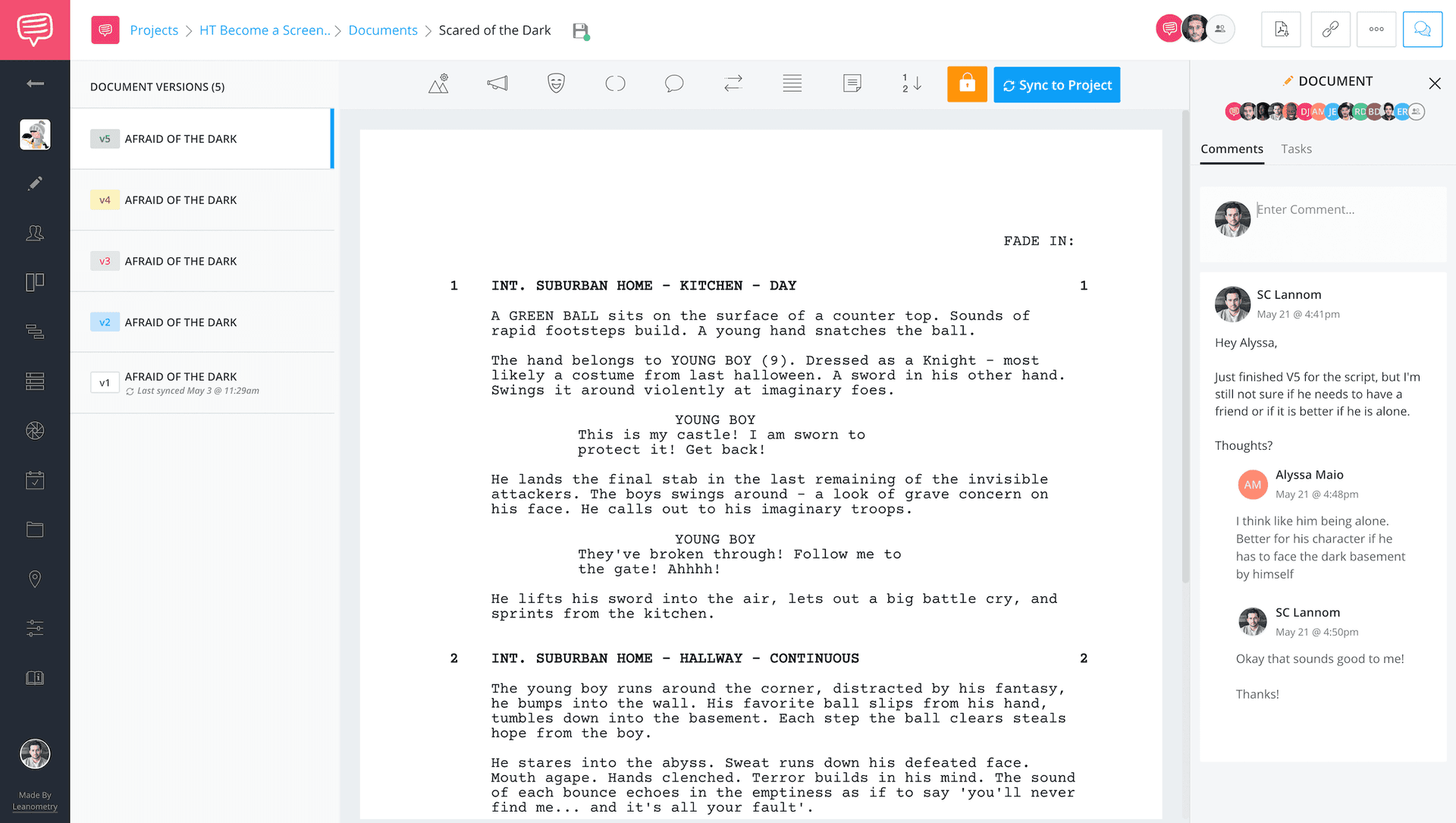
StudioBinder is a well-built pre-production platform. Filmmakers use it to write scripts, break down scenes, generate call sheets, build shot lists, and manage scheduling. Those are genuinely useful tools, and StudioBinder does them well.
The problem appears when production moves from pre-production into the financial phase. When a producer needs to build a detailed line-item budget, track vendor invoices in real time, manage expense cards for department heads, or pay a contractor directly from the platform, StudioBinder does not cover those workflows. The platform has a basic budget module, but it is not designed for the depth that modern production finance demands.
That is where producers start searching for alternatives. They are not looking to replace StudioBinder's scheduling tools. They are looking for something that handles the financial side of production with the same seriousness that StudioBinder brings to pre-production logistics.
Saturation.io was built for exactly that problem. Built by a working producer, it focuses on cloud-based collaborative budgeting, real-time expense tracking, contractor payments, and production banking. This guide breaks down the differences so you can decide which tool belongs in your workflow.
What Is StudioBinder?
StudioBinder is a cloud-based production management platform founded to modernize the pre-production process. Its core strengths sit firmly in the creative logistics side of filmmaking:
- Script writing and formatting
- Script breakdown (tagging props, cast, costumes, locations by scene)
- Shot lists and storyboards
- Production scheduling and stripboards
- Call sheet generation and crew distribution
- Contact management for cast and crew
- Document storage and collaboration
StudioBinder also includes a budgeting module at higher tier plans. However, the budgeting feature is a secondary addition, not the foundation of the product. It lacks integrated expense tracking, does not connect to payment tools, and does not offer production banking or contractor payment capabilities.
StudioBinder pricing runs from a limited free tier up to $340/month at the Studio plan (Starter at $42/month, Indie at $85/month, Professional at $127/month, Agency at $229/month, Studio at $340/month). The free plan allows one project with heavily restricted features: call sheets can only be sent to yourself, contacts are capped at 10, and shots are limited to 10 per project.
For directors, first ADs, and script supervisors managing the creative organization of a production, StudioBinder is a strong tool. For producers who need to own the financial layer of a film or television project, it leaves a significant gap.
What Is Saturation?
Saturation.io is a cloud-based financial management platform purpose-built for film, television, commercial, and music video production. It was founded by Jens Jacob, an active film producer with major production credits, which means the product decisions are driven by real on-set financial workflow, not generic project management theory.
Saturation's core capabilities are:
- Collaborative film budgeting with real-time multi-user editing
- Line-item budget building across above-the-line and below-the-line categories
- Expense tracking and invoice management
- Saturation Pay for contractor and vendor payments (not W-2 payroll)
- Production credit card with 3% cash back on production expenses
- AICP account code template for commercial production
- Free tier for a single project
Where StudioBinder focuses on the creative logistics of getting a production onto the set, Saturation focuses on the financial logistics of keeping the production financially healthy once shooting begins.
StudioBinder includes a budget tool, but the product's DNA is pre-production logistics. The budgeting module lets you enter line items and track basic costs, but it was not designed as a standalone budgeting product. You will not find deep account code structures, above-the-line and below-the-line formatting aligned to industry standards, or the kind of fringes calculation depth that a production accountant expects.
Saturation was designed from the ground up as a budgeting tool. Every line item, account code, and category structure reflects how working production accountants and line producers actually build budgets. The platform supports the full budget architecture of a feature film, commercial, television episode, or music video. You can build a budget collaboratively with multiple users editing simultaneously, track changes, and share the current state with stakeholders without exporting to a spreadsheet.
For productions where the budget is the primary deliverable before green light, Saturation is the purpose-built choice. StudioBinder's budget tool is adequate for simple cost tracking, but it is not a substitute for dedicated production budgeting software.
Expense Management
StudioBinder does not offer expense management. Once production is underway and money is moving, the platform has nothing to capture vendor invoices, reconcile actuals against budget lines, or manage petty cash and purchase orders.
Saturation includes expense tracking as a core feature. Department heads can submit expenses, production can review and approve them, and the system ties actuals back to specific budget lines. This closing of the loop between what was budgeted and what was spent is the financial control layer that every production needs, especially on lower-budget projects where cost overruns have immediate consequences.
Production Banking and Contractor Payments
This is the clearest differentiation between the two platforms. StudioBinder has no financial infrastructure. It cannot move money, hold funds, or facilitate any kind of payment.
Saturation Pay gives productions the ability to pay contractors and vendors directly through the platform. This is contractor and vendor payment only. It is not W-2 payroll processing. For the typical indie or mid-range production that has dozens of contractors, vendors, and crew members being paid on a per-project basis, this removes the friction of separate bank transfers, paper checks, and manual reconciliation.
The Saturation production credit card adds another dimension: 3% cash back on production expenses. For a production spending $200,000 below the line, that represents $6,000 back into the production budget. No other production budgeting platform currently offers an integrated credit card with that kind of return.
Call Sheets and Scheduling
This category is StudioBinder's strength. Its call sheet builder is among the best in the industry. The platform handles advanced call sheet distribution, crew confirmation tracking, weather updates, and the kind of daily communication that keeps a set organized. The scheduling and stripboard tools are also genuinely useful for first ADs and production coordinators managing shooting days.
Saturation does not offer call sheets or scheduling. It is not trying to compete in that space. If your workflow requires daily call sheets and a digital stripboard, StudioBinder is the right tool for those specific needs.
Collaboration
Both platforms are cloud-based and support team collaboration, but the nature of that collaboration is different. StudioBinder's collaboration is built around sharing pre-production documents: scripts, breakdowns, shot lists, call sheets. Multiple team members can view and comment on production materials.
Saturation's collaboration is built around the budget. Multiple stakeholders can work on the budget simultaneously, with real-time updates ensuring everyone sees the same numbers. For productions where the line producer, production coordinator, and department heads all need visibility into budget status, this live shared budget is a significant operational advantage over maintaining a single spreadsheet that gets emailed back and forth.
Pricing
StudioBinder's pricing is structured around team size and feature access. The free tier is genuinely limited: one project, 10 contacts, 10 shots, and call sheets that can only be sent to yourself. Paid plans start at $42/month for the Starter tier and run to $340/month for the Studio tier. The budgeting module and more advanced features are gated behind higher-priced plans.
Saturation offers a free tier for a single project with full access to core budgeting features. This makes it possible to fully evaluate the platform on a real project without a financial commitment. Paid plans scale with production needs.
The important pricing comparison point is this: if you subscribe to StudioBinder for pre-production management and then need a separate tool for production finance, you are running two subscriptions. Many production teams use Saturation alongside StudioBinder rather than instead of it, paying for each tool based on what it actually does best.
Who Should Use StudioBinder
StudioBinder is the right choice when the primary workflow need is pre-production organization and logistics. It makes the most sense for:
- Directors and first ADs who manage day-to-day set logistics through call sheets and scheduling
- Script supervisors and breakdown teams who need to tag and organize script elements
- Small commercial or branded content productions where the creative coordination layer is the main challenge
- Productions that already have a separate finance and accounting system and need a dedicated pre-production tool to sit alongside it
- Teams that prioritize shot list and storyboard functionality alongside scheduling
If you are running a lean production where the director and producer roles overlap heavily, and you need one platform to manage scripts, schedule, and basic cost tracking, StudioBinder at a paid plan tier can cover that workflow. You will be working within the limits of its budgeting module, but for simpler productions it may be enough.
Who Should Use Saturation
Saturation is the right choice when the financial layer of production is the primary concern. It makes the most sense for:
- Line producers and production accountants who need a dedicated, cloud-based budgeting platform
- Independent film productions running on tight margins where real-time budget control prevents cost overruns
- Commercial and music video productions needing AICP-formatted budgets
- Productions that need to pay contractors and vendors directly from the same platform where the budget lives
- Department heads who need to submit and track expenses against a live budget
- Producers who want the financial benefit of a 3% cash back production credit card
- Any production that needs a modern, browser-based alternative to desktop legacy software
Saturation is also the stronger choice for teams already using a separate scheduling tool (whether StudioBinder, Movie Magic Scheduling, or another platform) and who need a dedicated financial management layer to sit beside it. The two tools are not competing for the same workflow.
Can You Use StudioBinder and Saturation Together?
Yes, and this is how many professional productions actually run their toolset. The combination makes logical sense because the two platforms cover different parts of the production process without overlapping.
StudioBinder handles the pre-production and on-set logistics layer: scripts, breakdowns, call sheets, scheduling, shot lists. The first AD and script supervisor live in StudioBinder. Saturation handles the financial management layer: budget, expenses, vendor payments, banking. The line producer and production accountant live in Saturation.
Running both tools means each department is using software purpose-built for their specific workflow rather than a compromise platform that tries to cover everything and excels at nothing. For productions above micro-budget scale, this separation of tools by function is common practice.
The decision point for most producers is: what do I need right now? If you are in pre-production and the scheduling and call sheet workflow is the immediate priority, start with StudioBinder. If you are building a budget and need to get production finance under control before cameras roll, start with Saturation. Many productions use both throughout the full project lifecycle.
StudioBinder vs Saturation: Pricing Summary
Plan | StudioBinder | Saturation |
|---|---|---|
Free tier | 1 project, severely limited | 1 project, full budgeting access |
Entry paid plan | $42/month (Starter) | See saturation.io for current pricing |
Mid-tier | $85-$127/month (Indie/Professional) | Scales with production needs |
Agency/Team | $229/month | Contact Saturation |
Enterprise/Studio | $340/month | Contact Saturation |
The Real Difference: Pre-Production vs Production Finance
The simplest way to understand the StudioBinder vs Saturation question is to ask where the production is in its lifecycle and what function you need software to perform.
Pre-production logistics (scripts, breakdowns, scheduling, call sheets) is StudioBinder's domain. The platform was designed for the weeks between getting a script and calling action on day one. It organizes the creative and logistical preparation that makes a shoot possible.
Production finance (budgeting, expense tracking, payments, banking) is Saturation's domain. The platform was designed for the financial lifecycle of a production, from initial budget draft through final cost report. It organizes the money so productions can execute the work that StudioBinder helps plan.
These are complementary functions, not competing ones. The producers who get the most value from Saturation are often the same producers who value StudioBinder for its scheduling tools. They have simply learned to pick the right tool for each job rather than forcing one platform to do everything imperfectly.
Frequently Asked Questions
Does StudioBinder have a budgeting feature?
Yes, StudioBinder includes a budget module, but it is available primarily at higher plan tiers and is not the platform's core strength. The budgeting tool in StudioBinder allows basic line-item entry and cost tracking, but it does not include integrated expense management, contractor payments, or production banking. Productions that need dedicated production budgeting software will find Saturation better suited to that specific workflow.
Is StudioBinder free?
StudioBinder offers a free tier, but its limitations are significant. The free plan allows one project, a maximum of 10 contacts, 10 shots per project, and call sheets that can only be sent to yourself rather than to cast and crew. For basic evaluation purposes the free plan is useful, but a working production will need a paid plan. Paid plans start at $42/month.
Is Saturation free?
Yes. Saturation offers a free tier that covers a single project with access to the core budgeting functionality. This makes it straightforward to evaluate the platform on a real production before committing to a paid plan.
Does StudioBinder handle payroll?
No. StudioBinder does not process payroll of any kind. For W-2 payroll on film and television productions, dedicated payroll companies handle that workflow. Saturation Pay, Saturation's payment feature, handles contractor and vendor payments but is also not a W-2 payroll service.
What is the best StudioBinder alternative for budgeting?
If the specific gap you are trying to fill is production budgeting, Saturation is the most purpose-built alternative. It was designed specifically as a cloud-based film budgeting platform with expense tracking, contractor payments, and production banking built in. If you also need call sheets and scheduling (which StudioBinder provides), many productions run both tools for their respective strengths.
Can Saturation replace StudioBinder?
Not as a direct like-for-like replacement, and it is not designed to. Saturation replaces the financial management portion of your production workflow: budgeting, expenses, payments, and banking. It does not replace StudioBinder's call sheet generation, script breakdown, shot list, or scheduling tools. If you currently use StudioBinder only for its budgeting module and are looking for something more capable on the finance side, Saturation is a strong replacement for that specific function.
What does Saturation Pay do?
Saturation Pay is the contractor and vendor payment feature within Saturation. It allows productions to pay contractors and vendors directly through the platform without a separate payment system. It is important to note that Saturation Pay handles contractor payments only. It is not a W-2 payroll system for crew members employed as traditional employees.
Is there a StudioBinder alternative that includes a production credit card?
Saturation offers a production credit card that earns 3% cash back on production expenses. This is a feature unique in the production software space. Combined with the budgeting and expense management tools, it means that production spending can generate real savings that flow back into the budget rather than into a generic business credit card with no production-specific benefits.
Start with Saturation for Free
If your current workflow has a gap on the financial side of production, Saturation is worth evaluating on your next project. The free tier covers a single project with full access to the budgeting tools, so you can test it against a real budget rather than a demo environment.
Productions that need both call sheets and financial management can run StudioBinder and Saturation in parallel, each handling the part of the workflow it was built for. Producers who only need dedicated budgeting and expense management can use Saturation as a standalone platform.
Either way, you will be working with software that was designed by a film producer for the specific financial demands of film and television production, not adapted from a generic project management tool.
Start your free project on Saturation today.
Ready to Switch? Start Free with Saturation
Saturation is purpose-built for film and TV production finance, collaborative budgeting, expense tracking, and production banking in one platform. Unlike StudioBinder, Saturation is built specifically for the entertainment industry. Free to start, no credit card required. Start your free Saturation account.
Banking, cards, and payments, built into Saturation
Spend from production banking, issue cards to the crew, and approve every dollar in one place.
Banking
Saturation Pay: accounts, cards and bill pay in one place. Send ACH, wire or same-day.
Issue Cards
Virtual cards spend instantly, physical ships in a week. One at a time or twenty-five at once.


Payments
Every payment, in one place.
Credit
A charge card that codes itself, earns up to 3% cash back, and unlocks discounts on production tools.
Flows
Branch it, delay it, dry-run it.
Receipt scanning
Receipts arrive already coded.