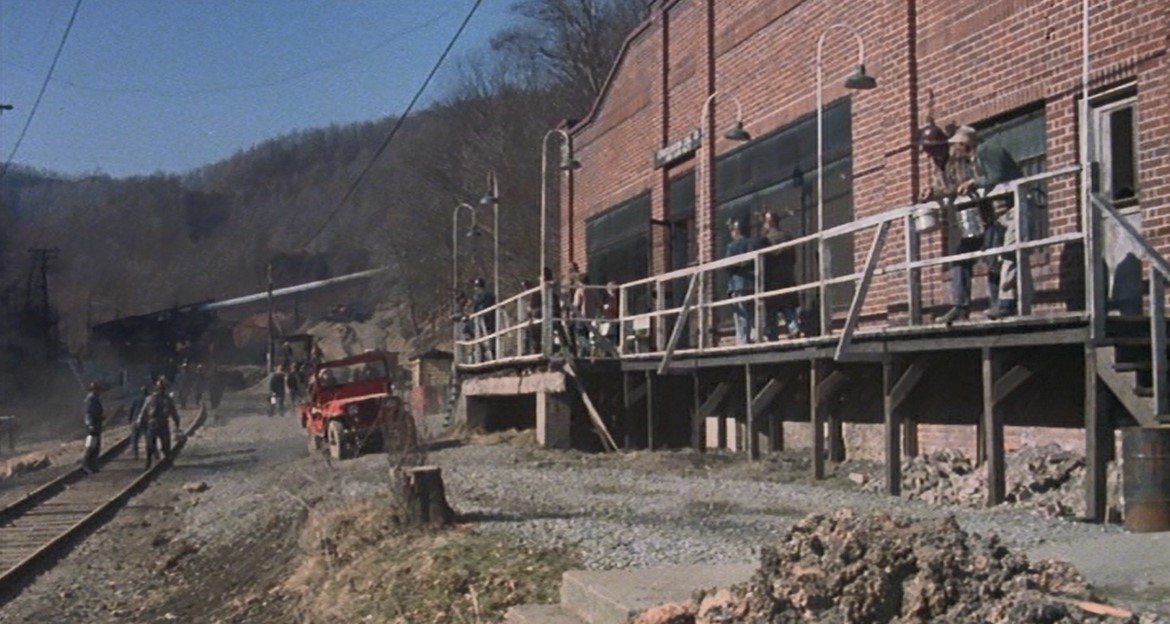
Saturation - Shot in Kentucy: Seabiscut

Kentucky Film Tax Credit

Kentucky Film Tax Credit

Refundable Tax Credit

Refundable Tax Credit

Incentive:

30-35%

Minimum Spend:
$250,000 (film/TV) / $20,000 (docs/Broadway)

Minimum Spend: $250,000 (film/TV) / $20,000 (docs/Broadway)

Annual Cap: $75,000,000

Project Cap: None (per-person cap: $1M above-the-line)

Apply for Incentive

More Info:

How the Kentucky Entertainment Incentive Works

Kentucky's Kentucky Entertainment Incentive (KEI) program is administered by the Kentucky Economic Development Finance Authority (KEDFA) and the Kentucky Film Office. The program provides a fully refundable tax credit equal to 30% of qualifying expenditures for productions filming in standard Kentucky counties, rising to 35% for productions that film in designated Enhanced Incentive Counties. Because the credit is fully refundable, productions receive the full credit value regardless of their Kentucky tax liability, functioning as a direct cash return from the state. Productions with no Kentucky tax obligation receive the excess credit as a cash refund.

Since the KEI launched in 2022, more than 250 projects have been approved for a combined $242 million in potential state incentives, supporting thousands of jobs in the state's growing entertainment sector. The program was expanded in 2025 with updated funding availability, and for 2026, $75 million in annual funding is available for applicants. The creation of the Kentucky Film Office and the Kentucky Film Leadership Council has formalized the state's commitment to entertainment industry development alongside the incentive.

The program's 3.5% loan-out withholding rate, effective January 1, 2026, applies to productions using loan-out companies for talent and key personnel. This requirement aligns with Kentucky's broader income tax compliance structure and must be factored into production payroll planning.

Kentucky Film Tax Credit Rates

The credit rates are:

  • Standard Kentucky counties: 30% refundable tax credit on qualifying expenditures

  • Enhanced Incentive Counties: 35% refundable tax credit on qualifying expenditures

The 35% rate applies to qualifying expenditures incurred in Enhanced Incentive Counties, which are counties designated by the Kentucky Cabinet for Economic Development based on economic development need. Productions filming primarily in Enhanced Incentive Counties receive 35% on both labor and non-labor qualified expenses for work performed in those counties.

For above-the-line workers, the credit applies to the first $1 million in wages per individual. This cap applies at both the 30% and 35% rates depending on county designation. Below-the-line labor and qualified non-labor expenditures do not carry a per-person wage cap.

Annual Program Cap

The KEI program has a $75 million annual cap. For 2026, the full $75 million is available to applicants. Applications are reviewed and credits awarded on a rolling basis within this annual limit. Productions should apply early in the year to secure their allocation before the cap is committed, particularly for larger productions that represent a significant portion of the annual pool.

Minimum Spend Requirements

The minimum qualifying expenditure thresholds vary by production type:

  • Feature-length films: $250,000

  • Television programs (including series and pilots): $250,000

  • Industrial films: $250,000

  • National touring Broadway productions: $20,000

  • Documentaries: $20,000

The lower threshold for documentaries and Broadway productions reflects Kentucky's goal of supporting a range of entertainment formats beyond traditional film and television.

Eligible Production Types

The KEI program covers:

  • Feature-length films (narrative and documentary)

  • Television series, miniseries, and movies of the week

  • Television pilots

  • Commercials intended for national distribution

  • Music videos

  • Documentaries

  • Industrial and training films

  • National touring Broadway productions

  • Animation

  • Reality and unscripted television

News programs, sports events, political advertising, and content primarily intended for limited commercial purposes are excluded from the program.

What Qualifies as a Kentucky Expenditure

Qualifying expenditures include wages and other compensation paid to workers performing services in Kentucky and payments to Kentucky-based vendors for goods and services used directly in the production. Eligible categories include:

  • Wages paid to Kentucky residents and non-residents for production work performed in-state, up to $1 million per above-the-line individual

  • Equipment rentals from Kentucky companies

  • Location fees paid to Kentucky property owners

  • Set construction materials from Kentucky vendors

  • Catering and craft services from Kentucky businesses

  • Lodging for cast and crew while working in Kentucky

  • Vehicle and transportation costs from Kentucky companies

  • Post-production services performed by Kentucky facilities

  • Wardrobe and props sourced from Kentucky suppliers

Story rights, music rights, marketing and distribution costs, and expenditures clearly incurred outside Kentucky are excluded. The purchase must generally be subject to Kentucky sales tax or involve Kentucky-based employment to count as a qualified expenditure.

Kentucky Sales and Use Tax Rebate

In addition to the income tax credit, Kentucky offers a separate sales and use tax rebate for qualifying production purchases. Productions can apply with the Kentucky Department of Revenue for reimbursement of sales taxes paid on production-related purchases in Kentucky. This additional layer of financial benefit stacks on top of the 30-35% income tax credit, improving the total economic return for productions with significant tangible property purchases in the state.

Productions should account for the sales tax rebate in their budget planning and work with a production accountant or Kentucky film office advisor to ensure qualifying purchases are properly documented for the refund claim.

Loan-Out Company Withholding

Effective January 1, 2026, Kentucky requires loan-out company withholding at a rate of 3.5% on wages paid through loan-out structures. Productions using loan-out companies for directors, stars, producers, and other key personnel must apply this withholding rate to remain in compliance with Kentucky tax law. Non-compliance with the withholding requirement can result in disqualification of those wages from the credit calculation.

Production accountants should verify the current withholding rate with the Kentucky Department of Revenue at the outset of any Kentucky production, as rates may be adjusted in future years.

How to Apply for the Kentucky Entertainment Incentive

Step 1: Pre-Application Contact

Contact the Kentucky Film Office and the Kentucky Cabinet for Economic Development before submitting a formal application. The Kentucky Film Office can advise on current program fund availability, the Enhanced Incentive County map, and how to structure the production to maximize credit eligibility. Early contact is particularly important for productions considering Enhanced Incentive County locations, as the KEI staff can identify qualifying locations relevant to the project's creative needs.

Step 2: Application Submission to KEDFA

The formal application is submitted to KEDFA at least 30 days before incurring any qualifying expenditures. This pre-production application requirement is strictly enforced: costs incurred before KEDFA approval do not qualify for the credit. The application includes the production budget, the projected Kentucky expenditure breakdown, a description of the production, evidence of financing, and a distribution or exhibition plan.

The application fee is non-refundable and is determined by production budget size. An administration fee equal to 0.5% of the estimated credit sought (or $500, whichever is greater) also applies. Productions should factor these fees into their pre-production budget.

Step 3: Production and Documentation

During production, maintain detailed records of all qualifying Kentucky expenditures, organized by vendor location, crew residency status, and expense category. Productions claiming the Enhanced Incentive County rate should document which expenditures were incurred in Enhanced counties versus standard counties. Loan-out withholding must be applied and documented from the first payment.

Step 4: Post-Production Audit and Final Submission

After production wraps, submit the final cost report with supporting documentation to KEDFA. A CPA audit of all qualifying expenditures is required. The audit must be performed by an independent CPA and should be arranged in advance to avoid delays in the certification process. KEDFA reviews the audit and issues the refundable tax credit certificate.

Step 5: Credit Application or Refund

The tax credit certificate is applied against Kentucky tax liability. If the production has no Kentucky tax obligation (as is common for out-of-state production companies), KEDFA issues a cash refund for the full credit amount. This refund process is the mechanism that makes the KEI program effectively equivalent to a direct cash payment for most out-of-state productions.

Enhanced Incentive Counties

Kentucky's Enhanced Incentive Counties are designated by the Cabinet for Economic Development based on economic development criteria. The county list is maintained by the Kentucky Film Office and updated periodically. Productions should verify the current Enhanced Incentive County map when planning production locations, as counties can be added or removed from the list.

Enhanced Incentive Counties include many rural and Appalachian Kentucky counties that offer compelling filming environments at lower production costs than the Louisville or Lexington markets. The 35% rate for Enhanced counties makes them among the most financially attractive filming locations in the eastern United States for productions that can incorporate those landscapes creatively.

Kentucky Film Locations

Kentucky's visual range spans from Thoroughbred horse country to the Appalachian highlands, offering several distinct production environments:

Horse Country: Lexington and the Bluegrass Region

The Bluegrass Region around Lexington is synonymous with Thoroughbred horse farming. Rolling green fields, elegant horse farms, stone fences, and the town of Keeneland (home to one of the most beautiful racetracks in the world) create a very specific and recognizable American landscape. Productions dealing with horse racing, Kentucky Derby narratives, or rural estate settings frequently choose this region.

Louisville

Louisville is Kentucky's largest city and its cultural center. The Ohio Riverfront, the NuLu arts district, the historic Churchill Downs racetrack, the Bourbon District, and neighborhoods ranging from Gilded Age mansions to working-class row houses give productions a range of urban environments within the city limits. Louisville's position on the Ohio River also creates compelling waterfront and transportation-era visual contexts.

The Appalachian Highlands

Eastern Kentucky's Appalachian mountains and valleys offer one of the most culturally distinct filming environments in the United States. The Red River Gorge, Natural Bridge State Resort Park, Cumberland Falls, Pine Mountain State Resort Park, and the surrounding hardwood forests create dramatic natural landscapes. The towns and communities of eastern Kentucky carry a rich cultural character that has drawn documentary and narrative productions for decades.

Cumberland Gap and Daniel Boone Country

The Cumberland Gap, where Kentucky, Virginia, and Tennessee meet, is one of the most historically significant landscapes in American history and offers dramatic mountain terrain and deep forest that evoke the early frontier era. The Daniel Boone National Forest covers over 700,000 acres of eastern Kentucky with hiking trails, rivers, arches, and cliffs accessible for production.

Western Kentucky

Western Kentucky's Land Between the Lakes National Recreation Area offers peninsula terrain between Kentucky Lake and Lake Barkley, with 170,000 acres of forest, water, and wildlife. The region supports outdoor and adventure productions as well as productions seeking large bodies of water without coastal salt water environments.

Kentucky Film Production Infrastructure

Louisville and Lexington have developed production services communities that support both resident and visiting productions:

  • Louisville has an established commercial and corporate film production community with trained crew across departments

  • Equipment rental companies in Louisville serve productions of moderate to significant scale

  • Several soundstage facilities in Louisville and surrounding areas

  • Growing SAG-AFTRA talent pool in the Louisville metropolitan area

  • Post-production facilities offering editorial, color, and sound services

  • The Kentucky Film Leadership Council, established to support the film industry, provides policy advocacy and production resources

The KEI program's rapid growth since 2022 has accelerated the development of Kentucky's production services industry. The 250-plus approved projects since launch represent a training ground for Kentucky-based crew that will support progressively larger productions as the industry matures.

How Kentucky Compares to Neighboring States

Kentucky vs. Tennessee

Tennessee's production incentive is administered through the Tennessee Entertainment Commission and offers a 25% base credit with a lower annual cap than Kentucky's $75 million. Kentucky's 30-35% rate with its larger cap pool gives it a financial edge over Tennessee for most production types. Nashville's dominance of Tennessee's production market is primarily music and music video focused, while Kentucky's program is designed for a broader range of content formats.

Kentucky vs. Ohio

Ohio's Motion Picture Tax Credit program offers a 30% credit for productions spending at least $300,000 in the state, comparable to Kentucky's standard rate. Ohio's program has a lower annual cap, and Ohio's urban markets (Cincinnati, Cleveland, Columbus) offer different visual environments than Kentucky's horse country and Appalachian landscapes. For productions that want a specific Kentucky visual, Ohio is not a substitute regardless of the comparable credit rate.

Kentucky vs. West Virginia

West Virginia offers a 27% base credit that can reach 31% for productions meeting specific West Virginia resident crew thresholds. Kentucky's 30-35% rate is higher than West Virginia's, and Kentucky's $75 million annual cap is substantially larger than West Virginia's program capacity. Both states offer Appalachian landscape settings, but Kentucky's more accessible credit structure and larger program give it an advantage for most production types.

Managing Kentucky Production Budgets with Saturation

Kentucky's Enhanced Incentive County rate distinction requires productions to track which expenditures were incurred in Enhanced versus standard counties from the first day of pre-production. A production that mixes shooting days between Enhanced and standard counties must maintain separate expenditure records to apply the correct credit rate to each category.

Saturation's cloud-based budgeting software supports location-tagged expense tracking from the purchase order stage, making it straightforward to separate Enhanced county expenditures from standard county expenditures in the final cost report. The loan-out withholding requirement at 3.5% is a compliance item that Saturation's payroll integration can flag as part of the production's Kentucky-specific setup.

For productions managing both the income tax credit and the sales tax rebate, Saturation tracks qualifying purchase categories to support both claims with the same underlying expense records, reducing duplicate documentation work for the production accountant.

Frequently Asked Questions

Is the Kentucky credit refundable?

Yes. The KEI provides a fully refundable tax credit. Productions with no Kentucky tax liability receive the excess credit as a cash refund from the state. This makes the program accessible to out-of-state production companies and single-purpose LLCs with no Kentucky tax exposure.

What is the application timing requirement?

The application must be submitted to KEDFA at least 30 days before incurring any qualifying expenditures. Costs incurred before KEDFA approval do not qualify for the credit. Productions must plan their application submission well in advance of pre-production activities to ensure compliance with this requirement.

Does Kentucky require a CPA audit?

Yes. A CPA audit of all qualifying expenditures is required as part of the final cost report submission to KEDFA. Productions should engage a CPA familiar with film production expenditure audits early in the production process and budget for audit costs as a line item.

What is the loan-out withholding rate?

As of January 1, 2026, the loan-out withholding rate in Kentucky is 3.5%. Productions using loan-out companies for talent and key personnel must apply this rate to wages paid through those structures. Non-compliance with the withholding requirement can disqualify those wages from the credit calculation.

How long does the credit approval process take?

Productions should anticipate approximately 60 to 90 days from the submission of the final cost report and CPA audit to the issuance of the credit certificate. KEDFA's processing time can vary depending on application volume and the complexity of the production's expenditure documentation.

Contact the Kentucky Film Office

The Kentucky Film Office and the Kentucky Cabinet for Economic Development jointly administer the KEI program. Tim Bates serves as Manager and can be reached at 502.564.4930 ext. 154. Program guidelines, the Enhanced Incentive County map, application materials, and contact information are available through the Kentucky Cabinet for Economic Development at ced.ky.gov. The Kentucky Film Office website at film.ky.gov provides production resources and location assistance for projects of all sizes filming in Kentucky.

Kentucky Film Office:

Kentucky Department of Travel & Tourism

500 Mero Street, 22nd Floor, Frankfort, KY 40601

Applying for the credit?

Get Free Template

Use our budget template to add qualified expenses to the proper chart of accounts as required by the state.

Check out other states incentives: