Kaboom Animation Festival
About
The Netherlands' leading animation festival, an Oscar qualifier.
Submit
Submission Page
Type
Film Festival
Time of Year
April
Qualifies For
—
Template
Browse All
About Kaboom Animation Festival
Kaboom Animation Festival is the Netherlands' largest dedicated animation festival, presenting independent and art animation across Utrecht and Amsterdam each spring. The festival was established in 2019 as a merger of two beloved Dutch animation events: the KLIK Amsterdam Animation Festival, founded in 2007, and the Holland Animation Film Festival, which dates back to 1985. That combined heritage gives Kaboom both deep roots in the Dutch animation community and a fresh, forward-looking identity as a single national platform.
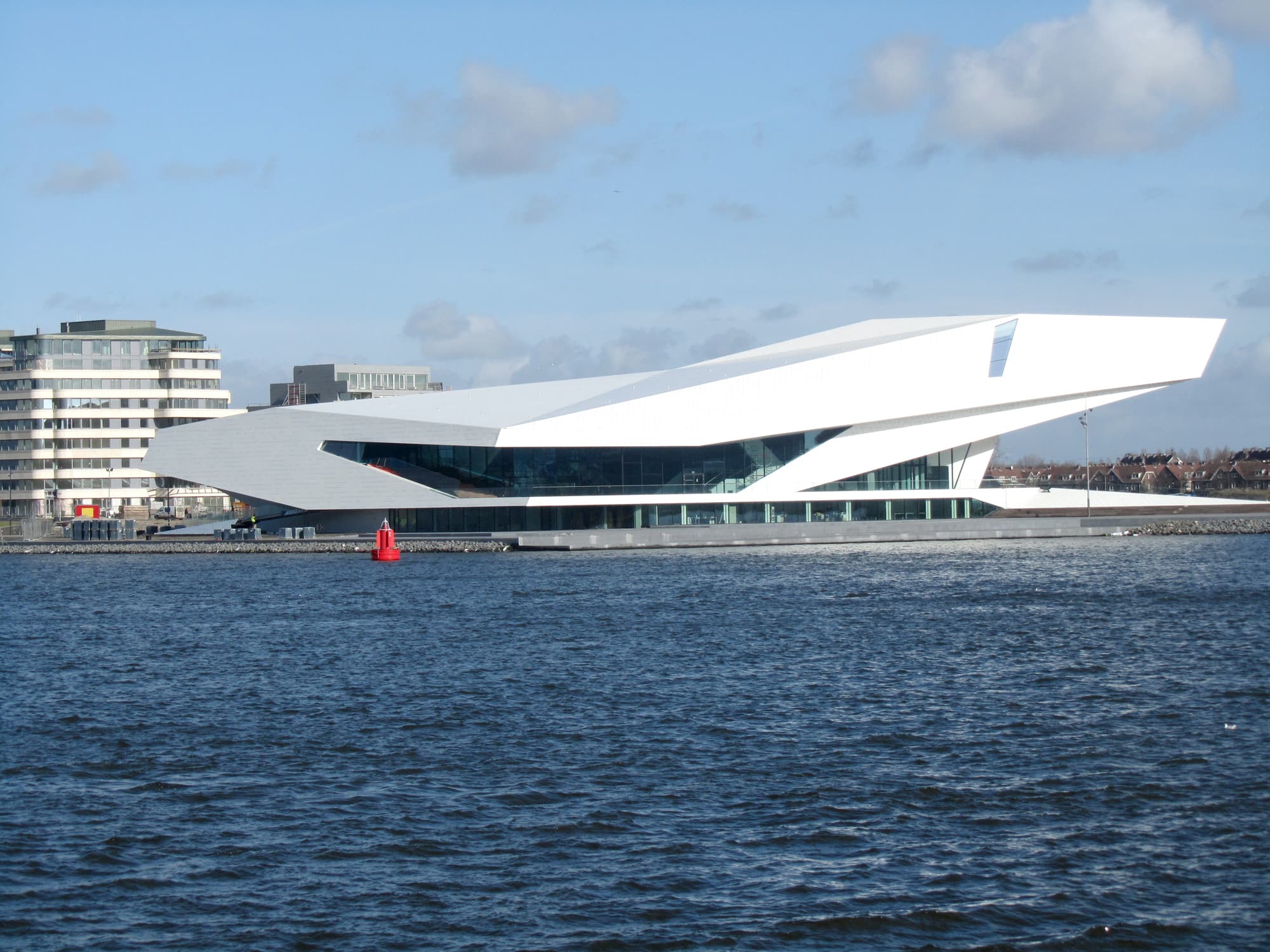
The festival runs across two Dutch cities in two distinct legs. The Utrecht edition opens the festival at a cluster of venues in the city center, including Slachtstraat Filmtheatre, followed by the Amsterdam leg, which anchors screenings at the EYE Filmmuseum on the northern bank of the IJ river. The EYE is one of the world's great dedicated film museums, with a purpose-built building designed by Delugan Meissl Associated Architects that opened in 2012, and its IMAX-scale theatres and waterfront setting make it a genuinely special venue for animation programmed on the big screen.
Kaboom's central conviction is that animation is not merely a genre of film but a distinct medium capable of carrying ideas and emotions beyond what live-action can reach. The festival programs across the full aesthetic spectrum, from formally adventurous experimental shorts to narrative features and work made for younger audiences, but its competitive programming and curatorial identity lean toward the strange, the intense, and the formally surprising. Independent animators working outside commercial pipelines find Kaboom to be one of the most receptive platforms in Europe for work that takes risks.
Festival Submission Fees
Submission Fees
Kaboom Animation Festival

Fees are estimated based on festival type and region. Please verify current submission fees on the festival's official website or FilmFreeway listing. Location: Amsterdam, Netherlands
Competition Sections and Awards
The Kaboom competition is organized into nine categories, giving the festival room to recognize the breadth of animation practice rather than collapsing everything into a single competitive track. The main competitive sections include:
- Shorts in Competition, the primary competitive strand for independent animated short films from around the world.
- Dutch Shorts, a dedicated strand for animation produced in the Netherlands, reflecting the festival's commitment to supporting the local industry.
- New Directions, experimental and formally ambitious work that pushes at the edges of what animation can be.
- Poetry in Motion, lyrical and visually poetic animation that prioritizes image and sensation over conventional narrative.
- Bonkers Shorts, unconventional, irreverent, and genre-defying animation that resists easy categorization.
- Short Docs, animated documentary shorts that use the medium to explore factual subjects.
- VR Projects, virtual reality works that expand the spatial possibilities of animation.
- Commissioned Shorts, professionally commissioned animation including music videos, branded content, and client work.
- Shorts for Kids, family programming split into age brackets for children aged 3 and up and 6 and up.
Jury awards are presented across the main competitive categories. The Jamie Bolio Award, worth 3,000 euros, is the festival's most distinguished jury prize. Additional jury awards of 1,000 euros each go to Best Short, Best Dutch Short, Best VR, and Best Student Short. A Best Dutch Student Short award combines a cash prize with a Kaboom Distribution package. Audience awards run in parallel, with separate prizes for the best feature, best experimental work, best commissioned short, best kids short, and best short overall. For industry participants, the Benelux Animation Pitch Award carries a prize of 5,000 euros.
Winners of the Best Short and Best Dutch Short categories become eligible for the Academy Award Short Film competition, which makes Kaboom a meaningful career milestone for independent animators pursuing international recognition beyond the festival circuit.
Amsterdam and the Dutch Animation Scene
The Netherlands has a long tradition of support for animation as both a fine art and a craft industry. The Dutch Film Fund (Nederlands Filmfonds) provides direct production funding for animated shorts and features, and the Stimuleringsfonds Creatieve Industrie supports animation projects that fall at the intersection of moving image and design. This institutional backing has allowed Dutch animation studios and independent filmmakers to sustain a body of work that punches well above the country's size on the international festival circuit.
Amsterdam itself is home to a dense creative infrastructure that supports animation production. The city's design schools, including the Rietveld Academie and HKU University of the Arts, produce graduates who move into animation, illustration, and motion design. Several of the Netherlands' most internationally recognized animation studios maintain offices in or near Amsterdam, and the city's concentration of post-production facilities and international co-production relationships has made it a natural hub for the Dutch animation industry.
The EYE Filmmuseum, Kaboom's primary Amsterdam venue, is more than a screening facility. It is a collecting institution with one of Europe's largest film archives and an active exhibition program that treats moving image work with the same seriousness as any other art form. Hosting a competitive animation festival at EYE signals to filmmakers and audiences alike that the work being shown belongs in conversation with the history of film as a whole, not in a separate category for animation enthusiasts.
What Kaboom Programmers Look For
Kaboom programmers are drawn to animation that takes a position. The festival is not a neutral showcase for all animated content; it has an aesthetic sensibility that favors work that surprises, unsettles, or challenges its audience in some way. Visual boldness matters more than technical polish. A hand-drawn short with an unusual structure and a strong point of view will attract more attention from Kaboom's selection committee than a technically accomplished film that plays it safe.
The festival's own language to describe its curatorial taste uses words like "intense," "strange," and "surprising." It treats animation as a medium with a distinct expressive range rather than as a delivery mechanism for stories that could just as easily be told in live-action. Films that use the particular properties of animation, its ability to move between abstraction and representation, to compress or expand time, to make the impossible physical, tend to resonate with the selection committee.
This orientation places Kaboom in a different register from Annecy International Animation Film Festival, which has a broader commercial and industry mandate, or from Stuttgart, which places stronger emphasis on media art and digital production. Kaboom sits closer to the independent and art animation end of the spectrum, alongside events like the Ottawa International Animation Festival and the Hiroshima International Animation Festival. Filmmakers who have screened at those events, or who make work in a similar spirit, should consider Kaboom a natural fit.
That said, Kaboom is not an exclusively experimental festival. Its multi-strand structure means there is room for narrative shorts, commissioned work, documentaries, and family programming alongside the more formally radical material. The festival's range is a genuine strength: a filmmaker whose work does not fit the experimental mold can still find an appropriate competitive section.
How to Submit to Kaboom
Submissions to Kaboom Animation Festival are accepted through the festival's official website at kaboomfestival.nl and through FilmFreeway. The festival typically opens its submission window in the autumn for the following spring edition, with early deadline discounts available in October and November, a regular deadline in December, and a late deadline in January. Because the festival runs in March, the full submission and selection cycle runs approximately five months before the opening.
Films submitted to the main competitive sections must be animated. The festival accepts shorts and features across all animation techniques: hand-drawn, stop-motion, CGI, cut-out, rotoscope, experimental mixed-media, and combinations thereof. There are no hard premiere requirements for most sections, meaning films that have screened at other festivals remain eligible, though the selection committee gives weight to work that has not yet been widely seen in the Netherlands or at other major European animation festivals.
Student films are eligible for the Best Student Short and Best Dutch Student Short categories. VR works can be submitted to the VR Projects section. Commissioned work including music videos and branded animation is accepted in the Commissioned Shorts section. Submission fees are standard for the festival tier; reduced fees apply for student submissions and films from emerging economies. Always verify current deadlines and fee tiers directly at kaboomfestival.nl before submitting, as these details are updated annually.
Frequently Asked Questions
How does Kaboom differ from Annecy or Stuttgart?
Annecy is the world's largest and most commercially oriented animation festival, with a significant industry market and strong representation from major studios alongside independent work. Stuttgart has a deep focus on media art, digital production, and commissioned animation. Kaboom sits closer to the independent and art animation end of the spectrum, with a curatorial sensibility that favors formally adventurous, strange, and visually bold work. It is also smaller and more intimate than either, which many filmmakers find more conducive to genuine connection with audiences and programmers.
What is the EYE Filmmuseum venue like?
The EYE Filmmuseum is a purpose-built film institution on the northern bank of the IJ river in Amsterdam, directly across the water from Amsterdam Centraal station and accessible by a free ferry. The building, designed by Delugan Meissl Associated Architects and opened in 2012, features several screening rooms of varying sizes along with permanent and temporary exhibition galleries. Screening animation at EYE means presenting it in the context of film history as a whole, in a venue that treats moving image work as a serious art form. For international filmmakers visiting for the Amsterdam leg of Kaboom, the setting is memorable.
What animation technique does the festival favor?
Kaboom accepts all animation techniques and does not privilege any single approach. Hand-drawn, stop-motion, CGI, cut-out, rotoscope, experimental mixed-media, and hybrid approaches are all represented in the competition. The selection committee cares more about the distinctiveness of the visual language and the strength of the formal choices than about how the images were produced. Work that uses its chosen technique with intention and clarity tends to fare better than technically accomplished work that applies a technique without a clear reason for that choice.
Is Kaboom accessible to international submissions?
Yes. Kaboom is an internationally oriented festival and accepts submissions from filmmakers worldwide. The competitive program in any given year typically includes work from dozens of countries. The festival screens films in their original language with Dutch and English subtitles where needed, and its English-language programming and website make it straightforward for non-Dutch filmmakers to navigate the submission process. The online programming component of the festival is, however, restricted to audiences within the Netherlands.
When are submissions open?
Kaboom's submission window generally opens in autumn, around September or October, for the following spring edition. Early deadline discounts are typically available through October and November, with a regular deadline in December and a late deadline in January. Because the festival runs in March, the submission period runs approximately four to five months before the opening. Check kaboomfestival.nl or the festival's FilmFreeway page for the current edition's exact dates and fees, as these are confirmed annually.
What makes a Kaboom selection?
Kaboom programmers look for animation that has a strong and distinctive point of view, visual boldness, and a willingness to take formal risks. Films that use the specific properties of animation purposefully, whether that means abstraction, impossible physics, compressed time, or a visual style with no live-action equivalent, tend to stand out. The festival values work that has something to say and says it in a way that only animation could. Technical accomplishment matters less than creative ambition. Films that feel strange, intense, or genuinely surprising in their approach are the ones that tend to resonate with the selection committee.
Submit Your Film to Kaboom
Kaboom Animation Festival is one of Europe's most distinctive platforms for independent and art animation, with a competition that carries real weight on the international circuit. Best Short and Best Dutch Short winners gain Academy Award eligibility, and the festival's location in the Netherlands, at the EYE Filmmuseum and across Utrecht's arts venues, gives selected films a genuinely meaningful context.
If you are making animation that takes risks, that cares about form as much as content, and that does something only animation can do, Kaboom is worth your attention. Submit through kaboomfestival.nl or FilmFreeway. Check the current deadlines early: the festival fills its competitive slots from a large international pool, and early submission gives your film the best chance of thorough consideration.
Awards & Recognition
Kaboom Animation Festival presents awards across its competition sections, recognizing excellence in filmmaking across multiple categories. Competition awards represent meaningful recognition from a distinguished jury of film professionals.
Award categories typically include recognition for Best Film, directorial achievement, performance, and short film excellence. Winning or being shortlisted at Kaboom Animation Festival provides a meaningful credential for press materials, distribution discussions, and future festival submissions.
Festival Leadership & Programmers
Kaboom Animation Festival is guided by a dedicated team of programmers and arts administrators who collectively bring deep knowledge of world cinema to the selection process. The festival's programming team works year-round reviewing submissions, attending international festivals, and cultivating relationships with filmmakers from around the world.
Plan every dollar of your festival run in Saturation
Map deadlines on the calendar, schedule submission payments, and report on campaign spend from one production budget.