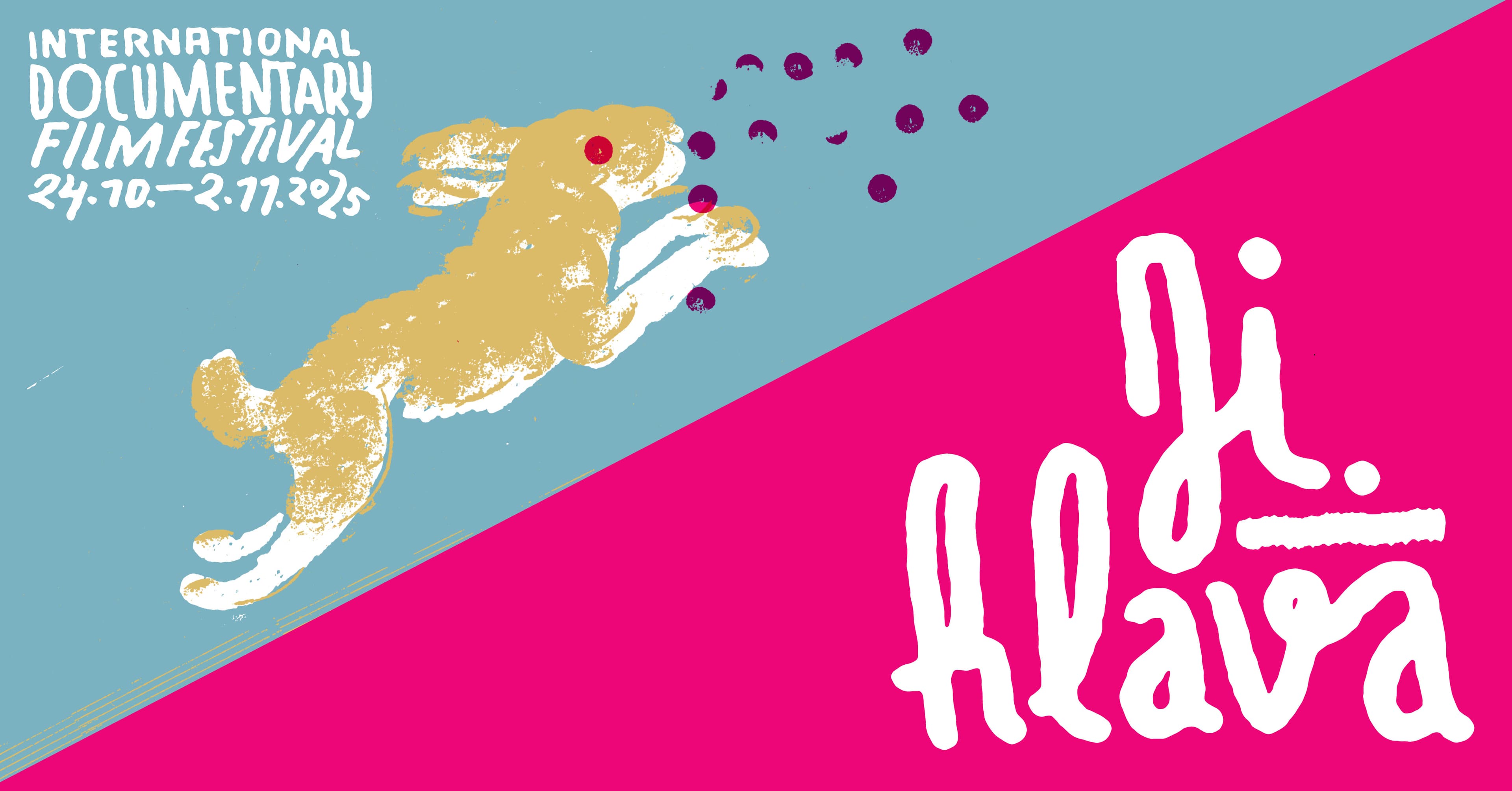
Ji.hlava International Documentary Film Festival
About
Central Europe's largest documentary film festival. An Oscar qualifier.
Submit
Submission Page
Type
Film Festival
Time of Year
October
Qualifies For
—
Template
Browse All
About Ji.hlava International Documentary Film Festival
The Ji.hlava International Documentary Film Festival (MFDF Ji.hlava) is one of Central Europe's most significant film events, held annually in late October in the city of Jihlava, Czech Republic. Founded in 1997 by a group of high school students led by Marek Hovorka, the festival began as a modest local initiative and has grown into a major international platform for creative documentary and experimental film. Over nearly three decades, Ji.hlava has established itself as the region's definitive gathering point for documentary cinema, drawing over 110,000 viewers across a ten-day program.
Jihlava sits in the Vysocina region of the Czech-Moravian Highlands, roughly midway between Prague and Brno. Its modest scale as a city makes the festival's international reach all the more remarkable. The festival transforms the city each October, with screenings, industry events, masterclasses, and public installations spread across multiple venues. The 30th edition runs from October 23 through November 1, 2026, marking three decades of documentary programming in a city that has become synonymous with the form in Central Europe.
Ji.hlava's founding mandate has always placed formal experimentation at the center of what documentary can be. The festival does not treat documentary as a purely journalistic or observational form; it consistently programs work that blurs the boundary between documentary, essay film, and experimental cinema. This commitment to hybrid and formally ambitious work sets Ji.hlava apart from larger European documentary festivals and gives it a distinct character within the international documentary landscape. The festival is also a founding member of Doc Alliance, a coalition of seven leading European documentary festivals that collaborate on distribution, discovery, and industry programming.
Alongside the main festival, Ji.hlava operates year-round through several permanent initiatives. The Center for Documentary Film (CDF) supports Czech documentary production and connects filmmakers with international partners. DOK.REVUE, the festival's online publication, provides ongoing critical coverage of documentary cinema in Czech and Slovak. The Emerging Producers program and the annual Inspiration Forum create continuous touchpoints between Ji.hlava and the broader documentary community between editions.
Festival Submission Fees
Submission Fees
Ji.hlava International Documentary Film Festival

Fees are estimated based on festival type and region. Please verify current submission fees on the festival's official website or FilmFreeway listing. Location: Jihlava, Czech Republic
Competition Sections
Ji.hlava runs multiple competitive sections, each with a distinct curatorial mandate. Together they cover the full range of documentary cinema from debut features to experimental short work to the strongest international titles of the year.
Opus Bonum
Opus Bonum is the festival's flagship international competition, selecting the most remarkable documentary films of the year from across world cinema. The section represents the full breadth of global documentary trends and is awarded a prize of $10,000 USD to the winning film. Opus Bonum also carries special prizes for films from Visegrad Four countries (Czech Republic, Slovakia, Hungary, Poland) and Central and Eastern European productions more broadly, reflecting the festival's regional focus within its international scope.
Czech Joy (Ceska radost)
Czech Joy is a prestigious competitive selection dedicated to Czech documentary filmmaking. The section celebrates the diversity of topics and cinematic approaches within the national documentary tradition, and the winner receives a prize of 200,000 CZK. Czech Joy consistently surfaces both established and emerging voices in Czech documentary, and winning the section carries significant weight within the Czech film industry.
First Lights (Prvni svetla)
First Lights focuses on documentary debuts and second feature-length films, presented at world, international, or European premiere. The section identifies emerging documentary filmmakers at the earliest stage of their careers and is one of the most closely watched competitive sections by programmers and producers attending the festival.
Fascination (Fascinace)
Fascination showcases international experimental cinema and work that explores unexpected representations of the lived world through formal innovation. The section is explicitly dedicated to films that push documentary language into new territory, covering audiovisual art, hybrid essay film, and formally adventurous nonfiction. A companion section, Fascination: Exprmntl.cz, focuses specifically on the newest Czech experimental works relating to reality.
Short Joy (Kratka radost)
Short Joy presents the best European short documentary and experimental films. Winners of Short Joy receive distribution support and free online access to the winning films. Significantly, Short Joy-winning films may be considered eligible for Academy Award nomination, giving the section practical career weight for filmmakers working in the short form.
Testimony (Svedectvi) and Virtual Reality
The Testimony section features films that capture the state of the world from multiple angles, encompassing political documentary, nature, and knowledge-focused nonfiction. The Virtual Reality section enables viewers to engage with 360-degree films and spatial installations, reflecting the festival's openness to documentary forms beyond the traditional theatrical frame.
Ji.hlava and Central European Documentary Tradition
Czechoslovakia produced some of the most formally inventive documentary cinema of the twentieth century. The Czech New Wave of the 1960s was as much a documentary movement as a fiction one: directors like Vera Chytilova, Jan Nemec, and Jiri Menzel all worked across fiction and documentary, and the observational and essay traditions they pioneered left a deep imprint on Central European filmmaking. Ji.hlava is the institutional heir to that tradition. Its programming philosophy is grounded in the idea that documentary is not a lesser or more functional form than fiction cinema, but a practice with its own formal possibilities and its own demands on both filmmakers and audiences.
The festival's location in Jihlava rather than Prague or Brno is itself a statement. Major European documentary festivals tend to cluster in capital cities or large media centers: IDFA in Amsterdam, Sheffield DocFest in Sheffield, CPH:DOX in Copenhagen. Ji.hlava's choice to remain in a mid-sized provincial city keeps it rooted in a different relationship with its audience. Jihlava residents make up a significant portion of the festival's 110,000-strong viewership, and the festival has become a genuine civic institution in the city over its nearly thirty years of operation.
Compared to IDFA or Sheffield DocFest, Ji.hlava operates at a smaller industry scale but with greater curatorial focus on formal ambition. IDFA is the world's largest documentary festival and functions partly as a market; Sheffield DocFest combines strong editorial programming with a significant industry forum. Ji.hlava's industry component, Ji.hlava Industry, is substantive (drawing over 1,000 film professionals), but the festival's primary identity is curatorial rather than commercial. Its Fascination and First Lights sections in particular reflect a programming sensibility that prizes aesthetic risk over accessibility.
The festival's Slovak and Czech programming focus is also notable. Czech Joy and the Exprmntl.cz strand within Fascination create dedicated space for national cinema within an international program, and the Opus Bonum prizes for V4 and Central/Eastern European films extend that regional commitment outward. For filmmakers from the broader post-communist region, Ji.hlava represents one of the most important European platforms for their work, offering both competition recognition and access to an industry audience that understands the specific contexts from which that work emerges.
What Programmers Look For
Ji.hlava programmers are explicit about their aesthetic preferences. The festival is not primarily seeking issue-driven or observational documentary in the conventional television sense. The programming sensibility across the competitive sections consistently favors formal ambition, an awareness of the documentary act itself, and work that treats cinematic language as a subject as much as a tool.
Films that tend to resonate with Ji.hlava programmers share several characteristics:
- Formal self-awareness: work that reflects on what it means to film reality, not just what it captures
- Hybrid construction: documentary-fiction hybrids, essay films, and formally experimental nonfiction are central to the program rather than marginal
- Central and Eastern European subject matter: stories rooted in the post-communist experience, regional history, or contemporary life in the V4 region carry a programming advantage
- Debut and early-career voice: First Lights actively prioritizes emerging filmmakers presenting their first or second feature; the festival is genuinely interested in discovering new voices rather than collecting established ones
- Short-form experimentation: Short Joy prizes European short documentary and experimental work that is formally inventive, not simply compressed versions of longer films
- Audiovisual art: the Fascination section programs work that straddles the boundary between documentary cinema and gallery installation
Ji.hlava is not the right primary target for straightforward observational documentaries with broad popular appeal. Filmmakers whose work operates in that register will find stronger fits at IDFA, Sundance, or Hot Docs. But for filmmakers making formally adventurous nonfiction, essay films, or experimental documentary with a Central/Eastern European dimension, Ji.hlava is one of the most important festivals in Europe to pursue.
Submission Guide
Ji.hlava accepts submissions through its official website at ji-hlava.com and through FilmFreeway. The festival runs annually in late October, which means submission windows typically open in late spring and close across several deadline tiers through the summer. Early-bird deadlines generally fall in May or June, with regular deadlines in July and final deadlines in August. Filmmakers should verify current deadlines on the festival's official submission platform, as specific dates vary by edition.
Key points for submitting to Ji.hlava:
- Premiere status: First Lights requires a world, international, or European premiere. Opus Bonum and Czech Joy do not require premiere status, though world and European premieres are noted and can strengthen a submission.
- Czech and Slovak advantage: Czech Joy is exclusively for Czech documentary productions. Slovak films should target Opus Bonum and the V4 prize category within that section.
- Short film submissions: Short Joy accepts European short documentaries and experimental films. Eligibility is limited to European productions.
- Experimental and hybrid work: films that would fit the Fascination section can be submitted through the standard process; the programming team assigns sections based on the film's character.
- Language: subtitles in Czech or English are required for all submissions.
- Completion year: films must generally have been completed within the two years preceding the festival edition; check current submission rules for the exact eligibility window.
The Ji.hlava Industry programme runs concurrently with the festival (October 27-30 for the 2026 edition) and is open to accredited professionals. Industry accreditation provides access to screenings, networking events, the Works in Progress program, and the Emerging Producers initiative. Filmmakers with projects in development or in post-production may also consider applying to the Works in Progress component, which connects projects with potential co-producers and distributors.
Frequently Asked Questions
What makes Ji.hlava different from IDFA?
IDFA in Amsterdam is the world's largest documentary festival and operates significantly as a market, with a major industry forum and broad international attendance from broadcasters, distributors, and financiers. Ji.hlava is more explicitly curatorial and more focused on formal ambition in documentary. Its Fascination and First Lights sections prize aesthetic risk in ways that IDFA's programming does not always prioritize. Ji.hlava is also distinctly Central European in character, with competition categories specifically for Czech, Slovak, and V4 films. The two festivals are complementary rather than equivalent: IDFA is the larger commercial platform; Ji.hlava is the more editorially focused European festival for experimental and hybrid documentary.
What is the Opus Bonum section?
Opus Bonum is Ji.hlava's main international competition, selecting the most outstanding documentary films of the year from across world cinema. It is the festival's highest-profile competitive section and awards $10,000 USD to the winning film. The section also carries additional prizes for films from V4 countries (Czech Republic, Slovakia, Hungary, Poland) and Central and Eastern European productions. Opus Bonum accepts films regardless of premiere status, though notable premieres are recognized.
What is the Fascination section?
Fascination is Ji.hlava's competitive section for experimental documentary and formally adventurous audiovisual work. It programs international films that push documentary language into new territory, including essay films, hybrid nonfiction, and works that sit at the boundary between cinema and gallery art. A companion strand, Fascination: Exprmntl.cz, focuses on the newest Czech experimental work relating to reality. Together the two Fascination strands make up the festival's most distinctive programming identity and are the sections most closely associated with Ji.hlava's reputation as a festival that takes formal risk seriously.
How does Ji.hlava treat hybrid documentary and fiction films?
Hybrid films that blur documentary and fiction are central to Ji.hlava's programming, not peripheral. The festival's founding aesthetic commitment is to documentary understood broadly as any film that engages with reality, regardless of whether it uses actors, scripted scenes, or reconstructed events. Films that fall between conventional documentary and fiction are often well-served by Ji.hlava, particularly in the Fascination section and, for debut or second features, in First Lights. Filmmakers working in hybrid forms who have struggled to find the right festival context should consider Ji.hlava as a primary target.
What city is Jihlava and where is it?
Jihlava is a city of approximately 50,000 people in the Vysocina region of the Czech-Moravian Highlands, situated roughly halfway between Prague (130 km) and Brno (90 km). It is well connected by train and road from both cities, and most international visitors fly into Prague and travel to Jihlava by train or bus. The festival makes use of multiple venues across the city center. Jihlava itself has a distinct architectural character, with a well-preserved medieval center, and the festival's presence over ten days each October has become a defining feature of civic life in the city.
When are submissions open and what are the deadlines?
Submission windows for the October festival typically open in late spring, with early-bird deadlines in May or June, regular deadlines in July, and final deadlines in August. Specific dates change each edition. Check ji-hlava.com or the festival's FilmFreeway page for current deadlines and submission fees. Czech and Slovak filmmakers submitting to Czech Joy should verify whether any national premiere requirements apply for a given edition, as these can differ from the international sections.
Submit Your Film to Ji.hlava
If you are making formally ambitious documentary, essay film, or experimental nonfiction, Ji.hlava is one of the most important European festivals to pursue. The festival's curatorial commitment to documentary-as-art, its strong industry programme, and its specific regional weight in Central and Eastern Europe make it a distinct platform from the larger documentary festivals. A selection at Ji.hlava carries genuine prestige within the international documentary community, and the First Lights, Fascination, and Short Joy sections actively seek out new voices at every stage of their careers.
Submit through ji-hlava.com or FilmFreeway, verify current deadlines for the upcoming edition, and ensure your film is subtitled in Czech or English. For Czech documentaries, Czech Joy is the dedicated national competition with a prize of 200,000 CZK. For international and hybrid work, Opus Bonum and Fascination are the primary targets. First Lights is the section to pursue if you are presenting a debut or second feature at world, international, or European premiere.
Ji.hlava's ten-day festival, its 110,000-strong audience, and its nearly thirty years of programming history make it one of the most durable and distinctive events in European documentary cinema. A film that belongs at Ji.hlava will find a knowledgeable and engaged audience there, along with the industry connections and the critical attention that follow from a selection at one of Central Europe's defining film festivals.
Awards & Recognition
Ji.hlava International Documentary Film Festival presents awards across its competition sections, recognizing excellence in filmmaking across multiple categories. Competition awards represent meaningful recognition from a distinguished jury of film professionals.
Award categories typically include recognition for Best Film, directorial achievement, performance, and short film excellence. Winning or being shortlisted at Ji.hlava International Documentary Film Festival provides a meaningful credential for press materials, distribution discussions, and future festival submissions.
Festival Leadership & Programmers
Ji.hlava International Documentary Film Festival is guided by a dedicated team of programmers and arts administrators who collectively bring deep knowledge of world cinema to the selection process. The festival's programming team works year-round reviewing submissions, attending international festivals, and cultivating relationships with filmmakers from around the world.
Plan every dollar of your festival run in Saturation
Map deadlines on the calendar, schedule submission payments, and report on campaign spend from one production budget.