What is a Stunt Double?
Overview
What Is a Stunt Double?
A stunt double is a skilled stunt performer who physically substitutes for a principal actor during dangerous or physically demanding sequences. When a director calls for a high fall, a car crash, a fire gag, or an intricate fight scene, the stunt double steps in so the actor can remain unharmed and available for the rest of production.
The role is far more nuanced than simply being a daredevil. A stunt double must closely match the actor's physical appearance—height, weight, build, and general look—so that camera angles and editing make the transition invisible to audiences. Wardrobe, hair, and makeup departments work alongside the stunt double to complete the illusion, and the stunt double must study the actor's movement patterns and body language so that their performance reads as seamless.
Stunt Double vs. Stunt Performer: What's the Difference?
These two titles are often used interchangeably, but they describe slightly different functions on set. A stunt performer is any SAG-AFTRA–covered performer hired specifically to execute stunts, whether doubling a principal actor or appearing as background or featured stunt players in their own right. A stunt double is a stunt performer assigned specifically to replicate a named actor throughout a production.
For example, a stunt performer might be hired for a single day to be part of a crowd fight. A stunt double would be engaged for the duration of a project to stand in exclusively for one actor whenever the script calls for physical danger. High-profile productions often retain the same stunt double for a star across multiple films in a franchise, building a working relationship that improves safety and performance quality over time.
Why Productions Use Stunt Doubles
The practical answer is insurance and scheduling. A studio's completion bond and production insurance policies typically restrict principal actors from performing dangerous activities. Beyond liability, losing a lead actor to injury can shut down a production for weeks and cost millions in overruns. Stunt doubles protect both the actor and the production's financial viability.
Managing those financial risks starts with smart budgeting. Productions that use Saturation's cloud-based film budgeting software can track stunt performer costs, adjustment pay, and stunt coordinator fees in real time—keeping the stunts department on budget alongside every other line item in a production.
The Stunt Double on a Modern Film Set
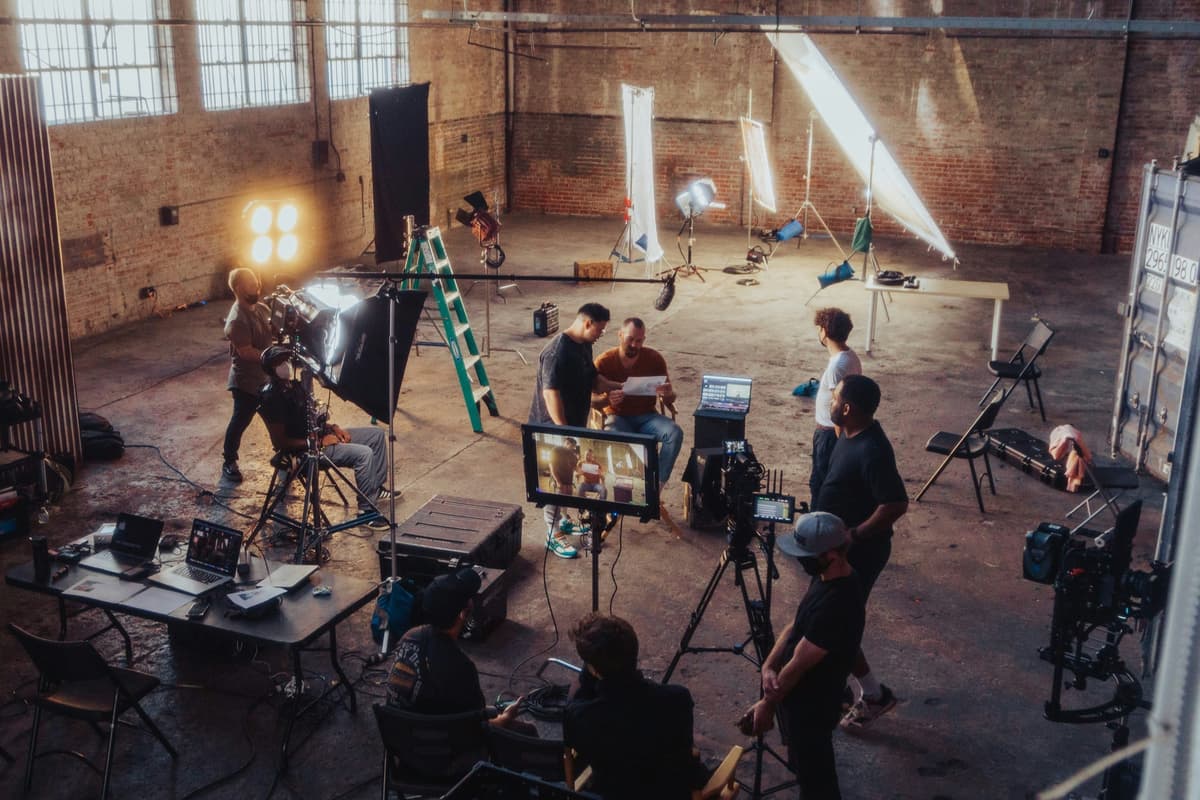
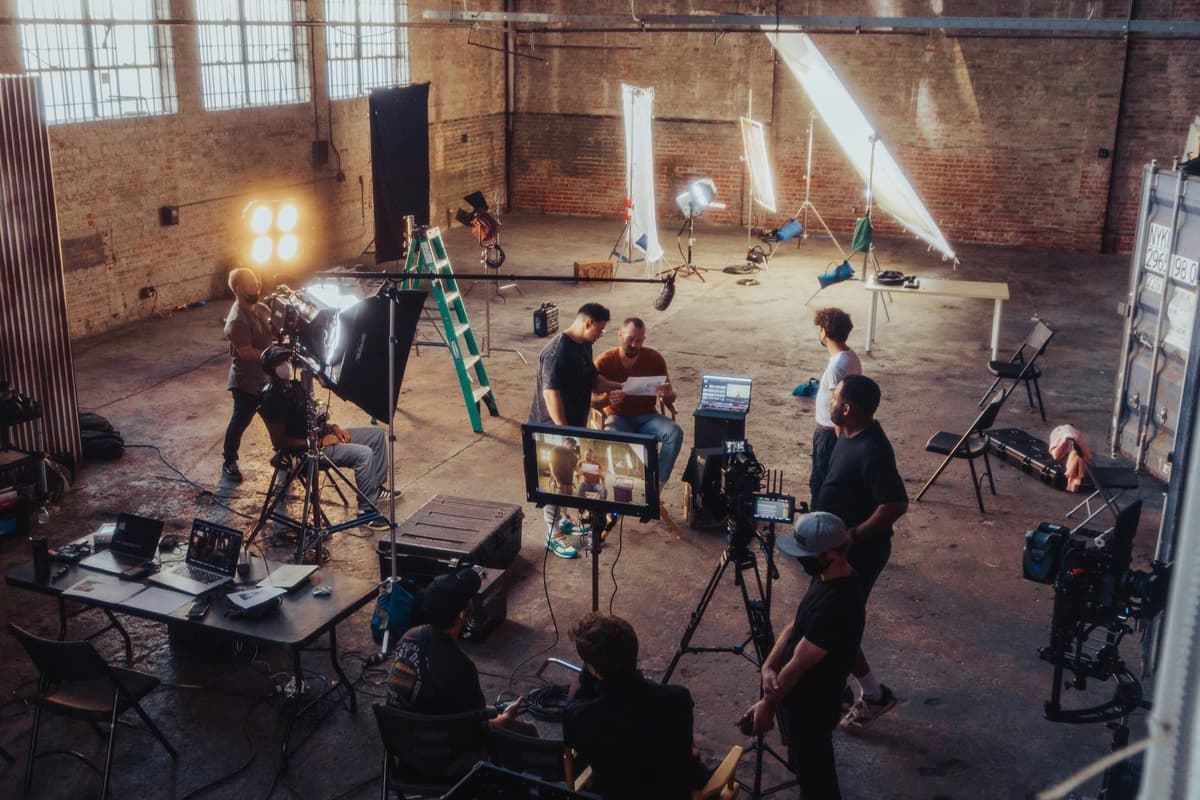
Stunt doubles collaborate closely with the stunt coordinator, who designs and oversees all stunt sequences. They rehearse gags repeatedly before cameras roll, study previsualization footage, and work with directors to ensure the stunt reads exactly as intended. On large productions, there may be a second-unit director who shoots the majority of stunt work, keeping the main unit free for dialogue-heavy scenes with the principal cast.
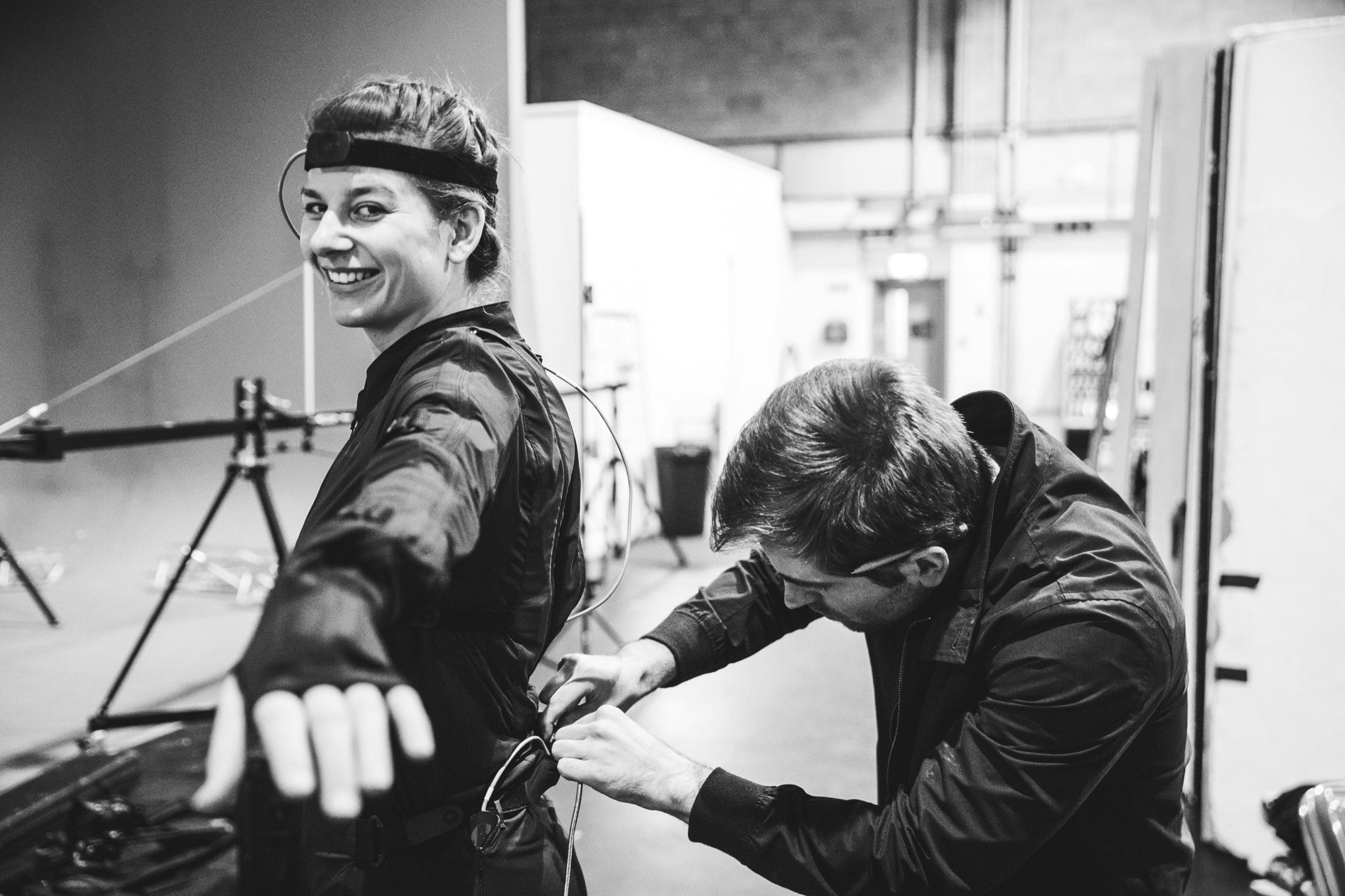
Advances in camera technology, wire rigs, air rams, crash pads, and computer-generated imagery have changed how stunts are executed, but have not eliminated the need for stunt doubles. Even heavily VFX-assisted sequences require real performers to provide reference footage, motion capture data, and the genuine physical performances that visual effects artists build upon.
Role & Responsibilities
Core Responsibilities of a Stunt Double
A stunt double's day on set begins long before cameras roll and often continues through detailed debriefs once the cameras stop. The responsibilities span physical preparation, technical execution, and close collaboration with every department that touches a stunt sequence.
Rehearsing and Choreographing Stunt Sequences
Before any live stunt is captured on camera, the stunt double rehearses the sequence repeatedly—sometimes for days or weeks on a pre-rigged location or in a dedicated stunt rehearsal space. Working with the stunt coordinator, they break down every beat of a gag: entry position, body alignment, timing cues, and landing or recovery position. Fight choreography is mapped and memorized like a dance, with each performer knowing exactly where their partner will be at every moment.
Rehearsals serve multiple purposes. They allow the stunt coordinator to spot safety issues before they become emergencies. They give camera operators and the director a chance to plan angles that make the stunt look most effective. And they help the stunt double internalize the sequence so that on the day of filming, execution can be near-automatic even under the physical and psychological pressure of a live stunt.
Physical Conditioning to Match the Actor's Build
A stunt double must maintain physical conditioning that mirrors the actor they are doubling. If the actor has been training to play a superhero and gains 20 pounds of muscle for a role, the stunt double needs to reflect that same silhouette. This sometimes means following the same diet and training regimen as the principal actor throughout pre-production and production. Weight, muscle mass, posture, and even the way someone carries themselves physically must be close enough to fool the camera at distance or in profile.
Year-round fitness is not optional. Stunt doubles carry their bodies as their primary professional tool, and any gap in conditioning can make them unusable for a role or create mismatches that are visible on screen. Many stunt doubles maintain multiple physical disciplines simultaneously—strength training, cardiovascular conditioning, flexibility, and sport-specific practice—so they can adapt quickly to whatever a new role demands.
Acting to Match Movement and Physicality
Stunt doubles are not simply athletes—they are performers. When the camera catches their hands, their gait, or the way they carry their shoulders, those details must match the principal actor's established screen presence. Many stunt doubles work with acting coaches and study footage of the actors they double extensively, learning how that person moves when they're confident, when they're frightened, or when they're in physical pain.
This movement matching becomes particularly critical in scenes where the camera cuts between the actor and the double within the same sequence. Editors require consistent rhythm and physical expression across both performers to maintain the illusion of a single continuous performance.
Executing the Full Range of Stunt Types
The practical work of a stunt double encompasses dozens of specialized skill categories. High falls require precise body control during descent and a safe landing that protects the spine—whether onto an airbag, a crash pad, or a prepared surface. Vehicle work includes high-speed driving, car rollovers, motorcycle work, and precision driving that places the vehicle exactly where the camera needs it frame by frame.
Fight work demands not only physical technique but spatial awareness of other performers, camera position, and prop weapons. Fire work—where the performer is partially or fully set alight—requires careful preparation with protective gels, a trained safety crew standing by, and coordination that gives the performer only a precise number of seconds before extinguishing. Wire work and aerial rigging place the stunt double in harnesses that must be integrated invisibly into wardrobe and removed in post-production.
Water work, horse work, precision car hits, dragging, explosions, and falls through breakaway glass complete the list of common stunt categories. Most stunt doubles specialize in several areas while maintaining at least foundational proficiency across the rest.
Collaborating with Wardrobe, Hair, and Makeup
The stunt double's work is only invisible when every other department helps complete the illusion. Costume designers build doubles for stunt doubles—versions of the actor's wardrobe that can sustain damage, have hidden rigging points for wire attachments, or are designed to be set alight. Hair and makeup teams match wigs, hairpieces, and camera-distance makeup so that the double's appearance is indistinguishable from the actor in the shots where they appear.
This collaboration requires the stunt double to attend fittings, continuity checks, and camera tests. On a long production, this coordination becomes ongoing, adjusting as the actor's look evolves through the story.
Safety Planning and Post-Stunt Review
A significant portion of a stunt double's professional responsibility involves safety planning before any physical work begins. They participate in production safety meetings, review rigging and equipment with the stunt coordinator, and communicate clearly any concerns they have about a sequence's execution. The right to refuse an unsafe gag is protected under SAG-AFTRA's contract, and professional stunt doubles take that responsibility seriously.
After each stunt, the team reviews footage immediately to assess whether the sequence was captured successfully and whether any adjustments are needed for safety or camera coverage. This review loop continues throughout a shooting day until the director has what they need and the stunt double can sign out.
Skills Required
Essential Skills for a Stunt Double
The stunt double is one of the few roles in film production that demands genuine elite-level ability across multiple completely different disciplines simultaneously. The skill set required spans physical competency, psychological resilience, interpersonal communication, and a detailed understanding of how film production works.
Multi-Discipline Physical Mastery
No single athletic background is sufficient for a career as a stunt double. Productions require versatility. A stunt double might be hired to perform a high fall on Monday, execute a complex fight sequence on Wednesday, and do precision driving on Friday. While specialization in one or two areas is common and valuable, stunt doubles who can credibly perform across a wider range of stunt categories have far more consistent work.
The physical disciplines most commonly required include: combat (boxing, wrestling, martial arts), gymnastics and acrobatics, precision driving, motorcycle riding, horseback riding, swimming and freediving, wire work and aerial rigging, and specialized skills like rock climbing, skiing, or snowboarding when productions call for them.
Physical Matching and Appearance Adaptability
Unlike most other stunt performers, a stunt double's casting depends not only on their skill level but on their physical resemblance to a specific actor. Height and build are primary factors, but proportions—the length of limbs, the width of shoulders, the size of hands—also matter when the camera gets close. Stunt doubles must be willing and able to adjust their physical appearance to match a role: gaining or losing weight, changing their hair, wearing prosthetics or special contacts, and submitting to the same continuity requirements as the principal actor.
This also means a stunt double's career can be closely tied to the career of the actor they regularly double. Many high-profile stunt doubles work almost exclusively with one or two actors throughout long stretches of their careers.
Movement Analysis and Actor Study
Physically matching an actor's appearance is only the beginning. A stunt double must also match how that actor moves—their gait, posture, the characteristic way they gesture, and the physical expression of their emotional states. This requires developing keen observation skills and a performer's ability to embody another person's physical identity.
Successful stunt doubles study hours of footage of the actors they double, often working with acting coaches or movement specialists to internalize specific physical patterns. On longer productions, they spend time with the actor directly, watching how they move naturally on and off set.
Fearlessness Under Controlled Conditions
Stunt doubles work in environments that would trigger significant fear responses in most people: the edge of a skyscraper, inside a burning vehicle, underwater in restricted spaces, or in free fall from significant heights. Managing fear under these conditions—not eliminating it, but channeling it into focus—is a fundamental professional skill.
This fearlessness is not recklessness. The most respected stunt performers are those who are meticulous about safety planning, ask detailed questions before executing any gag, and never attempt a sequence they are not genuinely prepared for. Controlled courage is the goal; unnecessary bravado is a liability.
Communication and Collaboration
Stunt work is inherently collaborative. A stunt double must communicate clearly with the stunt coordinator about their abilities, their concerns, and any physical limitations they have on a given day. They must work closely with camera operators to understand what angles are being used, so they can position their body for maximum effect. They must coordinate with wardrobe, hair, and makeup to maintain visual continuity. And they must receive and execute director feedback on performance quality.
Strong communication is also critical in the moment. During a live stunt, participants use hand signals, radio communication, and pre-established verbal cues to coordinate timing. A breakdown in communication during a complex multi-performer stunt can result in injury. The ability to listen, confirm understanding, and communicate under physical and time pressure is non-negotiable.
Physical Conditioning and Injury Prevention
Maintaining peak physical conditioning throughout a career is a demanding personal discipline. Stunt doubles train year-round, often spending as much time preventing injury as they do acquiring new skills. Flexibility work, recovery protocols, physical therapy, and ongoing conditioning in their core disciplines are standard practice.
Because stunt work involves repeated physical stress and occasional actual injury, stunt doubles must also understand their own bodies well enough to distinguish between manageable discomfort and warning signs that require medical attention. Performing through a significant injury creates conditions for catastrophic failure; knowing when to step back is a professional skill, not a weakness.
Film Production Knowledge
An effective stunt double understands how a film set operates. They know the hierarchy from director down to PA, understand shot types and why a stunt might be framed a particular way, and can communicate fluently with department heads across all the disciplines that intersect with stunt work. Stunt doubles who understand production logistics are easier to work with and create fewer costly delays—an advantage that builds reputation quickly in a word-of-mouth industry.
Professionalism and Reputation Management
The stunt industry is small and tightly networked. A reputation for reliability, professionalism, and safe execution of difficult material spreads rapidly—in both directions. Stunt doubles who show up prepared, execute cleanly, communicate honestly about their capabilities, and take care of everyone around them build careers that last decades. Those who cut corners, overstate their abilities, or create problems on set find that the calls stop coming.
Salary Guide
Stunt Double Salary and Compensation
Stunt double pay is governed by SAG-AFTRA collective bargaining agreements for union work, with additional adjustment pay categories that reflect the specific dangers involved in each stunt type. Compensation varies significantly based on production type, the performer's experience and reputation, and the specific physical demands of the work.
SAG-AFTRA Minimum Daily and Weekly Rates (2025–2026)
Under the SAG-AFTRA Theatrical and Television Basic Agreement (2023–2026 contract cycle), stunt performers receive at minimum the same day and weekly rates as principal performers, with additional stunt-specific adjustment pay on top of the base rate.
For the 2025–2026 contract year (rates effective July 1, 2025), SAG-AFTRA minimum rates for performers on theatrical feature films are approximately:
- Day rate: approximately $1,100–$1,200 per day (base minimum for principal performers; stunt performers receive this as a floor)
- Weekly rate (5 days): approximately $3,800–$4,000 per week (base minimum)
- 3-day week rate: approximately $2,800–$3,000
Television rates differ by production type and episode length. Half-hour and hour-long network television productions have their own rate schedules, generally comparable to or somewhat below theatrical rates. Streaming productions covered under SAG-AFTRA's Streaming agreements have rates that vary by budget tier.
Stunt Adjustment Pay
Above and beyond base performer rates, stunt performers earn adjustment pay for specific dangerous activities. These adjustments are negotiated individually for each stunt and are determined by the stunt coordinator in consultation with the producer. Common adjustment categories include:
- High falls: Adjustments typically start at several hundred dollars and scale with height. A fall from 30 feet may command a different rate than one from 60 feet or 100 feet. Falls at extreme heights from production aircraft or major structural heights can command adjustments of several thousand dollars per take.
- Fire work (full burn): Among the highest-compensated stunt categories. A performer who is fully set alight can earn several thousand dollars per take, given the inherent risk and the limited number of takes available before preparation must restart.
- Vehicle hits: Being struck by a moving vehicle, even at low speed, commands significant adjustment pay. High-speed hits or those involving precision placement within very tight margins are compensated accordingly.
- Underwater work: Extended underwater sequences with breath hold requirements or enclosed space restrictions are adjusted above base rates.
- Explosions and air rams: Pyrotechnic work and explosive launches command their own adjustment tiers based on proximity to the explosion and the physical impact on the performer.
Doubling Adjustment Pay
When a stunt performer is specifically doubling a named principal actor, an additional doubling adjustment may be negotiated. This recognizes the additional preparation required to match an actor's appearance, the ongoing nature of the engagement throughout production, and the added continuity requirements placed on the performer. Doubling adjustments are negotiated on a per-production basis and are not mandated at a fixed rate by the SAG-AFTRA Basic Agreement.
Annual Earnings Across Career Stages
Annual earnings for stunt doubles vary enormously based on how consistently they work and what level of productions hire them.
- Entry level (first 1–3 years): Many new stunt performers earn $20,000–$40,000 annually, working sporadically between non-union or low-budget union productions while building their network and credit list.
- Mid-career (4–10 years): Established stunt doubles working regularly on mid-budget productions can expect annual earnings in the range of $60,000–$120,000, depending on the volume of work and adjustment pay from specific stunts performed.
- High-level doubles (franchise work, A-list actors): Stunt doubles who regularly work with high-profile actors on major studio productions can earn $150,000–$300,000 or more in a strong working year. Performers who double the same major star across multiple franchise installments may negotiate per-production deals that go well above SAG-AFTRA minimums.
ZipRecruiter data from early 2026 reports an average annual salary of approximately $35,847 for stunt doubles across the U.S., but this average is heavily skewed by the large number of part-time or entry-level performers who work only sporadically. Full-time working stunt professionals earn significantly more.
Geographic Compensation Differences
The majority of high-paying stunt work is concentrated in Los Angeles, Atlanta, New York, and Vancouver (for U.S.–Canada co-productions). Los Angeles remains the hub of the stunt industry, and stunt performers based there have access to the greatest volume of studio work. Atlanta's growing production base, fueled by Georgia's film tax incentive, has created a secondary market with increasing rates. New York covers episodic television and independent film. Productions shooting on location in other states or countries provide per diem and travel allowances for stunt performers brought in from these hubs.
SAG-AFTRA Health and Pension Benefits
Beyond direct compensation, SAG-AFTRA membership provides access to the SAG-AFTRA Health Plan and the SAG-AFTRA Pension Plan. Health coverage requires meeting an annual earnings threshold (currently around $26,000 in covered earnings). Pension contributions are made by producers on behalf of all covered performers as a percentage of gross earnings. For stunt performers with physically demanding careers, these benefits—particularly health coverage—represent significant additional compensation value beyond the paycheck.
SAG-AFTRA has also been lobbying for stunt performers to receive full pension benefits at age 55 rather than the standard retirement age, recognizing that stunt careers are often physically unsustainable into a performer's 60s. This proposal has been under discussion with the Pension Plan board for several years.
External Reference: BLS Data
The U.S. Bureau of Labor Statistics does not report a separate occupational code for stunt performers or stunt doubles. The closest BLS category is Actors (SOC 27-2011), for which the median annual wage was $17.94 per hour as of the most recent survey. This figure dramatically understates what working stunt professionals earn, as it captures part-time and occasional performers across all types of acting work. For authoritative BLS wage data, see the BLS Occupational Employment and Wage Statistics.
Frequently Asked Questions
What does a stunt double do?
A stunt double physically substitutes for a principal actor during dangerous sequences in a film or television production. They perform high falls, fight choreography, vehicle work, fire gags, wire work, and other physically hazardous sequences that the actor cannot or should not perform due to safety or insurance restrictions. The stunt double must closely match the actor's physical appearance so that the substitution is invisible on screen.
How much does a stunt double make?
Under SAG-AFTRA contracts, stunt doubles earn at minimum the same base day rate as principal performers—approximately $1,100–$1,200 per day for theatrical features in 2025–2026—plus additional stunt adjustment pay for specific dangerous activities. Full-time stunt doubles working regularly on major productions can earn $60,000–$150,000 or more annually. Entry-level performers working sporadically may earn $20,000–$40,000 per year. The highest-earning stunt doubles working franchise features with A-list actors can make $200,000–$300,000 in a strong year.
How do you become a stunt double?
There is no formal degree for stunt doubling. The pathway requires mastery of multiple physical disciplines (martial arts, gymnastics, driving, and others), SAG-AFTRA union membership, a network of industry contacts, and a track record of on-set experience. Most stunt doubles spend 2–5 years training and working non-union or low-budget union productions before securing regular studio work. Finding a mentor—an established stunt performer or coordinator who can vouch for your abilities—is critical to breaking into the industry.
What is the difference between a stunt double and a stunt performer?
A stunt performer is any SAG-AFTRA–covered performer hired to execute stunts in a production. A stunt double is a stunt performer assigned specifically to replicate one named principal actor throughout a production. The stunt double must match that actor's physical appearance and movement style closely enough to be visually interchangeable on camera. A stunt performer who is not doubling a specific actor might appear as a stunt player in action crowd scenes or perform background stunt work.
Do stunt doubles receive screen credit?
SAG-AFTRA contracts require that stunt performers who double a specific actor receive screen credit as "Stunt Double for [Actor's Name]" in the end credits. However, the Academy of Motion Picture Arts and Sciences did not historically recognize stunt work with an Oscar category—a situation that changed in 2024 when the Academy announced an "Achievement in Stunt Design" award to be added starting with the 100th Academy Awards in 2028, covering films released in 2027. Until then, stunt performers have been among the most recognized-by-fans but least formally honored of all film production crafts.
How dangerous is stunt work?
Stunt work carries genuine risk of injury and, in rare cases, fatalities. A peer-reviewed study found that 80.1% of stunt performers reported receiving a head impact or head whip during stunt-related work. Common injuries include fractures, soft tissue damage, concussions, and burns. The profession mitigates risk through rigorous safety planning, specialized protective equipment, SAG-AFTRA safety provisions that give performers the right to refuse unsafe gags, and the accumulated expertise of experienced stunt coordinators. Despite these protections, stunt work remains one of the most physically demanding and inherently hazardous occupations in the entertainment industry.
How long does it take to become a stunt double?
Most professionals estimate it takes 2–5 years of intensive training and industry networking to break into consistent stunt work, and another 5–10 years to build the reputation and credit list needed for regular studio-level employment as a dedicated stunt double. The physical training typically begins years before anyone attempts to break into the industry. Becoming a stunt coordinator—the senior stunt department role—requires a minimum of 500 days of stunt performer credits under SAG-AFTRA rules, representing roughly 5–10 years of consistent professional work.
Education
Training Pathways for Stunt Doubles
There is no single accredited college degree program in stunt doubling, and no academic credential that qualifies someone for the role. What the industry requires instead is demonstrated mastery across multiple physical disciplines, a professional network, and an earned track record of safe, reliable performance. Building that foundation takes years of deliberate training in specific areas.
Martial Arts and Combat Training
Martial arts training is among the most common foundations for a career as a stunt double. Disciplines valued in the stunt industry include Brazilian jiu-jitsu, Muay Thai, boxing, wrestling, judo, kung fu, and Krav Maga. The goal is not simply to learn how to fight—it's to develop body awareness, timing, the ability to fall safely, and the comfort with physical contact that stunt fighting demands.
Many stunt performers compete in their chosen martial art at an amateur or semi-professional level, both to sharpen their skills and to establish a measurable record of their training. Credentials from recognized martial arts organizations, competition records, and belt ranks all serve as verifiable evidence of competency that can be referenced when pursuing stunt work.
Gymnastics, Acrobatics, and Parkour
Gymnastics and acrobatics give stunt doubles the body control needed for falls, wire work, and aerial sequences. Gymnastic training develops spatial awareness during airborne movement, which is critical when a stunt double must execute a flip or rotation and land in a precise position. The skill of knowing where your body is in space without visual reference—called proprioception—is developed through years of gymnastics training and is nearly impossible to acquire quickly.
Parkour and freerunning add a practical, environmental dimension to movement training. Stunt performers with strong parkour backgrounds can navigate urban environments, rooftops, scaffolding, and set pieces with confidence and efficiency. This is particularly valuable for chase sequences and action films set in dynamic locations.
Precision and High-Performance Driving
Vehicle work is one of the highest-paying stunt categories, and the qualifications required are significant. Aspiring stunt drivers train at recognized performance driving schools, learning car control at the limits of traction, handbrake turns, precision reverse driving, J-turns, and vehicle positioning for camera. Some pursue additional training in motorcycle riding, off-road driving, or water craft operation.
Stunt driving certifications and a documented training history are typically required before a production will allow a stunt performer to execute a vehicle gag. Many productions require a practical driving test before hiring for vehicle-specific work.
Equestrian Skills
Period productions, Westerns, and fantasy films regularly require stunt doubles who can ride horses at high speed, fall from a horse safely, and perform horseback fight sequences. Equestrian training for stunt work goes beyond recreational riding—it includes learning to fall from a moving horse onto prepared surfaces, riding bareback, and performing at speed in emotionally charged environments with multiple camera crews present.
Swimming and Underwater Work
Water sequences create some of the most complex stunt challenges. Stunt doubles who specialize in water work are typically strong competitive swimmers, many with scuba certification and experience in freediving. Underwater sequences require the ability to perform physically while holding breath, maintaining composure in enclosed underwater environments, and executing complex choreography without the ability to communicate verbally.
SAG-AFTRA Membership: The Union Path
To work on major studio and network productions in the United States, stunt doubles must be members of SAG-AFTRA, the union that covers film and television performers. Earning SAG-AFTRA eligibility through stunt work typically requires accumulating three days of principal stunt performer work on a SAG-AFTRA signatory production. Non-union work can also help build credits toward eligibility through the Taft-Hartley provision, which allows a non-union performer to work on a union production once before being required to join.
Joining SAG-AFTRA requires paying an initiation fee (currently around $3,000) plus ongoing semi-annual dues. The union provides access to minimum pay rates, health insurance, pension contributions, and critical protections around working conditions and safety standards. For stunt performers, the union's safety provisions are especially important given the inherent risk of the work.
The 500-Day Path to Stunt Coordinator
Many stunt doubles have a long-term career goal of becoming a stunt coordinator—the department head who designs, oversees, and takes overall responsibility for all stunt work on a production. Under SAG-AFTRA guidelines, a stunt performer must accumulate a minimum of 500 days of stunt performer work on SAG-AFTRA productions before they can be credited as a stunt coordinator. This requirement ensures that stunt coordinators have the depth of practical experience necessary to design safe sequences and supervise other performers.
Those 500 days represent years of consistent work—typically 5 to 10 years in the industry—during which a stunt performer builds relationships, hones their craft across multiple disciplines, and develops the leadership and organizational skills that a stunt coordinator role demands.
Building a Network and Finding a Mentor
Because there are no formal degree pathways into stunt work, career advancement depends heavily on personal relationships. Most stunt performers break into the industry through a mentor—an established stunt performer or coordinator who vouches for their abilities and brings them onto productions. Finding a mentor requires attending stunt training camps, competing in relevant sports at a visible level, and making connections at industry events. Some stunt performers begin their careers as stunt coordinators' assistants or production assistants on stunt-heavy productions before transitioning into performing roles.
Last updated August 31, 2026
Budget this role in seconds with Saturation
Rate packs, fringes, and phases turn a crew list into an accurate production budget without the spreadsheet math.
Rate packs
Verified union rates, versioned.


Fringes and markupsRebuilt
Stack them, cap them, and see the split on every line.
PhasesRebuilt
Every column knows its type.
Auto-fill
Rates fill in as you type, from the source you turned on.