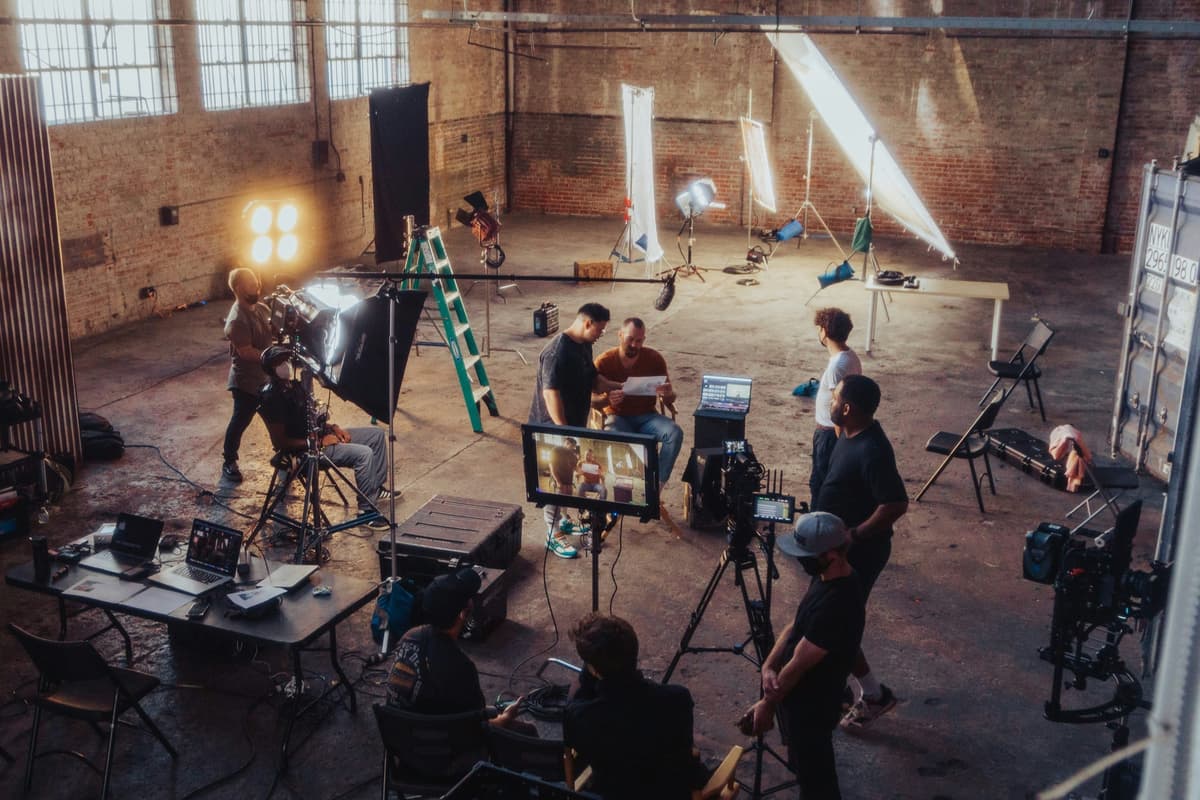
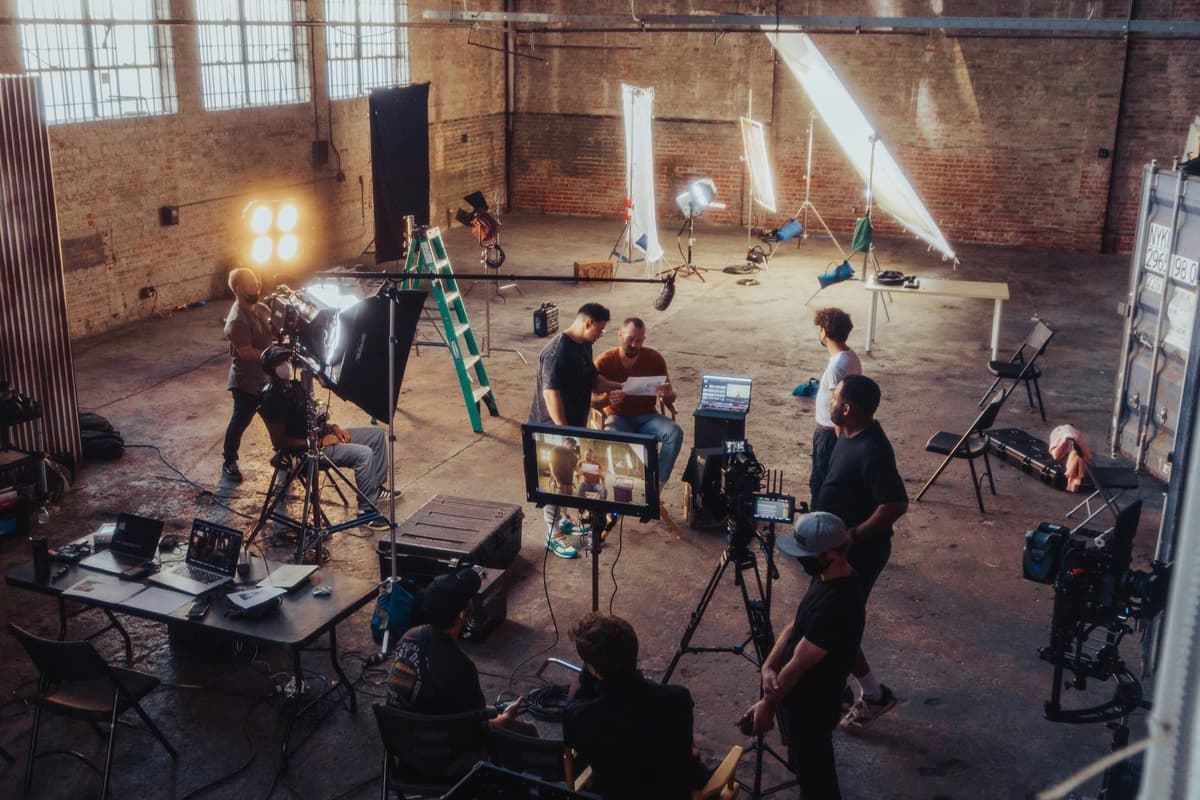
What is a Stunt Choreographer?
Overview
What Is a Stunt Choreographer?
A stunt choreographer is the creative architect of action. Where a stunt coordinator focuses on the safety and logistics of executing dangerous work, the stunt choreographer designs the visual language of that action — how a fight flows beat by beat, how a car chase builds dramatic tension, how a large-scale battle unfolds across a battlefield. On productions where both titles are present, the stunt choreographer is the storyteller; the stunt coordinator is the safety officer.
On many productions — especially mid-budget independent films — one person holds both roles simultaneously, working under the title "Stunt Coordinator/Choreographer." On major studio action films with dedicated action design teams (think John Wick, Marvel productions, or Mission: Impossible), the choreographic and safety functions are often separated into distinct roles. The choreographer works as closely with the director and director of photography as they do with the stunt team.
Where Stunt Choreographers Work
Stunt choreographers work across feature films, episodic television, commercials, music videos, and live events. The demand for dedicated stunt choreographers has expanded significantly with the rise of action-focused streaming content — platforms like Netflix, Apple TV+, and Amazon Prime have greenlit large-scale action series requiring sophisticated fight and stunt design. Notable recent examples include the Extraction franchise, The Witcher, and Tulsa King.
Production scale determines the role's scope. On a $200 million action blockbuster, the stunt choreographer may oversee a team of 40 stunt performers and spend three months in pre-production designing sequences with previsualization artists. On a $5 million indie thriller, the same person may have two weeks of prep time, a handful of stunt doubles, and handle all coordination duties themselves. The creative demands remain the same regardless of budget — the resources to execute them vary dramatically. Saturation.io helps production teams track all stunt-related expenses, from performer day rates to equipment rentals, in a single collaborative budget.
The Stunt Choreographer's Place in the Production Hierarchy
The stunt choreographer reports directly to the director. For major action sequences, they work closely with the producer and UPM to establish time and budget requirements for stunt work. They collaborate daily with the director of photography to ensure action sequences are designed for maximum cinematic impact — a beautifully choreographed fight that the camera cannot follow serves no one. On the physical execution side, they coordinate with the stunt coordinator (or perform both functions themselves) to ensure that every sequence designed on paper or in previsualization can be executed safely on set.
Role & Responsibilities
Pre-Production: Designing the Action
A stunt choreographer's work begins the moment they are hired, which is typically during development or early pre-production — often before principal photography by two to four months on major action productions. The first step is a comprehensive script breakdown: reading the screenplay not just for obvious action sequences but for any moment that involves physical conflict, vehicular movement, falls, or environmental hazards. A scene described simply as "they fight" in the script may translate to three weeks of choreography work.
From the script breakdown, the stunt choreographer meets with the director to understand the intended tone and visual style of each action sequence. A spy thriller calls for controlled, precise combat; an R-rated revenge film may demand brutal, realistic violence; a superhero film requires physics-defying spectacle. These creative conversations shape every decision that follows.
With the director's vision established, the stunt choreographer begins designing individual sequences. This process varies by practitioner but commonly involves:
- Writing detailed action breakdowns — a moment-by-moment description of every move in a sequence
- Rehearsing sequences with the stunt team to develop and refine choreography
- Working with previsualization artists (on larger productions) to produce animatic representations of key sequences
- Conducting stunt performer auditions and casting to match physical doubles to principal actors
- Training principal actors in the physical disciplines required for their roles — whether that's boxing, swordsmanship, vehicle operation, or wire work
- Creating a detailed stunt schedule that maps choreographed sequences to shoot days
- Budgeting stunt requirements in collaboration with the UPM and line producer
Production: On Set Day-to-Day
During principal photography, the stunt choreographer shifts into a directing role for action sequences. They work alongside the director — and in some cases, are given primary directorial control of action units — to ensure every beat of the choreography translates to camera. A typical shoot day involving a stunt sequence might unfold as follows:
Early morning: The stunt choreographer walks the location with the DP and gaffer, confirming that the physical space and lighting plan accommodate the designed action. They identify any safety concerns with the stunt coordinator and adjust choreography if the space has changed since pre-production rehearsals.
Before the cast arrives: The stunt team rehearses the day's sequences with stand-ins or stunt doubles. The choreographer makes final adjustments to footwork, timing, and spacing based on the physical reality of the location.
Principal action shooting: The choreographer works in close communication with the director during takes, watching both the physical performance and how it reads through the camera. Between takes, they give specific performance notes to stunt performers and actors — adjusting timing, selling reactions, or modifying choreography based on what they're seeing on the monitor.
Safety oversight: In coordination with the stunt coordinator, the choreographer participates in safety meetings before any high-risk gag (stunt). They confirm that all safety measures — rigging, crash pads, emergency medical personnel — are in place before any dangerous sequence begins. On productions where the same person fills both the choreographer and coordinator role, they bear full responsibility for both creative design and safety management simultaneously.
Actor Training and Physical Preparation
One of the most demanding and often underappreciated functions of the stunt choreographer is the preparation of principal actors for physical performance. When an actor must deliver convincing combat or physical action, the choreographer works with them — often over months of pre-production training — to develop the muscle memory required for safe, believable performance on camera.
This training must be calibrated carefully. Professional stunt performers train for years to execute dangerous physical work safely. A principal actor, regardless of how fit they are, cannot reach that level of technical expertise in a pre-production period. The choreographer's job is to design choreography complex enough to look realistic and dangerous, while keeping the portions the actor performs within their physical capability. The most dangerous elements are assigned to trained stunt doubles.
Post-Production: Reference and VFX Collaboration
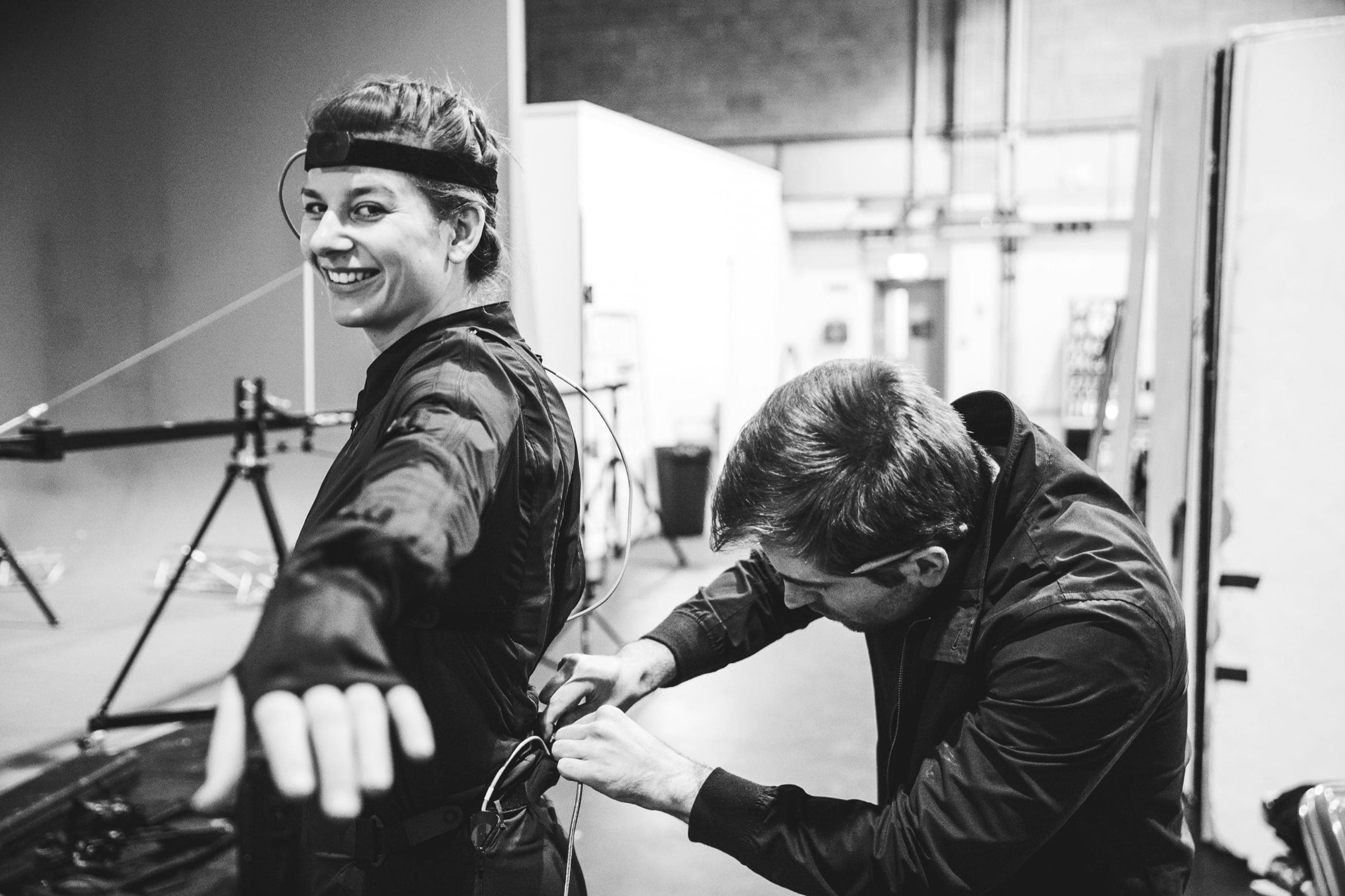
A stunt choreographer's involvement does not end when the cameras stop rolling. During post-production, they often serve as a resource for the visual effects team, providing reference notes on the physical intent of sequences that will receive VFX enhancement. If a sequence involved wire-removal (digital erasing of visible rigging), the choreographer can explain the intended physics of a move to help VFX artists make digital enhancements look physically credible. On productions with significant digital stunt work, the choreographer may be involved in motion capture sessions, directing stunt performers through digitized versions of sequences for use in post.
Working With the Stunt Coordinator
On productions where both roles are present, the choreographer and coordinator form a closely integrated partnership. The choreographer designs what the action looks like; the coordinator determines how to execute it safely. If the choreographer designs a sequence involving a 30-foot fall, the coordinator assesses whether that fall can be performed safely with available resources, and may suggest modifications. The choreographer retains creative authority; the coordinator retains safety authority. When these two authorities conflict — as they occasionally do on high-pressure productions — safety takes precedence, always.
Skills Required
Multiple Martial Arts Disciplines
Competency across multiple martial arts disciplines is the most foundational skill for any stunt choreographer. A single-discipline practitioner is limited in the choreographic vocabulary they can draw from, which becomes apparent when productions require period-specific combat styles, non-striking fighting forms, or the blended "movie martial arts" aesthetic that characterizes much of contemporary action cinema. The expectation among hiring directors on major productions is that the choreographer can design for any physical confrontation the script requires.
Beyond technical competence in specific disciplines, the stunt choreographer needs a meta-skill: the ability to rapidly learn and adapt choreography to match a production's specific physical requirements. A John Wick-style "gun-fu" sequence draws from Judo, BJJ, competitive shooting, and dance. A period pirate film requires Spanish rapier work blended with athletic acrobatics. The choreographer's job is to synthesize across disciplines to create something that is simultaneously safe, camera-ready, and cinematically compelling.
Fight Choreography and Sequence Design
The craft of designing fight sequences for camera is distinct from the ability to fight. Fight choreographers must think in shots — understanding that every position, every beat, every transition must read clearly through a specific lens at a specific angle. A head movement that looks like a dodge in person may be invisible from a camera 30 feet away shooting with a telephoto lens. A punch that would cause real damage in a genuine fight may need to be thrown three feet wide of the target to be both safe and convincing on camera.
Effective fight choreography is narrative choreography. Each sequence has an arc: an initiation, escalation, turning points, and resolution. The choreographer must design physical action that advances character and story — the way a character fights reveals who they are. The efficient, controlled combat of John Wick's operator character tells us as much about him as any dialogue. Designing that level of character-driven physical storytelling is an advanced creative skill that develops over years of practice.
Vehicle and Driving Coordination
Car chases and vehicle action sequences constitute a major category of stunt work in contemporary film and television. Stunt choreographers working on productions with significant vehicular content must possess foundational knowledge of precision driving, vehicle rigging (for camera mounts and safety equipment), and the logistical planning required for large-scale automotive sequences. On productions with extensive car work, a specialist driving coordinator often joins the team, but the choreographer must understand the vocabulary and constraints of vehicle-based action to design sequences effectively.
Large-Scale Battle Sequence Design
Battle sequences involving dozens or hundreds of performers present unique choreographic challenges. Unlike one-on-one fight choreography where every beat can be individually designed and rehearsed, large-scale battles require the choreographer to design systems — behavioral rules that groups of performers execute in coordinated ways to create the appearance of chaotic combat while maintaining absolute physical safety. Medieval battle sequences, crowd brawls, and war scenes all require this systems-level choreographic thinking, combined with deep experience managing large groups of stunt performers safely in the same physical space.
Camera Awareness for Action
A stunt choreographer who designs without consideration of how the action will be captured is not doing their job. Understanding shot composition, focal length behavior, the implications of different camera rigs (Steadicam, handheld, gimbal, wire cam) for action staging, and the editing rhythms typical of action sequences allows the choreographer to design action that will cut together effectively in post-production. The John Wick franchise's "gun-kata" style, for example, was explicitly designed around long-lens, single-take coverage — that coverage style was baked into the choreographic design, not determined independently by the cinematographer.
Actor Coaching and Physical Direction
Training non-stunts actors to perform convincing physical action is a specialized skill that combines athletic coaching, acting direction, and creative problem-solving. The choreographer must assess each actor's physical capabilities honestly, design training regimens that prepare them for what the camera requires, build their confidence through progressive achievement, and on set, provide performance direction that is both specific about physical mechanics and sensitive to the actor's creative process. Some of the most successful action films of recent years — including those featuring Keanu Reeves, Tom Cruise, and Charlize Theron — are distinguished by principal actors who have invested heavily in physical training under expert choreographic guidance.
Safety Management and Risk Assessment
Every stunt choreographer — regardless of whether they carry the formal coordinator title — must maintain deep competency in stunt safety practice. This includes knowledge of rigging systems, fall and crash protection, fire and water stunt protocols, the use of safety personnel, and the regulatory requirements that govern stunt work in different jurisdictions. The entertainment industry's painful history of on-set accidents — including fatalities during action production — has produced increasingly rigorous safety cultures on professional productions. Stunt choreographers who cut corners on safety do not work for long.
Collaboration and Communication
The stunt choreographer operates at the intersection of multiple departments: direction, camera, production design (whose sets and locations shape action), wardrobe (whose costumes affect actor movement), and visual effects (whose digital enhancements extend practical stunt work). The ability to communicate clearly and collaboratively across all of these departments — adapting language and priorities for each — is as important to professional success as any physical skill. Managing the egos, creative disagreements, and competing priorities that arise during action production requires both interpersonal skill and professional authority earned through demonstrated expertise.
Production Budgeting and Scheduling for Stunt Work
Stunt choreographers who understand production budgeting are more valuable to producers than those who do not. A choreographer who can accurately estimate the cost of a sequence — in stunt performer days, rigging costs, equipment rentals, prep time, and shoot days — helps productions plan realistically. Those who consistently deliver extraordinary action within budget constraints build reputations that sustain long careers. Saturation.io's film budgeting tools allow stunt coordinators and choreographers to build detailed action department budgets with real-time collaboration, helping ensure stunt sequences are fully costed before production commits to the schedule.
Salary Guide
How Stunt Choreographers Are Compensated
Stunt choreographers — whether functioning purely in a choreographic capacity or in a combined coordinator/choreographer role — are compensated through a combination of SAG-AFTRA scale rates, negotiated overscale fees, and in some cases flat deal arrangements. Understanding the structure of stunt industry compensation requires familiarity with both union rate schedules and the practical realities of a freelance, project-based career.
SAG-AFTRA Stunt Coordinator Rates
On union productions covered by the SAG-AFTRA Theatrical and Television Basic Agreement, stunt coordinators (the union designation most commonly applied to stunt choreographers) are compensated at specific minimum scales. Under the current agreement, stunt coordinators employed on a daily basis (not under a flat deal) earn scale rates comparable to stunt performers, which were in the range of $1,005 to $1,082 per day during the Year 3 wage period of the 2020-2023 theatrical agreement, with subsequent increases negotiated in more recent cycles.
Stunt coordinators may also be employed under "flat deal" arrangements for weekly or picture deals. Flat deals are negotiated directly between the production and the coordinator (or their representation), and on major studio productions, significantly exceed daily scale. The specific minimum flat deal rates are established by SAG-AFTRA and indexed to the weekly equivalent of daily scale, but the practical rates for working coordinators on studio features and major streaming productions are often three to five times the minimum.
Day Rates by Production Type
The production type and budget tier are the most significant determinants of what a stunt choreographer earns on any given project:
- Major studio action feature ($80M+): Day rates of $2,500–$7,000+ are common for lead stunt coordinators/choreographers on large productions with significant action content. Lead choreographers on franchise films (Marvel, Mission: Impossible, Fast & Furious) may negotiate picture deals well above these figures.
- Mid-budget studio/streaming feature ($20M–$80M): Day rates of $1,500–$3,500 for experienced choreographers with significant credits. Flat weekly deals of $6,000–$15,000 are common.
- Low-budget independent ($1M–$20M): Day rates of $800–$1,500 are common for working coordinators/choreographers. Productions operating below SAG-AFTRA thresholds may negotiate directly.
- Ultra-low budget / non-union: Day rates of $300–$700, with significant variation. Some emerging choreographers accept lower rates to build credits.
- Television (episodic): Weekly rates are standard on long-running series. Experienced action TV coordinators may earn $5,000–$15,000 per week on major network or streaming productions with significant action content.
- Commercial / music video: Day rates of $1,000–$3,000 for stunt coordinator services, with shorter engagements and sometimes no prep time budget.
Annual Earnings and Career Trajectory
Aggregated salary data from multiple sources provides useful context for understanding career earnings:
- ZipRecruiter (February 2026): Average annual pay of $50,890, with the 25th–75th percentile range falling between $42,000 and $59,000. Top earners (90th percentile) reaching $70,000 annually.
- Salary.com (February 2026): Average annual salary of $51,809.
- Glassdoor (December 2024): Average of $46,981 per year.
- Comparably (January 2026): Range of $18,585 to $171,596, with an average of $42,119.
These aggregated figures reflect the full range of professionals holding this title across all budget tiers, including those in early-career or part-time work situations. Working stunt choreographers on major productions earn significantly above these medians. The wide range (from under $20,000 to over $170,000) reflects the profound difference between emerging practitioners building credits and established choreographers working consistently on major productions.
BLS Data: Related Occupations
The Bureau of Labor Statistics does not maintain a specific occupational category for stunt choreographers. The closest related classifications include Special Effects Technicians and Directors/Producers. For broader compensation context, the BLS Occupational Employment and Wage Statistics can be referenced at bls.gov/oes. The BLS median for producers and directors — $79,000 as of the most recent survey — provides a reference point for what senior creative production roles earn.
Geographic Markets
As with virtually all entertainment industry occupations, geography significantly affects earning potential:
- Los Angeles: The primary market for film and television stunt work. The highest concentration of high-budget productions and the largest community of professional stunt practitioners. Highest rates and most consistent work availability for experienced choreographers.
- New York: Strong market for television and commercial stunt work. Rates comparable to LA for experienced practitioners.
- Atlanta / Georgia: Grown substantially as a production center. Significant stunt market, particularly for Netflix and Marvel productions shooting in Georgia.
- Vancouver / British Columbia: Major hub for US productions shooting in Canada. Strong stunt community with active productions year-round.
- Other US markets: New Mexico, New York, Texas, and New Orleans have active production communities, but with fewer major productions than LA, rates and work frequency are lower.
Union vs. Non-Union Considerations
SAG-AFTRA membership provides access to union productions, which generally offer higher rates, mandatory safety provisions, health insurance contributions, and pension benefits. Joining SAG-AFTRA requires either: Taft-Hartley eligibility (being hired for a principal role or stunt on a union production as a non-union performer, which triggers eligibility), or meeting initiation fee requirements after accumulating sufficient union work. The initiation fee for SAG-AFTRA is approximately $3,000, with ongoing dues thereafter. For stunt choreographers planning a long-term career on major productions, SAG-AFTRA membership is effectively required.
Frequently Asked Questions
What does a stunt choreographer do?
A stunt choreographer designs the creative and visual elements of action sequences for film and television. They work with the director to develop the style and tone of fight scenes, car chases, and large-scale action sequences, then design specific choreography — the individual beats, movements, and transitions — that performers execute on set. They also train principal actors in physical performance and coordinate with the director of photography on how action sequences will be filmed.
What is the difference between a stunt choreographer and a stunt coordinator?
A stunt coordinator is responsible for the safety and logistics of stunt execution — casting stunt performers, managing rigging and safety equipment, conducting safety meetings, and ensuring all dangerous work is performed safely. A stunt choreographer is responsible for the creative design of the action — what the fight looks like, how it flows, what story it tells. On many productions, one person holds both roles (stunt coordinator/choreographer). On major action productions with large dedicated teams, the roles may be separated, with a choreographer focused on creative design and a coordinator focused on safety management.
How much does a stunt choreographer make?
Earnings vary significantly by production budget and career level. On major studio action films, lead stunt choreographers may earn $2,500–$7,000+ per day or negotiate picture deals. Aggregated salary data shows annual earnings averaging approximately $50,000–$52,000 across all career levels, with a range from under $20,000 (emerging practitioners) to over $170,000 (established choreographers working consistently on major productions). SAG-AFTRA minimum stunt coordinator scale runs approximately $1,005–$1,082 per day on theatrical productions under the current agreement.
How do you become a stunt choreographer?
The standard path is: years of martial arts and physical training → work as a stunt performer → accumulate credits and on-set experience → take on increasingly senior coordination and choreography responsibilities on lower-budget productions → build a track record that attracts major-production work. SAG-AFTRA requires a minimum of 500 eligible stunt days before a performer can serve as a stunt coordinator on union productions. Pursuing SAFD (Society of American Fight Directors) certification provides formal credentials in stage and screen combat that support choreographic work.
Do stunt choreographers need martial arts training?
Yes. Martial arts training is essential — not as a background in one style, but as deep competency across multiple disciplines. A fight choreographer who has not personally trained in and executed the techniques they are designing cannot reliably coach performers, assess safety, or troubleshoot problems that arise during shooting. Most professional stunt choreographers have 10+ years of training across striking arts (boxing, Muay Thai), grappling arts (BJJ, Judo, wrestling), and weapons disciplines (Kali, stage combat swordsmanship), typically beginning training in their teens or early twenties.
What is SAFD certification?
SAFD stands for the Society of American Fight Directors, the leading certifying body for theatrical and screen combat in the United States. SAFD offers proficiency testing in specific weapons systems — unarmed combat, broadsword, rapier and dagger, small sword, quarterstaff, knife, and others — with three levels of achievement: Actor Combatant, Advanced Actor Combatant, and Fight Master (the highest designation). SAFD certification demonstrates formal technical training in combat choreography for theatrical and screen contexts, and is widely recognized by casting directors and choreographers hiring for productions requiring fight sequences.
Can stunt choreographers work internationally?
Yes. Many experienced stunt choreographers work across international markets, particularly as Hollywood productions increasingly shoot in the UK, Eastern Europe, Australia, New Zealand, and Canada. International productions may require local union membership or work permits depending on the jurisdiction. Building relationships with international production communities and demonstrating versatility across different action aesthetics (American, Hong Kong, European) expands a choreographer's global marketability.
What software do production teams use to manage stunt budgets?
Production accountants and line producers on professional film and television use film budgeting software to track all stunt-related costs — performer day rates, stunt adjustment payments, rigging and equipment rentals, and facility costs for rehearsal space. Saturation.io provides cloud-based production budgeting and expense management that allows stunt coordinators to collaborate directly with the production accounting team, keeping action department costs transparent and up to date in real time.
Education
Is There a Formal Degree Path for Stunt Choreographers?
There is no traditional academic degree that leads directly to a career as a stunt choreographer. The path into this profession is almost entirely experiential, built over years through physical training, stunt performance, and progressive assumption of choreographic responsibilities. That said, formal training programs and certifications play a meaningful role in building the foundational skills that effective stunt choreographers draw from throughout their careers.
Martial Arts and Physical Discipline Training
The most essential training for any aspiring stunt choreographer is deep competence in at least one — and ideally several — martial arts or physical combat disciplines. The most commonly sought disciplines in the industry include:
- Boxing and Muay Thai — Foundation of most cinematic striking choreography
- Brazilian Jiu-Jitsu (BJJ) — Essential for ground fighting and grappling sequences
- Wrestling / Judo — Throws, takedowns, and physical contact between performers
- Kali / Eskrima — Weapons choreography, particularly for blade and impact weapons
- Wushu / Kung Fu — Acrobatic martial arts widely used in action film aesthetics
- Fencing / Stage combat swordsmanship — Period productions and fantasy/sci-fi action
- Gymnastics and acrobatics — Wire work, flips, and environmental interaction
Years of disciplined training in these arts — typically 5 to 10 years minimum before pursuing professional stunt work — provide the choreographer with a physical vocabulary from which they draw when designing sequences. A choreographer who has not personally performed a technique cannot reliably design choreography around it, assess its safety on camera, or effectively coach performers through it.
Stage Combat Certifications
Several organizations provide formal training and certification in theatrical combat that is directly applicable to film stunt choreography:
Society of American Fight Directors (SAFD) — The leading American certifying body for theatrical and screen combat. SAFD offers certifications in broadsword, rapier and dagger, small sword, unarmed combat, quarterstaff, knife, and other disciplines. The highest SAFD designation — Fight Master — represents the apex of recognized expertise in North America. Many stunt choreographers pursue SAFD certification early in their careers as a formal credential, and SAFD training workshops provide structured instruction in the mechanics and theatrical presentation of combat that complements practical stunt training.
British Academy of Stage and Screen Combat (BASSC) — The UK equivalent of SAFD, widely recognized on international productions. Valuable for choreographers working on UK-US co-productions or major productions that shoot in the UK.
International Institute of Non-Theatrical Mime (IINM) — Provides training in physical performance and mime technique that enhances a choreographer's ability to create clear, readable physical storytelling.
Dance and Choreography Background
Many of the most highly regarded stunt choreographers in the industry have formal backgrounds in dance or theatrical choreography. The discipline of designing movement for camera, understanding rhythm and timing, structuring physical sequences for dramatic impact, and coaching non-dancers through physical performance directly transfers to fight and action choreography. Contemporary dance, hip-hop, and ballet training are all documented in the backgrounds of prominent stunt choreographers.
The Stunt Performer Path
The most reliable pipeline into stunt choreography runs through stunt performance. The industry's standard career progression is: stunt performer → stunt coordinator/choreographer. Accumulating credits as a stunt performer provides three essential assets:
- SAG-AFTRA membership and days worked — Required for union productions
- On-set experience — Understanding production workflow, camera angles, safety protocols
- Industry relationships — Connections with directors, coordinators, and producers who will hire you in elevated roles
SAG-AFTRA's 500-Day Rule
SAG-AFTRA, the union representing stunt performers and coordinators on most major productions, requires that a stunt coordinator have accumulated a minimum of 500 eligible days of credited stunt work before being recognized as eligible to serve as a stunt coordinator on union productions. This requirement applies equally to those functioning as stunt choreographers on union productions where the roles overlap.
500 days of stunt work represents approximately 2-4 years of active full-time stunt performing, depending on how frequently a performer books work. Not all days count equally — the eligibility criteria are verified by SAG-AFTRA's Stunt and Safety Department. Performers can track their progress and submit their day counts for review as they approach the threshold.
Building an Action Design Portfolio
As you progress from performer toward choreographer, assembling a portfolio of choreographic work is essential. This portfolio should include:
- Video documentation of fight sequences and action choreography you have designed (even self-produced short films or workshop footage)
- Credits as stunt coordinator or second unit director on lower-budget productions
- Documentation of actor training programs you have designed and led
- Evidence of your physical discipline background (competition results, certifications, instructor credentials)
Last updated April 25, 2026
Budget this role in seconds with Saturation
Rate packs, fringes, and phases turn a crew list into an accurate production budget without the spreadsheet math.
Rate packs
Verified union rates, versioned.


Fringes and markupsRebuilt
Stack them, cap them, and see the split on every line.
PhasesRebuilt
Every column knows its type.
Auto-fill
Rates fill in as you type, from the source you turned on.