One Flew Over the Cuckoo's Nest Budget
 Drama2h 13m
Actualizado
Synopsis
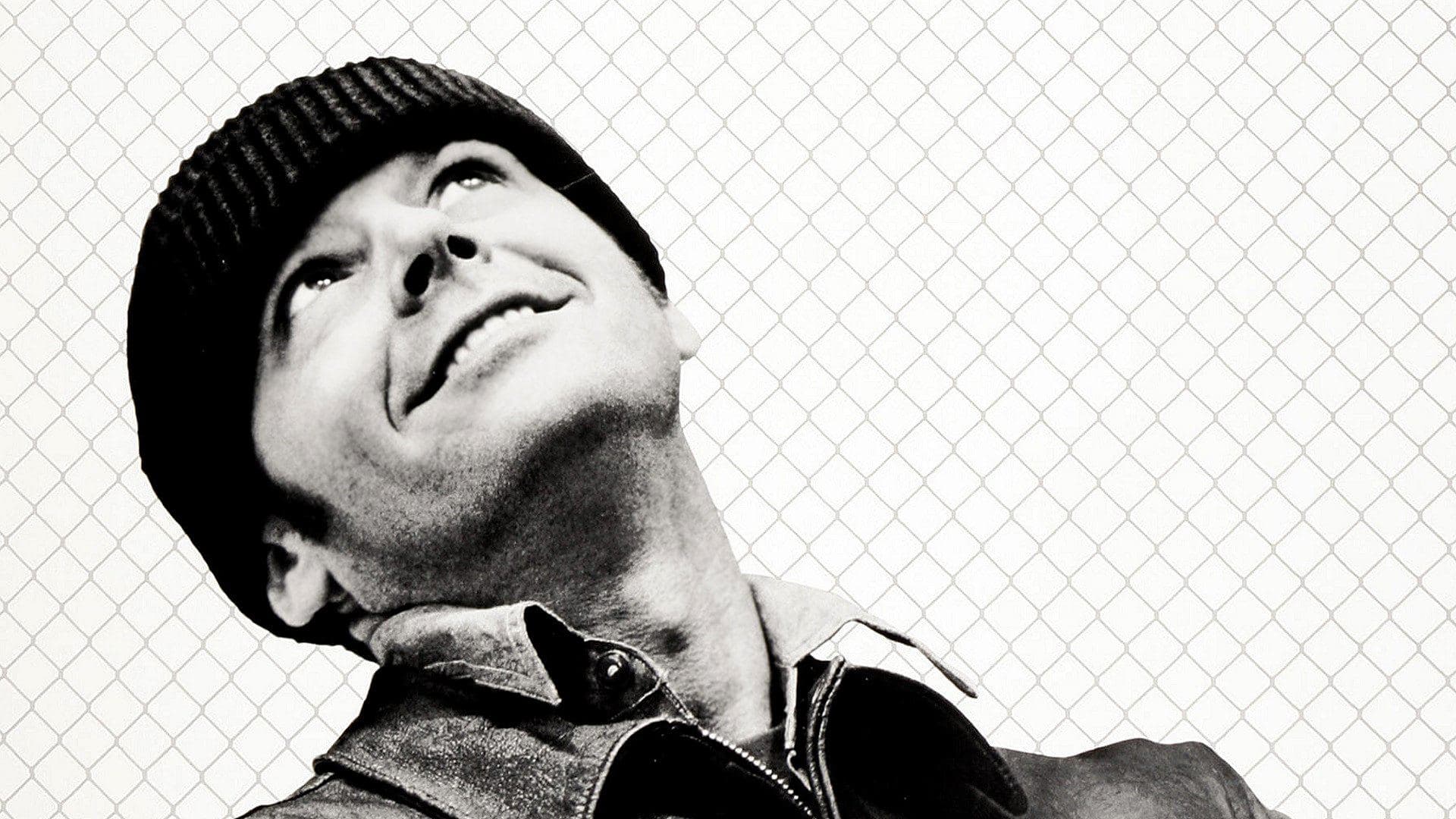
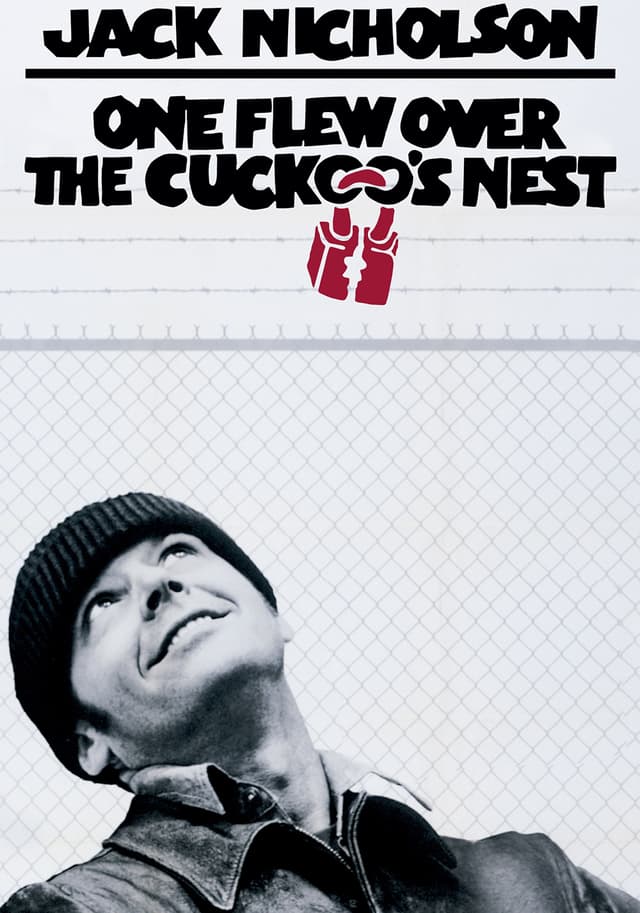
McMurphy has a criminal past and has once again gotten himself into trouble and is sentenced by the court. To escape labor duties in prison, McMurphy pleads insanity and is sent to a ward for the mentally unstable. Once here, McMurphy both endures and stands witness to the abuse and degradation of the oppressive Nurse Ratched, who gains superiority and power through the flaws of the other inmates. McMurphy and the other inmates band together to make a rebellious stance against the atrocious Nurse.
What Is the Budget of One Flew Over the Cuckoo's Nest?
One Flew Over the Cuckoo's Nest was produced independently by Saul Zaentz and Michael Douglas through their company Fantasy Films on an estimated budget of $4.4 million. United Artists acquired domestic distribution rights rather than financing the production outright, which gave the filmmakers unusual creative control. The lean budget was achievable in large part because director Milos Forman chose to shoot the entire film on location at Oregon State Hospital in Salem, Oregon, eliminating the cost of studio stage rentals and purpose-built institutional sets.
The independent financing model meant Zaentz and Douglas bore all the production risk themselves. When the film swept the five major Academy Awards and earned over $108 million domestically, both men became wealthy, and the picture became one of the most profitable independently financed studio pickups of the decade.
Key Budget Allocation Categories
- Cast and Above-the-Line Talent: Jack Nicholson received $1.25 million plus a backend percentage, the largest single cost on the production and a fee that reflected his status following Chinatown (1974). Louise Fletcher was cast after Ellen Burstyn, Anne Bancroft, and Colleen Dewhurst each passed on the role of Nurse Ratched; her relative lack of marquee value kept her fee modest. Brad Dourif, appearing in his first major film role, earned a Screen Actors Guild minimum and went on to receive an Academy Award nomination for Best Supporting Actor.
- Oregon State Hospital Location: The production rented Oregon State Hospital in Salem for $1,000 per day, an unconventional choice that gave the film immediate visual authenticity. Actual psychiatric patients appeared as background actors with permission from Oregon state authorities, and the hospital's utilitarian architecture required no set dressing. The institutional corridors, ward day rooms, and hydrotherapy facilities seen on screen are exactly as they existed in the working facility in 1974.
- Cinematography Transition: Haskell Wexler, one of the most respected cinematographers working in Hollywood, shot the first three weeks before creative differences with Forman led to his replacement by Bill Butler. The changeover required reshooting some material and reconciling two cinematographers' visual approaches within a single coherent grammar. Forman ultimately credited both Wexler and Butler, and the film's naturalistic, handheld-influenced look survived the transition intact.
- Music and Score: Jack Nitzsche composed a sparse, largely acoustic score built around piano, fiddle, and Native American flute that contrasted deliberately with the oppressive institutional setting. The music budget was modest by contemporary studio standards, and Forman supplemented it with silence and ambient hospital sound design to deepen the sense of confinement.
- Post-Production: Three editors (Richard Chew, Lynzee Klingman, and Sheldon Kahn) were required to assemble the final cut from Forman's improvisation-heavy production approach. Forman shot significantly more coverage than most directors of the period, giving the editorial team substantial material to shape the film's rhythm and sustain its tension across a 133-minute runtime.
How Does One Flew Over the Cuckoo's Nest's Budget Compare to Similar Films?
At $4.4 million, One Flew Over the Cuckoo's Nest was an extremely lean production by mid-1970s Hollywood standards, sitting well below the typical studio drama budget of the era. The comparisons below illustrate where it lands relative to films with similar subject matter, tone, or competitive positioning at the Academy Awards.
- The Exorcist (1973): Budget $12M | Worldwide $441M. One of the defining hits of the same New Hollywood era, produced at nearly three times the cost of Cuckoo's Nest. The comparison shows what a mid-to-large studio investment looked like in 1973-74 versus Forman's ultra-lean independent approach two years later.
- Nashville (1975): Budget $2.3M | Domestic $9.9M. Robert Altman's sprawling ensemble drama competed at the same 1975 Academy Awards and was produced at an even lower cost. Both films demonstrate the independent production models that defined American cinema in the mid-1970s, though Cuckoo's Nest vastly outperformed at the box office.
- Ordinary People (1980): Budget $6M | Worldwide $54M. The next film to sweep the major Oscar categories (Picture, Director, Adapted Screenplay) cost 36% more than Cuckoo's Nest and earned roughly a fifth of its cumulative gross. The comparison underscores how unusual the original film's commercial performance was even by the standard of its own precedent.
- Silver Linings Playbook (2012): Budget $21M | Worldwide $236M. A modern mental health drama that competed for Best Picture and won Best Actress, produced nearly four decades later at five times the cost. The comparison illustrates both inflation in production costs and the continued commercial viability of character-driven psychological drama when executed well.
One Flew Over the Cuckoo's Nest Box Office Performance
One Flew Over the Cuckoo's Nest opened on November 19, 1975, distributed by United Artists. The film debuted in limited release on eight screens, grossing approximately $584,000 in its opening weekend before expanding on the strength of critical acclaim and word-of-mouth. The expansion continued through early 1976, with the film eventually playing on over 1,000 screens nationally. It ranked among the top-grossing films of the 1975-76 release cycle. Cumulatively, including multiple theatrical re-releases over the decades, worldwide gross is estimated at approximately $300 million.
With a production budget of $4.4 million and estimated print and advertising costs of $5 million at mid-1970s rates, the total studio investment was approximately $9.4 million. Theaters retained roughly 50% of the gross under standard exhibition agreements, meaning the studio needed approximately $18.8 million in worldwide gross just to break even. The film's $108.9 million domestic gross alone placed it among the decade's most profitable pickups.
Box Office Breakdown
One Flew Over the Cuckoo's Nest

For every dollar invested in production, One Flew Over the Cuckoo's Nest earned roughly $24 at the domestic box office, making it one of the highest-returning theatrical investments of the decade. Even accounting for P&A and exhibitor splits, the film delivered returns that transformed Fantasy Films from a fledgling independent company into a recognized production entity.
One Flew Over the Cuckoo's Nest Production History
The path to production spanned more than a decade and began not with a filmmaker but with a stage actor. Kirk Douglas read Ken Kesey's 1962 novel shortly after publication and acquired the film rights, starring in a Broadway adaptation that ran for 82 performances in 1963. He spent the following ten years attempting to get a feature film made, commissioning multiple screenplay drafts and approaching several studios, but was repeatedly told by the time financing became available that he was too old, at 57, to convincingly play the physically vital, anarchic McMurphy.
In 1973, Kirk handed the rights to his son Michael Douglas, then 28 and working in television as a producer. Michael Douglas had no major studio credits at the time. He partnered with Saul Zaentz, a music industry entrepreneur who had produced Creedence Clearwater Revival's catalog at Fantasy Records in Berkeley and was looking to expand into film. Together they formed Fantasy Films and set about attaching a director. Czech-born Milos Forman, who had fled Czechoslovakia after the Soviet invasion of 1968 and made Taking Off (1971) in the United States, was hired after his work impressed Douglas.
Casting took months. Gene Hackman and Marlon Brando were among the names considered for McMurphy before Nicholson was offered the role. Forman conducted research visits to psychiatric institutions and encouraged the cast to improvise extensively during rehearsals and on set. Principal photography ran from June through November 1974 at Oregon State Hospital, with additional exterior work at Depoe Bay on the Oregon coast. The casting of the patients' ward drew from open calls and included Christopher Lloyd, Danny DeVito, and Will Sampson (a Creek Nation artist who had no prior acting experience) in roles that became defining early credits for all three.
Post-production extended through most of 1975. The large volume of improvised footage required Forman and his three editors to conduct an unusually extended assembly process. The film was completed in time for its November 1975 release, and the Academy campaign that followed was driven by strong critical reception rather than a major studio publicity infrastructure.
Awards and Recognition
One Flew Over the Cuckoo's Nest won five Academy Awards at the 48th Academy Awards ceremony in March 1976: Best Picture (Saul Zaentz and Michael Douglas), Best Director (Milos Forman), Best Actor (Jack Nicholson), Best Actress (Louise Fletcher), and Best Adapted Screenplay (Lawrence Hauben and Bo Goldman). It was only the second film in the Academy's 48-year history to win all five major awards, following It Happened One Night in 1934. The feat would not be repeated until The Silence of the Lambs in 1992.
The film also received nominations for Best Cinematography, Best Original Score, and Best Film Editing. Louise Fletcher's acceptance speech, delivered partly in sign language for her deaf parents, remains one of the most remembered moments in Oscar broadcast history. The film also won the BAFTA Award for Best Film, Best Director, and Best Actor in the same award season.
Beyond the awards season, the film has been recognized as a canonical work of American cinema. The American Film Institute ranked it 20th on its 100 Greatest American Films list (1997 edition) and 33rd on the 2007 revision. The Library of Congress selected it for preservation in the National Film Registry in 1993. AFI also named Nurse Ratched the fifth-greatest villain in American film history on its 100 Greatest Heroes and Villains list.
Critical Reception
One Flew Over the Cuckoo's Nest received near-universal critical acclaim on release. Roger Ebert awarded it four stars, writing that Jack Nicholson's McMurphy was one of the most vital screen performances he had seen in years. Vincent Canby of The New York Times called it one of the finest American films of 1975 and praised Forman's ability to draw the institutional setting without turning it into allegory.
Ken Kesey publicly disowned the adaptation, objecting that Forman shifted the narrative perspective from Chief Bromden (the novel's first-person narrator) to McMurphy. Kesey said he refused to see the finished film. Critics and audiences, however, embraced Forman's reorientation, and the film's moral architecture, centering on McMurphy's confrontation with institutional authority rather than Bromden's interior experience, proved well-suited to the screen.
The film holds an 80% approval rating on Rotten Tomatoes with consistent critical consensus that it remains one of the defining American films of the 1970s. Both Nicholson's McMurphy and Fletcher's Nurse Ratched entered the cultural vocabulary immediately upon release and have remained there: the characters are referenced, parodied, and analyzed across literature, psychology, and film criticism as archetypes of rebellion and institutional power. The film's influence on subsequent mental health narratives in American cinema, from Girl, Interrupted (1999) to A Beautiful Mind (2001), is well-documented by film scholars.
Preguntas frecuentes
How much did it cost to make One Flew Over the Cuckoo's Nest (1975)?
The production budget was $3,000,000, covering principal photography, cast and crew salaries, locations, sets, post-production, and music. Marketing and distribution (P&A) costs are estimated at an additional $1,500,000 - $2,400,000, bringing the total studio investment to approximately $4,500,000 - $5,400,000.
How much did One Flew Over the Cuckoo's Nest (1975) earn at the box office?
One Flew Over the Cuckoo's Nest grossed $108,981,275 domestic, totaling $108,981,275 worldwide.
Was One Flew Over the Cuckoo's Nest (1975) profitable?
Yes. Against a production budget of $3,000,000 and estimated total costs of ~$7,500,000, the film earned $108,981,275 theatrically - a 3533% ROI on production costs alone.
What were the biggest costs in producing One Flew Over the Cuckoo's Nest?
The primary cost drivers were above-the-line talent (Jack Nicholson, Brad Dourif, Louise Fletcher); talent compensation, authentic period production design, and meticulous post-production.
How does One Flew Over the Cuckoo's Nest's budget compare to similar drama films?
At $3,000,000, One Flew Over the Cuckoo's Nest is classified as a micro-budget production. The median budget for wide-release drama films in the era ranges from $30 - 80M for mid-budget to $150M+ for tentpoles. Comparable budgets: Ghost in the Shell (1995, $3,000,000); Witness for the Prosecution (1957, $3,000,000); Perfect Blue (1998, $3,000,000).
Did One Flew Over the Cuckoo's Nest (1975) go over budget?
There are no widely reported accounts of significant budget overruns for this production. However, studios rarely disclose precise budget overrun figures publicly. The reported production budget reflects the final estimated cost.
What was the return on investment (ROI) for One Flew Over the Cuckoo's Nest?
The theatrical ROI was 3532.7%, calculated as ($108,981,275 − $3,000,000) ÷ $3,000,000 × 100. This measures gross revenue against production budget only - it does not account for P&A or exhibitor shares.
What awards did One Flew Over the Cuckoo's Nest (1975) win?
Won 5 Oscars. 38 wins & 15 nominations total.
Who directed One Flew Over the Cuckoo's Nest and who were the key crew members?
Directed by Miloš Forman, written by Lawrence Hauben, Bo Goldman, shot by Haskell Wexler, with music by Jack Nitzsche, edited by Lynzee Klingman, Sheldon Kahn.
Where was One Flew Over the Cuckoo's Nest filmed?
One Flew Over the Cuckoo's Nest was filmed in United States of America.
Filmmakers
One Flew Over the Cuckoo's Nest

Crea presupuestos como este en Saturation
Empieza con una plantilla estándar de largometraje, importa el cronograma y las tarifas que ya tienes y deja que el informe de costos se mantenga al día a medida que gastas. Colaboración en tiempo real, sin hojas de cálculo.