Mission: Impossible Dead Reckoning Part One Budget
 ActionThrillerAdventure2h 43m
Actualizado
Synopsis
Ethan Hunt and his IMF team face their most dangerous threat yet when a rogue artificial intelligence known as the Entity gains the power to manipulate truth itself. As governments race to control the Entity, Ethan discovers that the key to defeating it lies in a two-part cruciform key from a sunken Russian submarine. Hunted by both allies and enemies, Ethan recruits skilled pickpocket Grace while confronting Gabriel, a figure from his past who serves the Entity's agenda. From the streets of Rome to the mountains of Norway to the Orient Express, Ethan must protect the key and the people he cares about while facing a threat that cannot be fought with conventional weapons.
What Is the Budget of Mission: Impossible Dead Reckoning Part One?
Mission: Impossible Dead Reckoning Part One (2023), directed and co-written by Christopher McQuarrie and distributed by Paramount Pictures, was produced on a budget of $291,000,000. The seventh installment in the Mission: Impossible franchise pushed the series into its most expensive territory yet, driven by a combination of COVID-related production shutdowns, Tom Cruise's commitment to performing increasingly dangerous practical stunts, and the complexity of a globe-spanning shoot across Italy, Norway, the United Kingdom, and the United Arab Emirates.
The film was conceived as the first half of a two-part story, with the sequel (The Final Reckoning) planned for back-to-back production. This ambitious structure contributed to ballooning costs as the production scale expanded well beyond initial projections. At $291 million, Dead Reckoning Part One ranks among the most expensive films ever produced, reflecting both the franchise's blockbuster ambitions and the real-world disruptions that plagued its production timeline from 2020 through 2022.
Key Budget Allocation Categories
Mission: Impossible Dead Reckoning Part One's $291 million budget was distributed across several core production areas:
- Practical Stunts and Action Sequences: The film's signature set pieces required enormous logistical investment. The motorcycle cliff jump, in which Tom Cruise rides a motorcycle off a cliff in Hellesylt, Norway, and deploys a parachute mid-air, required months of BASE jumping training, construction of a massive ramp on the cliffside, and multiple takes captured from over a dozen camera positions. The train crash sequence involved building and derailing a full-scale locomotive and carriages on a purpose-built track in Derbyshire, England, one of the largest practical effects sequences in recent film history.
- Location Photography and International Logistics: Principal photography spanned multiple countries including Italy (Rome, Venice), Norway (Hellesylt, Preikestolen), the United Kingdom (various locations in England), and Abu Dhabi in the UAE. Each location required local crew, permits, security coordination, and transportation of equipment. The Rome chase sequences involved closing major streets and coordinating with Italian authorities for extended periods.
- COVID-19 Shutdowns and Protocols: Production began in February 2020 in Venice, Italy, making Dead Reckoning one of the first major Hollywood productions disrupted by the pandemic. Filming halted in late February 2020 and did not resume until September 2020. Strict health protocols added significant overhead: regular testing, quarantine periods for cast and crew, isolated working pods, and contingency scheduling that extended the total production timeline by months.
- Digital and Visual Effects: While the franchise is known for practical stunts, Dead Reckoning Part One required extensive digital work for environment extensions, the sinking Orient Express sequence, the Entity's digital manifestations, and wire removal for stunt work. Industrial Light & Magic handled the visual effects. Notably, this was the first Mission: Impossible film shot digitally, using Sony CineAlta Venice cameras rather than film stock.
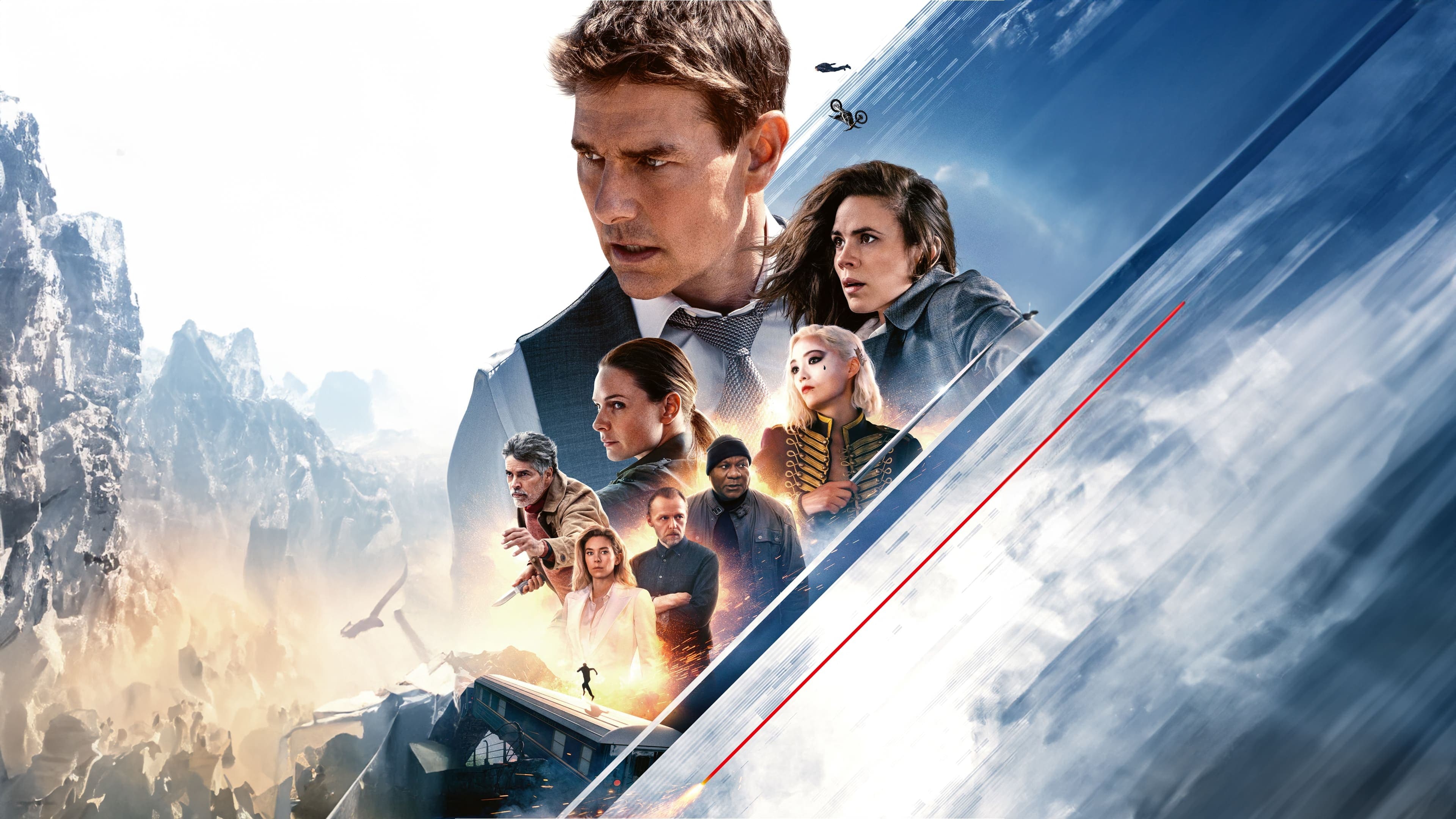
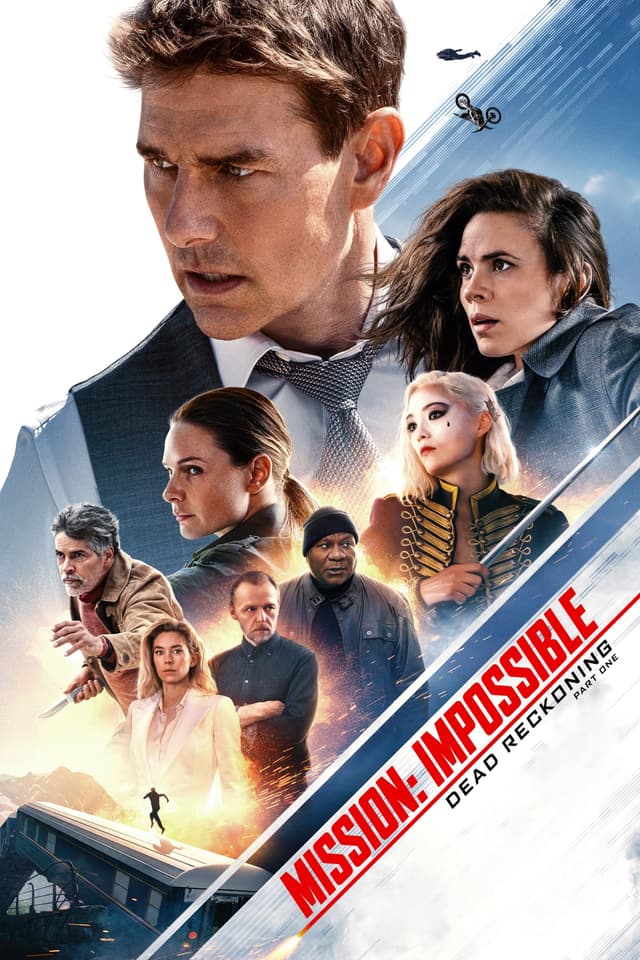
- Cast and Above-the-Line Talent: Tom Cruise serves as both lead actor and producer through TC Productions, commanding a significant portion of the budget. The ensemble cast included Hayley Atwell, Ving Rhames, Simon Pegg, Rebecca Ferguson, Vanessa Kirby, Esai Morales, and Henry Czerny. Christopher McQuarrie, who has directed every Mission: Impossible since Rogue Nation, served as director, co-writer (with Erik Jendresen), and producer.
- Score and Sound Design: Composer Lorne Balfe returned to score the film after his work on Mission: Impossible Fallout (2018). The score integrated Lalo Schifrin's iconic theme while expanding the musical palette for the new antagonist, the Entity. Editor Eddie Hamilton shaped the film's pacing across a 163-minute runtime, balancing sustained tension with the franchise's signature action sequences.
How Does Mission: Impossible Dead Reckoning Part One's Budget Compare to Similar Films?
At $291,000,000, Dead Reckoning Part One sits at the upper end of major franchise blockbusters. Comparing it with other action tentpoles reveals the financial pressures of maintaining practical stunt-driven filmmaking at this scale:
- Mission: Impossible Fallout (2018): Budget $178,000,000 | Worldwide $791,100,000. The previous installment cost 39% less and earned significantly more worldwide, highlighting how COVID disruptions inflated Dead Reckoning's production costs without a proportional increase in commercial return.
- Top Gun: Maverick (2022): Budget $170,000,000 | Worldwide $1,493,800,000. Tom Cruise's other franchise revival delivered nearly triple Dead Reckoning's worldwide gross at 42% less budget, demonstrating the commercial ceiling that Cruise-led tentpoles can reach under favorable conditions.
- The Final Reckoning (2025): Budget $400,000,000 | The sequel's even higher budget reflects the continued escalation of the franchise's practical stunt ambitions and the costs of completing the two-part narrative arc.
- No Time to Die (2021): Budget $250,000,000 | Worldwide $774,200,000. The final Daniel Craig Bond film faced similar COVID production delays and budget inflation. Its worldwide gross of $774 million against a $250 million budget parallels Dead Reckoning's challenge of recouping pandemic-era costs.
- Indiana Jones and the Dial of Destiny (2023): Budget $295,000,000 | Worldwide $384,200,000. Released just two weeks before Dead Reckoning, this legacy sequel demonstrates the risk of $300 million budgets for franchise installments that underperform at the box office.
Mission: Impossible Dead Reckoning Part One Box Office Performance
Mission: Impossible Dead Reckoning Part One opened in the United States on July 12, 2023, following a Rome premiere on June 19, 2023. The film debuted with $54.7 million domestically in its opening weekend, a solid but unspectacular start for a franchise of this scale. The opening trailed Mission: Impossible Fallout's $61 million debut, despite Dead Reckoning carrying a significantly higher production cost.
Box Office Breakdown
Mission: Impossible Dead Reckoning Part One

At approximately +96%, Mission: Impossible Dead Reckoning Part One returned roughly $1.96 for every $1 of production budget invested during its theatrical run.
While $571 million worldwide is a substantial gross in absolute terms, it represented a disappointment relative to the franchise's trajectory. Mission: Impossible Fallout earned $791 million on a $178 million budget, making it far more profitable. Dead Reckoning's underperformance was attributed to several factors: audience fatigue after a crowded summer that included Barbie, Oppenheimer, and Guardians of the Galaxy Vol. 3; the film's 163-minute runtime limiting daily screening counts; and the general post-pandemic softening of theatrical attendance for mid-tier blockbusters. Paramount reportedly took a write-down on the film, acknowledging it would not break even theatrically.
Mission: Impossible Dead Reckoning Part One Production History
Development on the seventh Mission: Impossible film began shortly after Fallout's commercial and critical success in 2018. Christopher McQuarrie, who had directed both Rogue Nation (2015) and Fallout, signed on to write and direct two consecutive sequels, with Erik Jendresen joining as co-writer. The ambitious plan called for filming parts one and two partially back-to-back, a structure that would allow the franchise to tell a longer, more serialized story centered on an artificial intelligence antagonist called the Entity.
Principal photography commenced in Venice, Italy, in February 2020. Within days of beginning the shoot, COVID-19 cases surged across northern Italy, and Dead Reckoning became one of the first major Hollywood productions to shut down due to the pandemic. The February 2020 halt was followed by months of uncertainty before filming resumed in September 2020, initially in Norway. Even after resuming, production faced repeated disruptions: a leaked audio recording of Tom Cruise berating crew members for violating COVID protocols on the UK set went viral in December 2020, illustrating the intense pressure to keep the production moving.
Filming continued through 2021, wrapping principal photography in September 2021 after approximately 18 months of interrupted shooting. The production utilized locations in Rome and Venice (Italy), Hellesylt and Preikestolen (Norway), various sites across England (including the Derbyshire quarry used for the train crash), and Abu Dhabi (UAE). The train derailment sequence in Derbyshire required constructing a rail line specifically for the stunt, building period-appropriate train carriages, and choreographing a controlled crash captured by an array of cameras including aerial drones.
The motorcycle cliff jump in Hellesylt, Norway, became the film's most publicized stunt and one of the most dangerous in Cruise's career. The actor trained for over a year in BASE jumping and skydiving, completing more than 500 practice jumps. The actual stunt involved riding a motorcycle at speed off a 4,000-foot cliff, separating from the bike mid-air, and deploying a parachute. The sequence was filmed over multiple days using 11 cameras positioned on the cliff, in helicopters, and on drones. Additionally, Cruise performed speed flying (a hybrid of paragliding and parachuting) for another sequence in the film.
Awards and Recognition
Mission: Impossible Dead Reckoning Part One received two Academy Award nominations at the 96th Oscars: Best Sound and Best Visual Effects. The film lost Best Sound to The Zone of Interest and Best Visual Effects to Godzilla Minus One. The nominations recognized the film's technical achievements, particularly the integration of practical stunts with digital effects and the sound design work required to sell the train crash, motorcycle jump, and chase sequences.
At the BAFTA Awards, the film received nominations for Best Sound and Best Special Visual Effects, further confirming its standing as one of the most technically accomplished action films of 2023. The stunts department and practical effects work were widely praised by industry guilds, with the motorcycle cliff jump cited as one of the most impressive practical stunts in modern cinema. The film also received nominations from the Motion Picture Sound Editors and the Visual Effects Society.
Critical Reception
Mission: Impossible Dead Reckoning Part One received overwhelmingly positive reviews, earning a 96% approval rating on Rotten Tomatoes based on 380 reviews, with a consensus praising Cruise's commitment to practical action and McQuarrie's direction. On Metacritic, the film scored 81 out of 100, indicating "universal acclaim." Audiences awarded it an A on CinemaScore.
Critics highlighted the film's action sequences as among the best in the franchise's history, with particular praise for the train crash set piece and the motorcycle cliff jump. The Venice and Rome chase sequences drew comparisons to classic Bond and Bourne films while being recognized as distinctly inventive. Several reviewers noted that the film's two-part structure created a less satisfying narrative conclusion compared to the standalone stories of Fallout and Rogue Nation, though the cliffhanger ending was generally accepted as earned by the preceding action.
The film cemented Christopher McQuarrie's reputation as one of the most capable action directors working in Hollywood. His four-film collaboration with Tom Cruise (Jack Reacher, Rogue Nation, Fallout, Dead Reckoning) represents one of the most sustained director-star partnerships in contemporary blockbuster filmmaking. Dead Reckoning Part One, despite its commercial challenges, was widely regarded as a technical and artistic achievement that pushed the boundaries of what is possible with practical stunt filmmaking.
Preguntas frecuentes
How much did it cost to make Mission: Impossible Dead Reckoning Part One?
The production budget was $291,000,000, making it one of the most expensive films ever produced. Costs were driven by elaborate practical stunts (including the motorcycle cliff jump and train crash), international filming across Italy, Norway, the UK, and UAE, and COVID-19 related shutdowns and health protocols that extended the production timeline from February 2020 to September 2021.
How much did Mission: Impossible Dead Reckoning Part One earn at the box office?
The film grossed $172,600,000 domestically and $398,500,000 internationally, totaling $571,100,000 worldwide. It opened with $54.7 million in its domestic opening weekend, below the $61 million debut of Mission: Impossible Fallout (2018).
Was Mission: Impossible Dead Reckoning Part One profitable?
The film was considered a box office disappointment relative to its budget. With a $291 million production cost and estimated $150 million or more in marketing, the break-even threshold was approximately $582 million to $700 million. Its $571 million worldwide gross fell short, and Paramount reportedly took a write-down on the film.
What stunts did Tom Cruise perform in Dead Reckoning Part One?
Cruise performed several death-defying stunts including riding a motorcycle off a 4,000-foot cliff in Norway and deploying a parachute mid-air (after 500+ practice BASE jumps), speed flying through mountain terrain, and extensive fight choreography aboard a moving train. The train crash sequence used a full-scale locomotive derailed on a purpose-built track in Derbyshire, England.
Who directed Mission: Impossible Dead Reckoning Part One?
Christopher McQuarrie directed and co-wrote the film with Erik Jendresen. McQuarrie has directed every Mission: Impossible since Rogue Nation (2015), making Dead Reckoning his third consecutive entry in the franchise. He also served as producer alongside Tom Cruise.
Where was Mission: Impossible Dead Reckoning Part One filmed?
Principal photography took place in Venice and Rome (Italy), Hellesylt and Preikestolen (Norway), various locations across England including a purpose-built rail line in Derbyshire, and Abu Dhabi (UAE). Filming began in February 2020 in Venice but was halted almost immediately by the COVID-19 pandemic.
How does Dead Reckoning Part One compare to Mission: Impossible Fallout?
Fallout cost $178 million and earned $791 million worldwide, making it significantly more profitable. Dead Reckoning cost $291 million (63% more) but earned only $571 million (28% less). The budget increase was largely attributable to COVID disruptions rather than increased production ambition, though the stunt work in Dead Reckoning was considered equally impressive.
What awards did Mission: Impossible Dead Reckoning Part One receive?
The film received two Academy Award nominations at the 96th Oscars: Best Sound and Best Visual Effects. It also earned BAFTA nominations for Best Sound and Best Special Visual Effects. The practical stunt work, particularly the motorcycle cliff jump, was widely praised by industry guilds and critics.
Why was Mission: Impossible Dead Reckoning Part One a box office disappointment?
Several factors contributed: the crowded summer 2023 slate (competing with Barbie, Oppenheimer, and Guardians of the Galaxy Vol. 3), the 163-minute runtime limiting daily screening counts, general post-pandemic softening of theatrical attendance, and the film's two-part structure which some audiences found less satisfying than a standalone story.
What cameras were used to shoot Mission: Impossible Dead Reckoning Part One?
Dead Reckoning Part One was the first Mission: Impossible film shot digitally, using Sony CineAlta Venice cameras. Previous entries in the franchise were shot on film. Cinematographer Fraser Taggart oversaw the digital photography across all international locations.
Filmmakers
Mission: Impossible Dead Reckoning Part One

Official Trailer
Crea presupuestos como este en Saturation
Empieza con una plantilla estándar de largometraje, importa el cronograma y las tarifas que ya tienes y deja que el informe de costos se mantenga al día a medida que gastas. Colaboración en tiempo real, sin hojas de cálculo.