The Wolf of Wall Street Budget
 CrimeDramaComedy3h
Aktualisiert
Synopsis
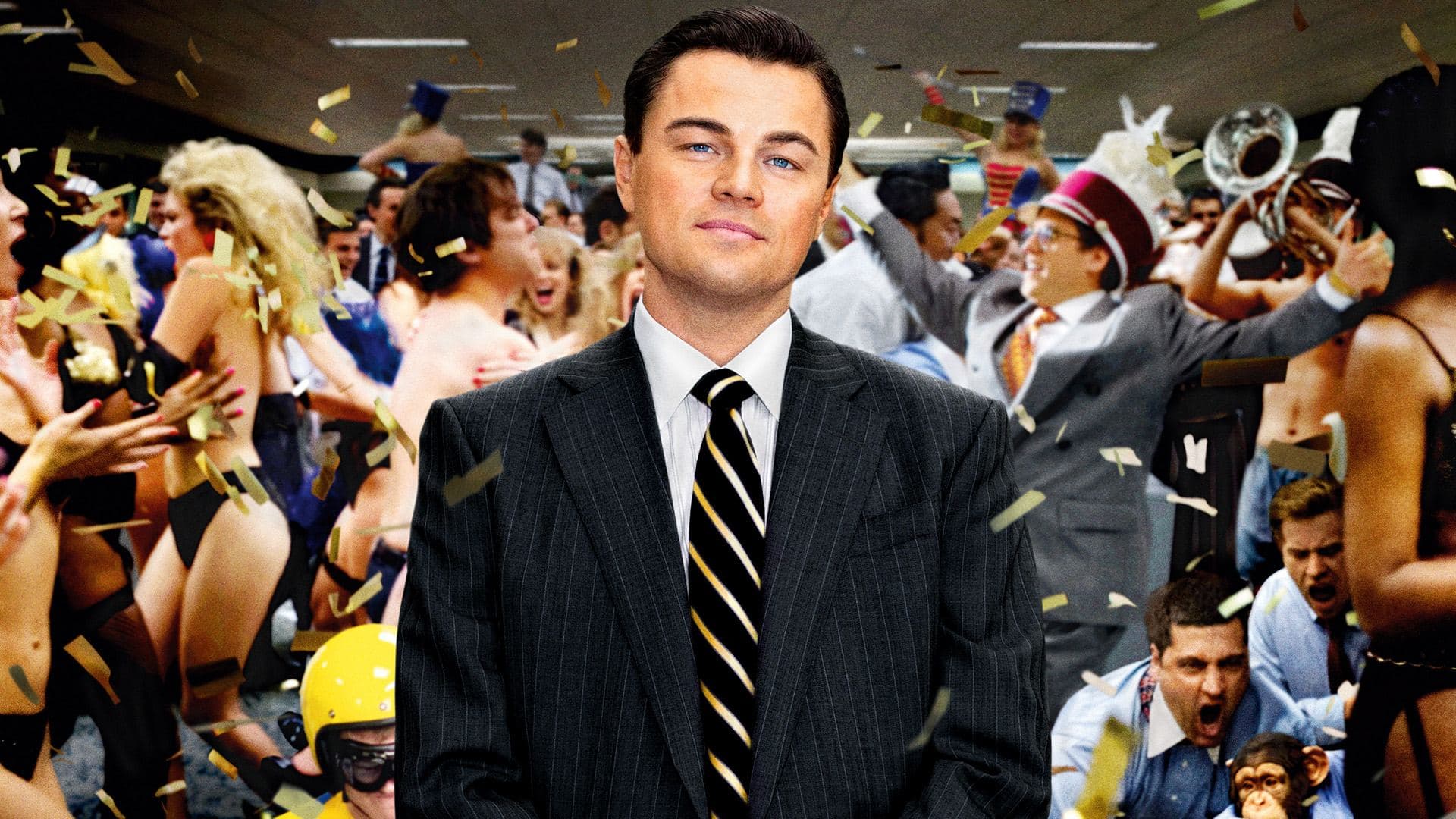
In 1987, Jordan Belfort starts out as a stockbroker on Wall Street, loses his job in the Black Monday crash and begins selling penny stocks from a small Long Island brokerage. With his partner Donnie Azoff he builds Stratton Oakmont into a firm that makes him rich by defrauding its clients, funding a life of drugs and excess while he hides money in Swiss bank accounts. An FBI investigation led by agent Patrick Denham eventually brings the operation down.
What Is the Budget of The Wolf of Wall Street?
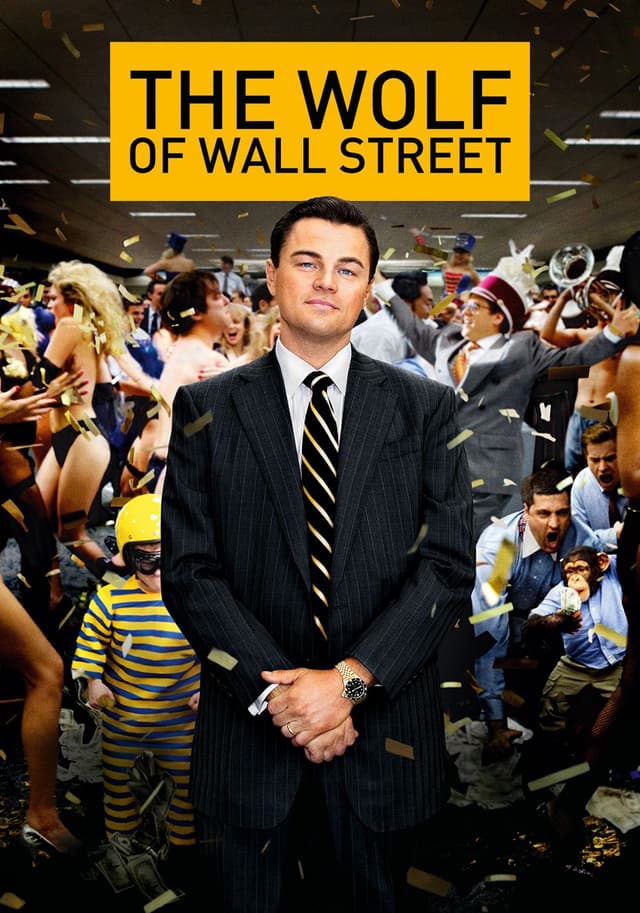
The Wolf of Wall Street (2013), directed by Martin Scorsese and starring Leonardo DiCaprio as the stockbroker Jordan Belfort, had a production budget of $100,000,000. That is the figure Box Office Mojo and The Numbers both list, and the cost The Hollywood Reporter gave in November 2012, while the film was shooting in New York. When production plans were reported in April 2012, Screen Daily put the budget lower, at about $85,000,000.
No studio financed the production. The budget came from Red Granite Pictures, an independent production and finance company founded in 2010 by Riza Aziz and Joey McFarland, which bought the project at the Cannes market in May 2011 and agreed to finance it without content restrictions. Paramount Pictures joined as distributor for the United States, Canada and Japan in October 2012, after filming had started, while Red Granite sold the rest of the world territory by territory, including several European markets to Universal and Australia and New Zealand to Roadshow Films.
That financing later became the most scrutinized part of the film's budget. In July 2016 the U.S. Department of Justice alleged in civil forfeiture complaints that Red Granite had used more than $100,000,000 diverted from the Malaysian state fund 1MDB to finance The Wolf of Wall Street. Red Granite said that, to its knowledge, none of the funds it received were illegitimate, and in March 2018 it agreed to pay the U.S. government $60,000,000 to settle the claims, without admitting wrongdoing or liability.
Key Budget Allocation Categories
Red Granite never published a line-item budget, but the production record shows where the money went.
- Rights and Screenplay: Jordan Belfort was paid $1,000,000 for the film rights to his 2007 memoir when DiCaprio and Warner Bros. won a bidding war for it, according to Fox Business. Red Granite took over the project in 2011, and Terence Winter adapted the book.
- Cast: DiCaprio led an ensemble that included Jonah Hill, Margot Robbie, Matthew McConaughey, Kyle Chandler, Rob Reiner, Jon Favreau and Jean Dujardin. Not every fee was large: Hill told Howard Stern in January 2014 that he took the SAG minimum, about $60,000 before commissions and taxes, for an almost seven-month shoot.
- Stages and Locations: Sets were built at Steiner Studios in the Brooklyn Navy Yard and at J.C. Studios in Brooklyn, with location work across New York City, Long Island, a country club in Harrison, New York, and Closter, New Jersey. The credits add that the film was shot in part at the One&Only Ocean Club in the Bahamas.
- Camera and Visual Effects: After comparison tests in pre-production, most of the film was shot on film stock, with the digital Arri Alexa used for green screen and low-light scenes, mainly at night. The finished film contains 400 to 450 visual effects shots, and Robert Legato's effects team was nominated by the Visual Effects Society.
- Music: Executive music producer Robbie Robertson and music supervisor Randall Poster built the soundtrack largely from existing recordings. More than 60 songs are used in the film, against 16 on the soundtrack album.
How Does The Wolf of Wall Street's Budget Compare to Similar Films?
At $100,000,000, The Wolf of Wall Street was far from Scorsese's most expensive film, but it has out-grossed every other film he has directed. Comparison figures are Box Office Mojo's across all releases; The Wolf of Wall Street's $392,000,694 is its original-release total, explained in the Box Office section below.
- The Departed (2006): Budget $90,000,000 | Worldwide $292,095,981. Scorsese and DiCaprio's Best Picture winner cost $10,000,000 less; The Wolf of Wall Street grossed $99,904,713 more, about 34% higher.
- Shutter Island (2010): Budget $80,000,000 | Worldwide $294,978,537. The film Scorsese made after first leaving the Wolf project; The Wolf of Wall Street cost 25% more and grossed 33% more.
- Gangs of New York (2002): Budget $100,000,000 | Worldwide $193,772,504. The first Scorsese and DiCaprio film had exactly the same budget, and The Wolf of Wall Street grossed about twice as much.
- The Great Gatsby (2013): Budget $105,000,000 | Worldwide $353,660,028. DiCaprio's other 2013 film about New York wealth and excess cost $5,000,000 more and grossed $38,340,666 less, with 41% of its total from North America against Wolf's 29.8%.
- American Hustle (2013): Budget $40,000,000 | Worldwide $251,171,807. A fellow Best Picture nominee loosely based on a real FBI sting and released the same December, it cost 40% as much but took 59.8% of its gross in North America, where Wolf earned most of its money overseas.
- The Big Short (2015): Budget $28,000,000 | Worldwide $133,440,870. Paramount's later Wall Street satire was made for 28% of the cost; The Wolf of Wall Street grossed roughly 2.9 times as much.
The Wolf of Wall Street Box Office Performance
Paramount opened The Wolf of Wall Street in the United States and Canada on Wednesday, December 25, 2013. It took $18,361,578 from 2,537 theaters over its first weekend, December 27 to 29, finishing fifth, and $34,153,137 across its first five days, according to Box Office Mojo. It held well, falling 27.9% to $13,230,353 in its second weekend as it widened to 2,557 theaters, and finished with $116,900,694 in North America. Overseas, where it opened through Red Granite's territory-by-territory deals, it earned $275,100,000, led by the United Kingdom ($37,413,041), Germany ($30,310,346), France ($26,445,099) and Australia ($16,732,703), for a worldwide total of $392,000,694.
Box Office Mojo's all-releases total of $407,039,432 adds a 2022 entry for Australia that records an opening of $615 and a gross of $14,877,539. Saturation treats that entry as a data error and uses the original-release total of $392,000,694, which is close to The Numbers' $389,816,136. No marketing spend for the film has been publicly reported, so the rows that depend on it are left blank below.
Box Office Breakdown
The Wolf of Wall Street

The worldwide gross came to 3.9 times the production budget, and 70.2% of it came from outside North America, a higher international share than The Departed (54.7%) or The Great Gatsby (59%). In February 2014 it became Scorsese's highest-grossing film, according to The Hollywood Reporter, and it still holds that place. It was also Paramount's first wide release distributed to theaters only in digital format, with no 35mm prints, as the Los Angeles Times reported. On home video, released March 25, 2014, The Numbers estimates domestic DVD and Blu-ray sales at $40,184,839.
Without a reported prints and advertising figure, the film's total investment, net return and return per dollar invested cannot be calculated from public data.
The Wolf of Wall Street Production History
Jordan Belfort published his memoir in 2007, and that year DiCaprio and Warner Bros. won a bidding war for the film rights. Scorsese, who had worked on the script, was in line to direct but left to make Shutter Island instead. In 2010 Warner Bros. approached Ridley Scott to direct, then abandoned the project.
Red Granite Pictures, whose co-founder Riza Aziz is the stepson of Najib Razak, then Malaysia's prime minister, acquired the project at Cannes in May 2011 and greenlit it without content restrictions, and Scorsese came back. Production plans were reported in April 2012, with Red Granite, DiCaprio's Appian Way, Scorsese's Sikelia Productions and EMJAG Productions behind it. Deadline reported in October 2012 that Paramount had picked up the film for release the following year, and in November Universal Pictures International bought several European territories.
Principal photography began in New York City on August 8, 2012. Scorsese had long championed shooting on film, and editor Thelma Schoonmaker said in mid-2012 that the production would go digital, but after tests most of it was shot on film stock. The shoot moved between Brooklyn stages and locations from Long Island to Closter, New Jersey, with a stop in the Bahamas.
Paramount first dated the film for November 15, 2013, but Scorsese and Schoonmaker were still cutting it down, and the studio moved it to Christmas Day. The MPAA's first rating was NC-17, and cuts to sex scenes secured an R. The New York Times reported that the film was finished on November 27, less than a month before it opened; it runs 179 minutes. It premiered at the Ziegfeld Theatre in New York on December 17, 2013. It set a Guinness World Record at the time for the most swearing in a feature film, with Vulture counting 569 uses of its most frequent expletive against 422 in Scorsese's Casino (1995), and it was banned in Kenya, Malaysia, Nepal and Zimbabwe.
The money behind the film became part of the 1MDB investigation. On July 20, 2016, the Justice Department filed civil forfeiture complaints in Los Angeles alleging that more than $3,500,000,000 had been misappropriated from 1MDB between 2009 and 2015, and that Red Granite had used more than $100,000,000 of it to finance The Wolf of Wall Street. In her published remarks that day, Assistant Attorney General Leslie Caldwell said that "neither 1MDB nor the people of Malaysia ever saw a penny of profit from the film." The government sought Red Granite's future rights to the film, and Red Granite said that, to its knowledge, none of the funds it received were illegitimate.
In March 2018 Red Granite agreed to pay $60,000,000 in three installments to settle the claims against its interests in The Wolf of Wall Street, Daddy's Home (2015) and Dumb and Dumber To, without admitting wrongdoing or liability; Variety reported later in 2018 that Red Granite had paid the settlement in full. In May 2019 Malaysia's attorney general said the United States had returned about $57,000,000 of it to a 1MDB recovery account. Riza Aziz was charged in Malaysia in July 2019 with laundering $248,000,000 in 1MDB funds and pleaded not guilty; in May 2020 he received a discharge not amounting to an acquittal under an agreement for the government to recover $107,300,000 in overseas assets. Belfort, meanwhile, sued Red Granite for $300,000,000 in January 2020, seeking to void his rights deal and saying he would not have sold the rights had he known how the film was financed.
Awards and Recognition
The Wolf of Wall Street was recognized mainly for DiCaprio's performance, Winter's screenplay and Scorsese's direction.
- Academy Awards: Five nominations at the 86th Academy Awards: Best Picture, Best Director for Scorsese, Best Actor for DiCaprio, Best Supporting Actor for Jonah Hill and Best Adapted Screenplay for Terence Winter. It won none; Best Picture went to 12 Years a Slave (2013), and Matthew McConaughey, who plays Mark Hanna in the film, won Best Actor for Dallas Buyers Club (2013).
- Golden Globe Awards: DiCaprio won Best Actor in a Motion Picture, Musical or Comedy, and the film was nominated for Best Motion Picture, Musical or Comedy.
- British Academy Film Awards: Four nominations, including Best Director, Best Actor and Best Adapted Screenplay.
- Critics' Choice Awards: DiCaprio won Best Actor in a Comedy, from six nominations for the film.
- National Board of Review and AFI: The National Board of Review named it one of the top ten films of 2013 and gave Winter its Best Adapted Screenplay award, and the American Film Institute included it in its ten films of the year.
- Guild and Industry Awards: Nominated by the Directors Guild, Producers Guild, Writers Guild and Visual Effects Society, with a Grammy nomination for Best Compilation Soundtrack for Visual Media; Ellen Lewis won the Casting Society of America award for big budget comedy.
Its standing has grown since release. The film ranked 78th in the BBC's 2016 poll of the 100 greatest films of the 21st century, members of the Writers Guild of America voted its screenplay 63rd on their 2021 list of the 101 greatest screenplays of the century so far, and The New York Times placed it 20th on its 2025 list of the 100 best movies of the 21st century.
Critical Reception
Reviews were largely positive but divided on the film's attitude to its subject. The Wolf of Wall Street holds 79% on Rotten Tomatoes from 284 critics, with an average rating of 7.9/10, and a Metacritic score of 75 out of 100 from 47 critics, indicating generally favorable reviews. The Rotten Tomatoes consensus reads: "Funny, self-referential, and irreverent to a fault, The Wolf of Wall Street finds Martin Scorsese and Leonardo DiCaprio at their most infectiously dynamic." Audiences were less enthusiastic: those polled by CinemaScore gave it a C, the lowest grade of any film opening that week, as Vanity Fair reported.
Peter Travers of Rolling Stone ranked it the third-best film of 2013, behind 12 Years a Slave and Gravity (2013). Mick LaSalle of the San Francisco Chronicle called it "the best and most enjoyable American film to be released this year," and Richard Brody of The New Yorker called it "Olympian." Dana Stevens of Slate found it "epic in size, claustrophobically narrow in scope." The sharpest criticism came from people close to the real case: Joel M. Cohen, the former federal prosecutor who handled Belfort's case, faulted it in The New York Times for leaving out the "thousands of victims who lost hundreds of millions of dollars," and Christina McDowell, whose father worked with Belfort, accused the filmmakers in an open letter of glorifying greed. DiCaprio defended the film, arguing that it does not glorify the lifestyle it depicts.
Häufig gestellte Fragen
How much did it cost to make The Wolf of Wall Street (2013)?
The Wolf of Wall Street had a production budget of $100,000,000, the figure listed by Box Office Mojo and The Numbers and reported by The Hollywood Reporter during filming in 2012. Screen Daily had reported about $85,000,000 when production plans were reported in April 2012. Red Granite Pictures financed it independently.
How much did The Wolf of Wall Street make at the box office?
The Wolf of Wall Street grossed $392,000,694 worldwide in its original release, including $116,900,694 in the United States and Canada and $275,100,000 internationally, according to Box Office Mojo. It opened to $18,361,578 from 2,537 theaters over its first weekend and is Martin Scorsese's highest-grossing film.
Was The Wolf of Wall Street profitable?
No profit figure has been published. The film grossed $392,000,694 worldwide, 3.9 times its $100,000,000 production budget, but no marketing spend has been reported, so its net return cannot be calculated from public data. The U.S. government later sought Red Granite's future rights to the film, and Red Granite paid $60,000,000 in 2018 to settle those and related claims.
Why do sources give different box office totals for The Wolf of Wall Street?
Box Office Mojo's all-releases total of $407,039,432 includes a 2022 Australian entry of $14,877,539 that records an opening of only $615. Saturation treats that entry as a data error and uses the original-release total of $392,000,694; The Numbers lists $389,816,136.
Who paid for The Wolf of Wall Street?
Red Granite Pictures, an independent company co-founded in 2010 by Riza Aziz and Joey McFarland, financed the production. Paramount Pictures distributed it in the United States, Canada and Japan, Universal released it in several European markets and Roadshow Films handled Australia and New Zealand.
Was The Wolf of Wall Street funded with 1MDB money?
In July 2016 the U.S. Justice Department alleged that Red Granite Pictures used more than $100,000,000 diverted from the Malaysian fund 1MDB to finance the film. Red Granite said that, to its knowledge, none of the funds it received were illegitimate, and in March 2018 agreed to pay $60,000,000 to settle the claims, without admitting wrongdoing. In May 2019 about $57,000,000 of that was returned to Malaysia.
How much was Jonah Hill paid for The Wolf of Wall Street?
Jonah Hill told Howard Stern in January 2014 that he was paid the SAG minimum, about $60,000 before commissions and taxes, for an almost seven-month shoot, because he wanted to work with Scorsese. He was nominated for the Academy Award for Best Supporting Actor for the role.
How much did Jordan Belfort get paid for the movie rights?
Jordan Belfort was paid $1,000,000 for the film rights to his memoir in 2007, when Leonardo DiCaprio and Warner Bros. won a bidding war for the book, according to Fox Business. In January 2020 he sued Red Granite for $300,000,000, seeking to void the rights deal over how the film was financed.
Where was The Wolf of Wall Street filmed?
Filming began in New York City on August 8, 2012, with sets at Steiner Studios in the Brooklyn Navy Yard and J.C. Studios in Brooklyn. Locations included Long Island, a country club in Harrison, New York, and Closter, New Jersey, and part of the film was shot at the One&Only Ocean Club in the Bahamas.
What awards was The Wolf of Wall Street nominated for?
The film received five Academy Award nominations: Best Picture, Best Director, Best Actor for Leonardo DiCaprio, Best Supporting Actor for Jonah Hill and Best Adapted Screenplay for Terence Winter. DiCaprio won the Golden Globe for Best Actor in a Musical or Comedy and the Critics' Choice Award for Best Actor in a Comedy, and the film earned four BAFTA nominations.
Filmmakers
The Wolf of Wall Street

Official Trailer
Erstellen Sie Budgets wie dieses in Saturation
Starten Sie mit einer branchenüblichen Spielfilmvorlage, importieren Sie Drehplan und Gagen, die Sie schon haben, und lassen Sie den Kostenbericht sich beim Ausgeben von selbst aktualisieren. Zusammenarbeit in Echtzeit, ohne Tabellen.