Yi ge ren de wu lin Budget
Updated
Synopsis
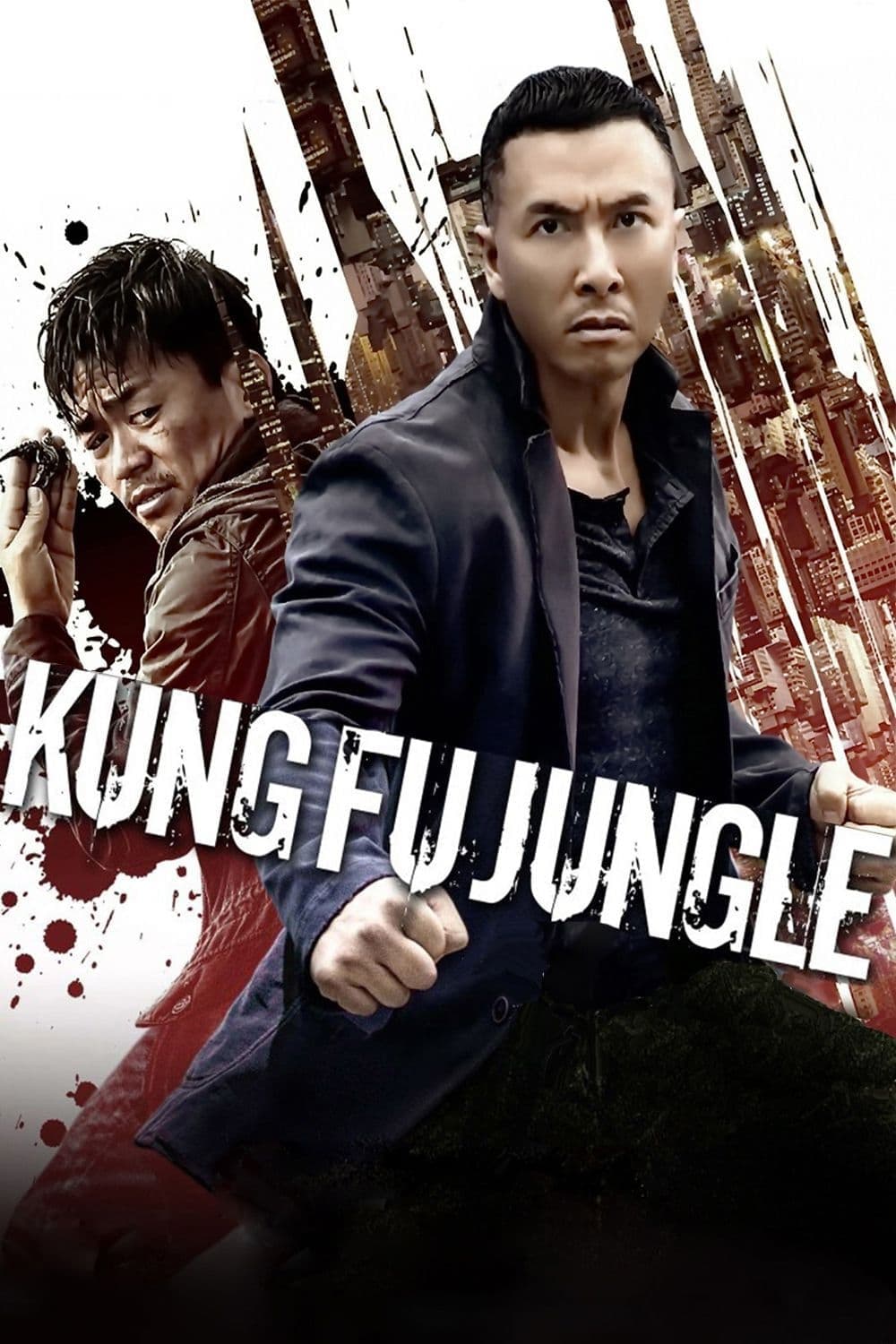
Hahou Mo, a former martial arts instructor serving time in a Hong Kong prison for manslaughter, offers his expertise to the police after a serial killer begins murdering grandmasters of the various fighting disciplines to claim the title of greatest martial artist alive. Working with Inspector Luk Yuen-Sum, Hahou tracks the killer through a series of escalating duels that culminate in a highway battle as he tries to save the woman he loves and stop a man who will not rest until he has fought every master in the city.
What Is the Budget of Yi ge ren de wu lin (2015)?
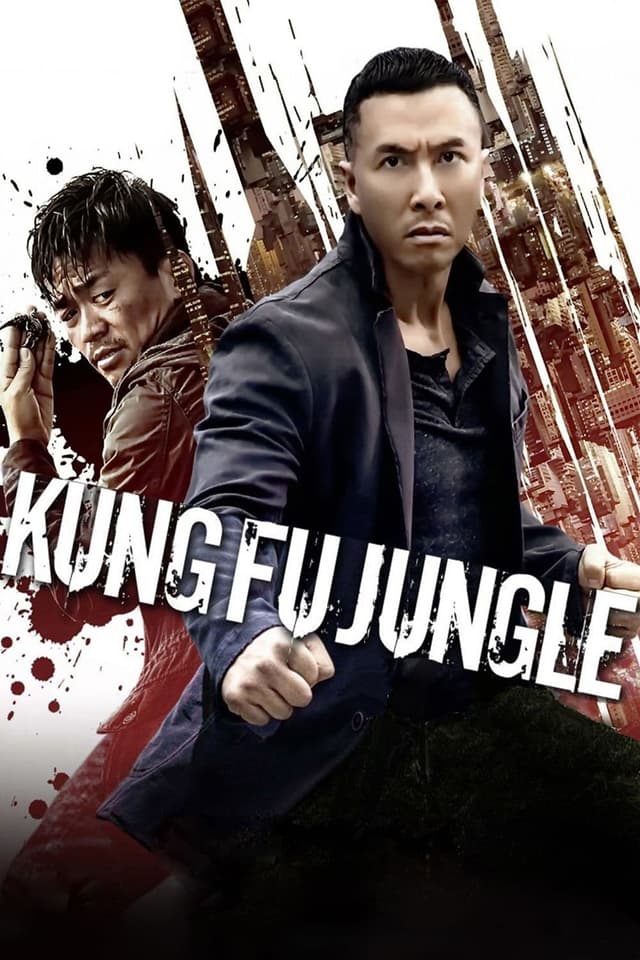
Yi ge ren de wu lin (also known internationally as Kung Fu Jungle and Kung Fu Killer, original title Yi ge ren de wu lin or 一个人的武林), directed by Teddy Chan and starring Donnie Yen, was produced on a reported budget of approximately $25,800,000 (HK$200,000,000). The Hong Kong and mainland Chinese co-production was financed and distributed by Emperor Motion Pictures alongside Sun Entertainment Culture, Beijing Silver Moon Productions, and Heart and Soul Production. The film premiered at the BFI London Film Festival on October 12, 2014, then opened in Hong Kong on October 30, 2014 and mainland China on October 31, 2014.
The reported $25,800,000 outlay positioned the film as a mid-budget Hong Kong martial arts feature, sized above modest local productions but well below the megabudget mainland Chinese tentpoles that were beginning to dominate the regional box office during the mid-2010s. Emperor Motion Pictures designed the project as a vehicle for Donnie Yen between his Ip Man entries, with Teddy Chan reuniting with Yen four years after their successful collaboration on Bodyguards and Assassins (2009).
Key Budget Allocation Categories
The Yi ge ren de wu lin budget was distributed across the following production areas:
- Above-the-Line Talent: Donnie Yen, one of the highest paid martial arts stars in Hong Kong cinema at the time of production, commanded a substantial fee that reflected his post-Ip Man theatrical pull across Hong Kong, mainland China, and the Asian diaspora markets. Director Teddy Chan, coming off the 2009 critical and commercial success of Bodyguards and Assassins, drew a feature-director rate appropriate to a mid-budget Emperor Motion Pictures tentpole. Co-stars Wang Baoqiang, fresh off his commercial success with Lost in Thailand (2012), and Charlie Yeung, returning to acting after a multi-year hiatus, also drew significant compensation.
- Action Choreography and Stunt Work: Donnie Yen served as action director alongside Yan Hua, Yuen Bun, and Stephen Tung, with the team designing a film built around dense, varied fight sequences that move through weapons disciplines including kicking, grappling, fists, boxing, and finally weapons. The choreography required extensive pre-production rehearsal, doubles, and protected stage time during principal photography, expanding the line item beyond a typical action film of this budget tier.
- Hong Kong Location Shoot: Principal photography took place across Hong Kong locations, including the climactic highway sequence shot on a section of motorway with full traffic control, a major construction site, and various urban exteriors. Hong Kong on-location work, while logistically convenient for Emperor Motion Pictures and its predominantly local crew, still carried permit, security, and overnight scheduling costs that pushed against the production budget.
- Cameo-Heavy Production Logistics: The film is notable for featuring more than 40 credited guest appearances from veteran Hong Kong martial arts performers, directors, and choreographers, including Andrew Lau, Kirk Wong, Raymond Chow, Yuen Cheung-yan, Wai Ka-fai, David Chiang, Yuen Bun, Lau Kar-wing, and Tung Wai. Scheduling these cameos around the principal cast and around the talents' own active film commitments demanded extensive coordination, with the resulting line item covering brief fees, expenses, and on-set turnaround for each appearance.
- Cinematography and Editing: Cinematographer Anthony Pun captured the action across multiple camera units, a standard requirement for fight choreography of this density. Editors Cheung Ka-fai and Derek Hui assembled the picture over an extended post-production schedule, working closely with the action team to preserve the rhythm of the choreography while serving the procedural plot.
- Score and Sound: Composer Peter Kam delivered an orchestral and percussion-led score, with sound design and mixing handled in Hong Kong post houses. Music and final sound work consumed a significant share of the post-production budget on a film whose action set pieces depend heavily on aural punctuation.
How Does Yi ge ren de wu lin's Budget Compare to Similar Films?
At a reported $25,800,000, Yi ge ren de wu lin sits in the mid-range of Hong Kong and Greater China martial arts productions of its era. The following comparison set illustrates how the film's budget and box office stand against its closest peers:
- Ip Man (2008): Budget $11,716,000 | Worldwide $21,929,978. Donnie Yen's earlier Wilson Yip collaboration cost less than half of what Kung Fu Jungle spent and returned a comparable worldwide gross, with the lower production cost producing a healthier return on investment.
- Ip Man 2 (2010): Budget $20,000,000 | Worldwide $20,995,449. The sequel that cemented Donnie Yen as a global martial arts brand cost about 78% of Kung Fu Jungle and posted similar box office, providing a useful benchmark for an Ip Man adjacent vehicle.
- Ip Man 3 (2015): Budget $26,000,000 | Worldwide $156,800,000. Released only weeks after Kung Fu Jungle, the third Ip Man cost almost the same and out-grossed Kung Fu Jungle by a factor of more than six, underlining how much of Donnie Yen's box office pull was concentrated in the Ip Man brand rather than in him as a standalone action lead.
- SPL: Sha Po Lang (2005): Budget $10,800,000 | Worldwide $12,300,000. The Donnie Yen / Sammo Hung / Wilson Yip crime martial arts thriller cost roughly 42% of Kung Fu Jungle and earned about 53% of its worldwide gross, a comparable ratio that highlights the durability of the modern Hong Kong action template at lower price points.
- Flash Point (2007): Budget $13,000,000 | Worldwide $13,700,000. The Wilson Yip and Donnie Yen MMA-styled cop thriller cost half of Kung Fu Jungle and grossed slightly more than half worldwide, again showing how lean Hong Kong action production budgets traditionally outperformed mid-budget peers on ROI.
- Dragon / Wu Xia (2011): Budget $20,000,000 | Worldwide $27,300,000. Peter Ho-sun Chan's prestige martial arts drama, with Donnie Yen and Takeshi Kaneshiro, cost about 78% of Kung Fu Jungle and out-grossed it by roughly 17% worldwide, illustrating how the festival circuit and arthouse-leaning martial arts pictures could outperform straightforward action vehicles in the same budget tier.
Yi ge ren de wu lin Box Office Performance
Yi ge ren de wu lin opened in Hong Kong on October 30, 2014 and in mainland China on October 31, 2014, with the BFI London Film Festival premiere on October 12, 2014 anchoring its festival profile. The film performed solidly in greater China and underperformed in international release, where Well Go USA handled the limited North American theatrical and home video rollout under the Kung Fu Killer title.
Against a reported production budget of $25,800,000, the film needed roughly $52,000,000 in worldwide gross to reach profitability when accounting for prints, advertising, and global distribution costs. Here is the financial breakdown:
Box Office Breakdown
Yi ge ren de wu lin (2015)

Yi ge ren de wu lin returned approximately $0.57 to $0.65 in theatrical revenue for every $1 invested when measured against total estimated production and marketing spend, placing it among the more disappointing mid-budget Hong Kong action releases of the 2014 to 2015 window in absolute terms, though the picture's strong critical reception and home video performance softened the loss for Emperor Motion Pictures.
The film's worldwide haul was concentrated almost entirely in mainland China and Hong Kong, with the United States limited release through Well Go USA in April 2015 grossing well under one million dollars in a small art-house and genre-circuit footprint. The performance reinforced an industry pattern of the mid-2010s in which Donnie Yen's standalone vehicles drew significantly less than his Ip Man franchise entries, and in which Hong Kong martial arts pictures generally struggled to convert critical goodwill into mass-market international ticket sales.
Yi ge ren de wu lin Production History
Development on what would become Yi ge ren de wu lin began at Emperor Motion Pictures in 2013, with director Teddy Chan attached and Donnie Yen signed as both star and action director. Chan had previously directed Yen in the 2009 ensemble historical epic Bodyguards and Assassins, which won the Hong Kong Film Award for Best Picture, and the new project was conceived from the outset as a contemporary Hong Kong martial arts procedural built around dense, varied fight choreography rather than the wuxia or historical settings that had defined much of Yen's recent work.
The screenplay, credited to Lau Ho-leung and Mak Tin-sau from a story by Chan and Lau, centers on Hahou Mo (Yen), a former martial arts instructor imprisoned for manslaughter who offers his services to the Hong Kong police when a serial killer (Wang Baoqiang) begins murdering grandmasters in each fighting discipline to claim the title of greatest martial artist alive. Charlie Yeung, returning to film acting after a long hiatus, was cast as Inspector Luk Yuen-Sum, the detective leading the investigation, with Michelle Bai as the killer's terminally ill wife.
Principal photography took place on Hong Kong locations during 2014. Donnie Yen led the action team alongside Yan Hua, Yuen Bun, and Stephen Tung, designing fights that move through five distinct disciplines, kicking, grappling, fists, boxing, and weapons, in a structural conceit that mirrors the killer's hierarchy of victims. The picture is also notable for assembling more than 40 cameo appearances from veteran Hong Kong martial arts performers, directors, and choreographers across three generations of the industry, with Andrew Lau, Kirk Wong, Raymond Chow, Yuen Cheung-yan, Wai Ka-fai, David Chiang, Lau Kar-wing, Tung Wai, Bryan Leung, Fung Hak-on, and many others appearing in roles ranging from line crossings to single-scene supports.
The climactic highway battle, in which Yen and Wang fight along a moving section of Hong Kong motorway in oncoming traffic, required full road closures and extensive coordination with Hong Kong police, and is widely cited as one of the most ambitious action sequences in mid-2010s Hong Kong cinema. The film premiered at the 58th BFI London Film Festival on October 12, 2014, before its Hong Kong release on October 30 and mainland Chinese release on October 31, 2014. Well Go USA acquired North American rights and released the film theatrically under the Kung Fu Killer title in April 2015.
Awards and Recognition
Yi ge ren de wu lin received its most prominent recognition at the 34th Hong Kong Film Awards on April 19, 2015, where the action design team of Donnie Yen, Yan Hua, Yuen Bun, and Stephen Tung won Best Action Choreography. The win was Donnie Yen's fourth Hong Kong Film Award in the action choreography category, cementing his position as one of the most decorated action directors in the modern Hong Kong industry alongside contemporaries Sammo Hung and Yuen Woo-ping.
The film also received Hong Kong Film Award nominations in additional craft categories including Best Editing for Cheung Ka-fai and Derek Hui, recognizing the assembly work that knit together the action set pieces and the procedural narrative. At the Asian Film Awards, the picture and its action team also drew nominations. The film was selected for the BFI London Film Festival, the Toronto International Film Festival's Midnight Madness slate had been a previous landing spot for Hong Kong genre films of comparable profile, and Kung Fu Jungle's London premiere extended that festival presence into the European market.
Critical Reception
Yi ge ren de wu lin received broadly positive reviews from international critics, who praised the action choreography and the film's affectionate gestures toward the history of Hong Kong martial arts cinema while flagging a thin procedural narrative. The film holds a 71% approval rating on Rotten Tomatoes based on 17 critic reviews with an average score of 6.7 out of 10, the strongest critical reception of any Donnie Yen-led non-Ip Man vehicle of the early-to-mid 2010s window.
Variety's Maggie Lee wrote that the film "delivers smashingly entertaining showdowns while serving as a love letter to Hong Kong action cinema," singling out the highway sequence as a standout. The Hollywood Reporter praised the cameo-heavy ensemble and called the fight choreography "ferociously inventive," while Twitch Film (now ScreenAnarchy) described it as "the most purely satisfying mainstream martial arts film of 2014." Western genre press, including Bloody Disgusting and Film School Rejects, treated the Well Go USA Kung Fu Killer release as one of the year's hidden martial arts gems.
The most consistent critical reservation concerned the killer's motivations, with multiple reviewers noting that Wang Baoqiang's grandmaster murderer was more procedural device than fully developed antagonist, and that the film's emotional through-line, Hahou Mo's relationship with the inspector and his desire to return to teaching, was rushed in service of the action calendar. Even so, the consensus held that the fight design, the cameo-driven texture of the production, and Donnie Yen's performance combined to make Kung Fu Jungle one of the most fully realized contemporary Hong Kong martial arts pictures of its decade.
Frequently Asked Questions
How much did it cost to make Yi ge ren de wu lin (2015)?
The reported production budget was approximately $25,800,000, or HK$200,000,000. The film was financed by Emperor Motion Pictures alongside Sun Entertainment Culture, Beijing Silver Moon Productions, and Heart and Soul Production as a vehicle for Donnie Yen between his Ip Man entries.
How much did Yi ge ren de wu lin earn at the box office?
The film grossed $23,295,638 worldwide, with the majority of revenue concentrated in mainland China and Hong Kong. The United States limited release through Well Go USA under the Kung Fu Killer title in April 2015 added a small additional amount to the worldwide total.
Is Yi ge ren de wu lin the same film as Kung Fu Jungle or Kung Fu Killer?
Yes. Yi ge ren de wu lin (一个人的武林) is the original Mandarin title of the film. It was released internationally as Kung Fu Jungle and as Kung Fu Killer in the United States, where Well Go USA acquired North American rights. All three titles refer to the same 2014 Teddy Chan martial arts thriller starring Donnie Yen.
Who directed Yi ge ren de wu lin?
Teddy Chan directed the film, working from a screenplay by Lau Ho-leung and Mak Tin-sau based on a story by Chan and Lau. Chan had previously directed Donnie Yen in the 2009 ensemble historical epic Bodyguards and Assassins, which won Best Picture at the Hong Kong Film Awards.
Who designed the action choreography in Yi ge ren de wu lin?
Donnie Yen led the action design team alongside Yan Hua, Yuen Bun, and Stephen Tung. The team won the Hong Kong Film Award for Best Action Choreography at the 34th Hong Kong Film Awards on April 19, 2015, Donnie Yen's fourth career win in the category.
Where was Yi ge ren de wu lin filmed?
Principal photography took place across Hong Kong locations throughout 2014, with significant set pieces including a major construction site sequence and a climactic highway battle shot on a closed section of Hong Kong motorway with full police coordination and traffic control.
How does Yi ge ren de wu lin compare to Ip Man 3?
Ip Man 3, released only weeks after Kung Fu Jungle in 2015, cost approximately $26,000,000, almost the same as Kung Fu Jungle, but earned roughly $156,800,000 worldwide, more than six times Kung Fu Jungle's worldwide gross. The contrast underlines how much of Donnie Yen's commercial pull during this period was concentrated in the Ip Man brand rather than in his standalone vehicles.
Why is Yi ge ren de wu lin known for its cameos?
The film features more than 40 credited guest appearances from veteran Hong Kong martial arts performers, directors, and choreographers across three generations of the industry. Cameos include Andrew Lau, Kirk Wong, Raymond Chow, Yuen Cheung-yan, Wai Ka-fai, David Chiang, Lau Kar-wing, Tung Wai, Bryan Leung, and Fung Hak-on, alongside director Teddy Chan himself in a brief on-screen role.
What did critics think of Yi ge ren de wu lin?
The film received broadly positive reviews. It holds a 71% approval rating on Rotten Tomatoes based on 17 critic reviews with a 6.7 out of 10 average. Variety praised the highway sequence and called the picture a love letter to Hong Kong action cinema, while The Hollywood Reporter described the fight choreography as ferociously inventive. The most common reservation concerned the relatively thin development of the antagonist's motivations.
Did Yi ge ren de wu lin win any awards?
Yes. The action design team of Donnie Yen, Yan Hua, Yuen Bun, and Stephen Tung won the Hong Kong Film Award for Best Action Choreography at the 34th Hong Kong Film Awards in 2015. The film also drew Hong Kong Film Award craft nominations including Best Editing, and the picture and its action team received Asian Film Awards nominations.
Filmmakers
Yi ge ren de wu lin (2015)

Build budgets like this one in Saturation
Start from an industry-standard feature film template, import the schedule and rates you already have, and let the cost report keep itself current as you spend. Real-time collaboration, no spreadsheets.