Wonderstruck Budget
 Drama1h 56m
Updated
Synopsis
The story of a young boy in the Midwest is told simultaneously with a tale about a young girl in New York from fifty years ago as they both seek the same mysterious connection.
What Is the Budget of Wonderstruck?
Wonderstruck (2017) was produced on an estimated budget of $15 to $20 million, a modest figure for a period drama operating across two distinct timelines. Amazon Studios financed the project, with Killer Films and Submarine Entertainment serving as production companies. The budget needed to cover two entirely different visual approaches: a silent, black-and-white 1927 storyline and a color, sound-driven 1977 narrative, each requiring separate period-accurate production design, costumes, and locations.
Director Todd Haynes, known for meticulously crafted period films like Carol and Far from Heaven, brought his characteristic attention to visual detail. The dual-era structure meant the production was effectively building two films within one budget, a challenge that required careful allocation across departments to maintain the quality standard Haynes and his collaborators demanded.
Key Budget Allocation Categories
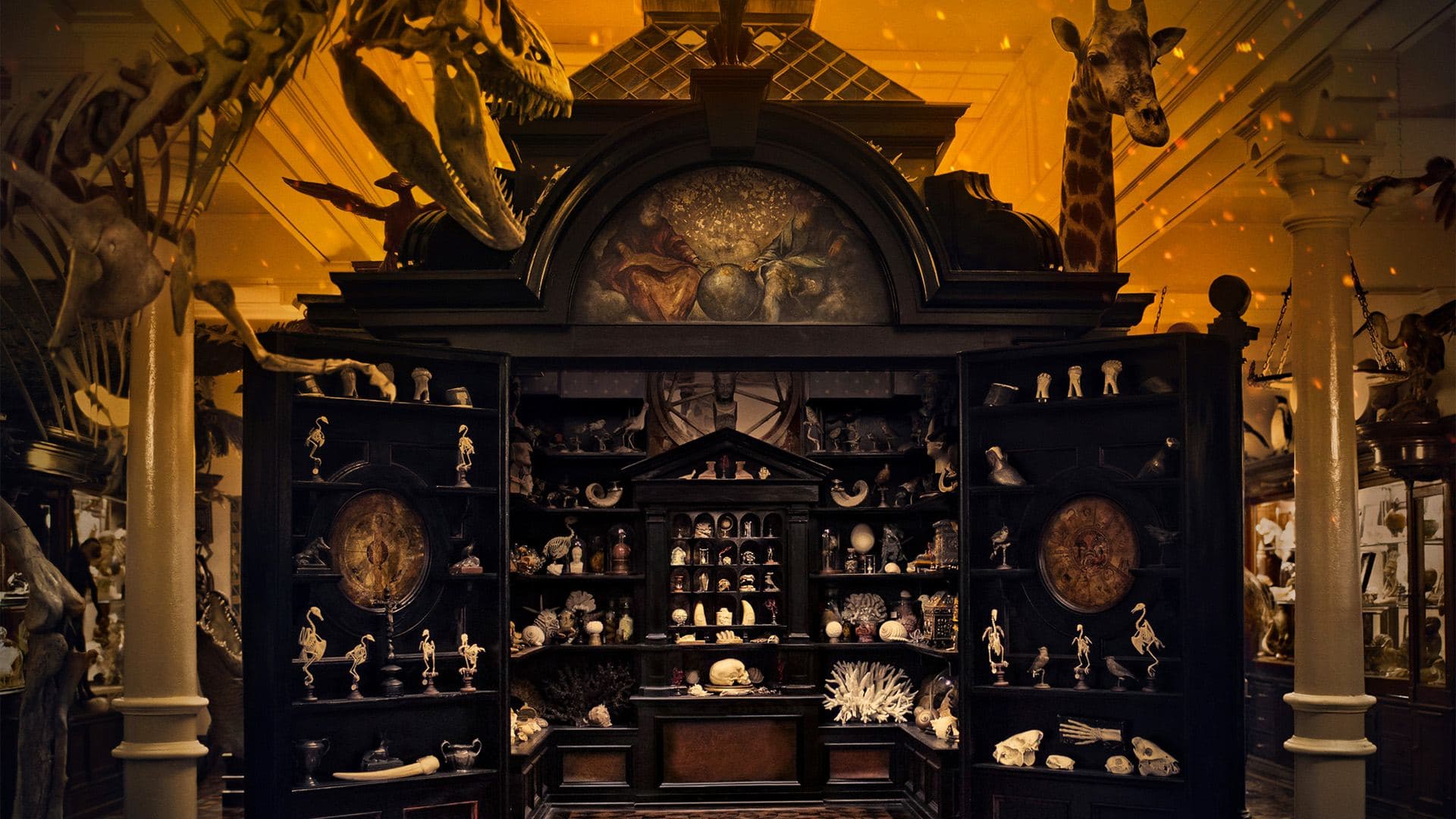
- Production Design and Art Direction: Sandy Powell designed costumes spanning 50 years, from 1920s silent-era fashion to late-1970s New York. Mark Friedberg built period-accurate sets for both timelines, including a recreation of the American Museum of Natural History's cabinets of wonder.
- Cinematography: Edward Lachman, who earned an Oscar nomination for Carol, shot the 1927 sequences in black-and-white Super 16mm to evoke the look of silent cinema, while the 1977 scenes were captured in color 35mm. The two formats required different lighting setups, lenses, and processing workflows.
- Cast and Talent: Julianne Moore and Michelle Williams anchored the adult cast, while newcomers Oakes Fegley and Millicent Simmonds (in her screen debut) carried large portions of the film. Simmonds, who is deaf in real life, brought authenticity to the 1927 storyline that no amount of production design could replicate.
- Location and Period Detail: Filming took place across New York, including the American Museum of Natural History, period-dressed street scenes, and multiple interior locations requiring full 1920s and 1970s dressing. Both eras of New York demanded distinct visual palettes and environmental details.
- Score and Sound Design: Carter Burwell composed an original score that bridges both timelines. The 1927 sequences relied entirely on music and sound effects to convey emotion, placing unusual demands on the sound design team to create a fully realized silent-film experience within a modern production.
- Visual Effects and Post-Production: Subtle VFX work extended period locations, removed modern elements from New York street scenes, and supported the transitions between the two timelines. The film also required careful color grading to differentiate the monochrome and color storylines.
How Does Wonderstruck's Budget Compare to Similar Films?
- Hugo (2011): Budget $150M | Worldwide $185.8M. Martin Scorsese's love letter to early cinema carried a budget ten times larger, reflecting its extensive 3D visual effects and large-scale set construction. Both films share a fascination with museums and the magic of early film, but Hugo operated at blockbuster scale.
- Carol (2015): Budget $11.8M | Worldwide $40.3M. Haynes' previous collaboration with Lachman delivered a focused period drama on a similar budget. Carol's single timeline and more contained scope allowed it to stretch its dollars further, and it performed significantly better at the box office.
- The Shape of Water (2017): Budget $19.5M | Worldwide $195.2M. Guillermo del Toro's fairy tale operated in the same budget range as Wonderstruck and shared a period setting, but its genre appeal and awards momentum (it won Best Picture) drove massive returns that Wonderstruck never found.
- A Quiet Place (2018): Budget $17M | Worldwide $340.9M. Another film that made creative use of silence as a storytelling device, though as a horror film its audience was far broader. The comparison highlights how genre can determine commercial viability at similar budget levels.
- Moonlight (2016): Budget $4M | Worldwide $65.3M. Barry Jenkins achieved extraordinary results on a fraction of Wonderstruck's budget, demonstrating that awards-circuit success can translate to strong returns when critical reception and cultural moment align.
Wonderstruck Box Office Performance
Wonderstruck opened in limited release on October 20, 2017, distributed by Roadside Attractions. The film earned $1,045,498 domestically and $760,000 internationally, bringing its worldwide total to $1,805,498. Against an estimated production budget of $15 to $20 million, the film was a significant commercial disappointment.
Using the standard break-even formula that accounts for production and marketing costs (roughly 2x the production budget), Wonderstruck needed approximately $30 to $40 million at the worldwide box office to reach profitability. Its final gross of $1.8 million represents a recovery of less than 10% of production costs alone, before marketing expenses are factored in.
The ROI calculation tells the full story. Using the midpoint budget estimate of $17.5 million: ($1,805,498 minus $17,500,000) divided by $17,500,000 times 100 equals negative 89.7%. Amazon Studios absorbed the loss, though the film's availability on Amazon Prime Video likely provided some downstream value that theatrical numbers alone do not capture.
The film's commercial failure reflected several factors: a challenging dual-timeline structure that resisted easy marketing, a young target audience that does not typically drive theatrical attendance for art-house releases, and a crowded fall 2017 market that included heavy competition from other awards contenders. Despite Todd Haynes' critical reputation and a Cannes premiere, the film never gained the word-of-mouth traction needed to expand beyond its initial limited run.
- Production Budget: $7,000,000
- Estimated P&A: approximately $2,800,000
- Total Investment: approximately $9,800,000
- Worldwide Gross: $1,947,099
- Net Return: approximately $7,900,000 (loss)
- ROI (on production budget): approximately -72%
Wonderstruck Production History
The project originated with Brian Selznick's 2011 illustrated novel of the same name, a companion piece to his earlier work The Invention of Hugo Cabret (which Martin Scorsese adapted as Hugo). Selznick's novel told parallel stories across two timelines through a combination of prose and sequential illustrations, with the 1927 storyline conveyed entirely through pictures and the 1977 storyline told in words. This structure made it a natural candidate for cinematic adaptation, though translating Selznick's visual storytelling into film required a director with a strong visual sensibility.
Todd Haynes came aboard to direct, drawn to the challenge of rendering two timelines in radically different cinematic languages. Haynes had long admired silent cinema and saw the 1927 sequences as an opportunity to create a genuine silent film within a contemporary production. He enlisted Edward Lachman, his cinematographer on Carol and Far from Heaven, to develop the visual approach. The pair decided to shoot the 1927 scenes on Super 16mm black-and-white film stock, giving those sequences the grain structure and tonal range of actual silent-era photography rather than simply desaturating digital footage.
Casting Millicent Simmonds as Rose, the deaf girl at the center of the 1927 storyline, became a defining decision. Simmonds, who is deaf, had no prior acting experience, but Haynes and his casting team found her through a nationwide search. Her performance anchored the silent sequences with an authenticity that professional actors would have struggled to match. Oakes Fegley was cast as Ben, the 1977 protagonist, while Julianne Moore took a dual role connecting both timelines.
Principal photography took place in late 2016 across New York City locations, including the American Museum of Natural History, which figures prominently in both storylines. The production dressed streets and interiors to reflect both the late 1920s and late 1970s, requiring the art department to manage two complete period environments. Haynes shot the timelines in sequence blocks rather than interleaving them, allowing the crew to maintain visual consistency within each era.
The film premiered In Competition at the 2017 Cannes Film Festival in May, where it received a standing ovation but mixed reviews from critics who found the dual structure more intellectually ambitious than emotionally engaging. Amazon Studios, which had acquired distribution rights, partnered with Roadside Attractions for a limited theatrical release beginning in October 2017.
Awards and Recognition
Wonderstruck premiered In Competition at the 2017 Cannes Film Festival, placing it among the most prestigious selections of the year. While it did not win the Palme d'Or (that year's prize went to The Square), the Cannes slot cemented the film's art-house credentials and introduced it to international buyers and critics.
The film earned recognition in craft categories across several organizations. Edward Lachman's dual-format cinematography drew particular attention, and Sandy Powell's costume design spanning five decades received praise from fashion and film critics alike. Carter Burwell's score, which carried substantial narrative weight in the dialogue-free 1927 sequences, was highlighted as one of the year's most essential compositions.
Millicent Simmonds' debut performance earned her a nomination for Best Young Performer at the Critics' Choice Awards. Her casting was widely praised as a milestone for deaf representation in mainstream cinema, and it led directly to her role in A Quiet Place (2018), where her performance reached a far larger audience. The legacy of Wonderstruck in launching Simmonds' career may ultimately prove more significant than any individual award.
Critical Reception
Wonderstruck holds a 68% approval rating on Rotten Tomatoes, reflecting a divided critical response that acknowledged the film's ambition while questioning its emotional impact. The consensus praised Todd Haynes' visual craftsmanship and the film's inventive dual-timeline structure but noted that the two storylines did not always cohere into a satisfying whole.
Supporters of the film highlighted its formal daring. The 1927 sequences, presented as a fully realized silent film complete with intertitles and an orchestral score, were widely regarded as the film's strongest achievement. Critics praised Lachman's black-and-white cinematography for capturing the texture and rhythm of authentic silent cinema rather than simply imitating its surface. Millicent Simmonds' performance as Rose drew near-universal admiration, with many reviewers noting that her scenes conveyed more emotion without dialogue than the 1977 storyline managed with it.
Detractors felt the 1977 sequences, while competently made, lacked the visual invention of their 1927 counterparts and that the eventual convergence of the two storylines relied too heavily on coincidence. Some critics found the film's pacing deliberate to a fault, particularly in its second half as the parallel narratives moved toward their shared resolution. The young audience the source material was designed for may have found the film's contemplative pace challenging in a theatrical setting.
Despite the mixed notices, Wonderstruck has gained appreciation over time as a singular experiment in cinematic form. Few mainstream productions have attempted to embed a genuine silent film within a contemporary narrative, and Haynes' commitment to the conceit, shooting on actual film stock rather than applying digital filters, gives the project an integrity that critics increasingly recognize. The film remains a distinctive entry in Haynes' body of work and a notable example of how mid-budget filmmaking can support genuine artistic risk.
Frequently Asked Questions
How much did it cost to make Wonderstruck (2017)?
The production budget was $7,000,000, covering principal photography, cast and crew salaries, locations, sets, post-production, and music. Marketing and distribution (P&A) costs are estimated at an additional $3,500,000 - $5,600,000, bringing the total studio investment to approximately $10,500,000 - $12,600,000.
How much did Wonderstruck (2017) earn at the box office?
Wonderstruck grossed $1,947,099 worldwide.
Was Wonderstruck (2017) profitable?
The film did not break even theatrically, earning $1,947,099 against an estimated $17,500,000 needed. Ancillary revenue may have improved the picture.
What were the biggest costs in producing Wonderstruck?
The primary cost drivers were above-the-line talent (Oakes Fegley, Millicent Simmonds, Julianne Moore); talent compensation, authentic period production design, and meticulous post-production.
How does Wonderstruck's budget compare to similar drama films?
At $7,000,000, Wonderstruck is classified as a micro-budget production. The median budget for wide-release drama films in the 2010s ranges from $30 - 80M for mid-budget to $150M+ for tentpoles. Comparable budgets: Capote (2005, $7,000,000); Norm of the North (2016, $7,000,000); American Psycho (2000, $7,000,000).
Did Wonderstruck (2017) go over budget?
There are no widely reported accounts of significant budget overruns for this production. However, studios rarely disclose precise budget overrun figures publicly. The reported production budget reflects the final estimated cost.
What was the return on investment (ROI) for Wonderstruck?
The theatrical ROI was -72.2%, calculated as ($1,947,099 − $7,000,000) ÷ $7,000,000 × 100. This measures gross revenue against production budget only - it does not account for P&A or exhibitor shares.
Who directed Wonderstruck and who were the key crew members?
Directed by Todd Haynes, written by Brian Selznick, shot by Edward Lachman, with music by Carter Burwell, edited by Affonso Gonçalves.
Where was Wonderstruck filmed?
Wonderstruck was filmed in United States of America.
Filmmakers
Wonderstruck

Official Trailer
Build budgets like this one in Saturation
Start from an industry-standard feature film template, import the schedule and rates you already have, and let the cost report keep itself current as you spend. Real-time collaboration, no spreadsheets.