What Women Want Budget
 ComedyRomance2h 7m
Updated
Synopsis
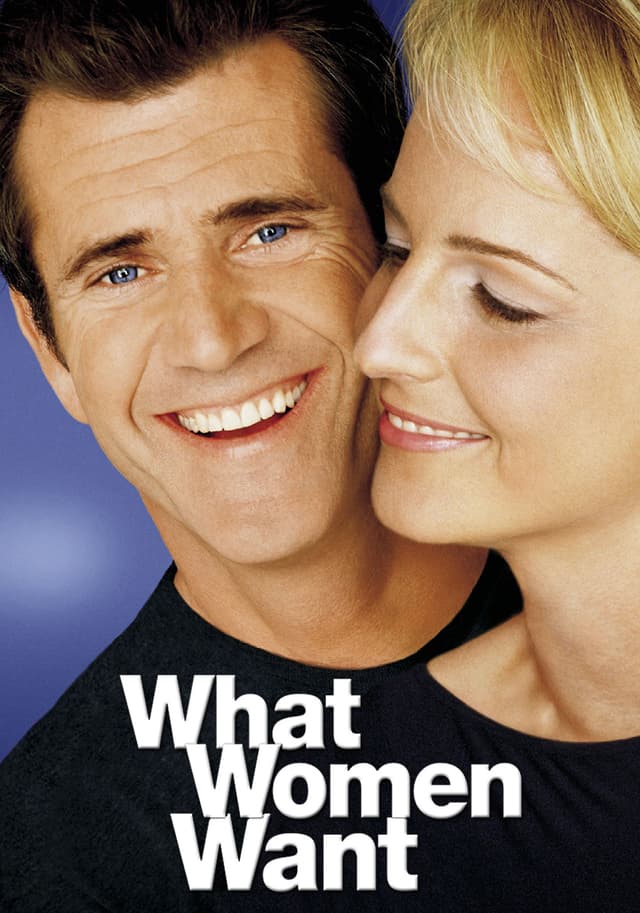
Advertising executive Nick Marshall is as cocky as they come, but what happens to a chauvinistic guy when he can suddenly hear what women are thinking? Nick gets passed over for a promotion, but after an accident enables him to hear women's thoughts, he puts his newfound talent to work against Darcy, his new boss, who seems to be infatuated with him.
What Is the Budget of What Women Want?
The production budget of What Women Want (2000) was $70 million. Paramount Pictures financed the romantic comedy, banking on the commercial appeal of Mel Gibson at the height of his box office power paired with Academy Award winner Helen Hunt. Director Nancy Meyers, coming off the success of The Parent Trap (1998), secured a substantial budget that reflected both Gibson's above-the-line salary demands and the film's need for polished production design across multiple Chicago and Los Angeles locations.
A significant portion of the budget went toward talent compensation. Gibson commanded one of the highest salaries in Hollywood at the time, reportedly earning upwards of $25 million against gross participation. Hunt's fee, combined with a supporting cast that included Marisa Tomei, Alan Alda, and a cameo from Bette Midler, further drove above-the-line costs. The remaining budget covered elaborate set construction, wardrobe for Gibson's advertising executive character, and Alan Silvestri's orchestral score.
Key Budget Allocation Categories
- Above-the-Line Talent: Mel Gibson's salary was the single largest line item, with Helen Hunt, Marisa Tomei, Alan Alda, and Bette Midler rounding out a high-profile cast that consumed a significant share of the production budget
- Production Design and Art Direction: The film required sleek corporate office environments for a Chicago advertising agency, Gibson's upscale bachelor pad, and multiple stylized interiors that conveyed the polished world of high-end advertising
- Location Filming: Principal photography split between Los Angeles soundstages and on-location shoots in Chicago, with travel, permits, and local crew costs adding to the budget
- Music and Score: Composer Alan Silvestri delivered an orchestral score, and the film's soundtrack featured licensed pop tracks that supported the comedic tone and montage sequences
- Visual Effects and Post-Production: While not effects-heavy, the film required subtle visual and sound design work to sell the premise of Gibson's character hearing women's inner thoughts, including layered audio mixing and occasional digital touch-ups
- Marketing and Distribution: Paramount invested heavily in a holiday-season marketing campaign timed for the December 2000 release, with Gibson's star power driving a wide domestic rollout
How Does What Women Want's Budget Compare to Similar Films?
At $70 million, What Women Want sat at the upper end of budgets for star-driven romantic comedies of its era. The film's cost was largely justified by Gibson's salary, which alone accounted for roughly a third of the total. Compared to similar high-concept comedies from the late 1990s and early 2000s:
- Liar Liar (1997): Budget $45M | Worldwide $302M. Jim Carrey's high-concept comedy cost less but followed a similar formula of a major star carrying a premise-driven story
- As Good as It Gets (1997): Budget $50M | Worldwide $314M. Jack Nicholson and Helen Hunt together cost less than Gibson alone, yet the film performed similarly at the global box office
- The Parent Trap (1998): Budget $15M | Worldwide $92M. Nancy Meyers' previous film operated on a fraction of the budget, demonstrating how star salary inflation shaped the cost of What Women Want
- My Best Friend's Wedding (1997): Budget $38M | Worldwide $299M. Julia Roberts commanded a high salary but the overall budget remained moderate, highlighting how Gibson's asking price pushed What Women Want into a different tier
- Something's Gotta Give (2003): Budget $80M | Worldwide $266M. Meyers' follow-up with Jack Nicholson and Diane Keaton cost even more, continuing the pattern of premium budgets for A-list romantic comedies
What Women Want Box Office Performance
What Women Want opened on December 15, 2000 and earned $33.6 million in its opening weekend, debuting at number one. The film held strongly through the holiday corridor, benefiting from a lack of direct romantic comedy competition during the Christmas season. It ultimately grossed $182,811,707 domestically and $374,111,707 worldwide.
With a production budget of $70 million, the film needed approximately $140 million at the worldwide box office to break even after accounting for marketing and distribution costs (roughly 2x the production budget). What Women Want cleared that threshold by a wide margin.
The return on investment was substantial: ($374.1M - $70M) / $70M x 100 = 434% ROI. At the time of its release, What Women Want became the highest-grossing film ever directed by a woman, a record Nancy Meyers held until Phyllida Lloyd's Mamma Mia! (2008) surpassed it. The film's international performance was particularly strong, with $191 million from overseas markets confirming Gibson's global draw.
Box Office Breakdown
What Women Want

What Women Want Production History
The project began as a spec script by Josh Goldsmith and Cathy Yuspa, built around the high-concept premise of a man who suddenly hears women's thoughts. The screenplay circulated in Hollywood during the late 1990s and attracted interest from multiple studios before Paramount secured the rights. Nancy Meyers signed on to direct, bringing her track record of commercially successful, character-driven comedies.
Mel Gibson was the studio's top choice for the lead role of Nick Marshall, a chauvinistic advertising executive. Gibson was at the peak of his commercial power following the back-to-back successes of Braveheart (1995), Ransom (1996), and Lethal Weapon 4 (1998). His willingness to play against his action-hero image in a comedic role was central to the film's marketing appeal. Helen Hunt, fresh off her Best Actress win for As Good as It Gets, joined as the female lead, with Marisa Tomei, Alan Alda, and Lauren Holly filling key supporting roles. Bette Midler contributed a memorable cameo as a couples therapist.
Principal photography took place primarily in Los Angeles, with additional location work in Chicago to capture the advertising world setting. Meyers, known for her meticulous attention to production design, worked closely with designer Jon Hutman to create environments that reflected the upscale, image-conscious world of Nick Marshall's career. The production moved smoothly, with few reported delays or complications.
Post-production focused heavily on the audio design required for the mind-reading sequences. The filmmakers layered overlapping inner monologues with environmental sound to create a comedic yet believable effect. Alan Silvestri composed the score, blending light orchestral arrangements with the film's romantic comedy tone. Paramount positioned the release for December 15, 2000, targeting the lucrative holiday moviegoing window.
Awards and Recognition
What Women Want received mixed recognition from awards bodies, reflecting its identity as a commercial crowd-pleaser rather than a critical darling. The film earned nominations at the People's Choice Awards, where it was recognized for Favorite Motion Picture Comedy. Mel Gibson received a Teen Choice Award nomination for Choice Actor in a Comedy, and the film was nominated at the Satellite Awards.
While the film did not compete at the Oscars or major guild ceremonies, its commercial achievement was widely noted within the industry. Nancy Meyers' record as the director of the highest-grossing film by a woman became a talking point in ongoing conversations about gender representation in Hollywood. The film's success gave Meyers the leverage to greenlight Something's Gotta Give with an even larger budget. A Chinese-language remake, What Women Want (2011), starred Andy Lau and further demonstrated the staying power of the original concept in international markets.
Critical Reception
What Women Want holds a 54% approval rating on Rotten Tomatoes, placing it squarely in mixed-review territory. Critics were divided between those who found the premise charming and those who felt the execution relied too heavily on Gibson's star charisma at the expense of deeper comedy. Roger Ebert gave the film three out of four stars, praising Gibson's comic timing and calling the film "a light, sweet, inconsequential movie that, in a better world, would be an indie success instead of a big-budget production."
Several critics pointed to the film's handling of gender dynamics as both its greatest strength and its most notable weakness. The premise of a self-absorbed man learning empathy by hearing women's thoughts offered a rich comedic setup, but some reviewers felt the script pulled its punches, defaulting to romantic comedy formula rather than exploring the concept's satirical potential. Helen Hunt's performance was consistently praised for grounding the story, and the chemistry between the two leads carried scenes where the writing fell short.
Audiences, however, responded enthusiastically. The film earned a strong CinemaScore and demonstrated legs at the box office that outpaced its critical reception. What Women Want became a cultural reference point for early-2000s romantic comedies, and its central concept proved durable enough to inspire the 2011 Chinese remake and the 2019 gender-swapped reboot What Men Want, starring Taraji P. Henson. The original remains Nancy Meyers' most commercially successful film and a landmark in her career as one of Hollywood's most bankable comedy directors.
Frequently Asked Questions
How much did it cost to make What Women Want (2000)?
The production budget was $70,000,000, covering principal photography, cast and crew salaries, locations, sets, post-production, and music. Marketing and distribution (P&A) costs are estimated at an additional $35,000,000 - $56,000,000, bringing the total studio investment to approximately $105,000,000 - $126,000,000.
How much did What Women Want (2000) earn at the box office?
What Women Want grossed $182,811,707 domestic, $191,288,293 international, totaling $374,100,000 worldwide.
Was What Women Want (2000) profitable?
Yes. Against a production budget of $70,000,000 and estimated total costs of ~$175,000,000, the film earned $374,100,000 theatrically - a 434% ROI on production costs alone.
What were the biggest costs in producing What Women Want?
The primary cost drivers were above-the-line talent (Mel Gibson, Helen Hunt, Marisa Tomei); star comedian salaries, location filming, and aggressive marketing campaigns.
How does What Women Want's budget compare to similar comedy films?
At $70,000,000, What Women Want is classified as a mid-budget production. The median budget for wide-release comedy films in the 2000s ranges from $30 - 80M for mid-budget to $150M+ for tentpoles. Comparable budgets: A Civil Action (1998, $70,000,000); Babylon A.D. (2008, $70,000,000); Beowulf (2007, $70,000,000).
Did What Women Want (2000) go over budget?
There are no widely reported accounts of significant budget overruns for this production. However, studios rarely disclose precise budget overrun figures publicly. The reported production budget reflects the final estimated cost.
What was the return on investment (ROI) for What Women Want?
The theatrical ROI was 434.4%, calculated as ($374,100,000 − $70,000,000) ÷ $70,000,000 × 100. This measures gross revenue against production budget only - it does not account for P&A or exhibitor shares.
What awards did What Women Want (2000) win?
5 wins & 9 nominations total.
Who directed What Women Want and who were the key crew members?
Directed by Nancy Meyers, written by Cathy Yuspa, Diane Drake, Josh Goldsmith, shot by Dean Cundey, with music by Alan Silvestri, edited by Thomas J. Nordberg, Stephen A. Rotter.
Where was What Women Want filmed?
What Women Want was filmed in United States of America.
Filmmakers
What Women Want

Official Trailer
Build budgets like this one in Saturation
Start from an industry-standard feature film template, import the schedule and rates you already have, and let the cost report keep itself current as you spend. Real-time collaboration, no spreadsheets.