Victoria and Abdul Budget
 Drama
DramaUpdated
Synopsis
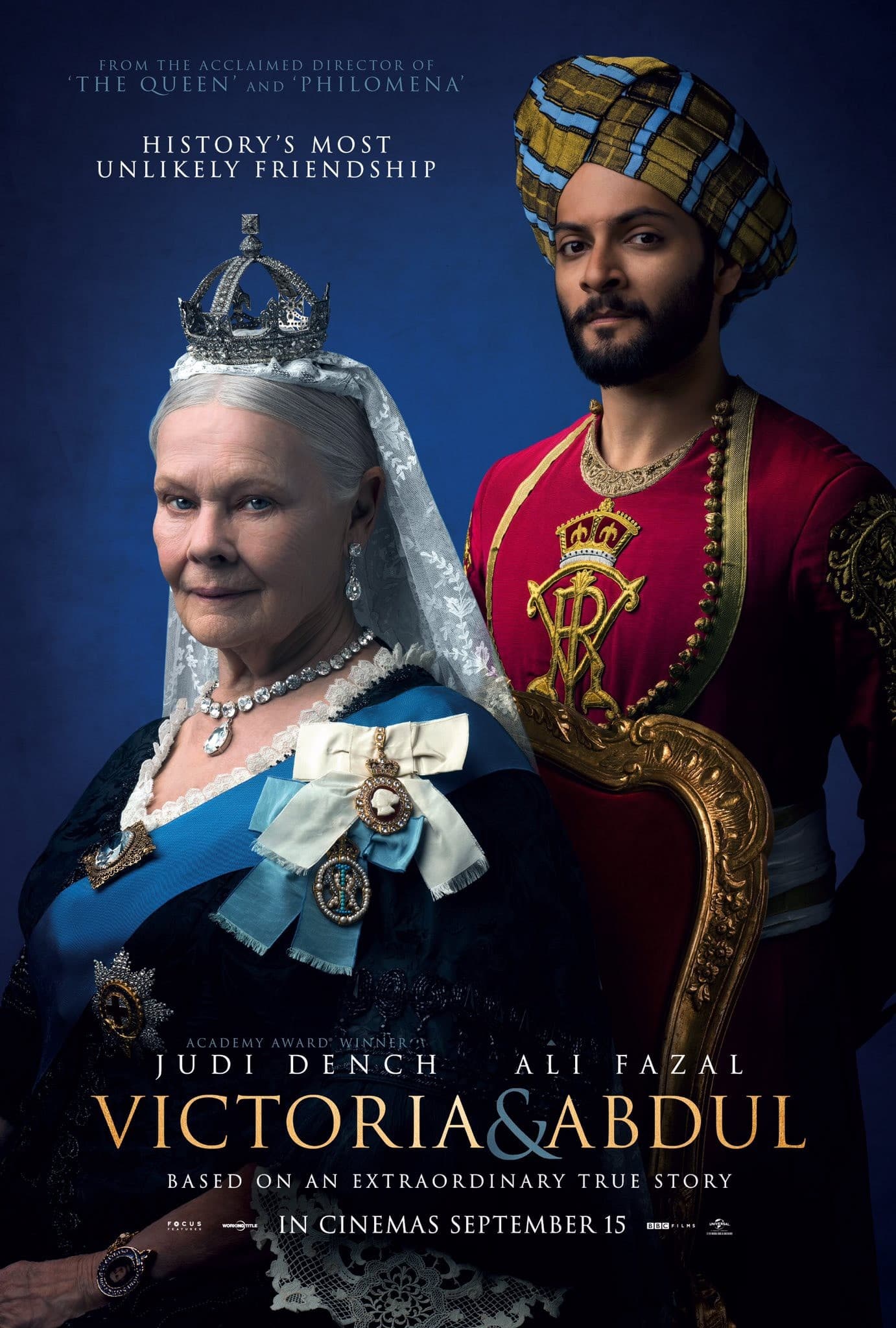
In 1887, the young Indian clerk Abdul Karim is selected to travel from Agra to England to present a ceremonial coin to Queen Victoria as part of her Golden Jubilee. The lonely, isolated empress unexpectedly befriends Abdul and elevates him to the role of personal Munshi, instructing him in Urdu and asking him to teach her about the customs of India, scandalizing her family and household staff who plot to remove him from her side.
What Is the Budget of Victoria and Abdul (2017)?
Victoria and Abdul (2017), directed by Stephen Frears and distributed by Focus Features in North America and Universal Pictures internationally, was produced on a budget of $21,000,000. Working Title Films and BBC Films co-produced through their long-standing UK and Universal-output relationships, with Tim Bevan, Eric Fellner, Beeban Kidron, and Tracey Seaward producing alongside line producer Caroline Levy. The film was an adaptation of Shrabani Basu's 2010 nonfiction book Victoria & Abdul: The True Story of the Queen's Closest Confidant, which had drawn extensively on Abdul Karim's previously unpublished journals.
The budget reflected the cost discipline of a contemporary British prestige period drama. Focus and Working Title priced the film below the typical historical-epic tier, betting that Judi Dench's reprisal of Queen Victoria (a role she had previously played in Mrs Brown (1997)) combined with Frears's track record (Philomena, The Queen, Florence Foster Jenkins) could anchor a theatrical and downstream-rights performance. The math required the film to clear roughly $48,000,000 worldwide to break even after marketing, a target the film cleared comfortably on international strength.
Key Budget Allocation Categories
Victoria and Abdul's $21,000,000 budget was distributed across several core production areas:
- Above-the-Line Talent: Judi Dench reprised Queen Victoria at her standard prestige-drama rate, returning to the role two decades after Mrs Brown. Ali Fazal, a Bollywood star with limited Western feature experience, was cast as Abdul Karim after an international casting search. Supporting players Eddie Izzard (as Bertie, the future King Edward VII), Tim Pigott-Smith (in his final completed role before his April 2017 death), Olivia Williams, Adeel Akhtar, Michael Gambon, and Simon Callow filled out the principal ensemble at standard scale plus established-actor premiums.
- UK Location Work: Production filmed extensively at Osborne House on the Isle of Wight, the historical Queen Victoria summer residence and the principal setting of the screenplay's English scenes. Additional UK locations included Balmoral Castle exteriors in Scotland, Knole House in Kent, and Royal Albert Hall in London, with English Heritage and the National Trust providing access through standard location-fee arrangements.
- India Sequences: The opening Agra sequences were shot on location in Agra, Jaipur, and Rajasthan over a multi-week India production block. The Indian unit covered exteriors, market scenes, and the Taj Mahal-adjacent ceremonial coin-presentation sequence. The Indian production made meaningful use of local crew, equipment, and accommodation, with the rupee exchange rate keeping below-the-line spend favorable.
- Period Costume Design: Costume designer Consolata Boyle (Florence Foster Jenkins, The Queen) researched and constructed extensive Victorian-era court wardrobe for Dench's Queen Victoria across the multi-year narrative arc, with the empress's mourning blacks gradually shifting to subdued color as the Abdul friendship altered her routine. Indian period costume for Ali Fazal and the Munshi household added a separate costume-construction line.
- Production Design: Production designer Alan MacDonald (Philomena, Florence Foster Jenkins) dressed Osborne House interiors with period-appropriate furniture, paintings, and royal household objects. Several rooms required full set decoration to recreate the 1890s Victorian court visual texture, and the practical set decoration anchored the film's design.
- Score and Sound: Composer Thomas Newman wrote the original score, his second collaboration with Frears after Florence Foster Jenkins. The score blended Western orchestral palette with subtle Indian instrumental textures during sequences depicting Abdul's Urdu instruction. The score earned Newman his 14th Academy Award nomination.
How Does Victoria and Abdul's Budget Compare to Similar Films?
At $21,000,000, Victoria and Abdul sits firmly in the typical range of contemporary British prestige period dramas. The comparison set illustrates the genre's commercial range:
- Mrs Brown (1997): Budget $6,000,000 | Worldwide $30,200,000. Judi Dench's previous Queen Victoria feature, also distributed by Miramax, cost less than a third of Victoria and Abdul and earned 46% of its worldwide gross, the closest stylistic and cast comparison.
- The Queen (2006): Budget $15,000,000 | Worldwide $123,438,212. Frears's previous prestige royal feature with Helen Mirren cost less than Victoria and Abdul and earned 87% more worldwide, anchored by Mirren's Best Actress Oscar win.
- Florence Foster Jenkins (2016): Budget $29,000,000 | Worldwide $58,067,892. Frears's previous prestige biopic with Meryl Streep cost 38% more than Victoria and Abdul and earned 12% less worldwide, the closest commercial comparison among contemporary biopics.
- Philomena (2013): Budget $12,000,000 | Worldwide $100,851,500. Frears's prior Judi Dench collaboration cost 43% less than Victoria and Abdul and earned 53% more worldwide, the cycle's commercial efficiency benchmark.
- The Best Exotic Marigold Hotel (2011): Budget $10,000,000 | Worldwide $136,841,232. John Madden's contemporary Judi Dench India-set ensemble cost less than half what Victoria and Abdul cost and earned more than double its worldwide gross.
Victoria and Abdul Box Office Performance
Victoria and Abdul opened on September 22, 2017, in limited release across 4 theaters in North America, debuting to $159,275 with a $39,819 per-theater average. Focus Features expanded the film through October and November, reaching a peak of 736 theaters in mid-October 2017. The platform-release strategy was Focus's standard prestige-tier rollout, building on the BFI London Film Festival opening-gala premiere (October 2017) and the established Dench-Frears reputation.
Against a $21,000,000 production budget, Victoria and Abdul needed roughly $48,000,000 in worldwide gross to reach profitability when accounting for marketing and distribution costs. Here is the financial breakdown:
Box Office Breakdown
Victoria and Abdul (2017)

Victoria and Abdul returned approximately $1.50 in theatrical revenue for every $1 invested when measured against total estimated production and marketing spend. The domestic share of the gross was $22,238,309 against an international share of $43,705,564, a 34/66 split heavily weighted toward international markets and a clear signal that the Queen Victoria material played significantly stronger in the United Kingdom, Commonwealth markets, and India than in the United States.
Focus and Universal recouped their investment comfortably and used the film as further evidence of the commercial viability of mid-budget prestige period drama for older audiences. Working Title's broader slate continued to mine the genre, with subsequent productions including Darkest Hour (2017), which earned more than four times Victoria and Abdul's worldwide gross. The film has subsequently developed an enduring catalog presence on streaming platforms, with British costume drama audiences and the post-COVID royal-content boom sustaining its reach into the 2020s.
Victoria and Abdul Production History
Development began at BBC Films in 2014 when Working Title and BBC optioned Shrabani Basu's 2010 nonfiction book, which had drawn on previously unpublished journals kept by Abdul Karim. Lee Hall (Billy Elliot, War Horse) adapted the screenplay across multiple drafts, with the narrative restructured to foreground the empress-Munshi friendship and the household resistance to it. Stephen Frears attached to direct in 2015, continuing his run of British prestige period drama after Philomena (2013) and Florence Foster Jenkins (2016).
Judi Dench, who had previously played Queen Victoria in John Madden's Mrs Brown (1997), agreed to reprise the role two decades later, with the project conceived around her availability and her established public association with the character. Ali Fazal, then primarily known to Western audiences for a small role in Furious 7, was cast as Abdul Karim after an international casting search that included Bollywood and British-Asian acting communities. Eddie Izzard signed as Bertie shortly after, with Tim Pigott-Smith taking the role of Sir Henry Ponsonby in what would be his final completed performance before his April 2017 death.
Principal photography ran from October 2016 through January 2017 in multiple locations. The Indian unit shot in Agra, Jaipur, and Rajasthan during October and November 2016, taking advantage of India's film production incentives and the favorable rupee exchange rate. The UK unit then shot at Osborne House on the Isle of Wight, Balmoral Castle exteriors in Scotland, Knole House in Kent, and Royal Albert Hall in London through December 2016 and January 2017, with English Heritage and the National Trust providing access through standard arrangements.
Post-production extended through summer 2017, with editor Melanie Oliver assembling the multi-year narrative and the period set pieces. Composer Thomas Newman scored the film with a blend of Western orchestral and Indian instrumental textures, recording the orchestra at AIR Lyndhurst Studios in London. Focus Features positioned the film for a September 2017 limited-release launch timed to the awards-season news cycle, premiering the film at the Venice Film Festival in late August 2017 before the BFI London Film Festival opening gala in October.
Awards and Recognition
Victoria and Abdul received two Academy Award nominations at the 90th Academy Awards: Best Costume Design (Consolata Boyle) and Best Makeup and Hairstyling. The film did not win in either category.
At the Golden Globes, Judi Dench received a Best Actress (Drama) nomination, her ninth career Globes nod. The film earned BAFTA nominations for Outstanding British Film, Best Production Design, and Best Costume Design. Dench received Critics' Choice Movie Awards, Screen Actors Guild Awards, and London Film Critics' Circle nominations for her lead performance, while Tim Pigott-Smith received posthumous recognition from multiple regional critics' associations. The film opened the BFI London Film Festival in 2017, an honor reflecting its standing within British prestige cinema, and Frears received a Hollywood Film Awards Career Achievement honor that year.
Critical Reception
Victoria and Abdul received mixed-to-positive reviews. The film holds a 65% approval rating on Rotten Tomatoes based on 261 critic reviews, with a critical consensus that called it a charming if uncomplicated Judi Dench showcase. On Metacritic, the film scored 58 out of 100, indicating mixed-to-favorable reviews. Audiences surveyed by CinemaScore gave the film an A-, the rarefied tier signaling exceptional word-of-mouth.
Critics broadly praised Judi Dench's central performance, Stephen Frears's measured direction, Consolata Boyle's costumes, and the production design at Osborne House. Roger Ebert's successor critics at the Sun-Times awarded the film three stars, writing that "Dench inhabits the role she pioneered two decades ago with deeper sadness and dryer wit." The New York Times' Stephen Holden called it "a film that knows exactly what it is, and does that thing very well." Variety's Owen Gleiberman noted that "the historical material is delicate, but Frears handles it with sympathy and intelligence."
A vocal minority of critics, particularly post-colonial scholars and South Asian commentators, objected to the screenplay's handling of British Empire material, with some arguing that the film softened the underlying colonial dynamic between empress and Munshi. The Atlantic's Akash Kapur wrote that "the film prefers heartwarming friendship to the more uncomfortable question of empire," while The Guardian's Peter Bradshaw awarded three stars but noted similar concerns. Among general audiences, the A- CinemaScore translated to durable word-of-mouth and strong international holds, particularly in the United Kingdom and Commonwealth markets, with the film remaining in UK theaters for more than ten consecutive weeks.
Frequently Asked Questions
How much did it cost to make Victoria and Abdul (2017)?
The production budget was $21,000,000. The film was produced by Working Title Films and BBC Films in association with Cross Street Films and Perfect World Pictures, and distributed by Focus Features in North America and Universal Pictures internationally.
How much did Victoria and Abdul earn at the box office?
The film grossed $22,238,309 domestically and $43,705,564 internationally, for a worldwide total of $65,943,873. It opened in limited release on September 22, 2017 in 4 theaters with a $39,819 per-theater average, then expanded to a peak of 736 theaters.
Was Victoria and Abdul profitable?
Yes. Against a $21M production budget and an estimated $20M to $25M in marketing spend, the film returned approximately $1.50 in worldwide gross for every $1 invested, generating roughly $20M to $25M in theatrical profit. International markets accounted for 66% of the worldwide gross.
Who directed Victoria and Abdul?
Stephen Frears directed the film. Frears had previously directed The Queen (2006), Philomena (2013), and Florence Foster Jenkins (2016). Victoria and Abdul continued his run of British prestige period dramas anchored by veteran lead actresses.
Where was Victoria and Abdul filmed?
Principal photography ran from October 2016 through January 2017 in multiple locations. The Indian unit shot in Agra, Jaipur, and Rajasthan in October and November 2016. The UK unit then shot at Osborne House on the Isle of Wight, Balmoral Castle exteriors in Scotland, Knole House in Kent, and Royal Albert Hall in London through December 2016 and January 2017.
Had Judi Dench played Queen Victoria before?
Yes. Dench had previously played Queen Victoria in John Madden's Mrs Brown (1997), focused on the empress's relationship with her Scottish servant John Brown. Victoria and Abdul was conceived in part around Dench's established public association with the character, with the empress now twenty years older and her relationship with Abdul Karim a parallel late-life friendship.
Is Victoria and Abdul based on a true story?
Yes. The film is adapted from Shrabani Basu's 2010 nonfiction book Victoria & Abdul: The True Story of the Queen's Closest Confidant, which drew extensively on Abdul Karim's previously unpublished journals. The journals had been kept secret by Karim's family for more than a century after his removal from the royal household following Victoria's 1901 death.
Who stars in Victoria and Abdul?
Judi Dench stars as Queen Victoria, with Bollywood star Ali Fazal as Abdul Karim. Eddie Izzard plays Bertie (the future King Edward VII), Tim Pigott-Smith plays Sir Henry Ponsonby in his final completed performance, and Adeel Akhtar, Michael Gambon, Olivia Williams, and Simon Callow round out the ensemble.
How does Victoria and Abdul compare to other royal biopics?
Victoria and Abdul earned $66M worldwide on a $21M budget. Mrs Brown (1997) earned $30.2M on $6M. The Queen (2006) earned $123.4M on $15M and won Helen Mirren the Best Actress Oscar. Philomena (2013) earned $100.9M on $12M.
What did critics think of Victoria and Abdul?
The film holds a 65% approval rating on Rotten Tomatoes (261 reviews) and scored 58 out of 100 on Metacritic. Audiences gave it an A- CinemaScore. The New York Times' Stephen Holden called it "a film that knows exactly what it is, and does that thing very well." A minority of post-colonial critics objected to the screenplay's soft handling of British Empire material.
Filmmakers
Victoria and Abdul (2017)

Build budgets like this one in Saturation
Start from an industry-standard feature film template, import the schedule and rates you already have, and let the cost report keep itself current as you spend. Real-time collaboration, no spreadsheets.